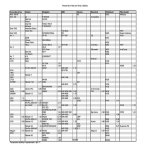
Temperature vs Velocity - Gunpowder

Interesting sir.. good work on your data..
My conclusion
Temps. Effect bullets, bore,,
Tight bore due to the cold , bore has shrunk, increasing pressure...
Bullet is harder,, copper engaging the lands, lead compression,, has changed.. compared to the warmer temps..
I bet primers are slowing powder ignition causing you
To have crappy S.D.
Any how , my 2 cents..
Glad to see the new reloader powder is stable..
Great thread.
Guess that's why I carry one round in my pocket.

TODBARTELL you have made my range time ....
long... in a good way
Now I have to try load development, with a cold clean bore.
And a round at body temp.
Your a bad man for feeding my addiction.. thanks
Keep up the good work
 
I can see myself using more magnum primers in hunting rifles as well

I'm going to be starting a fairly in depth test soon, comparing magnum vs standard (CCI) in cold weather, "normal" weather, and hot weather. I'll post up my results once done (summer)
 
Awesome stuff Bartell! Really appreciate it, I LOVE #’s specially when combined with graphs. Thanks for freezing for us.

I wonder how old school powders would compare? Like IMR 3031 or 4350?

You’re really becoming the “Barsness” of Vanderhoof :cheers:
 
This is a pretty good endorsement for the Labradar. Optical chronographs can have problems in the cold, such as misreads caused by airborne ice crystals, where a Doppler system is unaffected. Nice work on the graphs!
 
Great work, Mark!! The cold temperature phenomenon is not new.
I discovered similar elevated velocities from Norma MRP many years ago.
I was checking in preparation for a cold weather hunt, and wanted
to get some idea what to expect. I was a bit surprised to see speeds
increase, rather than decrease, when it was -35ºF outside.
Your graphs are spectacular for comparison. Thanks. Dave.
 
Although the Labradar works in the cold without any problems such as missed shots, wild numbers, etc.. what I think you may be seeing is a shift in the readings across the whole scale.

Let's say the Labradar is reading 75 fps high in the cold, just to have a number to work with. A shot that's actually 65fps slower than it was last summer will appear as being 10 fps faster. A shot that's 85 fps slower will appear as 10 fps slower than warm weather, etc.
I'm not saying I'm sure that's what's happening, but I've always been under the impression that ammunition is slower in cold temperatures, not faster.
 
Please excuse my ignorance, but where does the lab radar pickup the bullet along its flight path and how can you ensure this? There could be big drops in velocity from muzzle to even 20 feet in front of the firearm. Not 100fps by any means, but enough to make it appear that the bullets are faster in cold temps.
 
at distance, faster bullets hit higher than slow bullets, this is missing from this test to confirm the bullet speeds.

Generally speaking yes, but depending on the harmonics of your barrel, POI can be higher, lower, left or right. Just like in an OCW test, the bullets will group in an oscillating pattern.
 
at distance, faster bullets hit higher than slow bullets, this is missing from this test to confirm the bullet speeds.

This should be the case, but in my personal experience, is NOT always the case.
The bullet may hit higher, or it may move right, left or lower, depending on the
individual rifle, load and bullet. Dave.
 
at distance, faster bullets hit higher than slow bullets, this is missing from this test to confirm the bullet speeds.

Depends on the calibre, velocity & distance from the muzzle. Slow, heavy recoiling bullets will result in more muzzle rise, than fast, low recoiling bullets.

QUOTE>>>>>where does the lab radar pickup the bullet along its flight path and how can you ensure this? There could be big drops in velocity from muzzle to even 20 feet in front of the firearm. Not 100fps by any means, but enough to make it appear that the bullets are faster in cold temps<<<<<ENDQUOTE

Not sure about the cold, but I did some testing a couple of summers back with a number of bullets in several different calibres, at varying velocities and the most difference I ever encountered was 7 fps variance, when the 1st screen was placed at at anywhere from 1 foot to 12 feet. That was, however, with my Chrony Beta, not a Labradar.
 
Not sure about the cold said:
That's just it, with a chronograph you can control dist from muzzle. I don't know how the lab radar picks up the bullet at the same point every shot. I read on the website they are triggered by the rifle muzzle blast and can track velocity to around 60yds down range as well. Also, there can be user error as with anything. So unless the unit is placed at the same point from the firearm each time, you could get varying results.
 
Although the Labradar works in the cold without any problems such as missed shots, wild numbers, etc.. what I think you may be seeing is a shift in the readings across the whole scale.

Let's say the Labradar is reading 75 fps high in the cold, just to have a number to work with. A shot that's actually 65fps slower than it was last summer will appear as being 10 fps faster. A shot that's 85 fps slower will appear as 10 fps slower than warm weather, etc.
I'm not saying I'm sure that's what's happening, but I've always been under the impression that ammunition is slower in cold temperatures, not faster.


Possible. I was seeing some high pressure signs in my 280 Ackley 160gr Accubond load, stiff bolt lift, at 3010-3057 fps in cold weather. In +16 to -1c temps, no problems (2951-2961 fps)
 
That's just it, with a chronograph you can control dist from muzzle. I don't know how the lab radar picks up the bullet at the same point every shot. I read on the website they are triggered by the rifle muzzle blast and can track velocity to around 60yds down range as well. Also, there can be user error as with anything. So unless the unit is placed at the same point from the firearm each time, you could get varying results.

Rifles were shot about a foot from the side of the radar. Projectile offset in the menu was set at 12 inches. In 30 caliber or larger rifles, I've occasionally had downrange velocities out to 200 yards recorded. 500-100 yards is common for 22-28 calibers. Even a .177 caliber BB was tracked out to 50 yards once

From: Yann Tremblay (Labradar)


The labradar use a continuous Doppler wave in order to track the bullet, inside your labradar you have two damped internal microphone (one on each side) that are used to sync the signal. Therefore when you fire, the labradar is already monitoring, so when it track the bullet it is using a digital signal processing (a lot of mathematics and processing) in order to compute the muzzle velocity and downrange velocity.


Hope you understand,

Have a great day!


Last edited:
Fantastic job OP!!!

All things being equal, I'd suspect that temperature effecting 2 (at least) oscillators inside LR (most likely in a non-linear manner) changes radar frequency AND the frequency of the oscillator that's being used to compare with the Doppler shift.
I wouldn't expect to have TCXO or any advanced temperature compensation implemented in an inexpensive household item like Labradar. ;)

Can anybody run the tests on LR to measure the actual frequencies in question from -40C to +60C ?

Love my Labradar regardless!!!

s>
 
Back
Top Bottom