Tempilaq 750 results - interpretations? with pics MORE samples

RonR

Regular
Super GunNutz
Rating - 100%
25   0   0
Location
Saskatoon
I need help developing experience reading Tempilaq 750 results. I’ve read, watched and reviewed pictures but can’t comfortably come to a conclusion about what this stuff is supposed to look like. The instructions on the bottle state “will liquefy at stated temperature” and I need help determining if it’s been achieved…or other.

Pictures of other tempilaq results welcomed.

The objective is properly annealed cases with the methods I have at hand.

View attachment 81515

View attachment 81514


The first picture is the opposite side of the tempilaq coating and the other is the Tempilaq. Cartridge order has not been changed.

Setting: Garage, ambient temperature approximate – 15c

Method – single propane torch and socket. I know there are other methods and equipment but this is what I have. Respectfully requested is discussion around interpreting the tempilaq results…and not the method. By accounts I've read, this method can be successful.

Cases & prep – from left the first 4 cases Lapua, scotch brite pad in a drill to create contrasting surface finish free of any contaminates to prevent the colour argument from getting in the weeds. The fifth case is a Federal without scotch pad or any surface finish clean up. All cases neck turned to .012.

Duration – 9 sec, 11 sec, 13 sec, 15 sec, unknown…not recording the duration for the Federal case was unintentional but left here as reference to see what’s brought up in discussion.

My comprehension of annealing is to return the cartridge neck/shoulder to a more malleable state. Too much heat & duration OR too little heat/duration are both non effective. Tempilaq 750 is a tool to determine if proper heat/duration has been applied.

Regards
Ron
 
Last edited:
halfway between 3 and 4 look good, are you aiming the flame at the shoulder/body junction? that's where you want it as it's not just about the neck but also the shoulder so that when your sizing and pushing it back a hair it doesn't spring back to it's fired form
 
halfway between 3 and 4 look good, are you aiming the flame at the shoulder/body junction? that's where you want it as it's not just about the neck but also the shoulder so that when your sizing and pushing it back a hair it doesn't spring back to it's fired form

DAVE, you're awesome. Thanks!!!!

Aiming at the neck shoulder and not the shoulder body...will make the adjustment and thanks for noticing. You could see that? Wow.

Serious thanks.

Ronr
 
I have the same problem interpetating templac , between 3&4 doesn't make sense to me by the way what are you seeing ? . I could see when it flared to orange as in a u tube video and timed just short of that . With my torch setting it was 6-7 seconds and the cases look annealed

I ended up going by the case appearance and quit using the templac ! Hopefully this thread will help me too
 
Last edited:
I have the same problem interpetating templac , between 3&4 doesn't make sense to me by the way . I could see when it flared to orange as in a u tube video and timed just short of that . With my torch setting it was 6-7 seconds and the cases look annealed

I ended up going by the case appearance and quit using the templac ! Hopefully this thread will help me too

I've been studying the differences since Yodave's post and this is what I'm seeing... I'll take a kick at it but others more experienced will likely correct if I'm wrong
- 2 tempilaq surface has a subtle roughness to it compared to 3.
- 4 has indications that the heat is traveling farther down the case
- 3 and 4 have a smoother appearance than 2, but 4 has a "burnt orange" effect on the neck so to speak

...but that's my thoughts. Good to know others may benefit too.

Regards
Ronr
 
Have you tried with the Tempilaq insde the case neck?
Tempilaq should go clear when the temperature is reached.
By looking at those cases I'm assuming that they are scrap cases you were using to practice neck turning.
 
Dab the templac on the inside of the case neck so the fire does not litterly burn it. As soon as it goes clear you have reached 750 degrees and want to remove case from flame.

Google anneal right. I made my own version of his set up. I dab templac on the inside of each case neck.
 
Have you tried with the Tempilaq insde the case neck?
Tempilaq should go clear when the temperature is reached.
By looking at those cases I'm assuming that they are scrap cases you were using to practice neck turning.

"Cases & prep – from left the first 4 cases Lapua" from the original post.

I also thought it was suppose to be placed inside the necks.
 
it's not the easiest stuff to work with.......

once it melts it doesn't take much to turn it black, as shown in the picture, you want to anneal a quarter inch down below the shoulder without cooking the top of the case, in order to perfect this you may have to move the flame, thicker brass takes longer to heat, the neck being thin will draw the heat up very quickly, this is why you never aim the flame at the neck.....you don't want to anneal the body of the case. number 3 is as close to perfection as you can get by counting in your head, but on 4 you can see the bottom edge of the templique didn't turn color, 3 is good but it could go halfway 3 and 4. I am playing with a anni induction unit, I can see the results on the templique to the 10th of a second, it's not so easy with a flame, but any smart phone has a count down counter on it once you know your time. my winchester brass done in a flame was 10-12 seconds to get the same results that 2.7 seconds gives me with induction heat
 
I have never seen my annealed brass turn as dark as factory annealed brass, don't sweat the small things, your all on the right track
 
I'm going to try some tempilaq inside the neck and outside the neck and torch at the same time...but on some other culled cases to keep on the subject of interpreting the tempilaq results. (Won't be tonight but tomorrow before commitments kick in.)

I understand application inside the neck and why that may be used but that's the thinnest part brass and by the time that heat is reached in the neck what has the shoulder been subjected to by that point? Over 750? I understand the shoulder also being returned into a softer state, as stated by Yodave.


Have you tried with the Tempilaq insde the case neck?
Tempilaq should go clear when the temperature is reached.
By looking at those cases I'm assuming that they are scrap cases you were using to practice neck turning.

I'll save the neck turning part for the end of the thread for interest.

Dab the templac on the inside of the case neck so the fire does not litterly burn it. As soon as it goes clear you have reached 750 degrees and want to remove case from flame.

Google anneal right. I made my own version of his set up. I dab templac on the inside of each case neck.

I'm not sure it goes clear. That may be very likely to using a flame but putting some inside the neck and outside the neck and torching at the same time will indicate some interesting results. I've done this a few times, but this time with intention of posting results requesting insight from those more experienced.

it's not the easiest stuff to work with.......

once it melts it doesn't take much to turn it black, as shown in the picture, you want to anneal a quarter inch down below the shoulder without cooking the top of the case, in order to perfect this you may have to move the flame, thicker brass takes longer to heat, the neck being thin will draw the heat up very quickly, this is why you never aim the flame at the neck.....you don't want to anneal the body of the case. number 3 is as close to perfection as you can get by counting in your head, but on 4 you can see the bottom edge of the templique didn't turn color, 3 is good but it could go halfway 3 and 4. I am playing with a anni induction unit, I can see the results on the templique to the 10th of a second, it's not so easy with a flame, but any smart phone has a count down counter on it once you know your time. my winchester brass done in a flame was 10-12 seconds to get the same results that 2.7 seconds gives me with induction heat

Thanks again, I hope to show enough to indicate some definitive results for those at the same point as I. More good insight from someone using the A induction unit and experience of flaming. Right on!!!!


IIRC I read the post but wanted to expand a bit. This is anticipated to determine some discernable keys for reading tempilaq ergo providing others something to measure against to determine if annealing is properly completed.

My personal preference is inside the neck, if im doing anything outside its a 400 down the case body to make sure its not overheating

Hopefully the next examples will capture that as well.

Stay tuned

Regards
Ronr
 
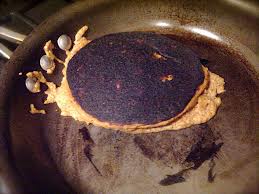
RonR, after seeing your tempilaq photos remind me to never come to your house for breakfast, I don't like burnt pancakes.

The burnt carbon belongs on the inside of the case neck and not on the top and bottom of the pancakes.

burnt-pancakes.jpg


The Art and Science of Annealing
Annealing Basics, Cartridge Metallurgy, and Automated Options
http://www.accurateshooter.com/technical-articles/annealing/
 
RonR, after seeing your tempilaq photos remind me to never come to your house for breakfast, I don't like burnt pancakes.

The burnt carbon belongs on the inside of the case neck and not on the top and bottom of the pancakes.

burnt-pancakes.jpg


The Art and Science of Annealing
Annealing Basics, Cartridge Metallurgy, and Automated Options
http://www.accurateshooter.com/technical-articles/annealing/

No burnt pancakes for you. If you flew up in the avatar P51 to the airport here I'll make sure of that. CANADIAN back bacon on top. My cooking has gotten better over time, or at least the my kids and wife say. Don't let the "cooking" of brass persuade any notions of improving. :) I appreciate your humor as always.

I am picking up what you are putting down regarding carbon inside the necks. It's what a reloader labors to create right? More carbon'd inside necks means more shooting.

Returning to content...the article is concise and puts in to context very well the subject of annealing. I've read it more than a few times to capture as much as I can. I figured from what I've learned, and read, to give this a serious attempt. In this case the subject matter is a bit subjective and am not too proud to ask for interpretation. There's been adventuring in this reloading process that I've enjoyed but I don't want to wreck good brass because "I think" I know what I am doing.

I'll get to those other test samples tomorrow...damn this weekends busy.

Regards
Ronr
 
The results below are on culled federal cases, no Laupa. One batch had the scotch brite treatment to provide some reference. I also put tempilaq inside the neck for both sets.

Both sets ( from left to right ) heat cycle dwell time was increased by 1 second except for the fourth example in both sets which had 2 second interval. Both sets started with same dwell time.

View attachment 81653
View attachment 81654
View attachment 81651
View attachment 81652

Setting: Garage, ambient temperature approximate – 5c

Method – same as previous however flame aimed at the shoulder/case junction

Cases & prep – Federal. Once batch scrubbed with scotch brite

Duration – not shared at this point to prevent previous experiences regarding dwell time from influencing interpretation. Case 1 in both sets same dwell time, case 2 in both sets same dwell time etc. It’s in the neighbourhood of first samples shared.

View attachment 81655

Observations/Findings
- Can’t honestly say I witnessed a state where tempilaq became “clear”. Didn’t capture a “flash point” either using this method. Can anyone confirm "clear"?
- Tempilaq inside the neck vs. outside on the shoulder body – from the results, both locations turned black and visually difficult to discern inside the neck. Either location is not telling me anything different except for the fact that tempilaq outside the case is indicating the point on the case that 750 hasn’t been exceeded which is valuable. At least on the outside of the case a person may have the ability to salvage the case…inside the neck would be more difficult I think

Regards
Ronr
 
Tempilaq pen are not getting clear when they melt, in fact they are made of different stuff depending on their temperature and can melt not all the same. I don't think using those pens is a good idea for anealing. they are too big and not meant to be use on such a thin material. you are also cooling down one side of your neck quicker than the other when you apply it so one side of the neck is anealled a different degree than the other.
 
it seems like your having the same luck interpreting the Templac as I did . Hope you have better perseverance than me , I quit trying . I thought I had nfg Templac . My brass does seem ok , as the case mouth doesn't collapse when I resize ( showing over annealing) and haven't had cracked necks YET ( showing not annealed ) wishing you luck with your further investigation. I will follow
KJ
 
Back
Top Bottom