Big Bad
CGN Ultra frequent flyer
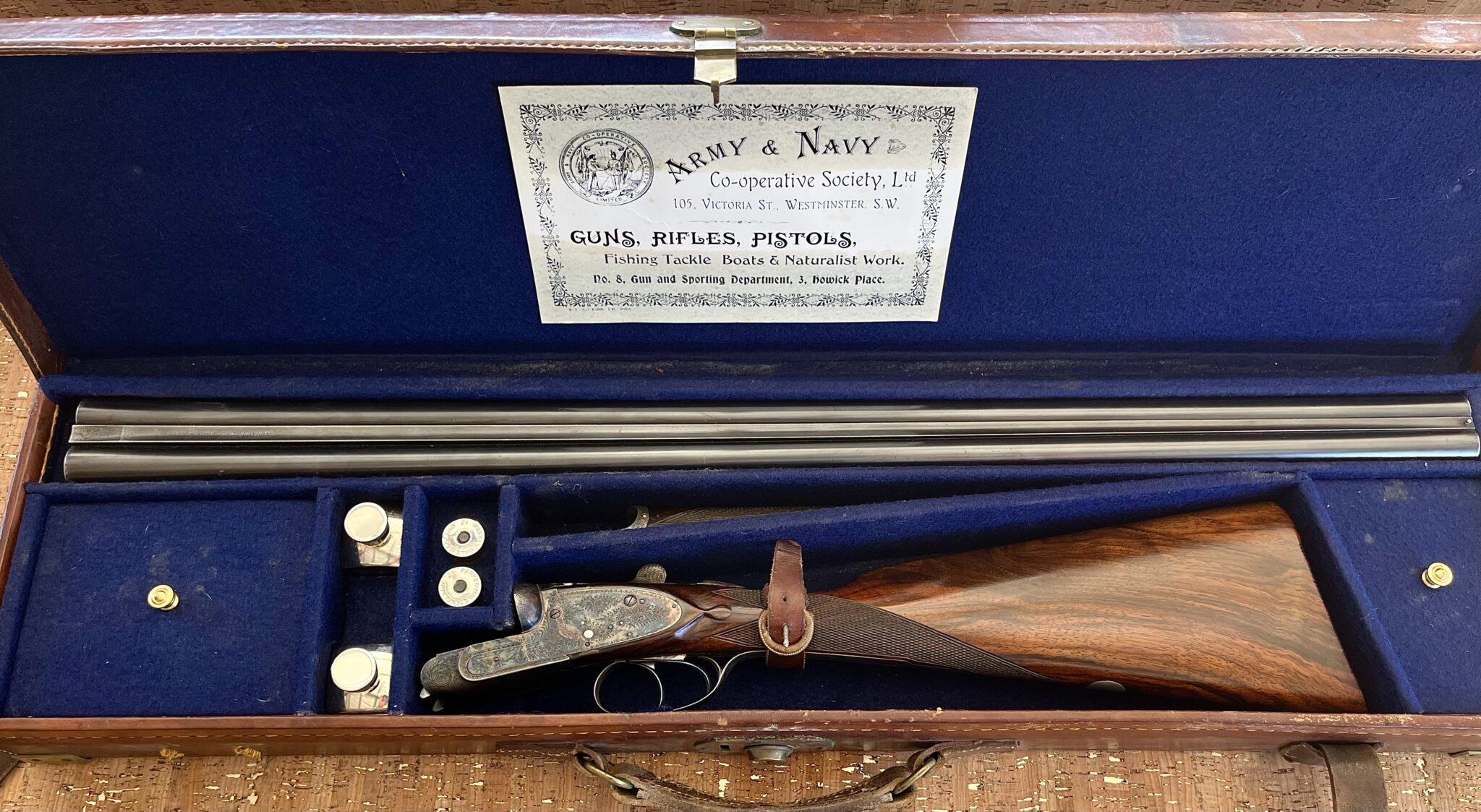
I do love my dear old Browning BSS. If I was ever to see a quality SxS that I liked, I would find it hard to resist- so I don't look.
By Outdoor Life Staff
Published Feb 16, 2021 3:23 PM EST
Add Outdoor Life(opens in a new tab)More information

RFM has only brought its side-by-sides to America in the last year. Adam Reiger
The dampness of the cellar mixed with the smell of gun oil hit my nose. My eyes caught the fluorescent lights reflecting off blued metal. Well-kept barrels of various brands and models of vintage shotguns stood out in contrast against a worn table. My bank account was about to be sucked dry; I tried not to think about the overdraft fees. The affordable gun I had originally came for fell by the wayside as I shouldered an Italian-built shotgun with a slender English grip. Welcome to the world of side-by-side shotguns.
Until I met my dream shotgun in that cellar, the name Bernardelli was entirely unknown to me. V. Bernardelli closed its doors in 1997, a fact I only learned after researching the Italian manufacturer when an opportunity arose to buy one of their side-by-side shotguns. The truth is that buying used shotguns can be challenging; it’s easy to get burned on the value, plus the advantages of modern side-by-sides become more relevant as our bird hunting culture expands. But if we’re going to understand the resurgence of modern side-by-side shotguns in America, we first must understand their decline.

 The popularity of side-by-sides began to slide after World War II. Project Upland
The story of side-by-side shotguns is one that follows the rise and fall of trends. Even before companies like V. Bernardelli closed their doors, the days of buying now-famous American classics, like Parkers and A.H. Fox guns from hardware store walls at affordable prices, were long gone. Many of the factories shuttered by the late 1940s and the rights of those companies were acquired by larger gun manufacturers that would, for the most part, also cease production.
“It started after World War II with the introduction of semi-automatic guns from various manufacturers,” said Jerry Havel, who spent 20 years working in the shotgun business and is now co-founder of the Upland Gun Company. “These manufacturers were able to mass-produce some great shotguns for the hunting market. This new technology made guns more affordable to the general public, so you saw a rapid growth of the outdoor industry. This left the ‘old guns’ in the corner for years.”
By the 1980s and ’90s, even the modern firearms companies began to drop side-by-sides as their popularity declined. Companies like Stevens ended production of classic models of side-by-sides by the late 1980s. Each one of these defunct guns were representatives of the last “affordable” side-by-sides of a different era. As Gregg Elliot of Project Upland pointed out in the article The Rise of the Over-Under: “Until about a decade ago, new, affordable side-by-sides ceased to be sold in the United States.”
Sure, affordable is a relative term. Even most over/under shotguns that dominated gunstore shelves during most of my younger days were beyond my price range. A Beretta 686 was entirely out of reach at $2,000. Classic side-by-sides were out of the question. After some years, though, my perspective began to change. I’d owned my fair share of affordable over/under shotguns that I eventually traded in, upgraded, or just left behind. My pattern of gun buying went from buying many inexpensive guns to buying fewer, more expensive guns. By consolidating my collection, a whole new world opened up to me.
Vintage shotguns are of course available to those interested in collecting, restoring, and understanding the old classics, but the vintage gun market is intimidating and fraught with risk, which further contributed to the decline in popularity of the side-by-side. But luckily, today there are a handful of modern side-by-side shotgun options that combine quality and functionality.
 You can buy a CZ Bobwhite for less than $700. CZ-USA
In the early 2000s, new double guns entered the market and renewed interest in the classic side-by-side design. Generally speaking, these guns are manufactured in Turkey, imported to the U.S., and sold by shotgun companies here.
CZ-USA introduced a very affordable side-by-side, the Bobwhite G2, that carried a price tag under $700. Despite a few failed attempts at this market segment by other companies—notably Franchi’s Highlander that survived for less than a decade due to lack of interest—CZ stuck it out. Today, CZ-USA leads the entry-level side-by-side market. Entry-level guns provide the unique opportunity to fall in love with a side-by-side without a significant financial investment.
“CZ-USA was uniquely positioned with its significant investment in CNC technology to bring a quality side-by-side to market that offered fit and finish not usually available at an entry-level price point—proven true by the CZ Bobwhite G2 quickly becoming the best-selling side-by-side in the United States,” said Zach Hein, Marketing Communications Manager at CZ-USA.
I am still shocked every time I see a CZ Bobwhite G2 on the gun store shelves with its straight English stock and double triggers for an MSRP of only $675. The gun has always treated me well and I would not hesitate to recommend it as a starting point to anyone interested in getting into side-by-side shotguns.
 AKUS build shotguns that fall between $2,000 and $5,000. That's a reasonable price range for a side-by-side. AKUS
AKUS has white-labeled a series of side-by-side shotguns that include big names like Dickinson Arms, Webley & Scott, and even Kimber. These side-by-sides occupy a big portion of the $2,000-$5,000 market and are certainly worth the price. I’ve had the opportunity to shoot a Dickinson on a few hunts over the years and have always been pleased with its performance.
[This article from Outdoor Life is only about half here, the second got lost when I had to cut this one to length and Facebook reset and shyte. I'm nearly past caring, really.] -BB
The Affordable Side-by-Side Shotgun Is Making a Comeback with American Bird Hunters
Now just might be the best time for upland bird hunters to buy a modern side-by-side shotgunBy Outdoor Life Staff
Published Feb 16, 2021 3:23 PM EST
Add Outdoor Life(opens in a new tab)More information
RFM has only brought its side-by-sides to America in the last year. Adam Reiger
The dampness of the cellar mixed with the smell of gun oil hit my nose. My eyes caught the fluorescent lights reflecting off blued metal. Well-kept barrels of various brands and models of vintage shotguns stood out in contrast against a worn table. My bank account was about to be sucked dry; I tried not to think about the overdraft fees. The affordable gun I had originally came for fell by the wayside as I shouldered an Italian-built shotgun with a slender English grip. Welcome to the world of side-by-side shotguns.
Until I met my dream shotgun in that cellar, the name Bernardelli was entirely unknown to me. V. Bernardelli closed its doors in 1997, a fact I only learned after researching the Italian manufacturer when an opportunity arose to buy one of their side-by-side shotguns. The truth is that buying used shotguns can be challenging; it’s easy to get burned on the value, plus the advantages of modern side-by-sides become more relevant as our bird hunting culture expands. But if we’re going to understand the resurgence of modern side-by-side shotguns in America, we first must understand their decline.
The Decline of American Side-by-Sides
The story of side-by-side shotguns is one that follows the rise and fall of trends. Even before companies like V. Bernardelli closed their doors, the days of buying now-famous American classics, like Parkers and A.H. Fox guns from hardware store walls at affordable prices, were long gone. Many of the factories shuttered by the late 1940s and the rights of those companies were acquired by larger gun manufacturers that would, for the most part, also cease production.
“It started after World War II with the introduction of semi-automatic guns from various manufacturers,” said Jerry Havel, who spent 20 years working in the shotgun business and is now co-founder of the Upland Gun Company. “These manufacturers were able to mass-produce some great shotguns for the hunting market. This new technology made guns more affordable to the general public, so you saw a rapid growth of the outdoor industry. This left the ‘old guns’ in the corner for years.”
By the 1980s and ’90s, even the modern firearms companies began to drop side-by-sides as their popularity declined. Companies like Stevens ended production of classic models of side-by-sides by the late 1980s. Each one of these defunct guns were representatives of the last “affordable” side-by-sides of a different era. As Gregg Elliot of Project Upland pointed out in the article The Rise of the Over-Under: “Until about a decade ago, new, affordable side-by-sides ceased to be sold in the United States.”
Sure, affordable is a relative term. Even most over/under shotguns that dominated gunstore shelves during most of my younger days were beyond my price range. A Beretta 686 was entirely out of reach at $2,000. Classic side-by-sides were out of the question. After some years, though, my perspective began to change. I’d owned my fair share of affordable over/under shotguns that I eventually traded in, upgraded, or just left behind. My pattern of gun buying went from buying many inexpensive guns to buying fewer, more expensive guns. By consolidating my collection, a whole new world opened up to me.
Vintage shotguns are of course available to those interested in collecting, restoring, and understanding the old classics, but the vintage gun market is intimidating and fraught with risk, which further contributed to the decline in popularity of the side-by-side. But luckily, today there are a handful of modern side-by-side shotgun options that combine quality and functionality.
CZ Introduces the Turkish Side-by-Side Shotgun
In the early 2000s, new double guns entered the market and renewed interest in the classic side-by-side design. Generally speaking, these guns are manufactured in Turkey, imported to the U.S., and sold by shotgun companies here.
CZ-USA introduced a very affordable side-by-side, the Bobwhite G2, that carried a price tag under $700. Despite a few failed attempts at this market segment by other companies—notably Franchi’s Highlander that survived for less than a decade due to lack of interest—CZ stuck it out. Today, CZ-USA leads the entry-level side-by-side market. Entry-level guns provide the unique opportunity to fall in love with a side-by-side without a significant financial investment.
“CZ-USA was uniquely positioned with its significant investment in CNC technology to bring a quality side-by-side to market that offered fit and finish not usually available at an entry-level price point—proven true by the CZ Bobwhite G2 quickly becoming the best-selling side-by-side in the United States,” said Zach Hein, Marketing Communications Manager at CZ-USA.
I am still shocked every time I see a CZ Bobwhite G2 on the gun store shelves with its straight English stock and double triggers for an MSRP of only $675. The gun has always treated me well and I would not hesitate to recommend it as a starting point to anyone interested in getting into side-by-side shotguns.
AKUS has white-labeled a series of side-by-side shotguns that include big names like Dickinson Arms, Webley & Scott, and even Kimber. These side-by-sides occupy a big portion of the $2,000-$5,000 market and are certainly worth the price. I’ve had the opportunity to shoot a Dickinson on a few hunts over the years and have always been pleased with its performance.
[This article from Outdoor Life is only about half here, the second got lost when I had to cut this one to length and Facebook reset and shyte. I'm nearly past caring, really.] -BB
Last edited:





 . But, full disclosure, I’ve never been a sideXside fan.