Just how far back the Tolley firm started making breech-loading game guns is what I wanted to know. Until recently, I had never encountered an early Tolley. Records haven’t survived, so a review of every known tidbit of information was necessary. In an online, private, source of obscure gunmaker data I’ve grown to trust, was the following statement:
“An 1862 advertisement stated ‘Gun rifle and pistol manufacturers, Contractor for Military Arms, Breech Loading Guns, Pistols, also all guns suitable for the African markets’.” This was the earliest date I could trace, so it was a good starting point. I have also learned that every fact and statement about historical gunmaking needs to be checked and double-checked to avoid repeating errors, including published ones. A straightforward Google search did not turn up the 1862 advertisement or any Tolley advertisement along the same lines. Nor did a search using several other popular search engines. I then turned to AI, as a number of well-meaning folks have encouraged me to try. I used the latest version of ChatGPT and started a back-and-forth conversation with the language model, looking to identify the source of the advertisement. It started by quoting back to me my own writings on Tolley and Internet board posts influenced by the original online quote. By pushing harder for specifics, ChatGPT then informed me of the source of the Tolley advertisement, using those words:
“The 1862 advertisement for J. W. Tolley (James William Tolley) appeared in the South Australian Register, an Adelaide-based newspaper (National Library of Australia – NLA). In the November 20, 1862 edition, the firm was listed as "Gun, rifle, and pistol manufacturers" and explicitly described itself as: "Contractor for Military Arms, Breech Loading Guns, Pistols, also all guns suitable for the African markets." This publication reflects the firm's early business model, which relied on exporting large quantities of "trade guns" to international markets, including Africa and Australia, before they became famous for their high-end "big bore" sporting rifles.”
I couldn’t have asked for anything better. I could have stopped there, but I didn’t-- I double-check everything. So I was able to track down a scanned copy of that newspaper for that date, from the National Library of Australia. The Tolley advert wasn’t there. I checked issues from several days before and after that date, without success. So I went back to ChatGPT and challenged the model with this result. It basically said:
“Correct, there is no such advertisement. The original published statement may have been in error,” without acknowledging that moments earlier it had presented its ‘findings’ as fact. This absurdity, of giving factual statements, then after challenging them, being informed that the earlier ‘facts’ were indeed wrong, was repeated several times. This was my first experience with large language models being biased towards pleasing you rather than being accurate/objective. I wanted an answer, pressed hard for one, so it gave me what I wanted – but it totally made it up.
The Wikipedia entry for AI hallucinations explains:
“In the field of artificial intelligence (AI), a hallucination or artificial hallucination (also called bull####ting, confabulation, or delusion) is a response generated by AI that contains false or misleading information presented as fact.” Yeah.
“For example, a chatbot powered by large language models (LLMs), like ChatGPT, may embed plausible-sounding random falsehoods within its generated content.” No kidding. Hence, my rant about fake and misleading information on the Internet. I could have been satisfied with the ChatGPT response and written about that data point online. This would have been scraped up by bots, and further solidify the misinformation with a new reference. Others, or chatbots, might have quoted me as a reference, and there you have it, false data as fact, stronger with every repetition. As AI becomes further and further embedded in Google searches and academic research, how long before we can’t trust any ‘fact’ out there? An interesting and frightening learning experience. Case in point, I just noticed a new YouTube video about an SKB over/under made in...1854? I guess ChatGPT wrote that script...
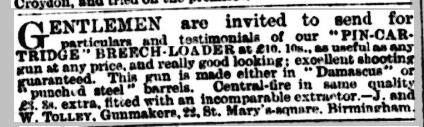
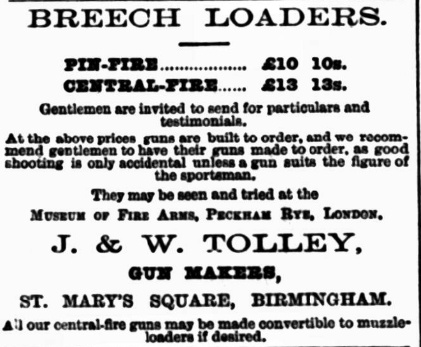
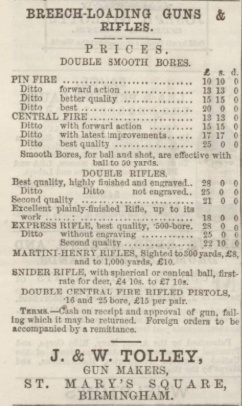
In my research, I try to stick to primary sources, contemporary sources, and original research by myself and others (which can be verified). The earliest account of a Tolley breech-loader I am certain of is April 1866, the date of the well-documented Field trial; I can presume Tolley made them earlier, though how early I cannot tell. The trial would have generated publicity and orders, but by mid-1867, the price of the basic Tolley pin-fire game gun had increased to ten Guineas, or £10.10s. It was available with damascus or ‘punched steel’ barrels (which I take to be drawn steel, which was just starting to appear). This was still about half the price of comparable guns. The price remained at that level throughout its promotion, at least until February 1876. Shortly after this, all J & W Tolley adverts ceased to mention pin-fire guns, with production limited to central-fire. Advertisements for this gun stopped appearing in
The Field newspaper after 23 March 1872, which mainly had a readership within Britain. Tolley continued advertising his bargain pin-fire in newspapers aimed at expatriate readers, such as
Broad Arrow,
Volunteer Service Gazette and Military Dispatch,
Army and Navy Gazette,
Home News for India, China and the Colonies, Homeward Mail from India, China and the East, and foreign newspapers, such as the
Indian Statesman.
Ad in The Field, 13 July 1867:
Ad in
The Field, 16 October 1869:
Ad in the
Volunteer Service Gazette and Military Dispatch, 25 March 1871:
A run of at least 10 years for a particular model of pin-fire gun presents a problem for ageing the gun in the absence of the maker’s records. Often, a narrow manufacturing ‘window’ can be determined by features and styles that tended to come and go quickly as technology advanced and tastes changed. Tolley had little reason to change their entry-level gun, especially if keeping to the same pattern kept production costs down. There is even the possibility the £10.10s. gun was what we now define as a loss leader, where the selling price is below the cost of production, to attract loyal customers who will move on to better (and more profitable) guns. I don’t know, but keeping the same price for at least 10 years makes me wonder.
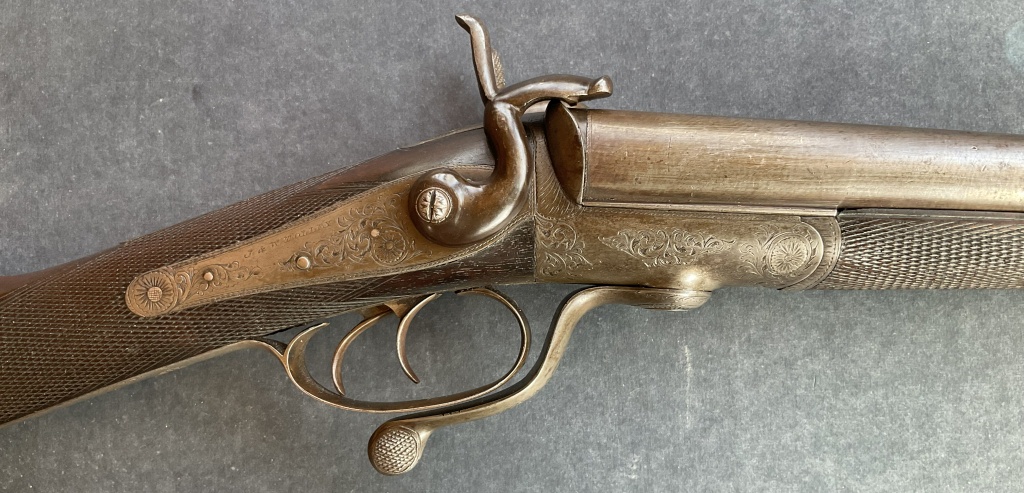
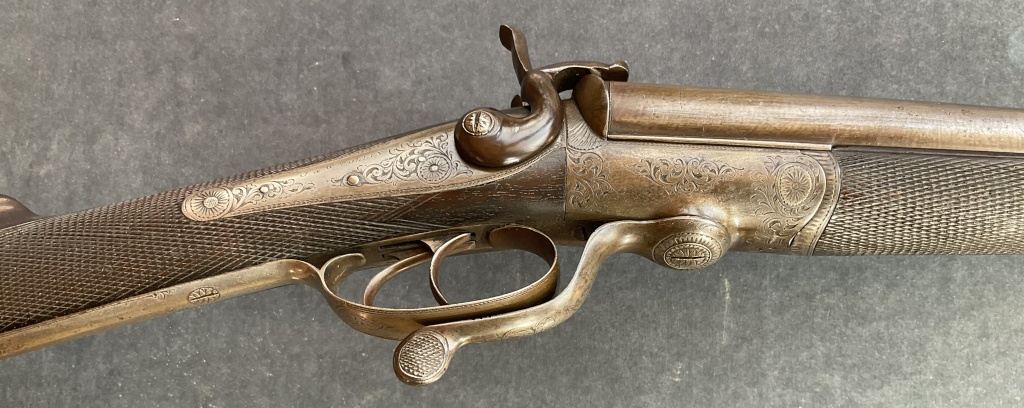
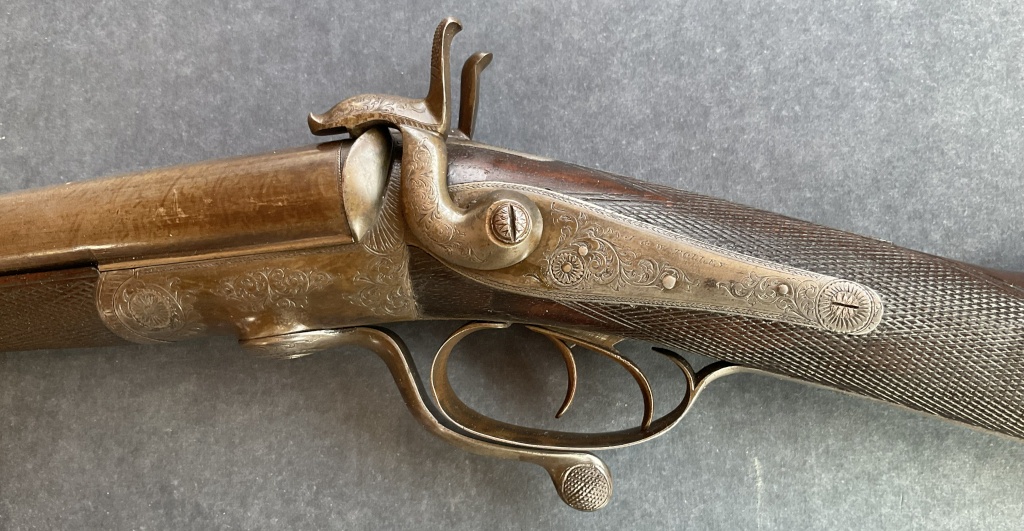
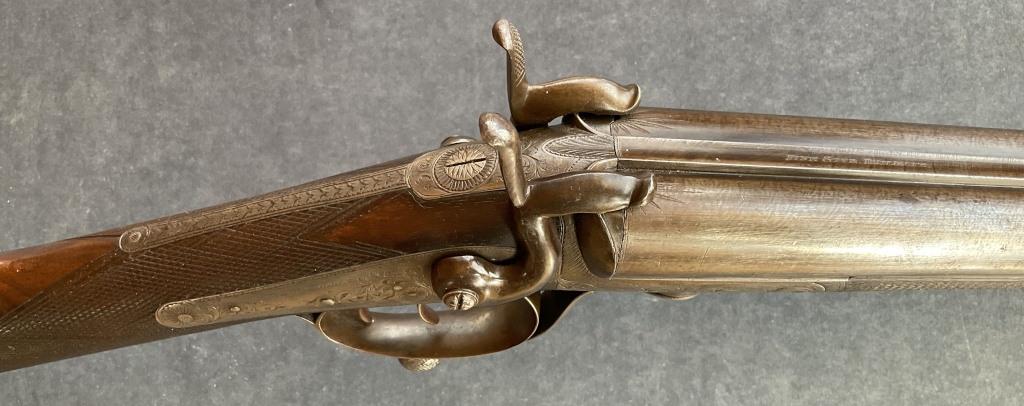
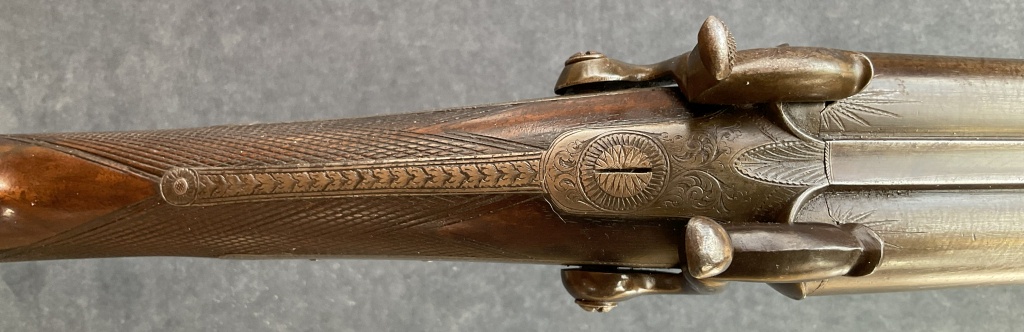
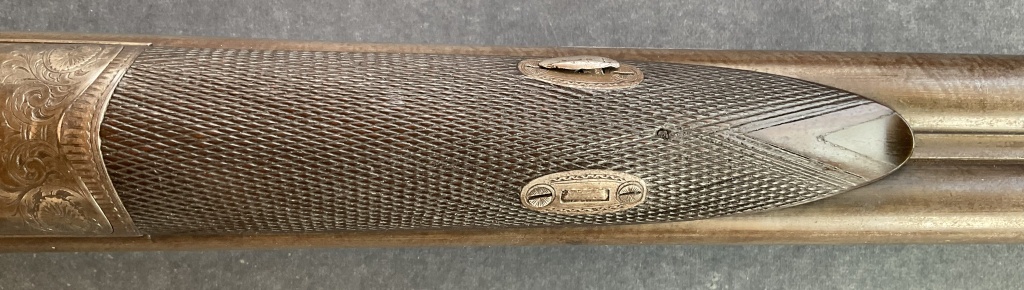
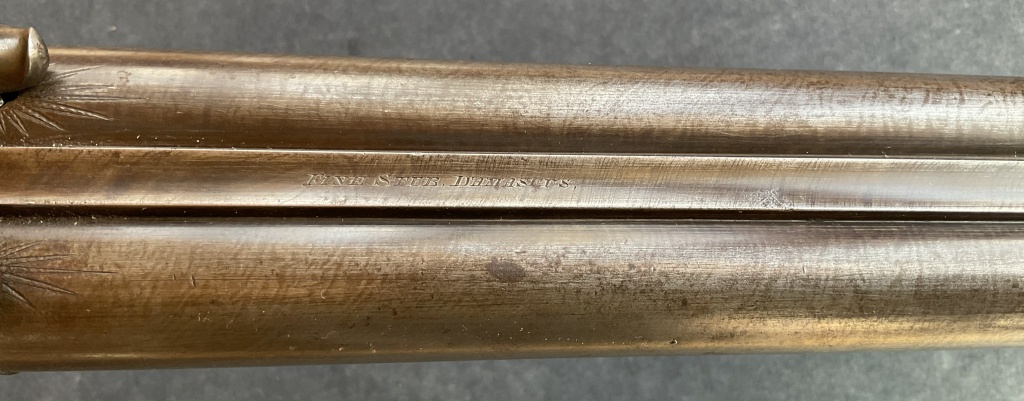
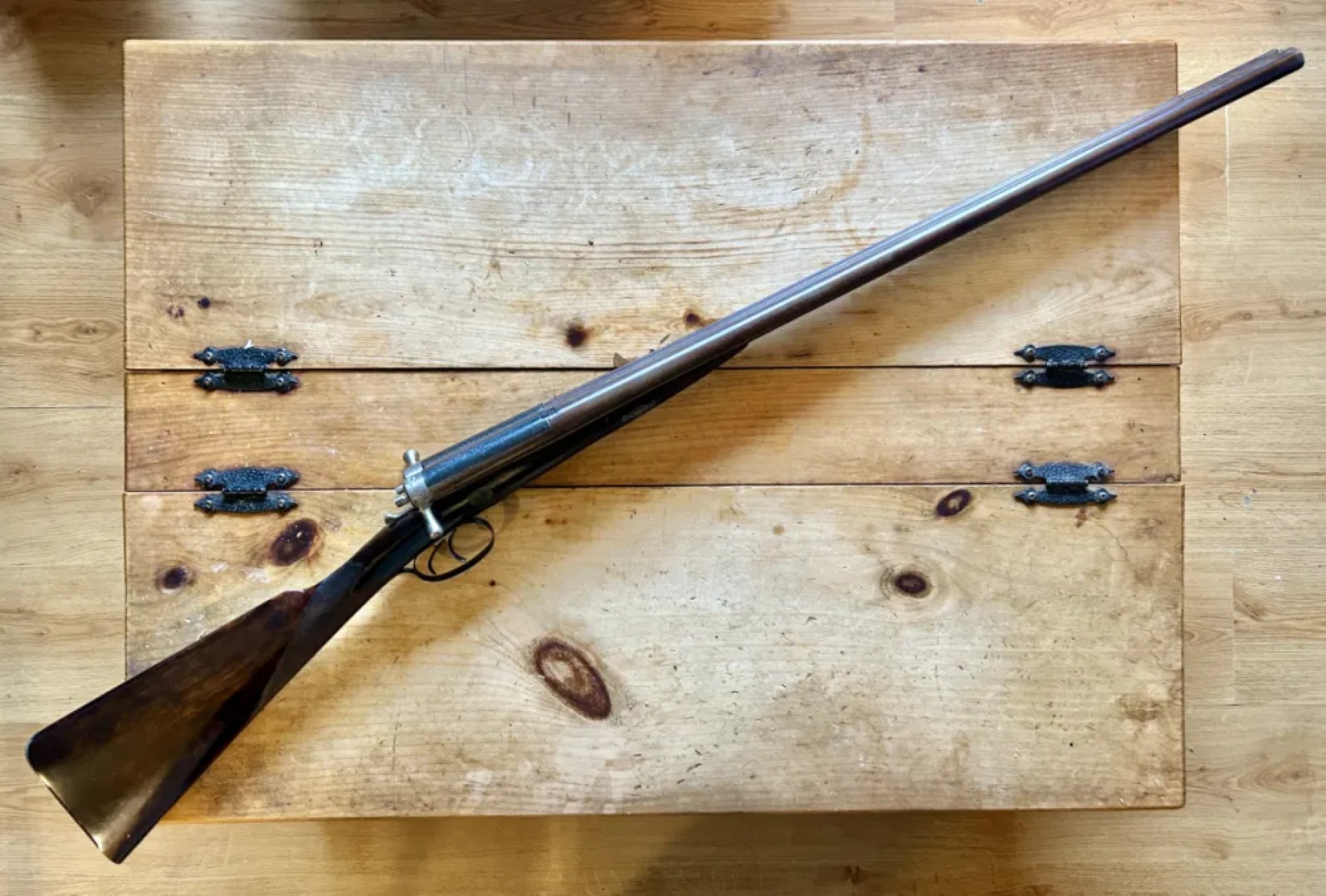
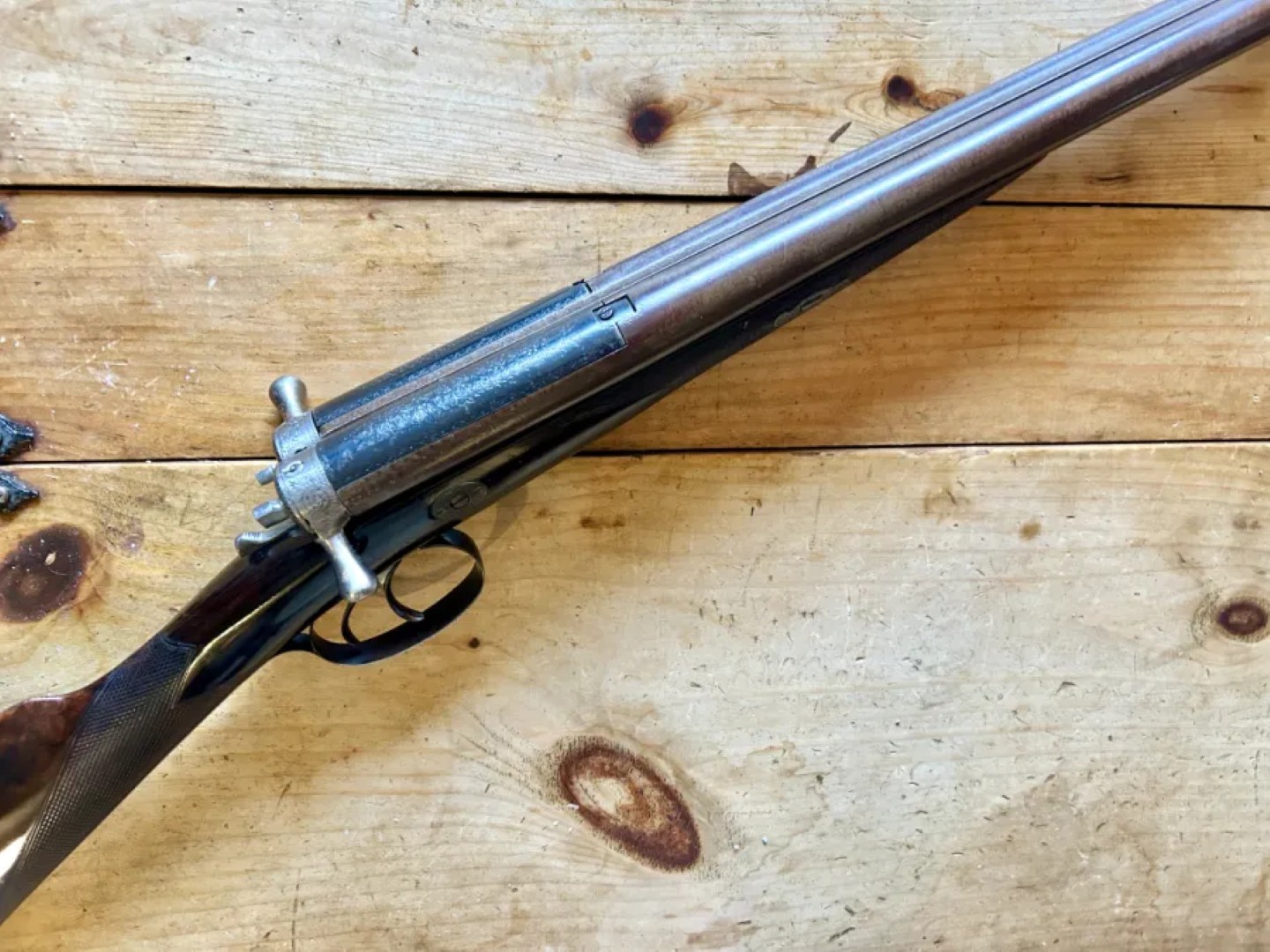
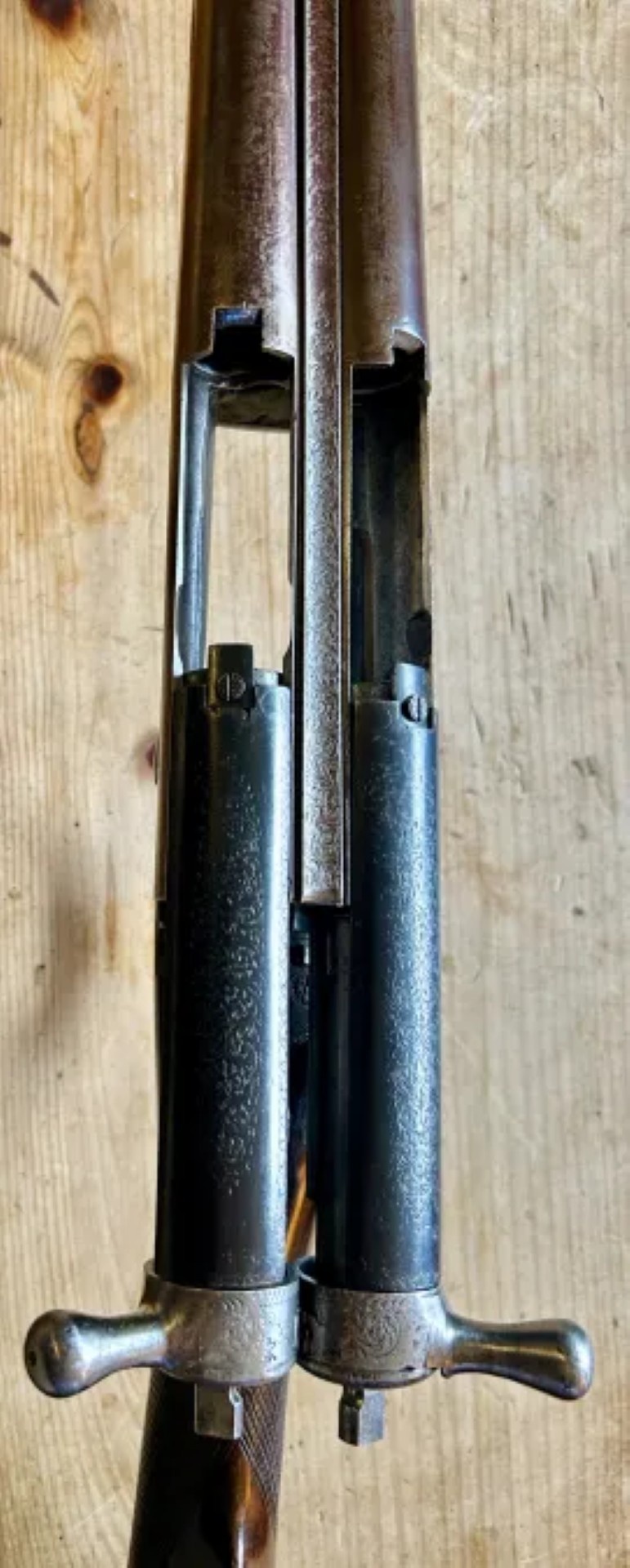
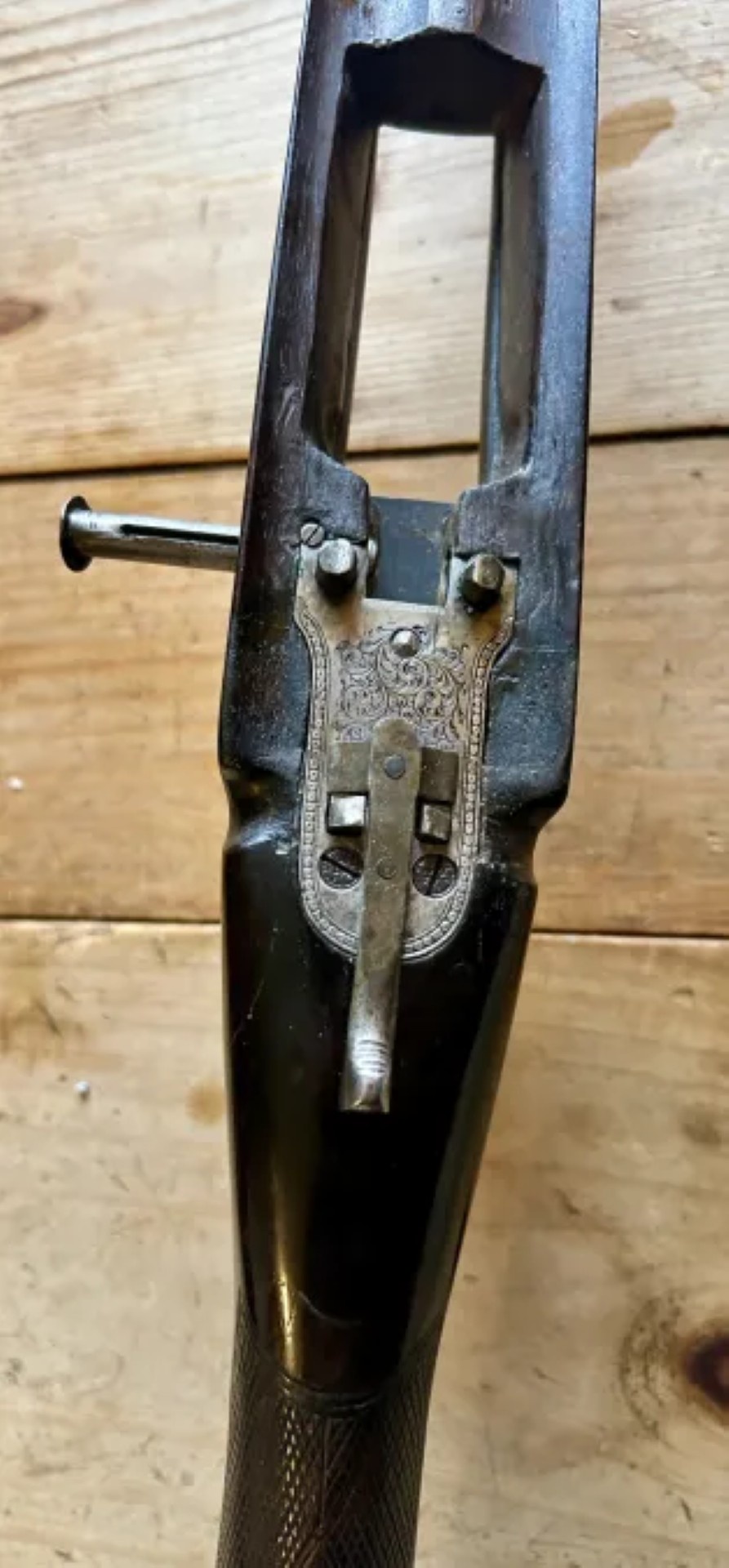
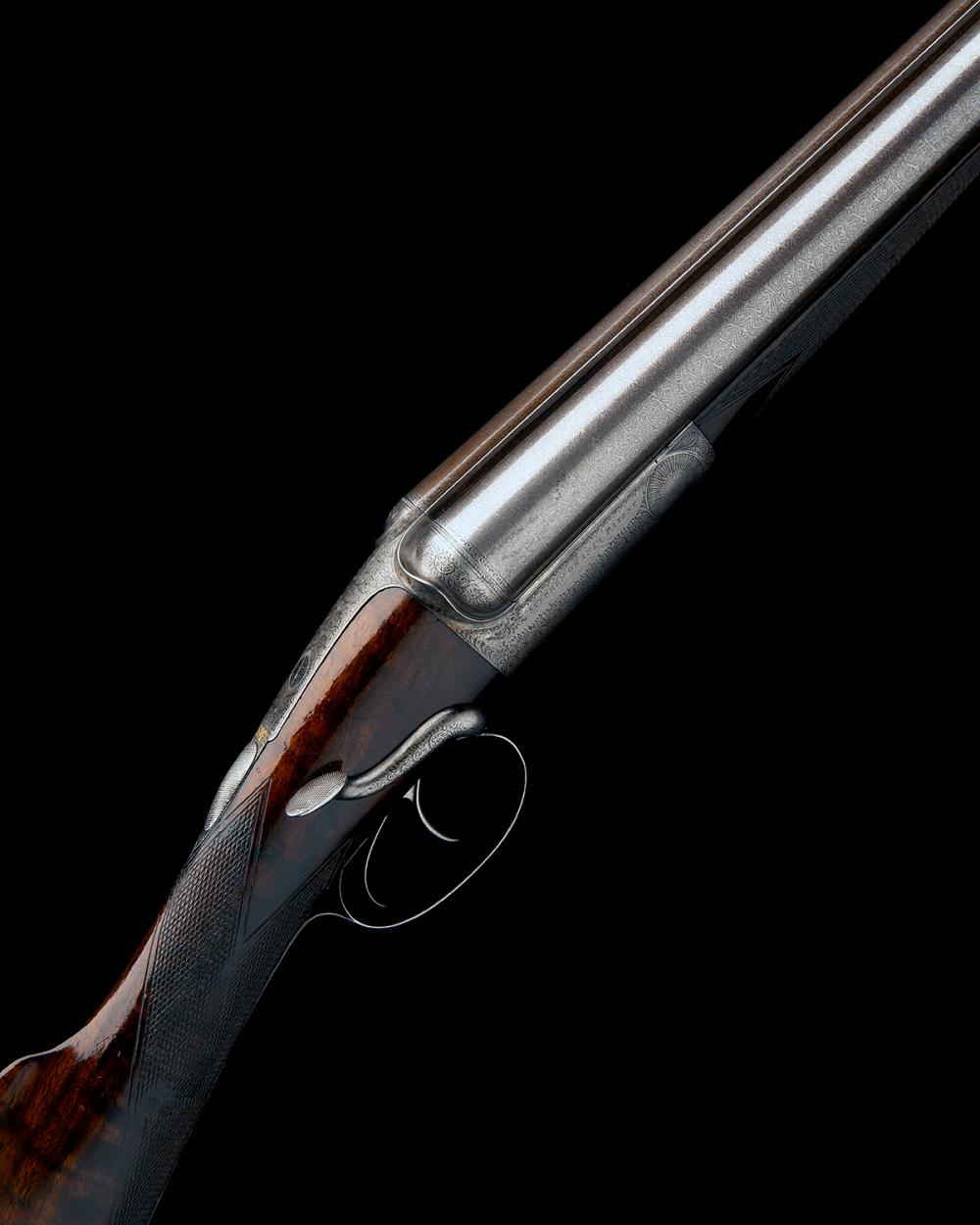
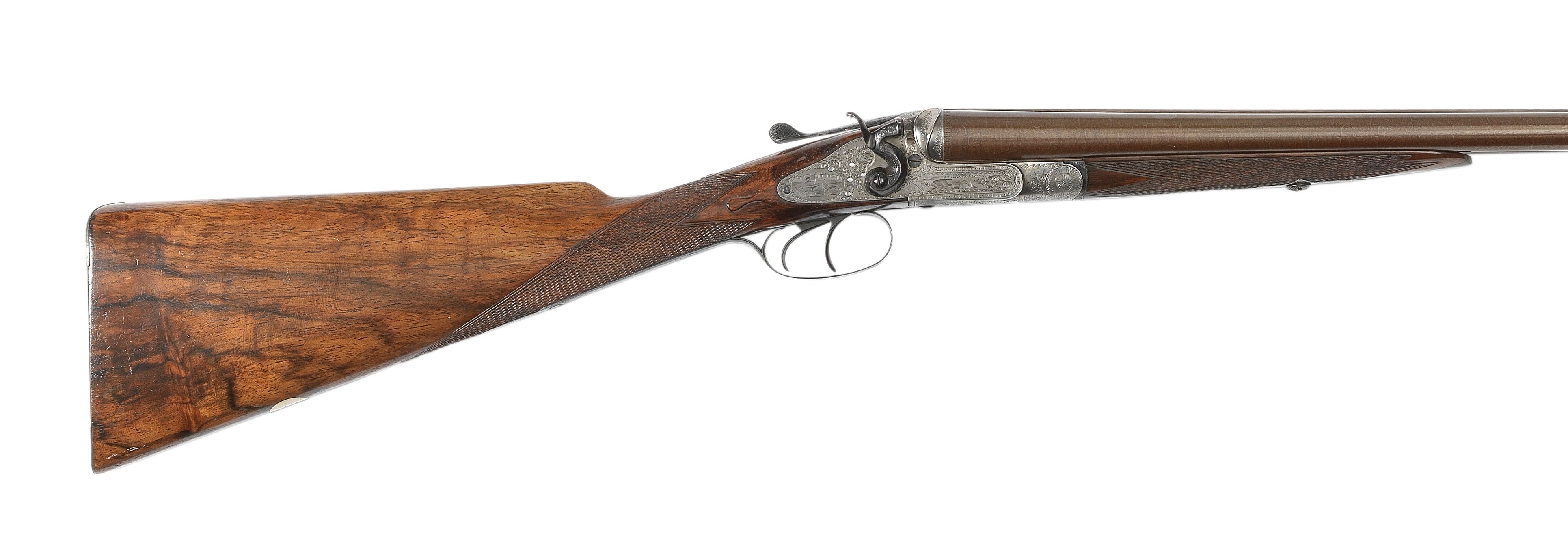
So, what does an entry-level, half-the-price-of-the-competition, Tolley pin-fire look like? Here is one, and it’s the only one I’ve ever seen – it fell into my lap, as it were, a few weeks ago. It is a 14-bore rotary-underlever pin-fire, lacking a serial number. It has 30” laminated steel barrels with Birmingham proofs, and the machine-forged barrel tubes are stamped “Roses Patent No. 20,” indicating they were made by the Rose Brothers of the Hales-Owen Mills & Forge, located in Halesowen, Worcestershire. The top rib lacks a street address but has “Fine Stub Damascus” inscribed on it. The back-action locks are signed “J & W Tolley.” The gun may have been produced on a nameless workbench at Tolley’s instruction, which explains the lack of a number and retail address. However, the gun is stamped with the initials ‘WT,’ which could be for William Tolley, suggesting at least part of the gun was crafted in-house. There is also a barrel maker’s mark, ‘JS,’ which I believe is for the barrel maker Joseph Smith of 27/28 Loveday Street, who would have assembled the Rose Brothers tubes. The only obvious cost-cutting measure is the standard double-bite action with underlever, and the lack of a silver stock escutcheon. Otherwise, the gun has attractive foliate scroll engraving, starburst detailing at the pin-fire apertures, a well-figured stock, and a horn-tipped fore-end. As to date, it could have been made anytime between 1866 and 1876, but by the 1870s other Birmingham makers were putting out inexpensive pin-fires with much less detail and finish, and with crude ‘Birmingham squiggle’ engraving. For a fourth-quality gun and the cheapest on the breech-loading market, it is surprisingly well-made. Period repairs might hold clues as to the use of cheaper, less durable materials: one hammer has been replaced, and some work has been done on one of the locks, perhaps a replacement of a mainspring and tumbler. Despite its long life, it still has clean bores, and it weighs 7lb 2 oz. When new, it would have been quite a handsome gun, and I can only imagine the confusion of other gunmakers, who charged twice the price for a similarly appearing gun.