













































The German Wartime Kettenkrad (an abbreviation of Ketten Kraft Rad) was a vehicle that was developed starting in 1939 by the NSU Company of Neckarsulm Germany. The NSU Company was a manufacturer of motorcycles and had started designing a small tracked vehicle for the forestry and farming trades that would be small but extremely capable off road. Initially thought to be developed for the civilian market they found the German military interested in the vehicle and with the out break of WWII further developement and field testing refined the vehicle so it was accepted by the Wehrmacht. By the Autuam of 1941 the need from the field in the Eastern Front saw demand for the kettenkrad to counter the mud of Russia rise. During WWII the Kettenkrad saw service on all fronts, from Norway to Italy and North Africa, from Russia in the East to France in the west its served in all fronts by all services. So capable was the wartime design that a further, neat order of 550 more kettenkrads where produced post war right up till 1948 (not so uncommon, as Opel Blitz trucks, Kubelwagens and even six Schwimmwagens where built post war).
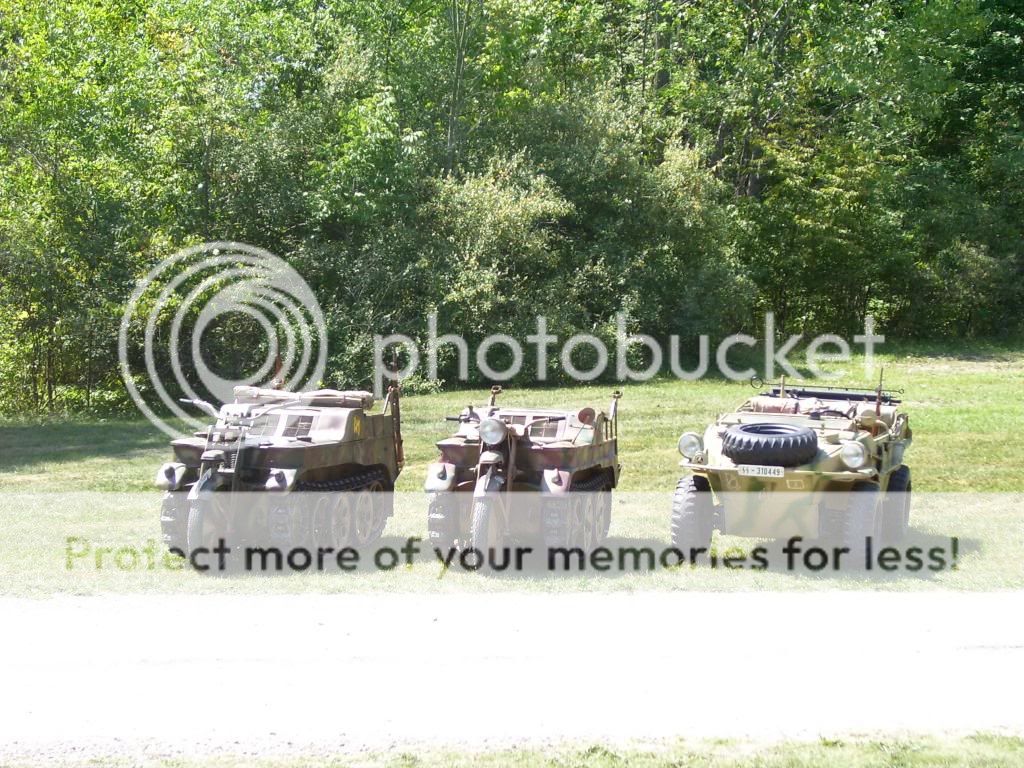
If the interest is there I would like to show the restoration, in detail, of my Kettenkrad 116714 which was built in December of 1944 and is said, but undocumented, to be a Battle of the Bulge veteran. Currently there are only two Kettenkrads in Canada, the one at the CWM and mine that has come a long way from the day a sad pile of expensive rust was deposited in my driveway. In N.America there is about a dozen or so Ketts and only about two hundred more "out there". As I was looking for a restoration project, I certainly got that and then some with my kett that had lived a hard life, been abused to no end, and was at that fork in the road of being either 1. parted out or 2. restored and brought back from the grave. Traveling from Belgium to Texas and onwards to Ottawa the big day arrives when I see the vehicle that would take up the next three plus years of my life, and uncounted $$$, to make new again.
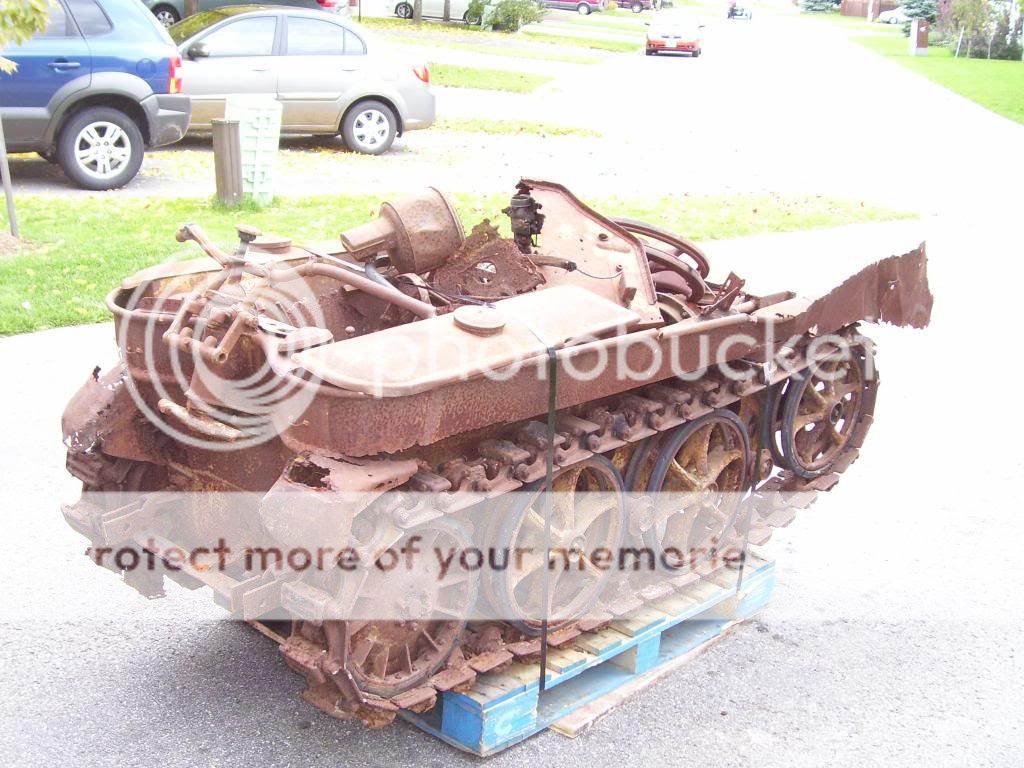
One of the first orders of business was to take stock of what all came with the kett as the seller sent a big box of "stuff" that he had been setting aside if he may have been thinking of restoring it but thought otherwise after seeing it
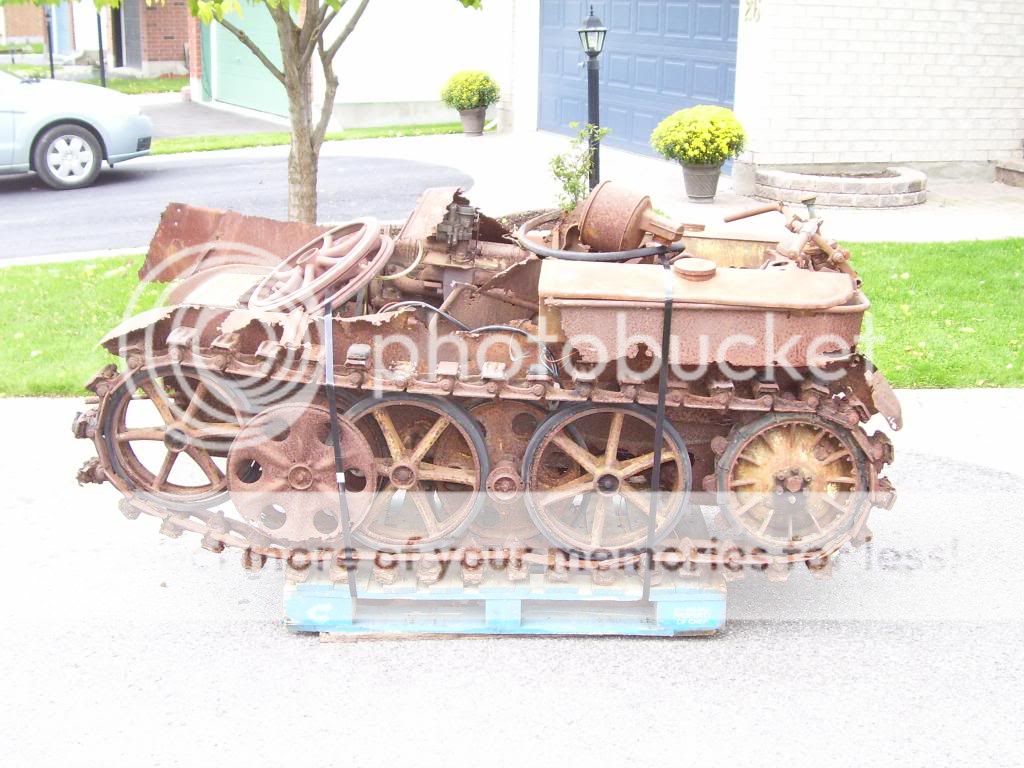
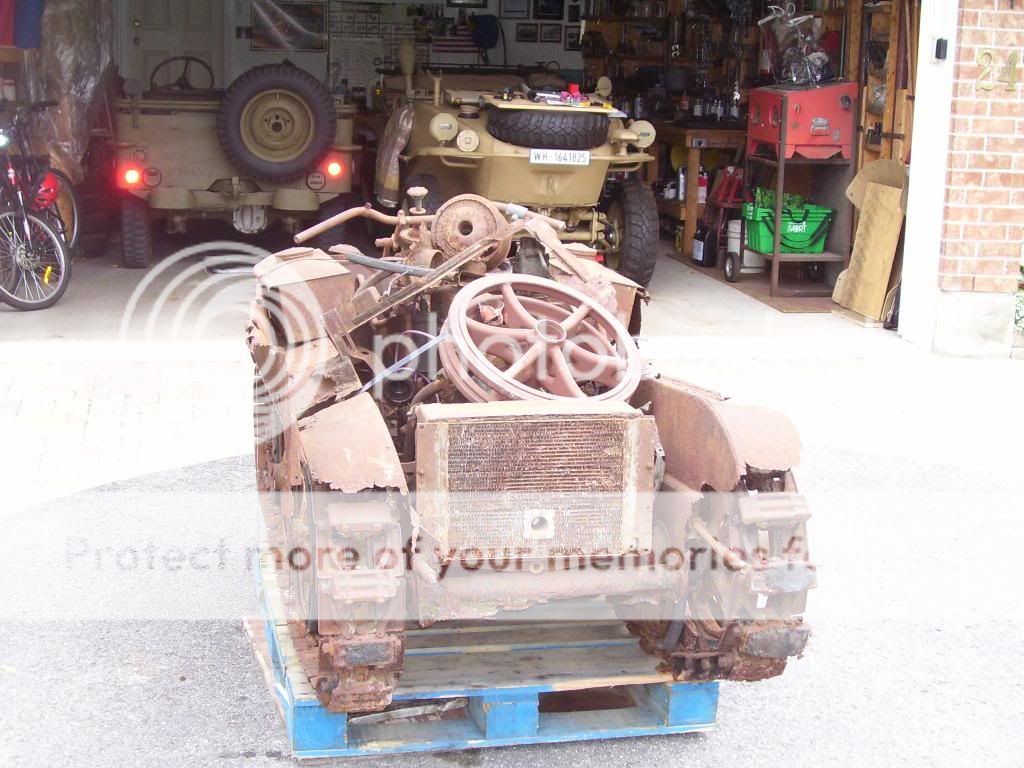
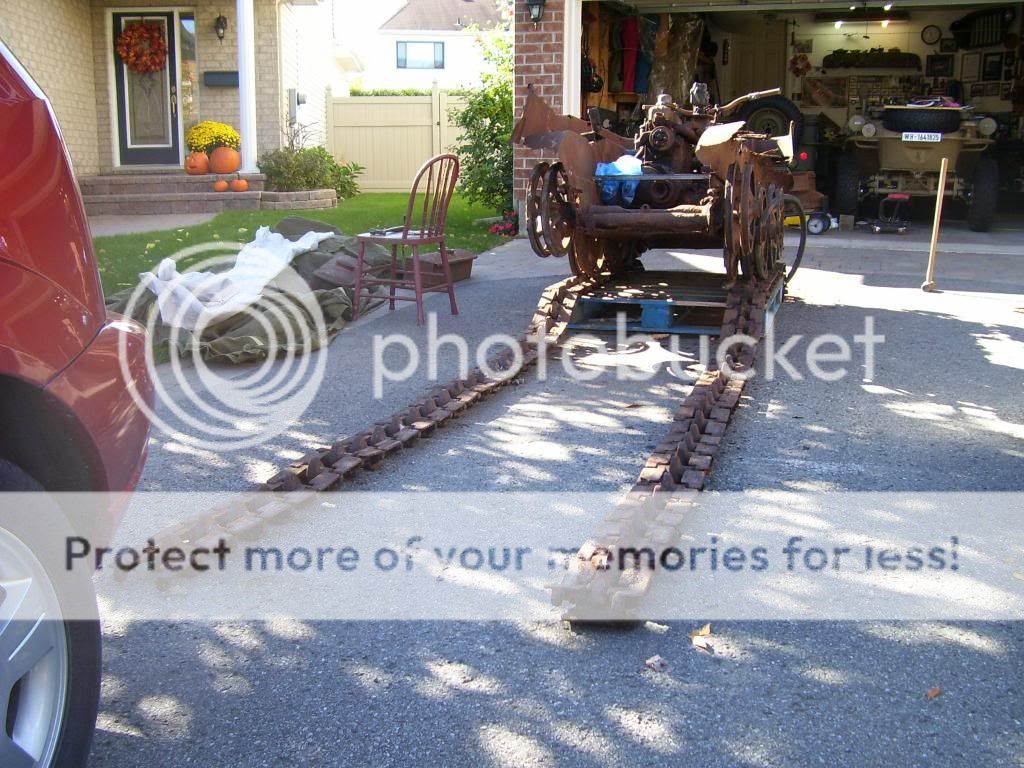
The next thing to do was break track so I could roll the carcass about, suprisingly it rolls like a dream on its road wheels and when I opened the hubs the grease looked new and even more importantly about thirty sets of bearings I would not need to buy. That was all the more amazing as the kettenkrad had been found abandoned by the Germans by a farmer post battle then converted into a little bulldozer like vehicle to keep a creek running free to drive a water wheel at a mill. Note the angle iron pieces crudely welded to the front tow hooks where a blade had been fitted.
Working on the track was trip down memory lane sound wise it it certainly brings one back to pounding Leopard Tank/Lynx or 113 track at least sound wise. Track rebuild will be the next installment.
Here is my Kettenkrad while it was in Belgium. Trust me it does not look anything like this now.
[youtube]jJUBuKEznOw[/youtube]
I just love the rusted panels flapping in the wind as its loaded on the trailer.
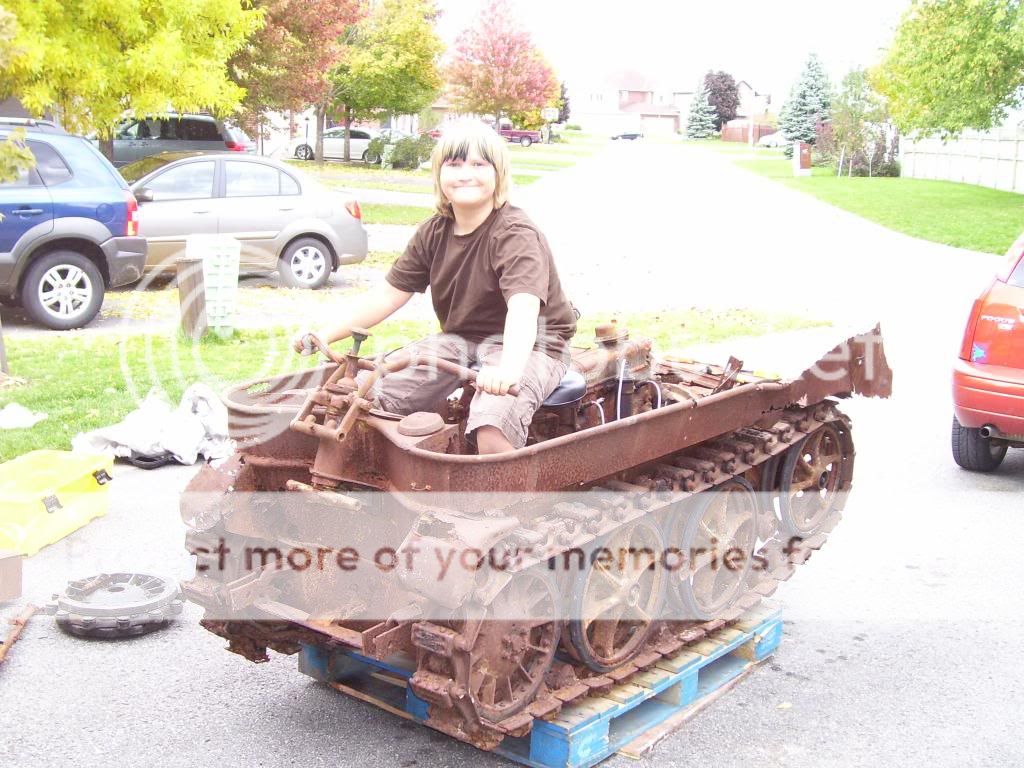
My helper (son), help generally boiled down to him sitting in the seat telling me what to do next.

If the interest is there I would like to show the restoration, in detail, of my Kettenkrad 116714 which was built in December of 1944 and is said, but undocumented, to be a Battle of the Bulge veteran. Currently there are only two Kettenkrads in Canada, the one at the CWM and mine that has come a long way from the day a sad pile of expensive rust was deposited in my driveway. In N.America there is about a dozen or so Ketts and only about two hundred more "out there". As I was looking for a restoration project, I certainly got that and then some with my kett that had lived a hard life, been abused to no end, and was at that fork in the road of being either 1. parted out or 2. restored and brought back from the grave. Traveling from Belgium to Texas and onwards to Ottawa the big day arrives when I see the vehicle that would take up the next three plus years of my life, and uncounted $$$, to make new again.

One of the first orders of business was to take stock of what all came with the kett as the seller sent a big box of "stuff" that he had been setting aside if he may have been thinking of restoring it but thought otherwise after seeing it


The next thing to do was break track so I could roll the carcass about, suprisingly it rolls like a dream on its road wheels and when I opened the hubs the grease looked new and even more importantly about thirty sets of bearings I would not need to buy. That was all the more amazing as the kettenkrad had been found abandoned by the Germans by a farmer post battle then converted into a little bulldozer like vehicle to keep a creek running free to drive a water wheel at a mill. Note the angle iron pieces crudely welded to the front tow hooks where a blade had been fitted.
Working on the track was trip down memory lane sound wise it it certainly brings one back to pounding Leopard Tank/Lynx or 113 track at least sound wise. Track rebuild will be the next installment.

Here is my Kettenkrad while it was in Belgium. Trust me it does not look anything like this now.
[youtube]jJUBuKEznOw[/youtube]
I just love the rusted panels flapping in the wind as its loaded on the trailer.
My helper (son), help generally boiled down to him sitting in the seat telling me what to do next.

Last edited:
























