The restoration of Kettenkrad 116714

This is an awesome thread.

One was to hand it to the Germans and their engineering (or maybe over engineering for some of the stuff they did, and do still). To answer your question the front wheel affected turns up to about 5 degrees from the center, after that the forks are connected to a pair of brake drums that make for tighter turns. The wartime German 3/4 tracks such as the Sd.Kfz 250, 251 and Demag D7 all used brake steering also, unlike the American half tracks that are more truck based. The kettenkrad could be operated with the front wheel removed (fork remains on) and just use track steering to turn. The girder style fork is pretty cool to watch while the kett is driving off road with it going up and down over bumps but the handle bars staying level.
 
Could the front wheel actually steer that thing? It seems like such a weird combo but I guess it worked for the Ski Doo Alpine.
[youtube]VCEw08_5pA4[/youtube]
This video shows the fork and steering, something else is watching a kettenkrad track is almost hypnotic with everything swirling around, it is very cool to see.
 
I'm a little surprised they didn't put some fuel or oil tanks between the housings on the floor, but I guess that would have required pump and valves and it has gravity feed only as designed?

Here's Smiling Albert having a ride near Monte Cassino. The paras must have been well supplied with Kettenkrads since they were air-portable.

kess.jpg
 
I'm a little surprised they didn't put some fuel or oil tanks between the housings on the floor, but I guess that would have required pump and valves and it has gravity feed only as designed?

Here's Smiling Albert having a ride near Monte Cassino. The paras must have been well supplied with Kettenkrads since they were air-portable.

kess.jpg

Fuel tanks inside the vehicle as you describe, never happen as there is no useable space as you may think there is. The inside of the body is packed pretty full and i joke that its like having an entire car folded and stuffed into the trunk of another car. Ketts have a fuel pump and two 21L tanks. Of course Albert is smiling he is in a kettenkrad ! (which looks pretty well loaded with staff members)
Fallschirmjager had them but I doubt no more or less then any other infantry formations, one thing the FJ did was to cut the fenders at an angle and the rear hand holds off so the side loading geometry on to a Ju52 could be done.
http://www.eucmh.com/2012/10/12/sdkfz-2-kleines-kettenkraftrad-hk-101/sdkfz-2-kettenkrad-001/
 
Well I better get posting something while I am searching for the AWOL SD card showing the install of the drivetrain, something unsettling seeing your rare, original, expensive drivetrain six-eight feet up in the air. Man I got to find that damned card, till then I can fill you folks in on the finer details of kett restoration. To that end I shall lay out the late war kettenkrad Notek tactical lighting system.
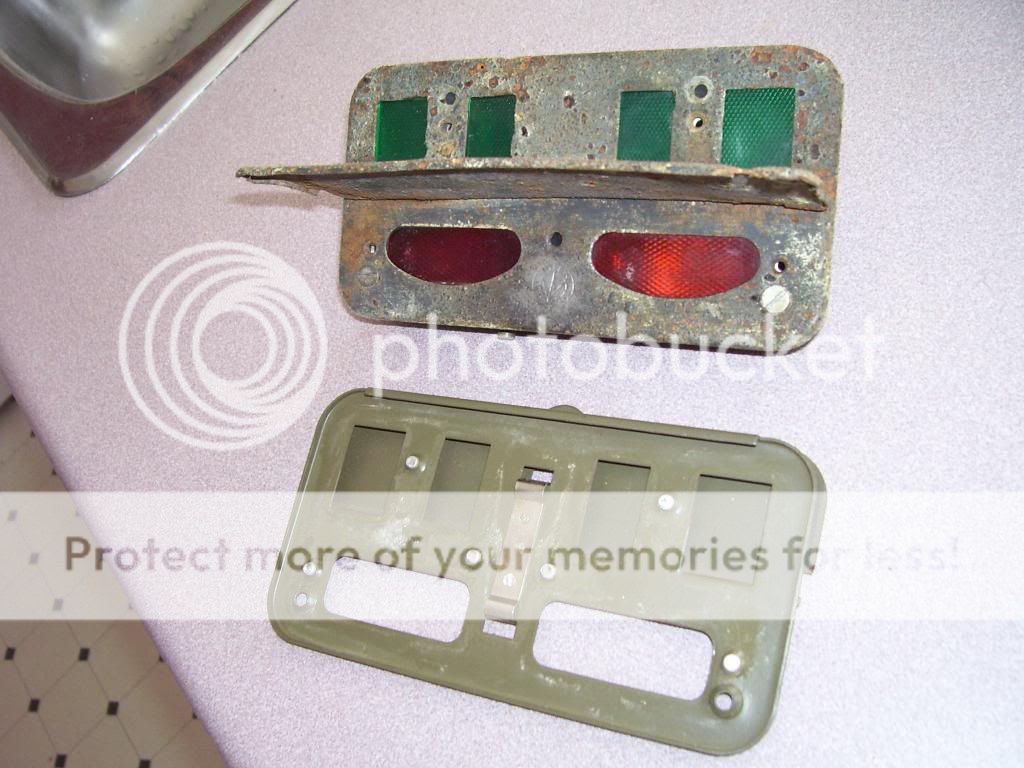
The kettenkrad in its early years had a two lighting systems, tactical-with low watt bulbs and shielded lights and non tactical with "white" light headlight, tail and marker lights as one would find on a motorcycle. As the war dragged on the need to simplify the manufacture led to a number of items being deleted as they where not really needed. The non-tactical light system was one of these items and the Notek light where kept. Original Noteks are crazy expensive and one day I was looking at my crappy Czech post war version of a German Notek and it dawned on me that if I the outer piece I could mate them and make a workable copy. A fellow in Russia had what I needed and so my project was to make it look and work a true wartime rear Notek.
Top is CZ lamp and rusty (go figure, more rust) correct Notek.
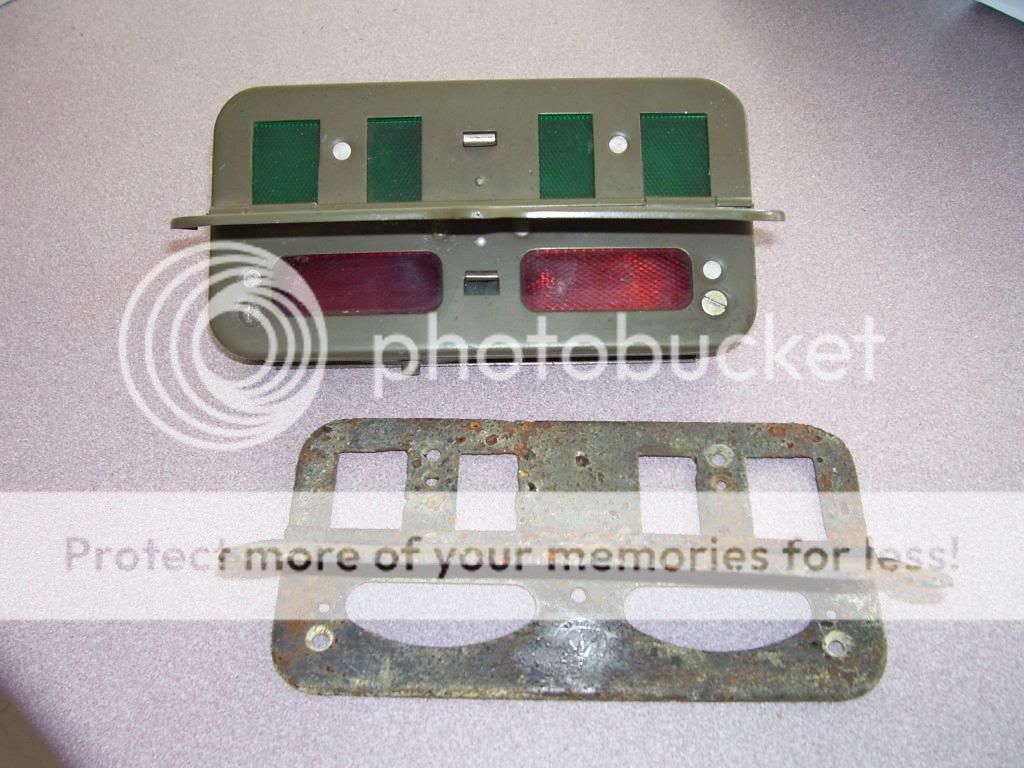
Gutting the CZ lamp gives you lots of great stuff for the conversion such as clean lens, backing piece, rubber gasket. I was suprised at how close the internal bits matched the German wartime stuff that I| had.
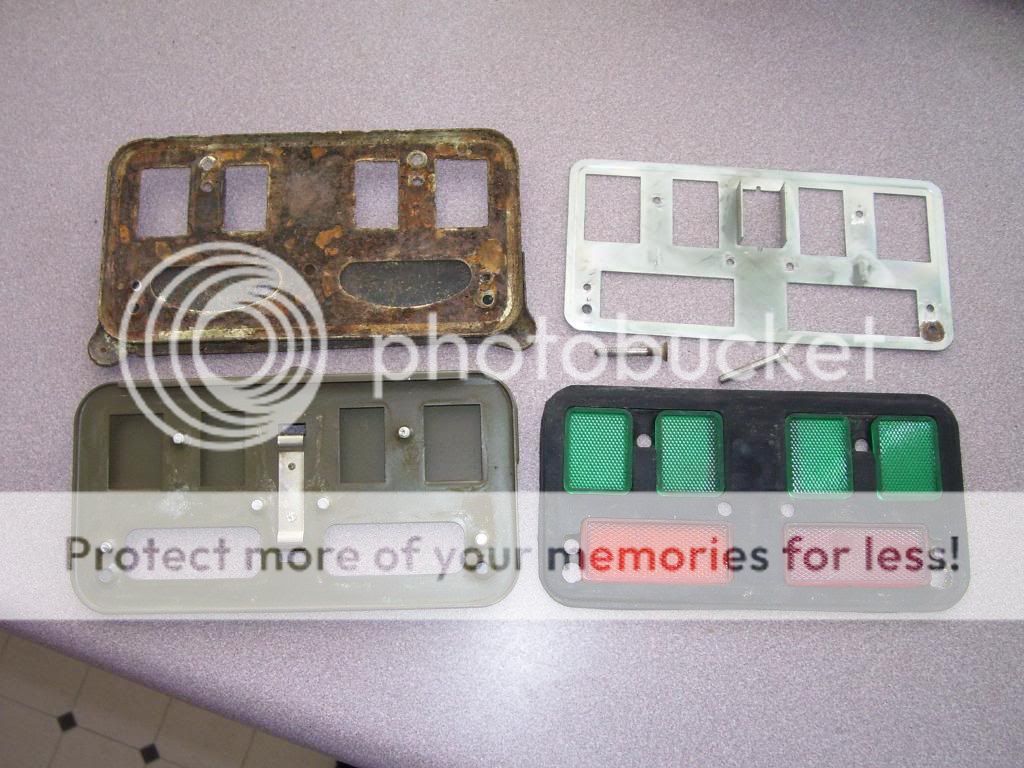
Face starting to come together, note the Notek symbol on the shiny area.
Using JB Wel I filled in the pitting after bead blasting the cover then primed and painted.
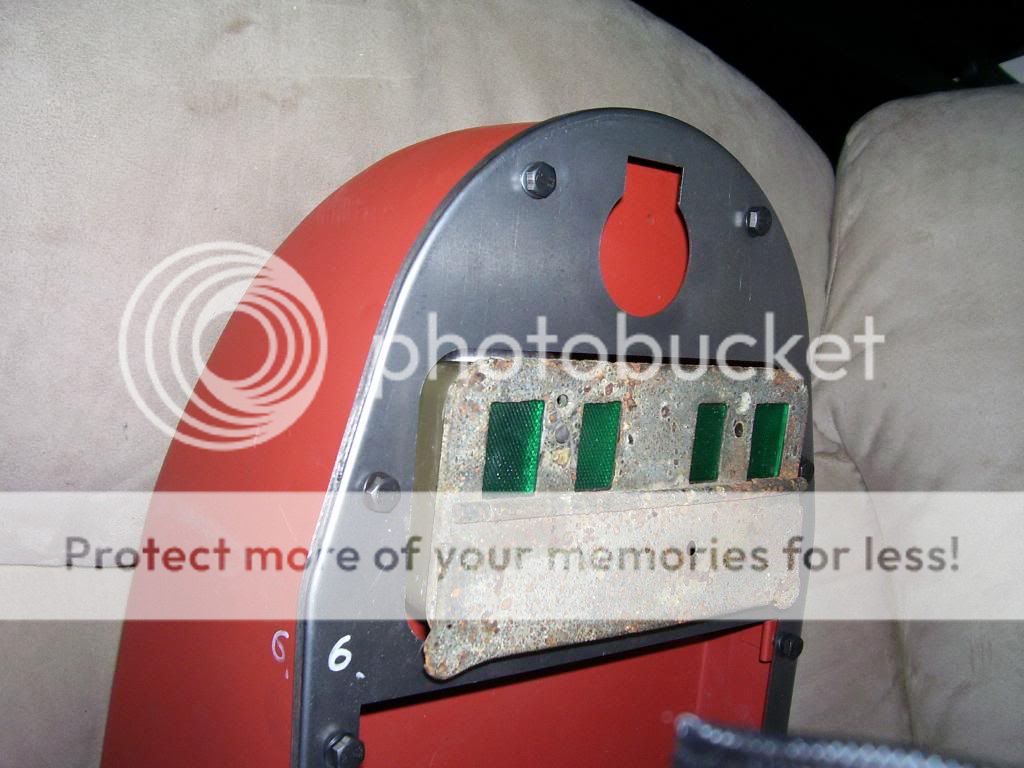
There are two types of rear fixtures early ketts had a very angle fixture and late ketts had a more "tombstone" shaped fixture. What you see here is the late tombstone from the Czech Rep, trailer power socket from France, CZ made rear light with Russian sourced Notek face. The license plate is double stamped with 60mm wide Wehrmacht Registration stamps (some people insist in calling that a "Feldpost" stamp, trust me its not a FP stamp).
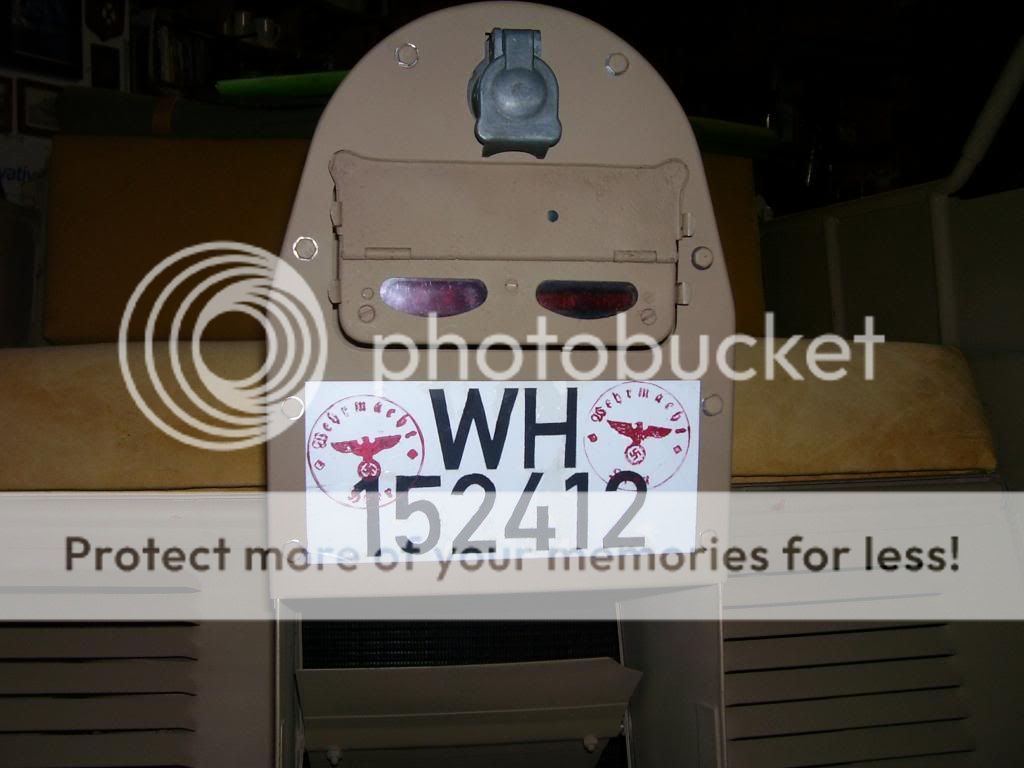
^ And looking thru the duct you can just see my 600 Euro radiator.
The front Notek casts a low, dim, shielded light on the ground in front of the vehicle, these lamps where a common German item and versions where made postwar but less the stamped in Notek symbol. A point of pride is I must have the only three Notek stamped bolts in Canada, no different then finding a rare or unique gun part or marking.
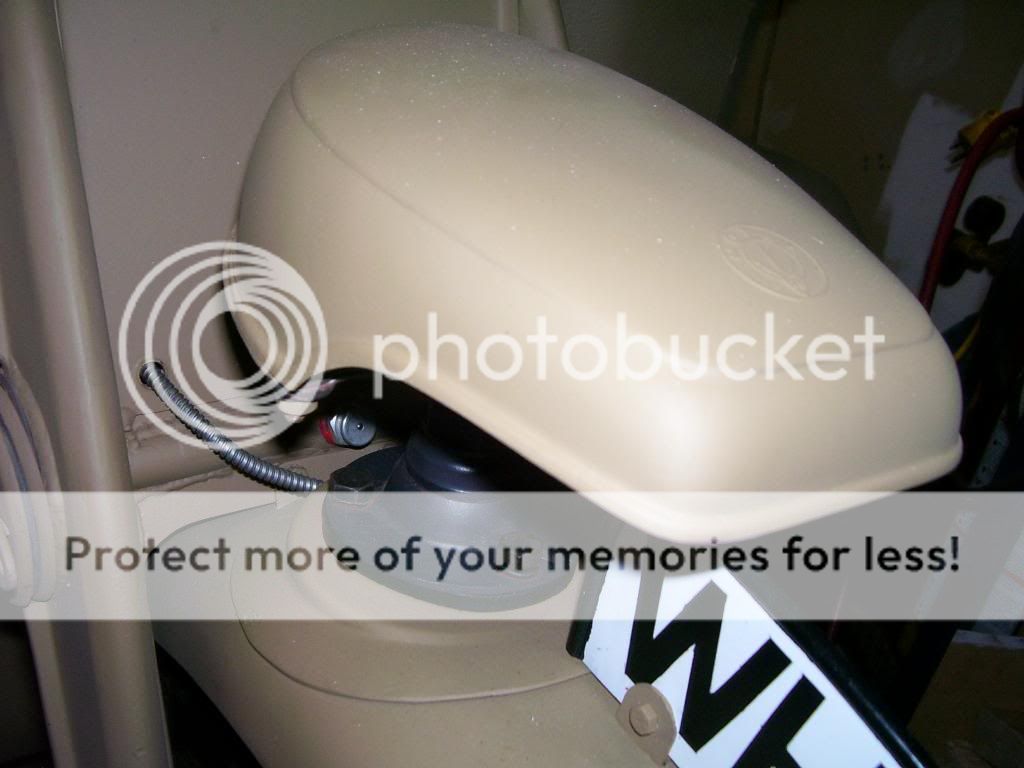
Front plate with 60mm stamp (I smeared it to give it a look less then show room perfect as a driver tasked would do). Where have you seen that number before??
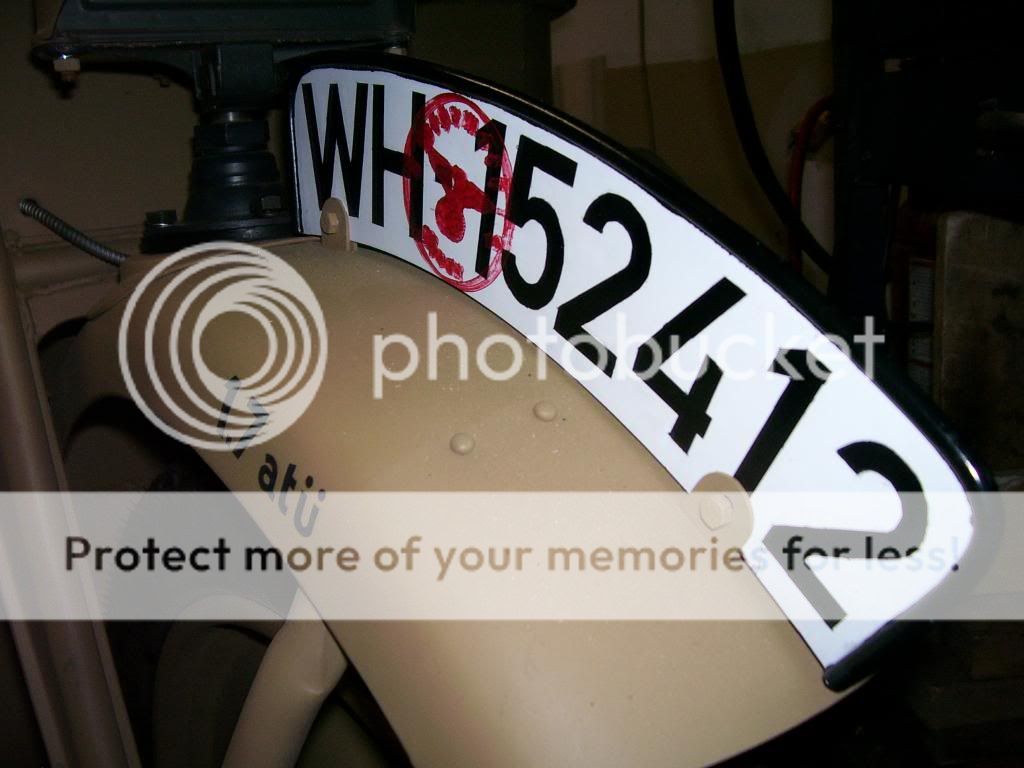
Saving Private Ryan, it was a toss up between the plate number worn by the motorcycle riden by Steve McQueen (who apparently owned two kettenkrads) in the movie The Great Escape or the SPR kett which got the nod as it was a Kettenrad Vs a Murdercycle. There is a pretty interesting story behind Steve McQueen and the Great Escape ride BTW.
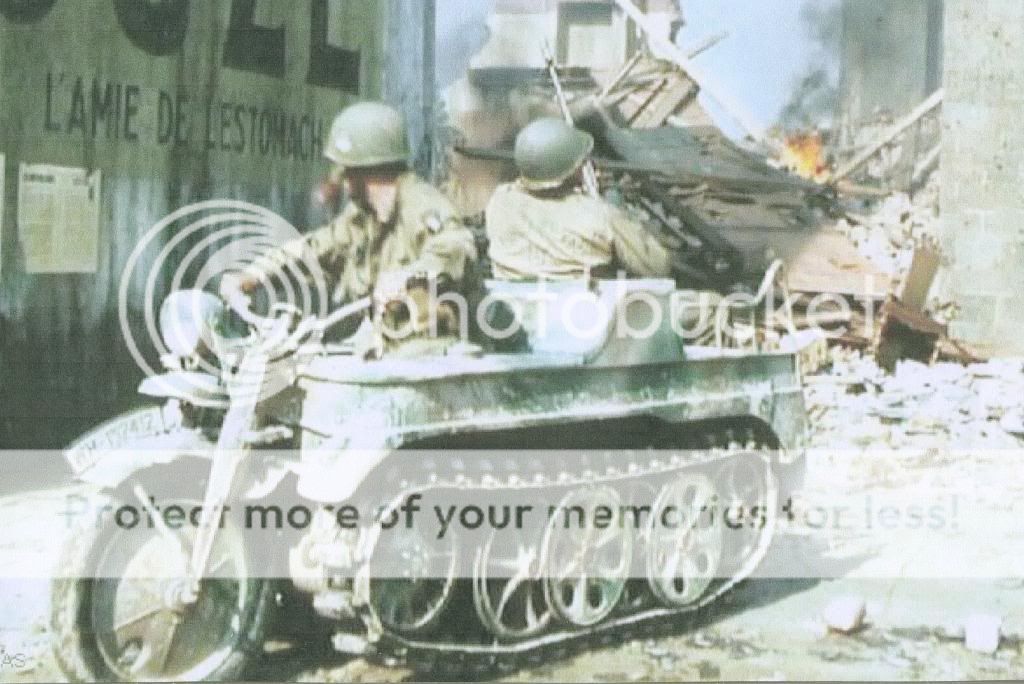
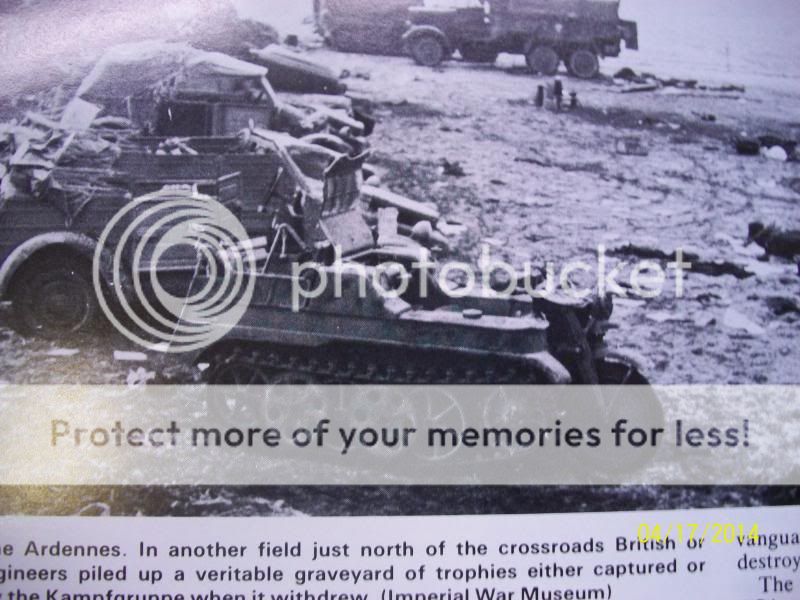
I had long been searching for ANY pictures of Battle of the Bulge kettenkrads and just cannot find any showing late kettenkrads either participating in the action or post battle at a Captured Equipment Collection Point.

 
Last edited:
Battle of the Bulge Then and Now p. 354
Near Celles Crossroads, Celles Belgium, December 24/25 1944
Likely Kampfgruppe von Cochenhausen
100_6088_zps03597d3d.jpg


Sorry for the crap pic, but I don't have a scanner.
 
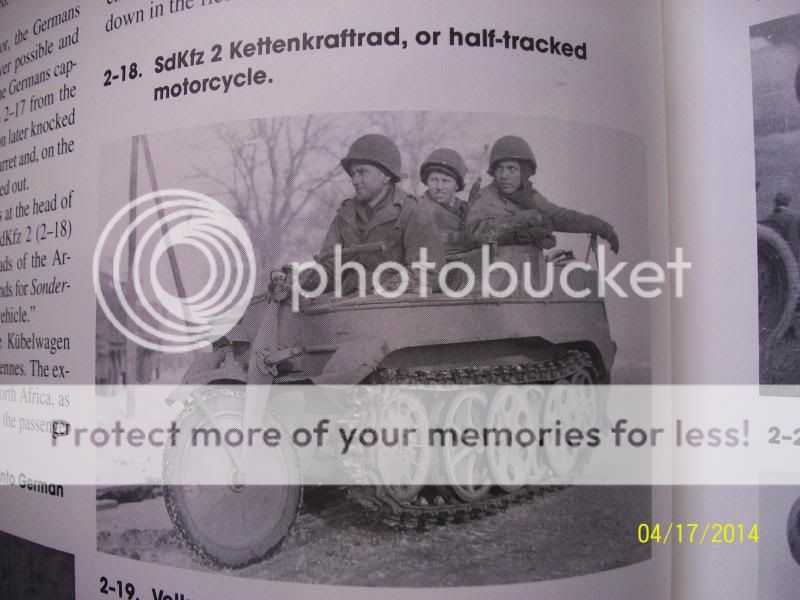
^^(169) I have seen that picture many times but thats a slightly earlier version of my kettenkrad as it has the side "fender extensions" that run the length of the vehicle. Oh to have a time maschine. Of note is the hanging braided hand holds on the passenger hand rails, totally not needed but they where still making these and equiping vehicles with them, eventually they to where deleted. Picture in 170 (seen again) is really, really close to my late 44 kett but still has the fender extensions, this kettenkrad at 170 is probally made in the summer or fall of 1944.
 
It's funny, eh, a 500 page book on the Ardennes Offensive and one pic of a kett.

Bazillion pics of Panthers from every angle under the sun, but one of a kett.

 
It's funny, eh, a 500 page book on the Ardennes Offensive and one pic of a kett.

Bazillion pics of Panthers from every angle under the sun, but one of a kett.
True, taking it one step further there are far more pictures of early wartime use of the kettenkrad then towards the end. It seems there was a marked drop off from .the summer of 1944 till the end in May 45. I just stepped in from running up my Schwimmwagen, last week the thing was starting on first hit of the button, yesterday it totally refused to fire, today its happy again. Ahh, the "exquisite misery" of owning old vehicles.
 
Fear not its only paint and the opposite side is crisp. One thing is that often a vehicle being restored today will be looking better then when it left the factory. Paint runs galore are the way it should look. There is a great picture showing schwimmwagen bodies hanging to dry after they where dipped in paint and you can see runs going upwards. Ambi-Budd, the company who made the bodies till the dies where moved to Wolfsburg, had asked VW if they could drill more holes in the body panels to drain paint out of captive areas after dipping. VW said NEIN, there are eight paint drain holes and no more allowed. I can, with a bright light, point out numerous paint runs going upwards on the CWM 166 which are all totally correct.
 
Cool! I really love all the knowledge you have shared about the Kett with all of us.
Fear not its only paint and the opposite side is crisp. One thing is that often a vehicle being restored today will be looking better then when it left the factory. Paint runs galore are the way it should look. There is a great picture showing schwimmwagen bodies hanging to dry after they where dipped in paint and you can see runs going upwards. Ambi-Budd, the company who made the bodies till the dies where moved to Wolfsburg, had asked VW if they could drill more holes in the body panels to drain paint out of captive areas after dipping. VW said NEIN, there are eight paint drain holes and no more allowed. I can, with a bright light, point out numerous paint runs going upwards on the CWM 166 which are all totally correct.
 
Fear not its only paint and the opposite side is crisp. One thing is that often a vehicle being restored today will be looking better then when it left the factory. Paint runs galore are the way it should look. There is a great picture showing schwimmwagen bodies hanging to dry after they where dipped in paint and you can see runs going upwards. Ambi-Budd, the company who made the bodies till the dies where moved to Wolfsburg, had asked VW if they could drill more holes in the body panels to drain paint out of captive areas after dipping. VW said NEIN, there are eight paint drain holes and no more allowed. I can, with a bright light, point out numerous paint runs going upwards on the CWM 166 which are all totally correct.

Enjoyed reading the latest 'issue' of the Kett build and seeing the pics. As with all military vehicle restorations, the level of detail & finish is dictated by the owner, however it amazes me the number of restorations that are made as if they are entering the Palm Springs concours d'elegance...Its just not how these vehicle's were produced.

I had a guy looking over the jeep last week. He was checking (with one eye open) the lines down each side of the vehicle..WTF..Its not a 57 Bel-Air...and I'll paint it whatever f'ing colour I want..:)
 
Three days, no updates. If my withdrawal symptoms get any worse, I'll be the shaky guy you find in your garage at 3 AM tearing stuff apart looking for the lost SD card.

I have to know, man - what happens next!
 
Back
Top Bottom