All shotguns, regardless of age, maker, or value, will better retain value and function if properly cared for and maintained. In this thread, I encourage veteran shooters, collectors, and those who discover excellent new products to share with all of us their learnings and discoveries in this regard. I’ll kick things off with a couple of examples that may seem obvious, but I don’t see them widely adopted in the field or at the range.
The first is the use of a gun case. Hard cases fitted to the specific make/model are the best option, but any hard case that can be adapted to fit (without the shotgun rattling around inside) will suffice. Soft-sided cases are the next best thing, as any case is better than no case. With all cases, check to ensure that padding and fixtures are in good condition so that the inside of the case doesn’t have surfaces or fixtures that are hard or abrasive. If the gun is broken down in order to go into the case, care must be taken to use dividers to keep the various pieces from contacting each other during handling and transport. Lacking other options, wrapping them in towels will do the trick.
The second example involves bluing, case colours, stock and other finishes. It is common practice to rate the bluing condition when describing guns that are for sale or of interest to collectors. Tips on how to protect and preserve metal and wood finishes are not so common.
Two of the sometimes overlooked substances that degrade bluing are finger/hand oils and blood. Simply handling your guns without wiping off finger prints and palm prints afterward will cause bluing to fade and diminish its rust protection. Blood is even worse. Left unchecked, blood will burn through bluing and some other metal finishes. Whether the blood comes in contact with the metal surface from the game that was hunted or from the hunter/shooter’s minor injuries, it must be removed as soon as possible. The best solution is to wash the affected area with lots of water immediately. Water doesn’t harm bluing as long as it isn’t left to linger on the metal for weeks and months.
The best solution for removing finger/hand prints is to thoroughly wipe all exterior surfaces, including case colours and wood finishes, with a silicone-infused cloth. If these are new to you, they can be purchased at most sporting goods stores. They’re inexpensive and they last for decades. In my entire hunting and shooting career, I have purchased only three. All three are still in service. They get a little dirty and ratty after years of use, but still do the job well. For maximum protection and best results, wiping down the gun should be done at the end of every day the gun has been handled, and last thing before returning it to the gun safe. Use rags or gloves to avoid touching the gun with bare hands while putting it away.
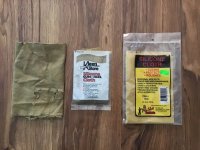
In the photo below, the one on the left is 35 years old. The one in the middle is roughly 20 years old. And, the one on the right is about 10 years old. They all work great. I only bought 3 so I could have one handy all the time without having to search for where I last left it.
The first is the use of a gun case. Hard cases fitted to the specific make/model are the best option, but any hard case that can be adapted to fit (without the shotgun rattling around inside) will suffice. Soft-sided cases are the next best thing, as any case is better than no case. With all cases, check to ensure that padding and fixtures are in good condition so that the inside of the case doesn’t have surfaces or fixtures that are hard or abrasive. If the gun is broken down in order to go into the case, care must be taken to use dividers to keep the various pieces from contacting each other during handling and transport. Lacking other options, wrapping them in towels will do the trick.
The second example involves bluing, case colours, stock and other finishes. It is common practice to rate the bluing condition when describing guns that are for sale or of interest to collectors. Tips on how to protect and preserve metal and wood finishes are not so common.
Two of the sometimes overlooked substances that degrade bluing are finger/hand oils and blood. Simply handling your guns without wiping off finger prints and palm prints afterward will cause bluing to fade and diminish its rust protection. Blood is even worse. Left unchecked, blood will burn through bluing and some other metal finishes. Whether the blood comes in contact with the metal surface from the game that was hunted or from the hunter/shooter’s minor injuries, it must be removed as soon as possible. The best solution is to wash the affected area with lots of water immediately. Water doesn’t harm bluing as long as it isn’t left to linger on the metal for weeks and months.
The best solution for removing finger/hand prints is to thoroughly wipe all exterior surfaces, including case colours and wood finishes, with a silicone-infused cloth. If these are new to you, they can be purchased at most sporting goods stores. They’re inexpensive and they last for decades. In my entire hunting and shooting career, I have purchased only three. All three are still in service. They get a little dirty and ratty after years of use, but still do the job well. For maximum protection and best results, wiping down the gun should be done at the end of every day the gun has been handled, and last thing before returning it to the gun safe. Use rags or gloves to avoid touching the gun with bare hands while putting it away.
In the photo below, the one on the left is 35 years old. The one in the middle is roughly 20 years old. And, the one on the right is about 10 years old. They all work great. I only bought 3 so I could have one handy all the time without having to search for where I last left it.
Last edited: