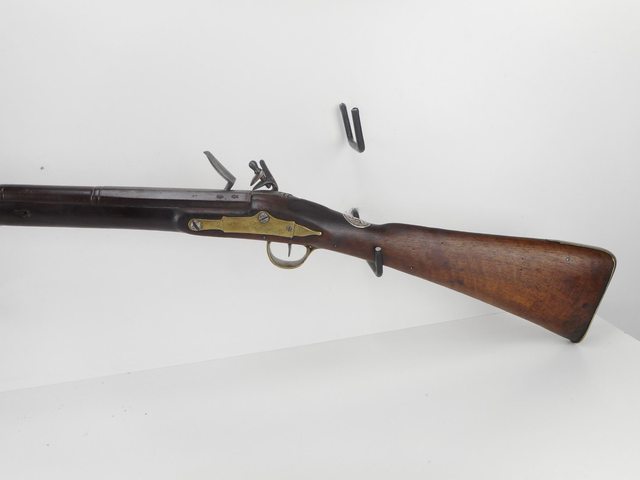
Trade Gun 1871 Barnett

jpc

CGN Ultra frequent flyer
Rating - 100%
692   0   0
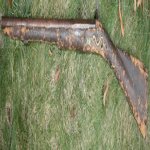
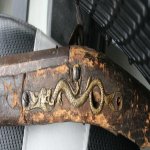
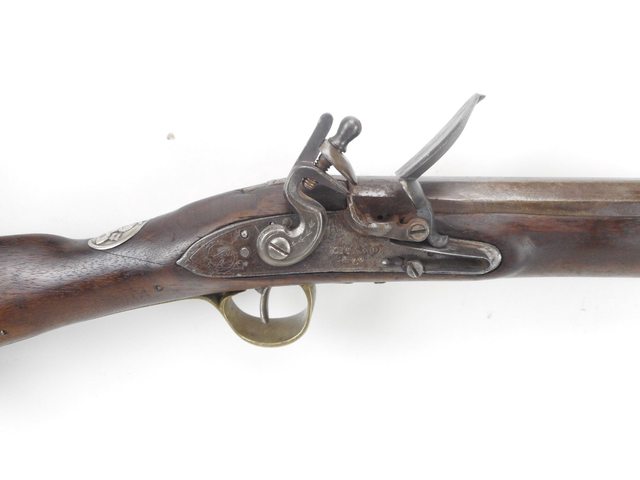
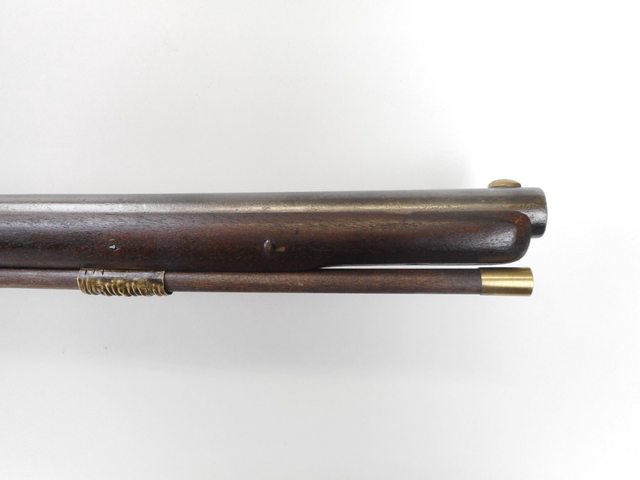
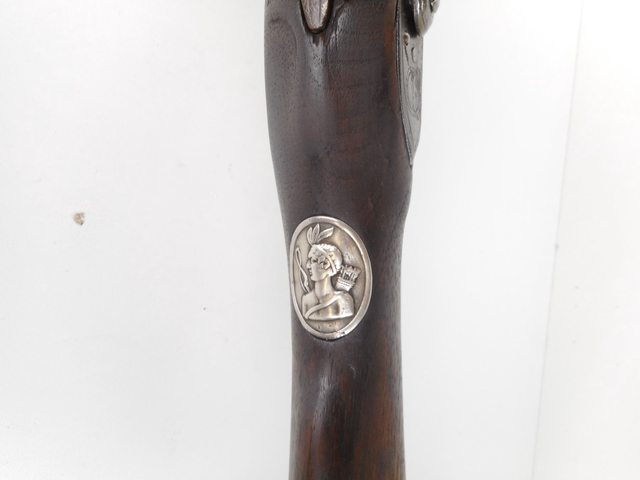
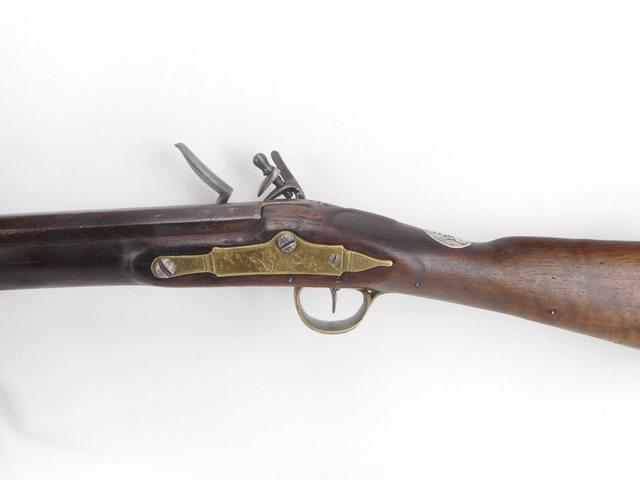
Someone took a hacksaw to this ole girl when robbing parts. The lock screws were cut, but for some reason they were unable to get the lock and serpent off.

Had her soaking for a few months and was able to get the screw shafts unseized. Lock is currently being held on with 1873 Winchester tang screws. (they fit)

take care
Trade - Barnett 1871 007.jpgTrade - Barnett 1871 008.jpgTrade - Barnetrte 1871 003.jpg
 

Attachments

  • Trade - Barnett 1871 007.jpg
    Trade - Barnett 1871 007.jpg
    52.7 KB · Views: 328
  • Trade - Barnett 1871 008.jpg
    Trade - Barnett 1871 008.jpg
    50.4 KB · Views: 327
  • Trade - Barnetrte 1871 003.jpg
    Trade - Barnetrte 1871 003.jpg
    53.5 KB · Views: 315
Last edited:

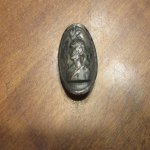
I have the remains of a Chief's Gun in even worse condition. The little silver thumb piece is excellent, though.
 
Chief's Gun thumb piece medallion. Best surviving part of a wreck. ca War of 1812.

Chief's Gun 003.jpg
 

Attachments

  • Chief's Gun 003.jpg
    Chief's Gun 003.jpg
    103.9 KB · Views: 241
I didn't realize the trade gun flintlocks were made into the 1870's. Is it a HBC gun. I'm a greenhorn but interested in these guns a lot. Looks pretty good for a 150 years old! Better than any of us will look at the same age.
 
I didn't realize the trade gun flintlocks were made into the 1870's. Is it a HBC gun. I'm a greenhorn but interested in these guns a lot. Looks pretty good for a 150 years old! Better than any of us will look at the same age.

I believe HBC Trade guns were made and sold up to the 1910's or 20's...
 
I’ve seen one dated to the late 1890s. Belgium also produced a large number for the North American trade, right up till around 1900. Not all were that large in bore size. It seems most repros are in the .58-.62 size range. But I’ve seen a number of originals with dainty little barrels, around .54 cal.
 
MC does that apply to flintlocks being made to the early 1900's or just percussion guns?

Tula if I was to build it would be .54/28ga for the sake of my shoulder. I own a 54 Lyman flinter and it is plenty of kick at both ends.
 
There were percussion trade guns made after 1900, although they had been pretty much replaced by the Imperial single shot and double barrelled shotguns, as far as muzzleloaders were concerned. Flintlock guns had been phased out of regular stock a generation earlier. ML shotguns were being made for the HBC into the mid 1930s. Cartridge guns were standard trade items when they became available everywhere else.
 
MC does that apply to flintlocks being made to the early 1900's or just percussion guns?

Tula if I was to build it would be .54/28ga for the sake of my shoulder. I own a 54 Lyman flinter and it is plenty of kick at both ends.

The later trade guns were almost always 24ga. There are exceptions, but that was the most common size for NW guns and the single and double shotguns.
 
Anyone see the one that went at Switzer auction yesterday?

Went for more than $3500

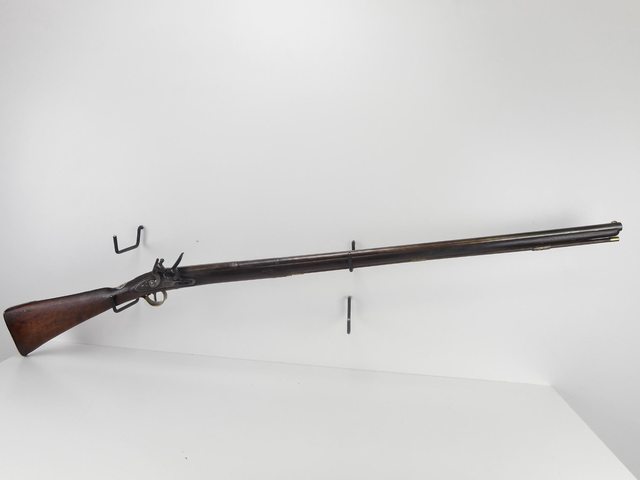
Description from auction

KETLAND , MODEL: CHIEF TRADE GUN , CALIBER: 65 CAL FLINTLOCK, KETLAND IS A KNOWN MAKER OF FIRST NATIONS TRADE GUNS WHO PRODUCED FIREARMS FOR THE HUDSON BAY COMPANY IN THE EARLY 19TH CENTURY. BORE IS GOOD WITH LIGHT PITTING. BRASS BLADE FRONT SIGHT. 2/3 ROUND 1/3 OCTAGONAL BARREL. MARKED LONDON WITH VARIOUS PROOF MARKS. FAINT POSSIBLE TOMBSTONE FOX LOGO BEHIND THE LONDON MARK ON BARREL. FULL LENGTH STOCK. WOOD AND BRASS RAM ROD. BRASS BUTT PLATE AND TRIGGER GUARD. TRIGGER GUARD IS ENGRAVED WITH ARROWS. SILVER CHIEFS HEAD MEDALLION ON TOP OF WRIST. BARREL IS HELD ON WITH THREE PINS AT THE FOREND. SMALL CRACK IN THE WRIST. METAL FINISH IS SILVER GREY. SOME DINGS AND MARKS IN THE WOOD. ACTION: FLINTLOCK , BARREL LENGTH: 37", CONDITION: 6/10 ANTIQUE, STOCK # , SERIAL # N/A, CLASS: CANADIAN CLASS ANTIQUE

SPwON1bl.jpg

nlVonHgl.jpg

FLCUNMul.jpg

oAJiCaql.jpg

ShiQE2pl.jpg

YnrxiqSl.jpg
 
Last edited:

Looks very much like the one I worked on about a year ago. It needed a new tumbler and some minor lock work to get functioning properly. It was not a re-conversion and as I remember had a bridle-less lock, also was in .54 cal.
 
I went back to the auction site, and blew up the photo with the best lock detail. The touch hole is remarkably clean and corrosion free, compared with adjacent areas. The ####, frizzen and frizzen spring colours don't look quite right. The top jaw and screw are obvious replacements. The frizzen screw has a very clean, crisp slot. At the very least, there are replacement parts. There is no crown broad arrow under the pan. Maybe there never was one, maybe it disappeared with a new pan being welded in. Inspection of the actual gun in good light would be necessary, along with inspection of the inside of the lock, and barrel with lock removed.
The lock is bridled inside and out, so it isn't the gun you worked on.
I may be wrong, but I am very suspicious. With a gun in that price range, it should be right.
 
Last edited:

Looked at an old CJAC Journal which talked about these. The author indicated...

Of course these guns were originally flintlock but most have been converted to percussion. The lock-plates bear the names of numerous different
makers but all have the same decoration - a boar's head and hunting horn. The fancy brass side plates and trigger guards have an odd bow and
arrow engraving and the boar's head and hunting horn appear again on the top of the butt plate. The distinguishing feature, however, is a silver medallion,
with the head of an Indian, set into the top of the stock just back of the barrel tang.


Also in the article..

"The Northwest Gun" by Charles E. Hanson. This states as follows:

"Though not in any sense a trade gun, the light Indian muskets given out as diplomatic inducements by the British government have special
interest for the trade gun collector. It is believed that many of these guns were distributed to allied tribes in the years just preceeding the
War of 1812. Specimens seem to vary considerably in quality but general makeup is quite uniform - barrel of trade fusil style and size, engraved
brass guards and butt plates of sporting style, fancy engraved brass side plate, flintlock with crown and broad arrow and stamping of boar's
head with hunting horn, usually full stocked but not always, silver medallion with bust of turbaned and feathered Indian on top wrist of
stock. A good example of this type is... stamped with Crown and broad arrow denoting Crown ownership and "HM" for "His Majesty".
Lock is stamped "Ketland Walker & Co.". ... other known makers include Morris, and Ely. Some specimens of this type have "fox-in-
circle" marks and a few have been encountered with both sets of markings. These last were evidently distributed by Company officers."
 
Back
Top Bottom