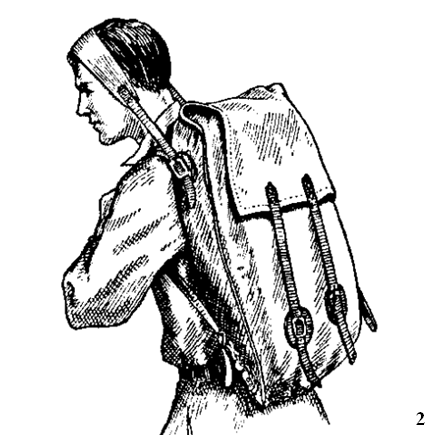
Trapper Nelson pack board.

Butcherbill

BANNED
CGN Ultra frequent flyer
GunNutz
Rating - 100%
39   0   0
Does anyone have or use one? I’ve been looking around at pack frames and while light weight they are all really bigger than I want, I want one that’s not super tall as I’m hunting close to home for the most part. I’m not hiking in lots of gear and want to keep the amount of gear on my back to a minimum yet still have the ability to pack out quarters easily.

I have a good condition Trapper Nelson pack board, unfortunately without the bag but I have an idea of how to modify it to strap my med sized pack with all my gear to it. I’m curious how much weight it can carry and if anyone has enjoyed using them. It’s exactly the size I had in mind and it’s light as hell, the shoulder straps and leather buckles are all in great shape. Was thinking of oiling the leather parts and waxing the canvas to waterproof it. I’m going to attach 3 web straps and quick release buckles to be able to strap my pack or game to it, seeing as it’s not complete and I doubt I’ll find a bag for it easily I have no concern with permenantly modifying it to suit my use.


jPY8l3k.jpg

6gEevgk.jpg
 
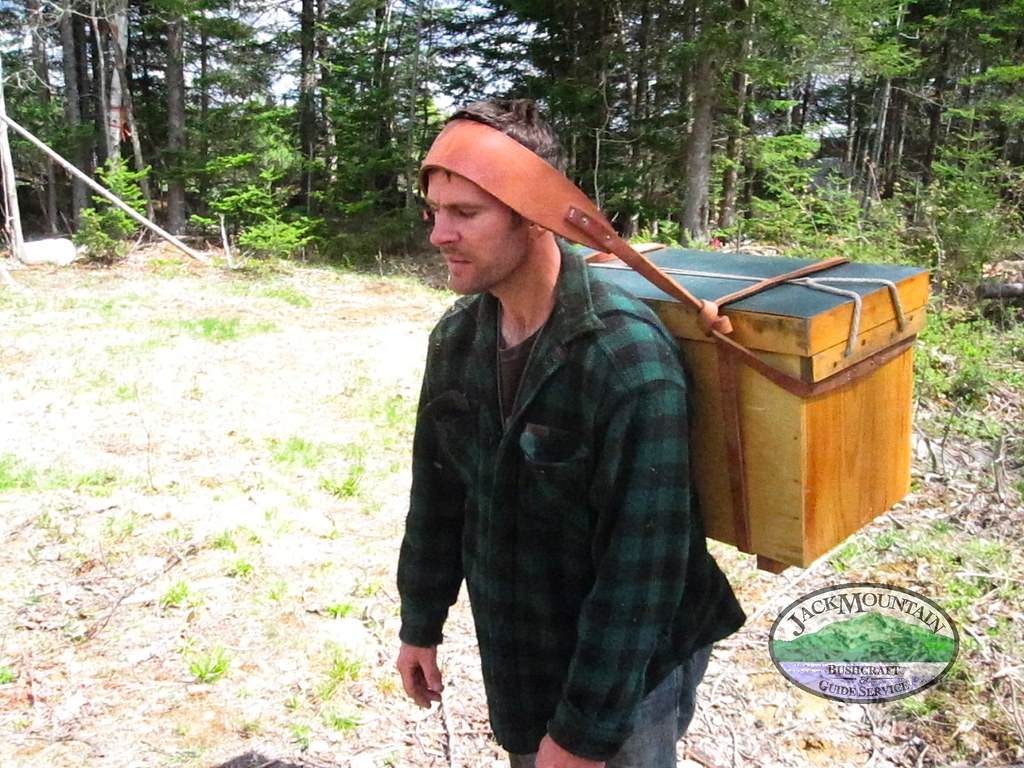
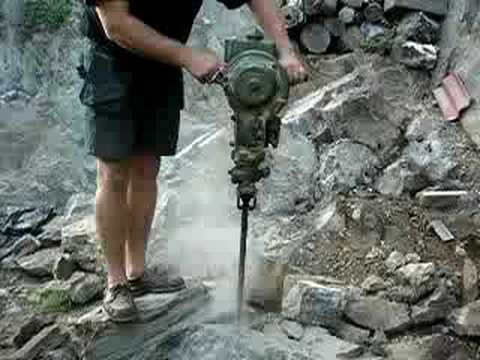
I've carried 75 lb Wajax fire pumps and 80 lb Atlas Copco pluggers on Nelsons. IMHO they are useless without a Tumpline to take the weight off of the shoulder straps.

24-Mar-15.png


4682083979_f74567f063_b.jpg
 
Last edited:
Trapper Nelaon's are what I used to haul bait when I was guiding bear hunters in NorOnt... I had half a dozen of them from a timber cruising job as a young guy. Great packs, not easy to get on when loaded top heavy, watch for bruised hips from the frame stave! ;)
 
If you want a smaller pack that has hauling capability check out the mystery ranch pintler or pop up series. Pricey but you'll never have to buy another one. Rampart has a good deal on the pintler right now. I ordered it and a daypack lid for a little extra capacity.
 
You have to know how to use it properly.

https://www.theatlantic.com/technology/archive/2017/08/tumplines/537306/

Methods of “head carry,” or weighting a load on top of the head, are standard across the developing world. The best-known images of the technique show African women trekking miles to and from water sources. Despite 10-gallon buckets balanced precariously above them, their backs are straight as a rod and their chins lifted. Often, heavy loads aren’t only carried on the heads, but suspended from it by a strap, called a tumpline. Light, internal-frame backpacks have largely replaced tumplines among modern folk who carry loads outdoors. But when done properly, head carry can be safer, more efficient, and more functional than supposedly better, newer technologies.

This state of affairs makes Yvon Chouinard an outlier. He is the founder of Patagonia, a company that makes some of the fanciest gear in the outdoor sports world. And even though he built an empire on $900 parkas and $500 sleeping bags, Chouinard still swears by the tumpline. His company sells a simple nylon version of the product for under $20.

Chouinard took up the tumpline in 1968, after sustaining a neck injury in the jungles of Colombia that resulted in severe recurring back pain. A decade later, during an expedition to Nepal, he saw that the porters were carrying twice as much as the climbers with much simpler gear. Chouinard began training with the tumpline, and it proved an effective a solution. To this day, the founder of a company some critics have nicknamed “Patagucci” makes use of an ancient tool, claiming that he’d never go back to using a conventional pack without adding on a tumpline.

Numerous studies show that tumplines and other head-carry techniques are more metabolically efficient and physically healthy than the supposedly high-tech successors that fill today’s gear shops. African women have been found to carry loads of up to 60 percent of their body weight on their heads more economically than army recruits with a backpack of an equivalent weight. Nepalese porters with a tumpline have been found to be 60 percent faster and 39 percent more powerful than their clients carrying modern packs.

Method rather than fitness level explains why. When used properly, tumplines evenly channel weight down the strongest part of the body. They require good posture and don’t allow for the sloppiness that can be hidden with a hip belt and shoulder straps. They also don’t restrict lung expansion in the way that pack straps can, allowing for deeper and more even breathing, something that is especially important at high altitudes where climbers are at risk of hypoxia.

In 2007, the Outside magazine contributor Eric Hansen wrote about how he had tested out the economy of the tumpline for himself. After convincing a team of Nepalese porters to let him into their ranks, he was fitted with a rope tumpline and loaded up. The experience wasn’t fun or comfortable, but it did question prevailing norms in the world of outdoor sports. Whereas a client might struggle with a 55-pound load, that was the absolute minimum that a porter would carry for the same distance.
 
Thanks guys, all great points to keep in mind. I think I’ll be able to make this work with some tweaking, I’ll be hunting locally this year and will be anywhere from 3-500 yds from to a couple Kms from a road and the truck depending on the spot.

geologist, the head strap is a great idea. I’ll likely get enough webbbing for one when I buy the strap material, I’ve got an idea to add some padding to the shoulder straps too. Which was a concern from the get go for me.

hoytcannon, good to hear. I figured it would be good for what I want it for, it seems like a sturdy pack and I already have it lol. Going to try and make do with what I have already for this coming season.

savagelh, those Mystery Ranch packs are exactly what I’d like at some point. The mule and pop up look perfect, thanks for the heads up. I hadn’t found them yet.
 
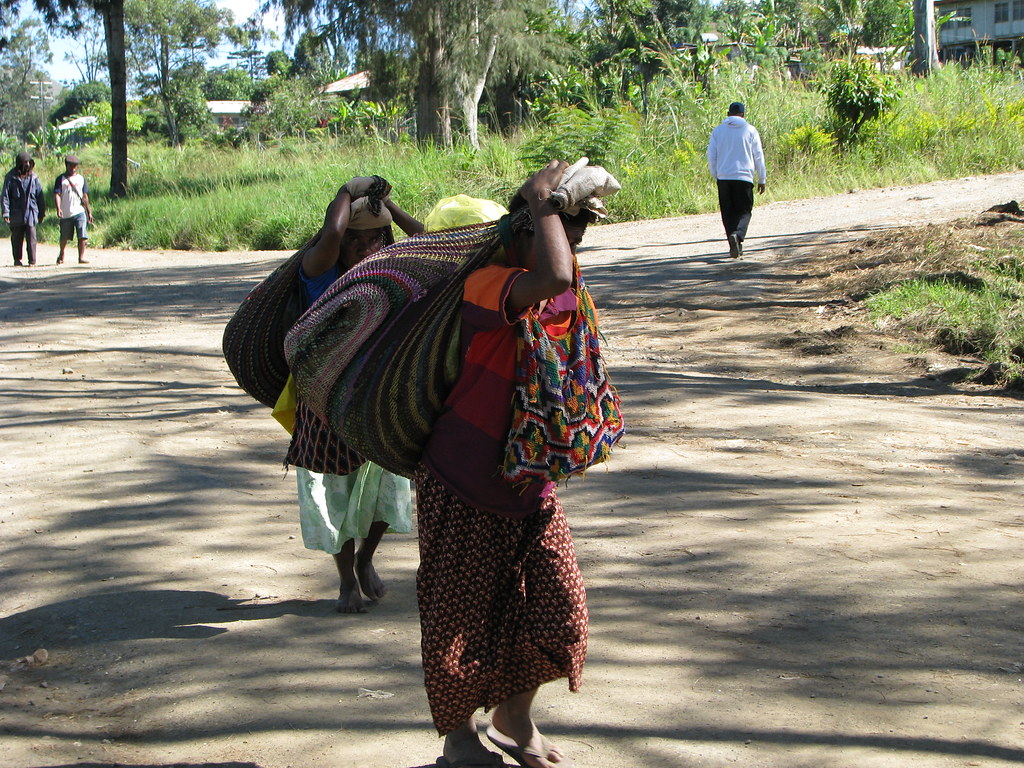
I have seen women in Papua new Guinea in the highlands at 3000m elevation carrying 75 kg loads on trails through the mountains, barefoot with only string bilums for the loads of rice, tinned meat, coca cola, beer etc. They were travelling 20 km.

The system works.

3664223079_7d3b45ca05_b.jpg
 
I carried one on numerous hikes to Cape Scott on Vancouver Island, on a 7-month hitchhiking trek across Africa in 1972 with all the things you need for such a trip, climbed Mt. Kilimanjaro with it and packed it on a trip to the USSR, Japan and Thailand in 1973-'74. Also lugged it around from BC through the western US through Mexico and Central America in the spring of 1973.

They are backbreaking killer things to lug around. I'm glad I was stupid and 19-20 when I did it. They are up-to-date 19th century technology.

Unless you can figure out how to attach a hip support belt I'd forget it. Anything off the shelf in an outdoor store these days is a better pack than a Trapper Nelson.
 
Last edited:
I carried one on numerous hikes to Cape Scott on Vancouver Island, on a hitchhiking trek across Africa in 1972 with all the things yoiu need for such a trip, climbed Mt. Kilimanjaro with it and on a trip to the USSR, Japan and Thailand in 1973-'74.

They are backbreaking killer things to lug around. I'm glad I was stupid and 19-20 when I did it. They are up-to-date 19th century technology.

Unless you can figure out how to attach a hip support belt I'd forget it. Anything off the shelf in an outdoor store these days is a better pack than a Trapper Nelson.

While my use of a Trapper Nelson is not as extensive as MD's, I did use one a lot in the foothills of Alberta as a young man. And I have to second his opinion, there are much better packs available today that utilize modern technology. Even a used modern pack off the EE or from an Army Surplus would be better than an old Trapper. I still have mine, and won't ever part with it, but it is for nostalgia reasons, not practical.
So if you are restoring one just for poops and giggles and perhaps to use one on a couple of hikes just to be able to say you did it, then by all means, go for it. But I would never plan an extensive long hike with one.
Dave
 
I think I have about a dozen or so of the pack boards, and a bunch of the bags. I'm missing shoulder straps and the canvas for the pack board. I may have 2 complete backpacks.

If you ever want to part with a bag keep me in mind!

Yeah I know there are better options out there but this will do me for now once I add a couple things on the cheap, if it really doesn’t work for me I’ll get something else mid season. It will not see long hikes, just from a cut lock back to the truck. I’d like to avoid a solo 350y uphill drag like I did last year to get a doe out to th road whole.
 
I preferred them for heavy metal things like pumps and pluggers that in a soft bag would hurt your back. The rigid TN keeps the metal away from your back and the tump line eases the load when you're humping it over the hills and valleys in the bush.

hqdefault.jpg


Waterax.Edits_.0071920x1000.jpg
 
Used the old army cargo pack which had a tumpline, sure made a difference in comfort. As does a decent waist belt.

Also pack boards which weren't real satisfying due to having to lash everything on, but must concede that you're not restricted by size or shape of your load.

I'd suggest looking at an external frame with detachable bag like the Moose Freighter. Fairly robust and best of both worlds for flexibility and has what I considered a decent waist belt. Used to take the belt off mine to use on 82 Pattern rucksack which was a vast improvement on forced marches.
 
I preferred them for heavy metal things like pumps and pluggers that in a soft bag would hurt your back. The rigid TN keeps the metal away from your back and the tump line eases the load when you're humping it over the hills and valleys in the bush.

hqdefault.jpg


Waterax.Edits_.0071920x1000.jpg

Trust me, it doesn't keep a heavy load off your back very well. :)

Grizz
 
Well this will be a good test then I think, I’ll post pics of it after I modify it and take it for a loaded test hike. I like a good real world test, so far I’m only in it for $7. I found the pack board at a thrift store locally and the upgrades will be cheap from what my digging shows, I do like a good retrofit when it works.
 
While my use of a Trapper Nelson is not as extensive as MD's, I did use one a lot in the foothills of Alberta as a young man. And I have to second his opinion, there are much better packs available today that utilize modern technology. Even a used modern pack off the EE or from an Army Surplus would be better than an old Trapper. I still have mine, and won't ever part with it, but it is for nostalgia reasons, not practical.
So if you are restoring one just for poops and giggles and perhaps to use one on a couple of hikes just to be able to say you did it, then by all means, go for it. But I would never plan an extensive long hike with one.
Dave

I agree with MD and d4dave1, I also have one that will be kept for nostalgic purposes, but even with a hip belt, it was cruelty to dumb animals- re me. A moose freighter is relatively cheap and carries weight much easier.
 
I carried one on numerous hikes to Cape Scott on Vancouver Island, on a 7-month hitchhiking trek across Africa in 1972 with all the things you need for such a trip, climbed Mt. Kilimanjaro with it and packed it on a trip to the USSR, Japan and Thailand in 1973-'74. Also lugged it around from BC through the western US through Mexico and Central America in the spring of 1973.

They are backbreaking killer things to lug around. I'm glad I was stupid and 19-20 when I did it. They are up-to-date 19th century technology.

Unless you can figure out how to attach a hip support belt I'd forget it. Anything off the shelf in an outdoor store these days is a better pack than a Trapper Nelson.

Proper living MD, just wanted to say. Good stuff.
 
Back
Top Bottom