Treating a new barrel

Lapping compound is not polishing compound...two different things. Lapping compound is effectively a fluid file that will remove a surprising amount of material (steel) in a very short order. I've personally hand "lapped" I don't know how many valves to seat them in cylinder heads (before hardened seat inserts) using this compound. Trust me it's quick.

We know it is relatively quick but not near as quick as you seem to imply. The method has been used for years. Why not do some investigating in the process before you pass judgement. You clearly are working on some preconceived idea as if the process is just a new revelation. It isn't, it works and has an added benefit that you will discover if you do your research.

Try the Cast Bullet Forum for starters and remember Google is your friend.


Take Care

Bob
 
No
Barrel is harder than projectiles that pass through it. I don't know where the South East of the Center of the Universe is, but if you have a berm at your range, go dig up some projectiles and inspect them. You'll find rifling grooves on projectiles that left there from hard barrel during firing.
This will tell you that its the bullet gets deformed during firing, not the barrel to bullet.
However if you decide to shoot a bullet that is made from harder materials than led or copper or brass, then damage can occur.
Who does that anyway?
If you really want to lap your barrel then I'd suggest to spread lapping compound in your barrel then fire your bullets, you'll get more use out of it than spreading lapping compound on the bullet.

Ahem. However, if one were to fire an abrasive projectile (or as suggested, several of them under psi) through that same barrel it will leave indelible markings which will forever capture lead and copper alloys...no?
 
No
rrel then I'd suggest to spread lapping compound in your barrel then fire your bullets, you'll get more use out of it than spreading lapping compound on the bullet.

Do you understand the nature of this conversation regarding the possible need to lap a revolvers barrel? If so the process is not as you describe. Google barrel lapping and you should be able to understand the process as a way to remove barrel constriction. Filling a barrel with lapping compound is not a useful suggestion and adds nothing to the thread.

Take Care

Bob

 
Lead is always a pain. You have to make sure that the lead bullets are a 'hard cast' lead bullet. Scrape the bullet with your finger nail, if it makes a groove or a mark, don't use it. The hardness is dependent on the compound mixed with the lead, which in the most cases is tin, and how much is used to create hardness. I use Wolf Bullets, and his lead is a super hard cast with very minimal lead fowling. My guns have always been easy and quick to clean using his bullets.
 
Lead is always a pain. You have to make sure that the lead bullets are a 'hard cast' lead bullet. Scrape the bullet with your finger nail, if it makes a groove or a mark, don't use it. The hardness is dependent on the compound mixed with the lead, which in the most cases is tin, and how much is used to create hardness. I use Wolf Bullets, and his lead is a super hard cast with very minimal lead fowling. My guns have always been easy and quick to clean using his bullets.

Overly hard bullets can lead to leading just as much as to soft an alloy. The key is the application.

The 38spl loaded even to +P levels does not require an overly hard bullet. What is key is the type of lube used and proper fit. Commercial casters use a hard lube primarily because lead bullets lubed with hard lube ship with less mess. Soft lubes work very well in handgun applications. For those of us who cast our own bullets, air cooled wheel weight alloy works just fine. Bullets will obuterate (sp) and fill the bore. Unfortunately getting commercial cast bullets that are not hard cast is not common. The key to preventing leading is proper bullet fit to bore and the lube used. Get those two right and you are on your way to lead free shooting. Along with the 38spl the 45acp and 45 colt cartridges work well with softer lead alloys.

As an aside I water quench my 9MM, 40 cal, .357mag amd 44 mag lead bullets to harden them as the they are high a higher pressure cartridges.

Take Care

Bob

 
Either way
If you think you'll get different results, you are kidding yourself
Do you understand the nature of this conversation regarding the possible need to lap a revolvers barrel? If so the process is not as you describe. Google barrel lapping and you should be able to understand the process as a way to remove barrel constriction. Filling a barrel with lapping compound is not a useful suggestion and adds nothing to the thread.

Take Care

Bob

 
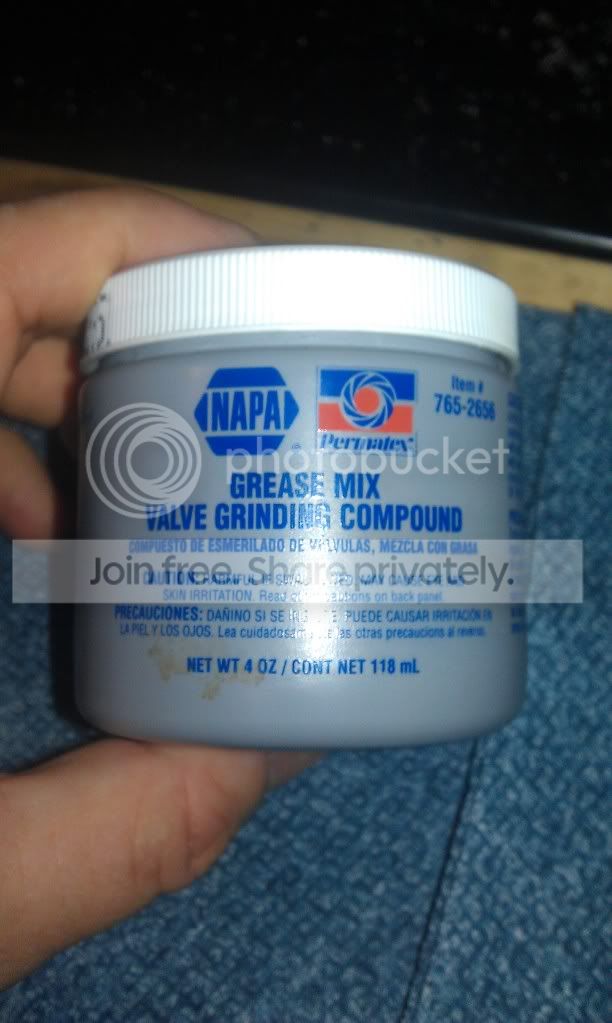
45b3df34.jpg


This is the stuff we're talking about right? It's a heavy thick abrasive grease that much like baby sh1t, gets everywhere unexpected when using it.

Filling a barrel would be a kin to filling the barrel with a heavy toothpaste and firing.b:
 
Yes. I pressed soft bullets over the compound, impregnating the grit into the walls of the bullets. It takes about 80 - 100 rds (go slowly and check often), to remove the barrel constriction. A side benefit is a bore that is shaped a bit like a cone where the muzzle end is tighter than the chamber end. The amount of coning is small. I am told this type of barrel will generate tighter groups in rifle barrels if my memory serves me correctly. When I did my GP-100 I was more interested in eliminating my barrel constriction than anything else. Accuracy in my gun improved and the leading I was getting was eliminated. If you don't have an issue with barrel constriction don't use the process and read up on it more than this brief paragraph. Google is your friend. There are a few folks on the Cast Bullet forum that can add more light on the process than I can from memory - it has been two years and I wasn;t into memorizing all the info I got when I was working on the gun.

You don't want to fill your barrel with the stuff that is for sure. Sarcasm lives in one of the posts above.

Take Care

Bob

 
Back
Top Bottom