OK, I'm always interested in these mysteries, but this is much later than my usual comfort zone.
Perhaps a reason why no one has chipped in yet is that there are some inconsistencies that are hard to reconcile.
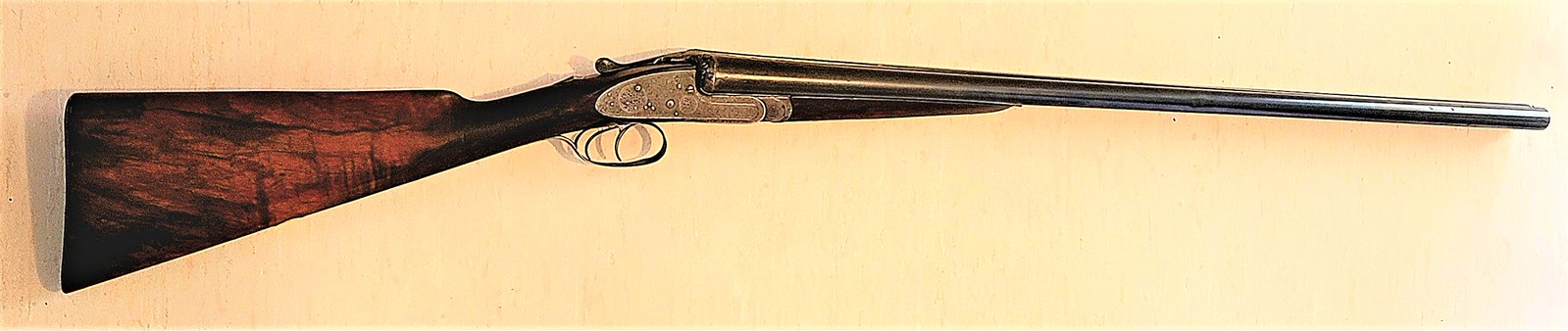
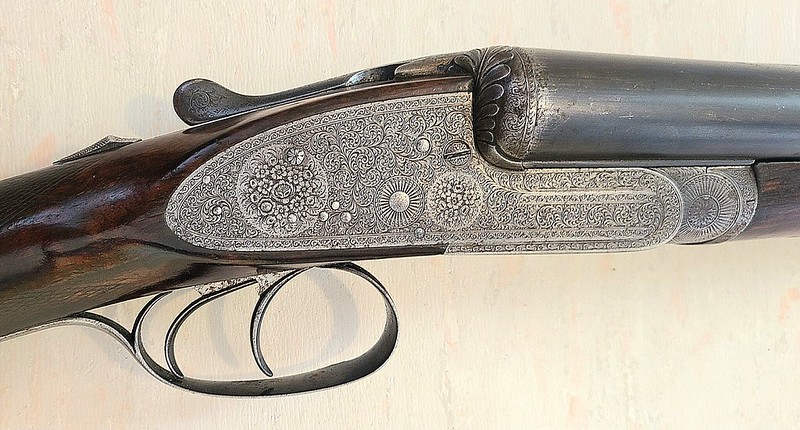
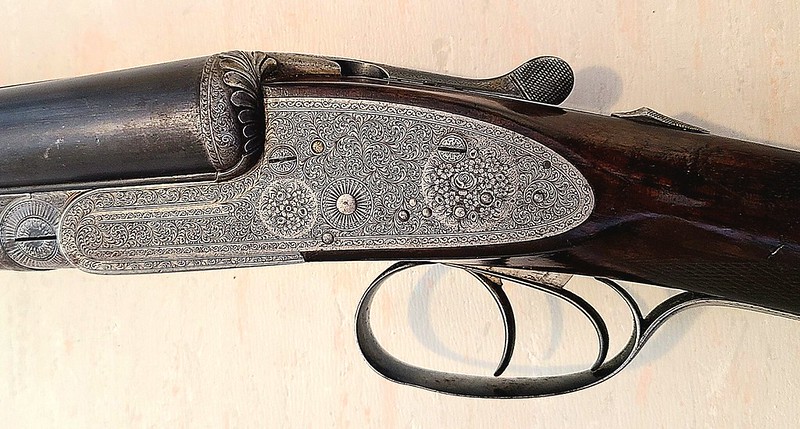
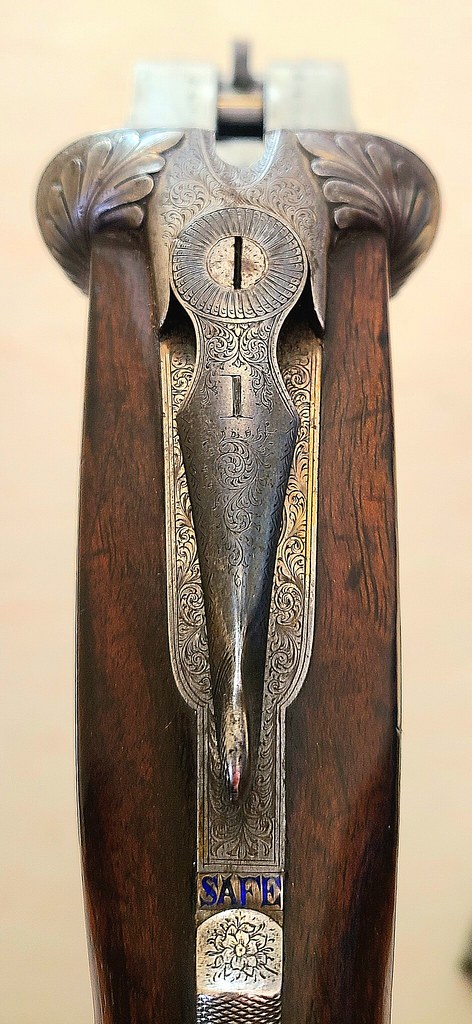
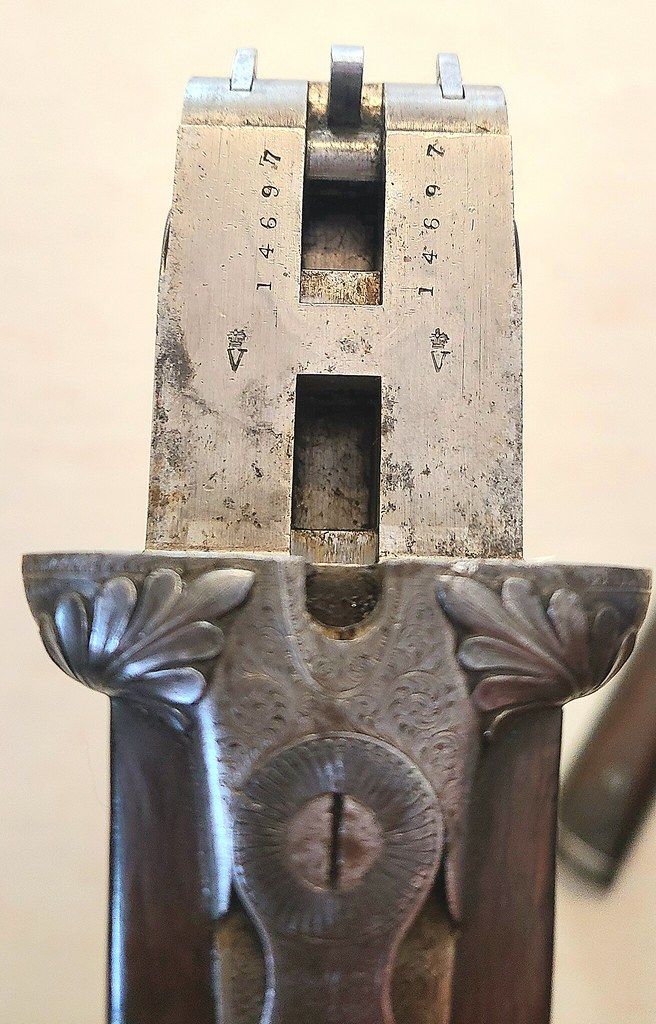
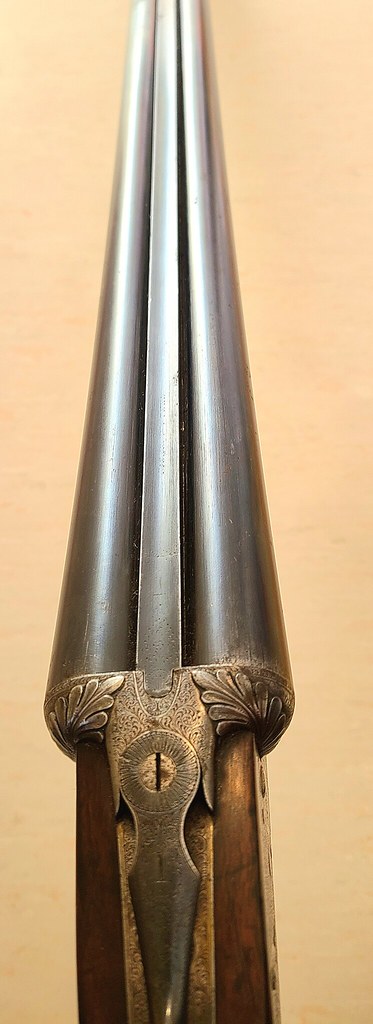
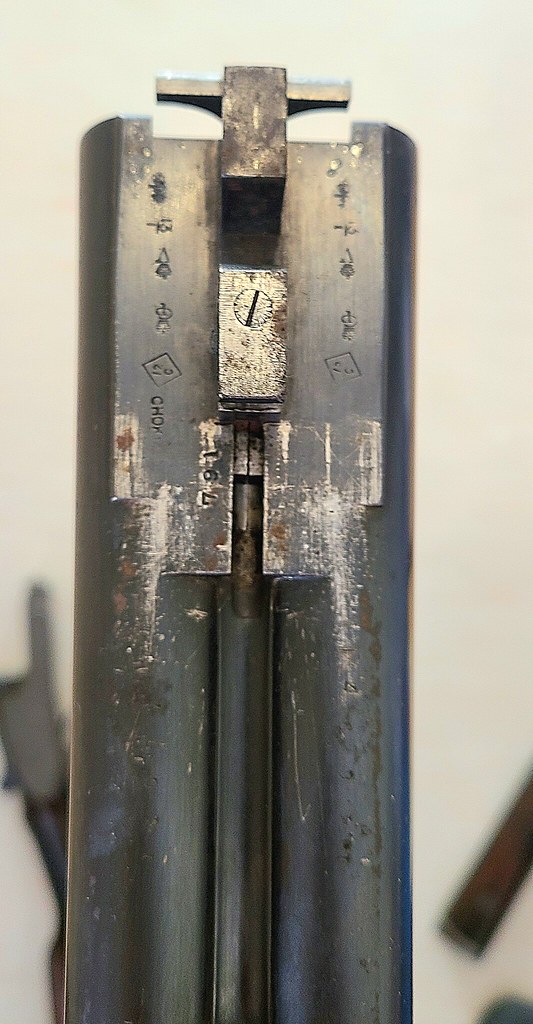
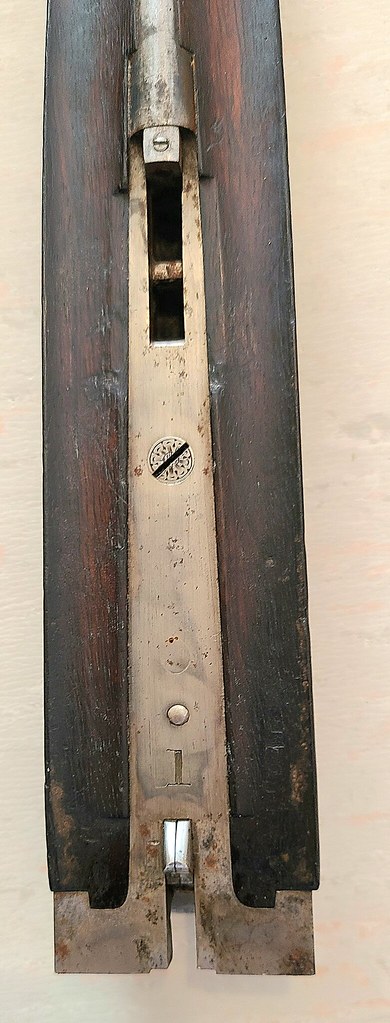
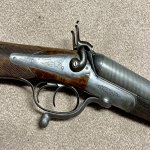
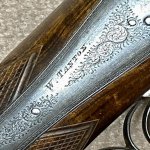
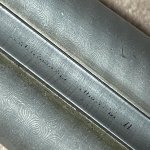
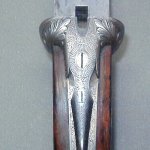
It is a sidelock ejector, stocked to the fences. The extra skill with wood usually means a top-tier maker or someone producing work to that standard. It has an Anson fore-end release. The fences are carved in a manner frequently seen on Frederick Beesley guns, but this is not a Beesley action, and the serial number is way too high for a Beesley. William Evans guns are also seen with these kinds of fences. It might never be possible to identify the maker. It is one of a pair, so not your off-the-shelf gun. The barrels have been refinished, so it is possible that the maker's name on the rib has been sanded off and/or diminished by an aggressive hot-bluing. It looks like there might be the tiniest indication of lettering on the top rib, but I can't tell from the pictures. It is also possible the barrels are later replacements, as the gun has seen a lot of use, from the worn chequering. In this case, the London proofs might help age the barrels, but not the gun. Also, the top spindle screw is a later replacement, so the gun has been worked on at some point. I am insufficiently versed on ejector patents, so I can't tell from the photos if these are a specific mechanism, or a variation/copy. The action itself, a Scott spindle and Purdey underbolt, was made pretty widely after 1877, so the action type is no help. There is a hint of a third bite fastener, but I can't make out from the pictures if it is a true third-bite, or just a barrel extension.
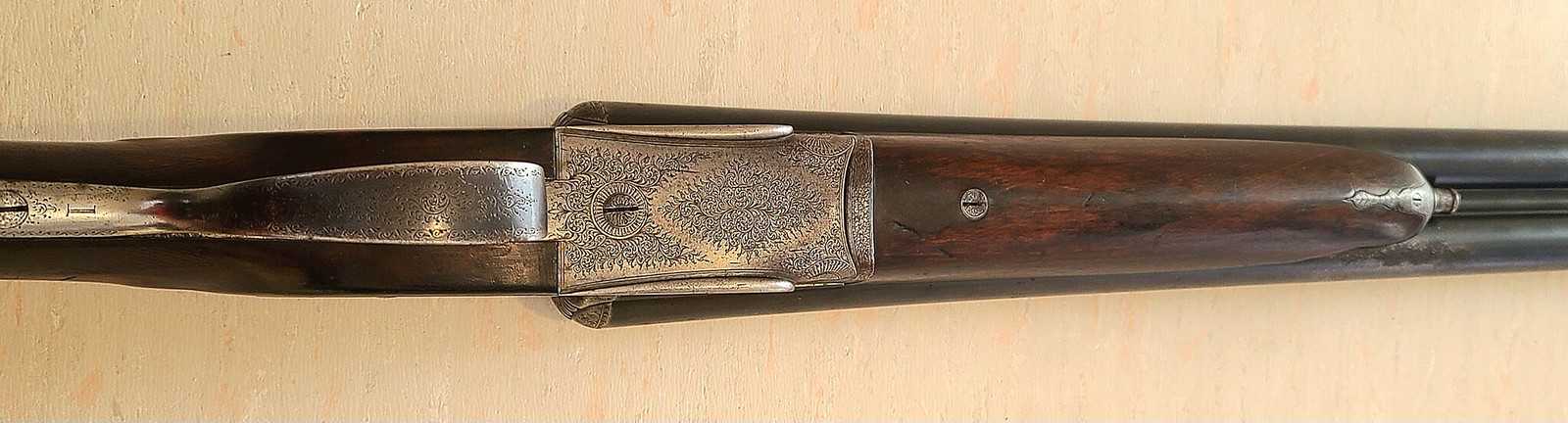
What completely throws me is the style of the engraving. Your more typical rose-and-scroll leaves empty space around the circular 'bouquets', to make them stand out. On this gun, there is little of that, though it might just be the photographs. It all seems a bit too bunched and busy. The space on the lockplate bar usually reserved for the maker's name is fully engraved, almost awkwardly, like someone engraved over the name. It is almost like the engraving on the sideplates and bottom plate don't quite match in style... Of course, with British guns, everything is possible, and the client's requests on ornamentation will be followed.
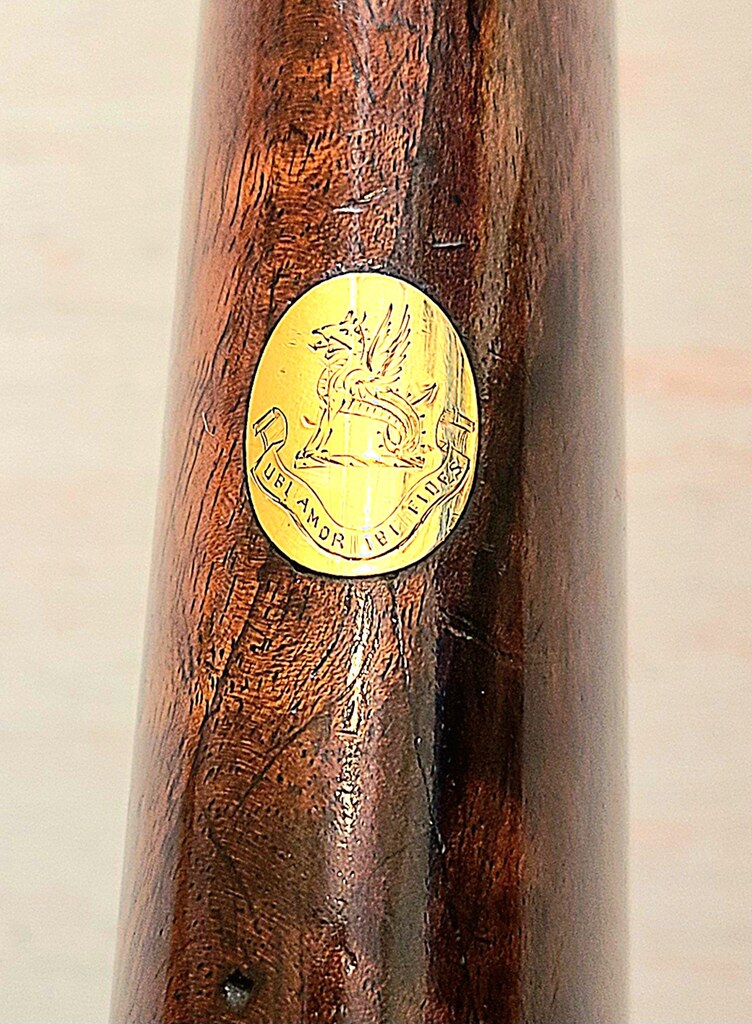
This was an expensive gun, and the owner went to the trouble of adding the family crest and motto. The crest, a wyvern, wings up and addorsed, over a wreath, was unfortunately used by close to 60 families, so it doesn't narrow things much. The motto, ubi amor ibi fides (where there is love, there is trust), was recorded by several families, though none of these were known to combine it with the wyvern crest -- so the standard references don't help here either.
That's about all I could tell from the photos. Very nice gun, barrel wall thicknesses should probably be measured by a competent smith, and peculiar engraving. Perhaps under strong magnification it might be possible to tell if the engraving was refreshed or added to.