trying to re create the Hickok Tutt shot

lone ranger

CGN Ultra frequent flyer
Rating - 100%
220   0   1
Location
sask
I am trying to dial in my 1858 New Army 44 so I can Make the famous 75 yard shot that Wild Bill Hickok made against Dave Tutt many years ago in July on the streets of Springfield Missouri.

I have a ways to go.............

this was my 1st trip out with my new Cap n Ball. I took a file with me to dial in the sights.
I am using Hornady 44 ball "454" with 30g of Hodgon tripple 7 powder.

100-7667.jpg


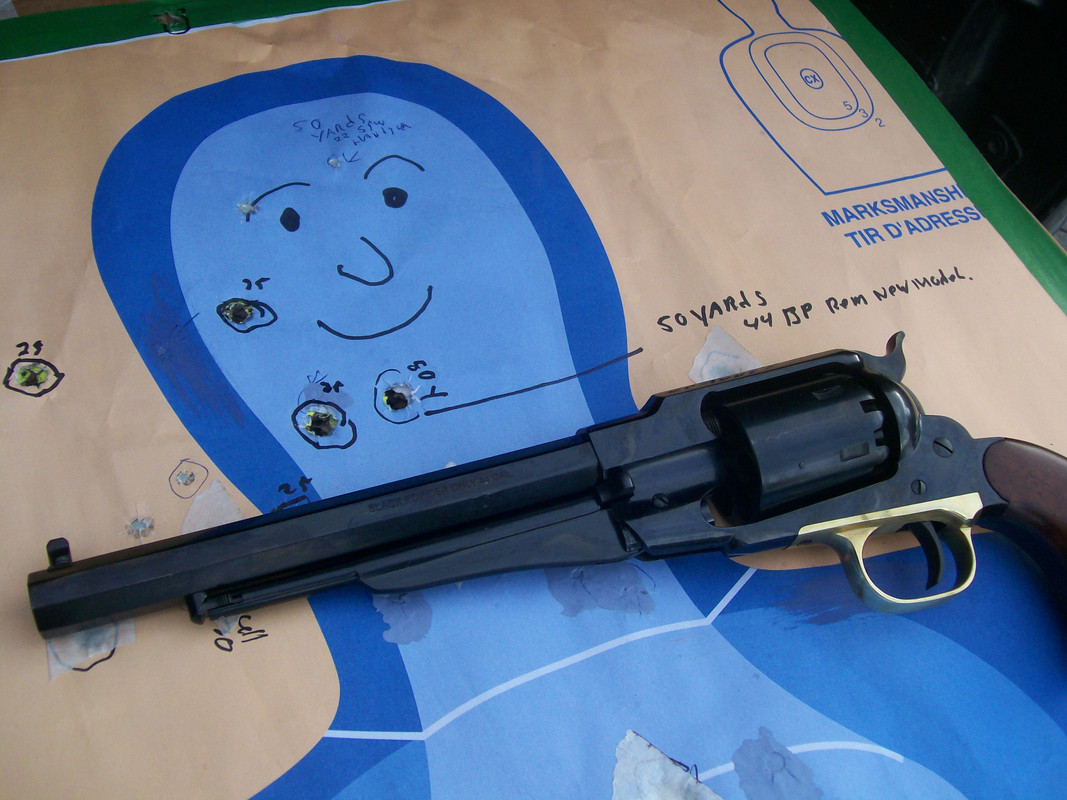
Dialing it in at 25 was very easy.
dialing it in at 50 took some sight adjustment.I had to use the bottom of the front sight to get enough elevation.
This gun is very accurate, very pleased.
100-7666.jpg


I pushed my target out to 75 yards. Big surprise, the 44 ball was dropping like a Stone !
I barley hit the very bottom of my target & strayed Left. Gotta figure out my" hold over"
It started raining so I will have to come back to this another day.
 
Last edited:
Oh, its a Uberti. Some say they are better quality than the pietta.
I know the earlier ones were on par, but I think Both are better now.
I know the finish on my new 44 is better than the one I had 10 years ago.
I would love to have that engraved Model.
Its EYE Candy all the way !
 
lone ranger:That's nice shooting at extended range! Remington revolvers are known for their good accuracy. Yours certainly carries on that tradition.

This may interest you: The Blackie Thomas youtube site features an informative set of videos on how he deals with hold over. Thomas uses a variation of the Elmer Keith method. A detailed examination of how Keith managed impressively long shots with a revolver can be found in the book: "Sixguns`. Interesting stuff and well worth a look. Perhaps you can incorporate this method into your own longrange shooting.
 
lone ranger:That's nice shooting at extended range! Remington revolvers are known for their good accuracy. Yours certainly carries on that tradition.

This may interest you: The Blackie Thomas youtube site features an informative set of videos on how he deals with hold over. Thomas uses a variation of the Elmer Keith method. A detailed examination of how Keith managed impressively long shots with a revolver can be found in the book: "Sixguns`. Interesting stuff and well worth a look. Perhaps you can incorporate this method into your own longrange shooting.

Thanks..I do need help on this shot. any and all info will be certainly welcome.
 
well this project is on HOLD. It seems there is a shortage of 44 ball right now.
sooo, until I find some ........ I wont be blasting with my 1858.
friggen Covid sh1t !! everything is on back order.
 
well this project is on HOLD. It seems there is a shortage of 44 ball right now.
sooo, until I find some ........ I wont be blasting with my 1858.
friggen Covid sh1t !! everything is on back order.

You need some balls? I have molds for most round balls. I could cast some and sell you 100 or so. .454??

What would it take to get into some very basic, occasional casting?

-some lead
-a cast iron pot/pan
-a hot plate/propane burner
-molds
-a back yard
-favorable winds/understanding neighbours...

What else?
 
kodiakjack: You pretty much have all your basics, right there. In addition, you should have a short length of hardwood dowel or stick, to tap open the sprue plate. A pair of heavy leather gloves to protect your hands. Wax, or some other fluxing medium. A small ladle.(I repurposed an old metal one from the kitchen. Still going strong, after at least 4 decades).
A long-handled spoon(Again, a repurposed kitchen table spoon, attached to a section of dowel. Good for skimming dross...mixing/stirring the lead, etc.) Safety glasses(One drop of water or a sweat droplet in the pot and you have an instant lead shower. Highly entertaining!). A respirator rated for airborne lead particulate exposure. Plus an old towel or something of the sort, to drop the bullets on.
I also like to wear an old mechanic's apron, to protect my body from lead spray(See results of water bomb above). Plus: closed-toe boots or shoes. Wearing clogs or sandals while casting bullets can get entertaining, too. I don't recommend it. That's about it.
You don't need an elaborate set-up to cast perfectly good bullets in your back yard. As many do.
A proper, well-ventilated indoor casting area is recommended for year-round use. If you have the space and means, one of these can be set up for very few dollars.
Al
 
kodiakjack: You pretty much have all your basics, right there. In addition, you should have a short length of hardwood dowel or stick, to tap open the sprue plate. A pair of heavy leather gloves to protect your hands. Wax, or some other fluxing medium. A small ladle.(I repurposed an old metal one from the kitchen. Still going strong, after at least 4 decades).
A long-handled spoon(Again, a repurposed kitchen table spoon, attached to a section of dowel. Good for skimming dross...mixing/stirring the lead, etc.) Safety glasses(One drop of water or a sweat droplet in the pot and you have an instant lead shower. Highly entertaining!). A respirator rated for airborne lead particulate exposure. Plus an old towel or something of the sort, to drop the bullets on.
I also like to wear an old mechanic's apron, to protect my body from lead spray(See results of water bomb above). Plus: closed-toe boots or shoes. Wearing clogs or sandals while casting bullets can get entertaining, too. I don't recommend it. That's about it.
You don't need an elaborate set-up to cast perfectly good bullets in your back yard. As many do.
A proper, well-ventilated indoor casting area is recommended for year-round use. If you have the space and means, one of these can be set up for very few dollars.
Al

Thanks Alex. :)

Would you mind explaining just a tad more on the wax/fluxing process and purpose? Does it just help bring crap to the surface?

And I hear casters talk about antimony... is that adjusting the hardness?

I recall reading about a way of testing the hardness of lead at home... I forget now. You press different types of pencils against it or something?

Not trying to hijack your thread here lone star. Just figured I’d ask while it was on my mind.
 
kodiakjack: Sure. I won't bore you with a lot of detail. In its simplest terms: Fluxing helps remove dirt or other foreign material from the lead matrix. So yes.... fluxing not only brings all the crap to the surface....it also helps purify the entire mix. I like to thoroughly mix and stir the flux into the lead, during the process. Depending on the flux used....it will likely either smoke profusely, or even burst into flame. So....a long handled ladle or spoon is recommended.

Though there are commercial flux compounds available..... ordinary paraffin wax, beeswax, sawdust and many other products work just as well. I've even used leftover scented wax candles to flux the pot. Does the job and smells purty, too!

Yes...antimony can be introduced to harden the lead. The easiest way, is to add some lead shot....which often includes a certain percentage of antimony in it.... to the mix. I generally don't bother adding antimony to my bullets. Preferring them on the softer side(hunting bullets, especially). But you may, if you wish. Especially if you want to drive your bullets at higher velocity. Or....you can skip all the mixing and drama and go to powder coated bullets. Which are proving to be reliable performers across a broad spectrum of shooting use.

Lead hardness testers are pretty handy gadgets. Very useful, when you may have some stray ingots of unknown origin and wish to determine their composition. In simplest terms: A steel rod or probe is pressed into the lead bar. The resulting depth of the dent is then measured and compared to a known control(pure lead). The result is the approximate hardness of the compound. There are plenty of detailed accounts of how this is measured. So I won't tire you with detail. But, the process works.
Lee Precision offers a lead testing kit in their lead casting accessories section. Once mastered, it works quite well and is pretty accurate.

Hope this info is useful.

Al
 
kodiakjack: Sure. I won't bore you with a lot of detail. In its simplest terms: Fluxing helps remove dirt or other foreign material from the lead matrix. So yes.... fluxing not only brings all the crap to the surface....it also helps purify the entire mix. I like to thoroughly mix and stir the flux into the lead, during the process. Depending on the flux used....it will likely either smoke profusely, or even burst into flame. So....a long handled ladle or spoon is recommended.

Though there are commercial flux compounds available..... ordinary paraffin wax, beeswax, sawdust and many other products work just as well. I've even used leftover scented wax candles to flux the pot. Does the job and smells purty, too!

Yes...antimony can be introduced to harden the lead. The easiest way, is to add some lead shot....which often includes a certain percentage of antimony in it.... to the mix. I generally don't bother adding antimony to my bullets. Preferring them on the softer side(hunting bullets, especially). But you may, if you wish. Especially if you want to drive your bullets at higher velocity. Or....you can skip all the mixing and drama and go to powder coated bullets. Which are proving to be reliable performers across a broad spectrum of shooting use.

Lead hardness testers are pretty handy gadgets. Very useful, when you may have some stray ingots of unknown origin and wish to determine their composition. In simplest terms: A steel rod or probe is pressed into the lead bar. The resulting depth of the dent is then measured and compared to a known control(pure lead). The result is the approximate hardness of the compound. There are plenty of detailed accounts of how this is measured. So I won't tire you with detail. But, the process works.
Lee Precision offers a lead testing kit in their lead casting accessories section. Once mastered, it works quite well and is pretty accurate.

Hope this info is useful.

Al

Thanks al, that’s great. I’m in the market for a 1858/1860, so when I make my mind up, I think I’ll delve into casting.
 
UPDATE- well a GNC member saskgunowner101 came to my rescue.
he brought me some 451 ball.
I grabbed my gear and headed back to the range to complete my Dave Tutt Shot.

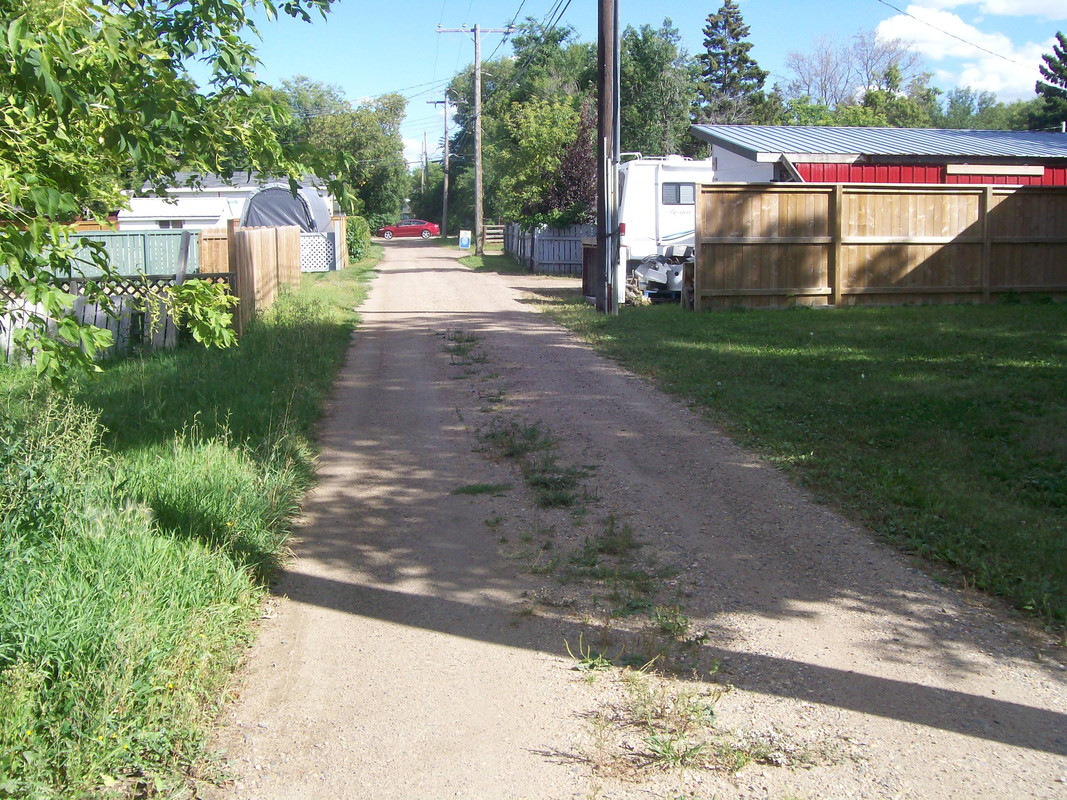
here is a pic of my Target. Look to the Right,..way way down the alley. my front sight Post covers most of the target. You just aim for the middle and hope for the best.
100-7680.jpg


well...here is what I found out.- 451 ball shoots the same as 454 ball at 25 and 50 yards.

However,...the 454 does hit lower at 75 yards. I find with my gun that 451 has better accuracy at long distance. maybe just my gun ?

I filled off a bunch more off the front sight as well. About 1/2 of it. LOL I was hitting way low.
100-7679.jpg


I just aim 3 inches low at 25 yards. Dead on at 50 yards, and aim 6 to 8 inches higher for 75 yards. cant tell for sure.

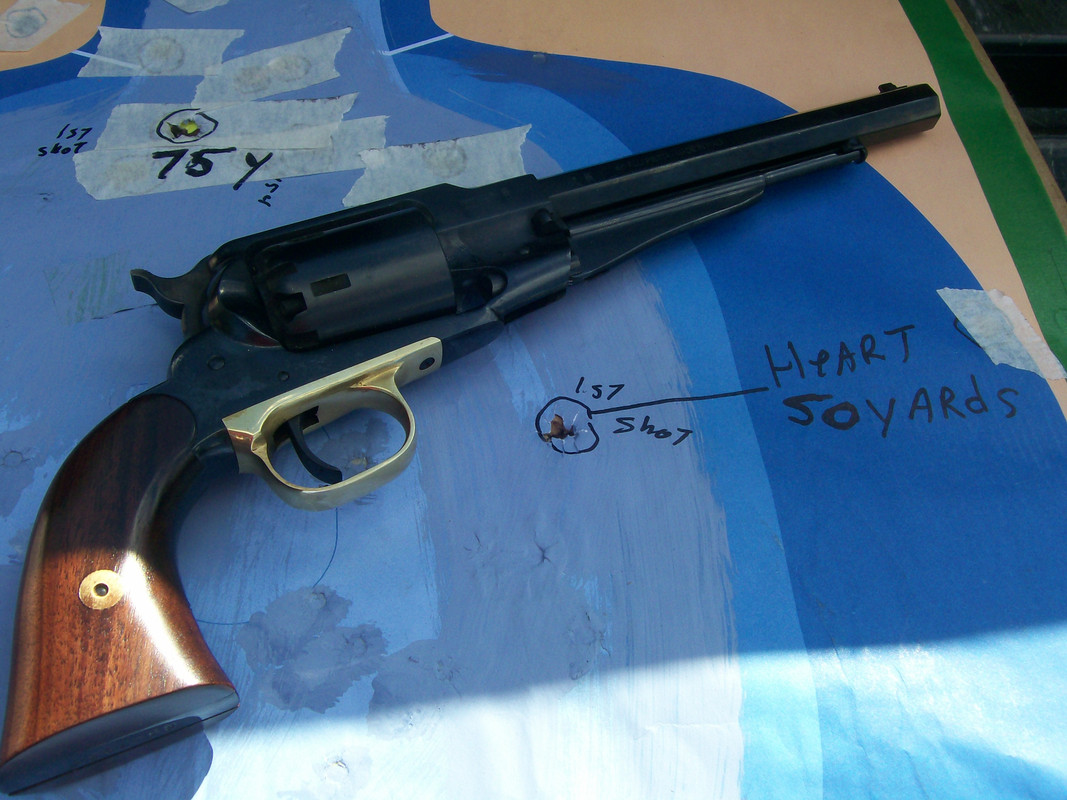
well I am able to do a Heart shot at 50 yards.
100-7677.jpg


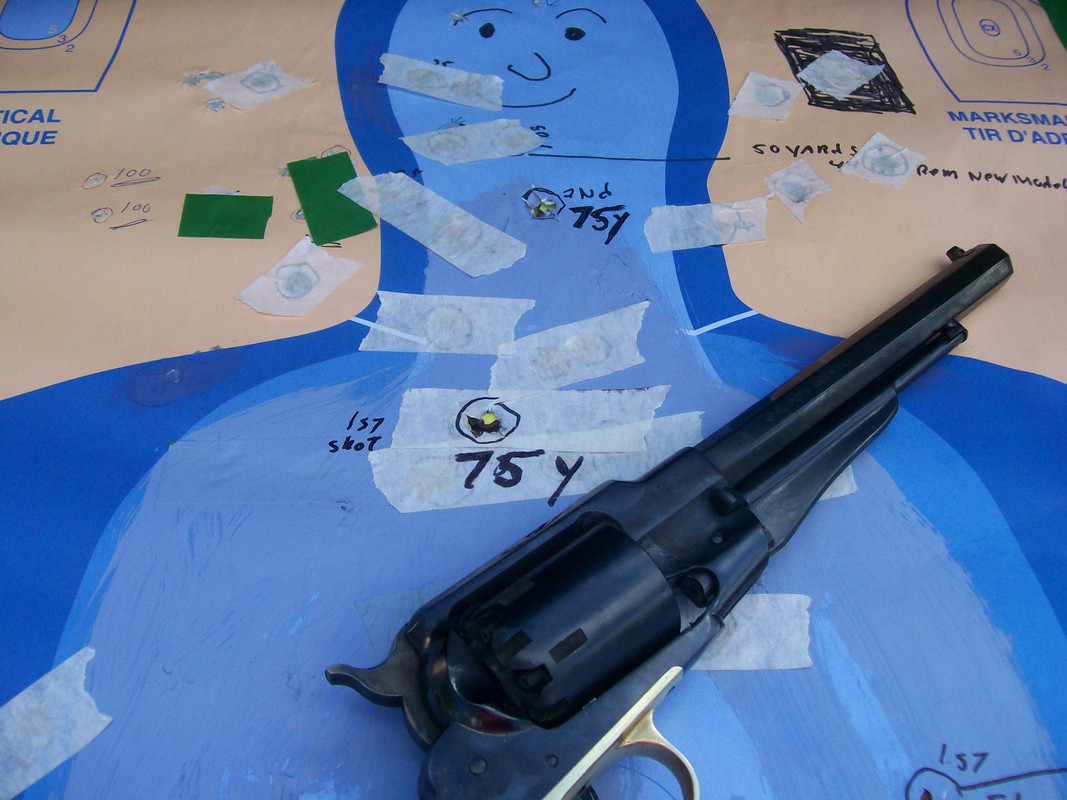
my 75 yard 1st shot was in the upper middle chest.
100-7678.jpg


my second shot at 75yards was in the neck.

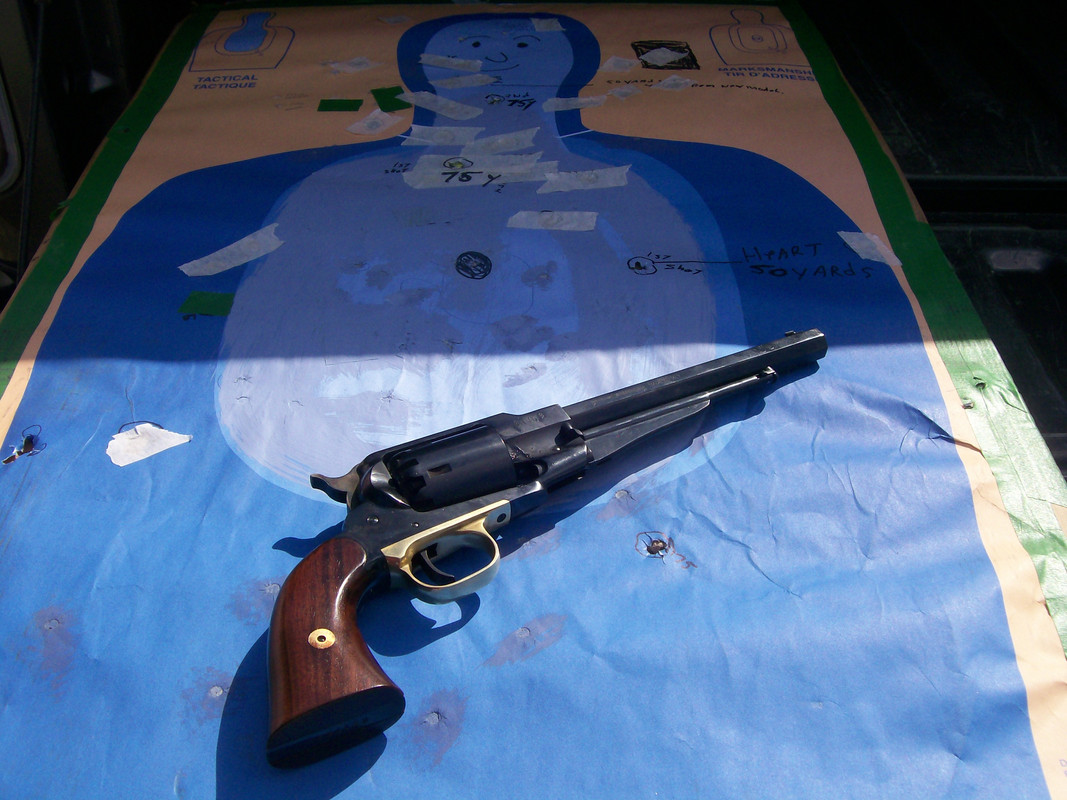
my 3rd shot went way low. pic
100-7676.jpg


so...my conclusion. If you REALLY know your gun,..... your powder charge,... your ball diameter & weight.....and you practice the shot, at long range...... you might or may not hit your target. Every so often I got a flyer about 8 inches off. could be me, my load, my gun, my trigger ECT

I honestly feel the Dave Tuut shot was 50% skill and 50% luck. Try the shot your self, I think you will come to the same conclussion.

I didnt get him in the heart, but I did get a deadly shot off 2 times in a row.
 
Last edited:

lone ranger: Well done! Your conclusions about the Tutt shot are bang-on, too. Wild Bill was known as a great shot. But I've always felt that the shot he killed Dave Tutt with relied on a lot of luck, too. Once you've got your revolver dialed in...I don't doubt at all you'll be hitting right in the 10-ring, every time,

Al
 
Back
Top Bottom