Unloved M98 [UPDATE WITH PICS POST #16]

HW77Shooter

Member
EE Expired
Rating - 0%
0   0   0
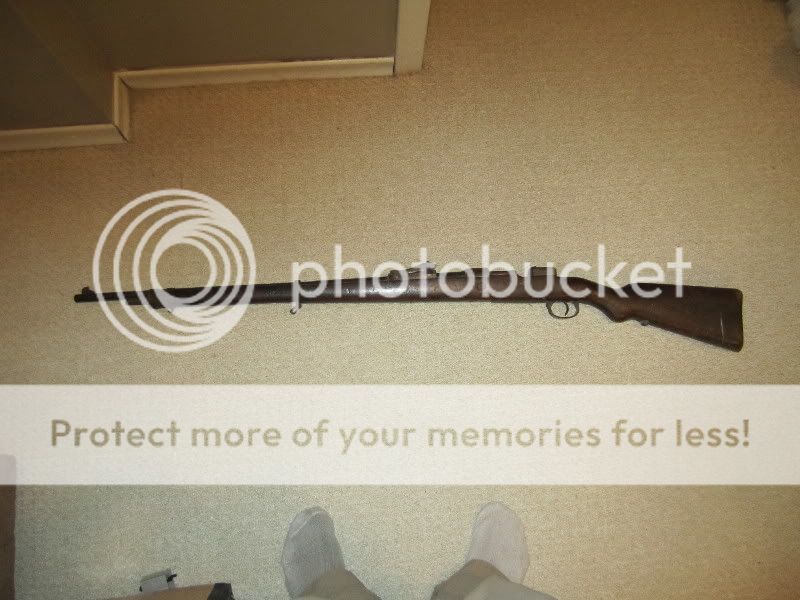
I've recently been asked to "have a look at" an M98 belonging to a family friend. Apparently her father (an American) picked it up off the ground in a WWII battlefield. It was smuggled home in a duffle bag, and has been sitting in the back of a closet since then. I'm hoping we'll be able to clean it up and shoot it!
small0000.jpg


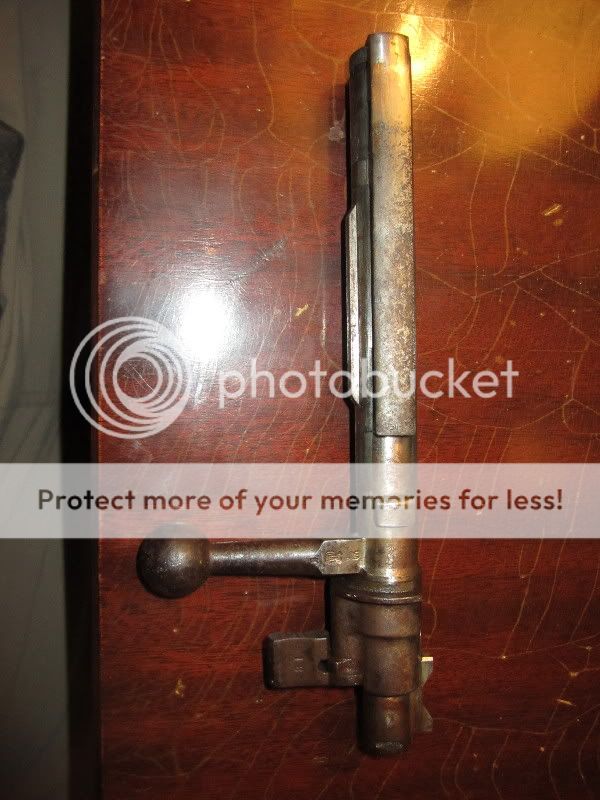
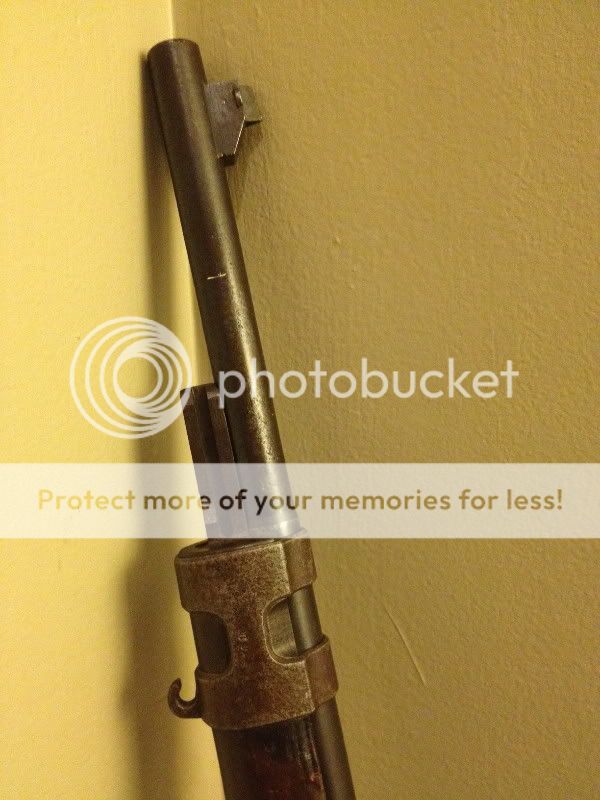
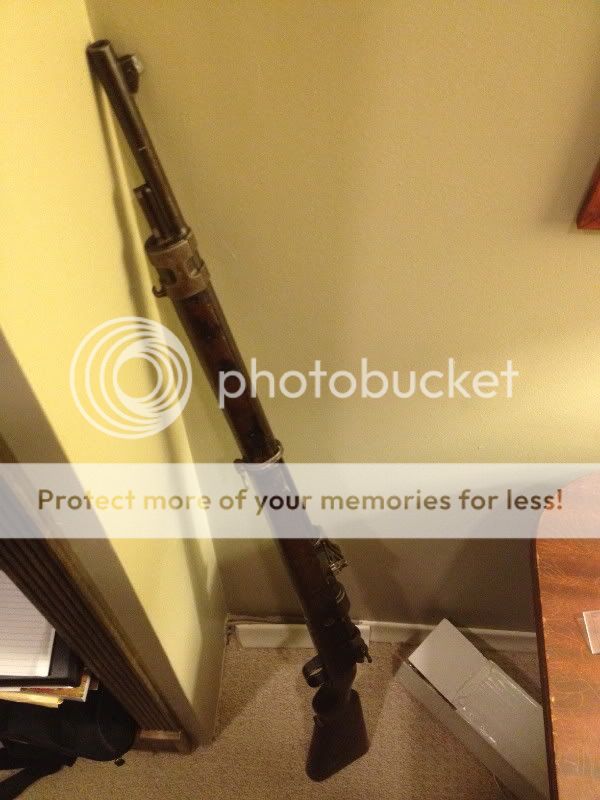
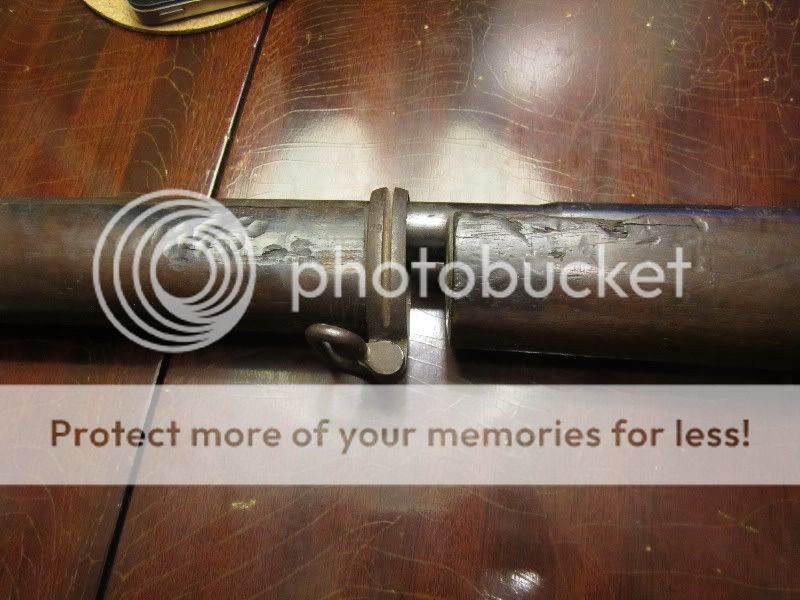
It has a broken fore-end, some surface rust, and a healthy amount of closet grime.
small0003.jpg


small0004.jpg


small0008.jpg


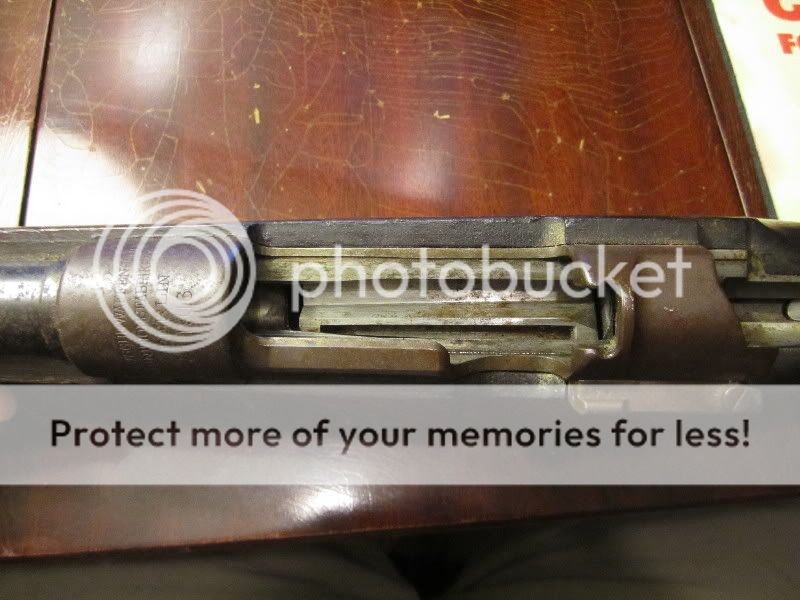
I'm hoping some Mauser experts can give me some advice on a few points. First of all, before I go mucking about with this thing I would like to make sure it isn't some super rare collector's item that would be better left as-is. My internet research would seem to suggest that isn't true. It hasn't been re-arsenaled, or anything, but the bolt s/n doesn't match the rest of the rifle and overall it isn't in great shape. Anyone disagree?

Secondly, how do I know if this thing is safe to shoot? I've disassembled and freed up the firing pin to the point that the safety lever will now move. (It was frozen.) It passes some basic safety tests, so I'm not too concerned it will go off unexpectedly...what I AM concerned about is whether it will blow up or something when it does go off. There's no obvious rust pitting in the barrel, chamber or bolt, but is 100 year steel up to the job? Can modern ammo be used, or do I need something lighter?

If anyone has answers to these questions, or any guidance in general on how to approach this I would greatly appreciate it.

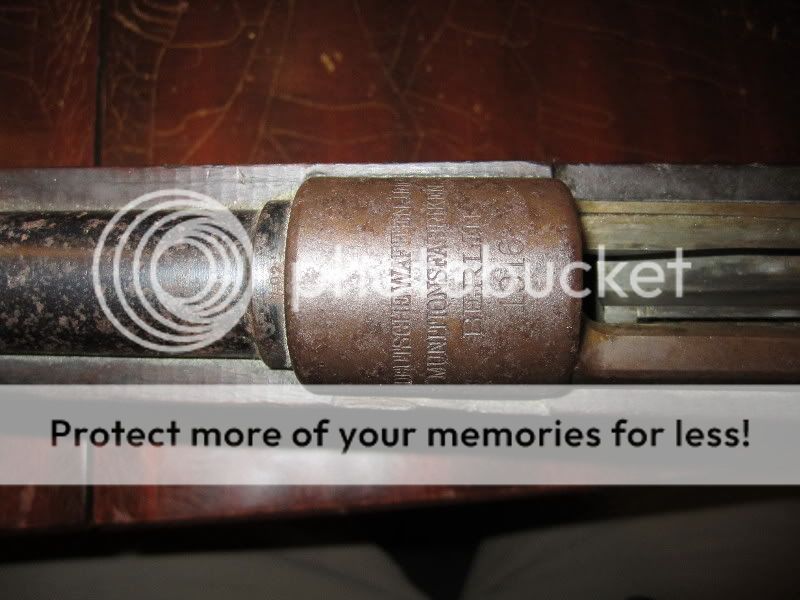
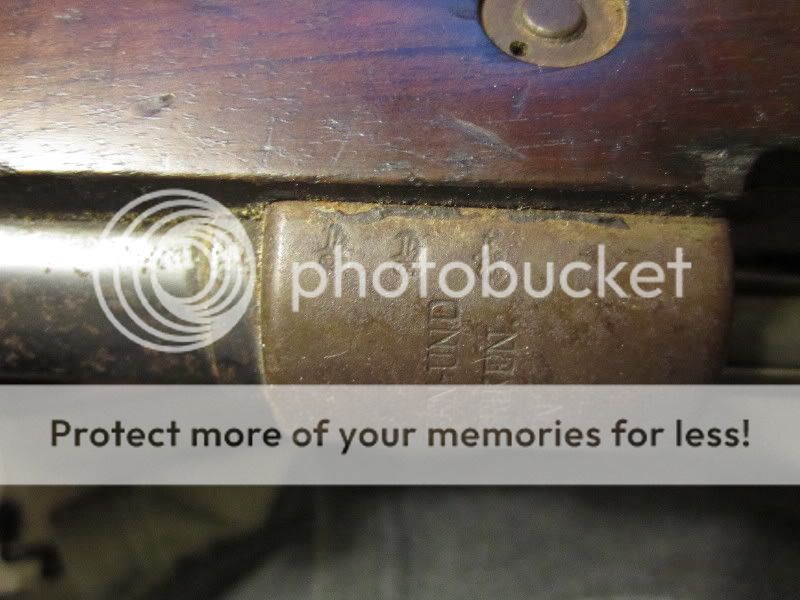
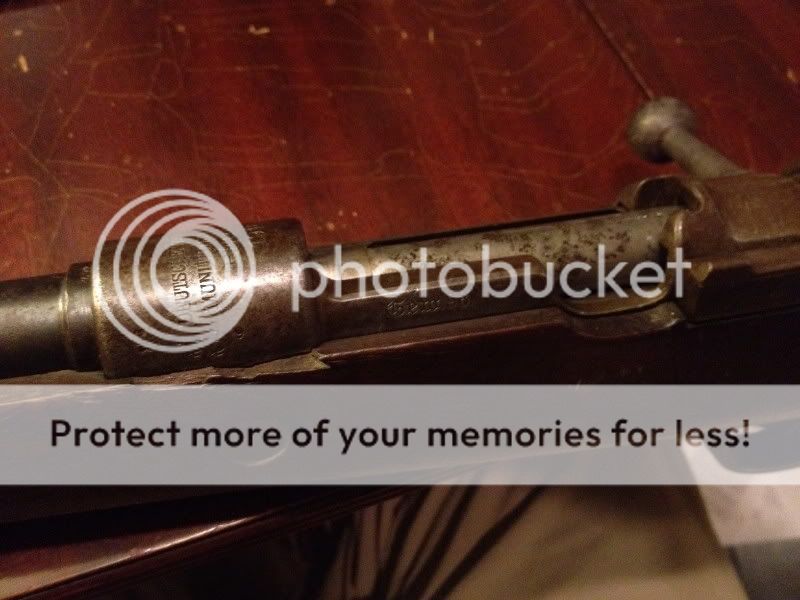
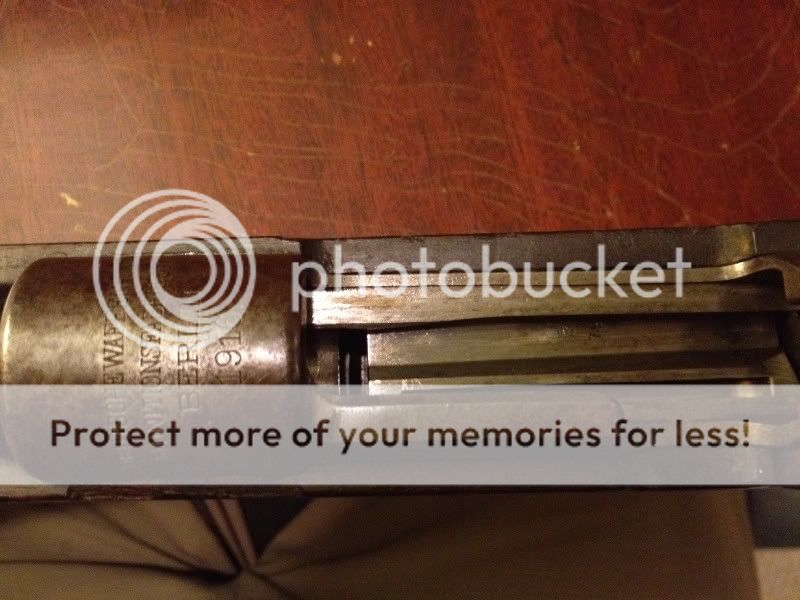
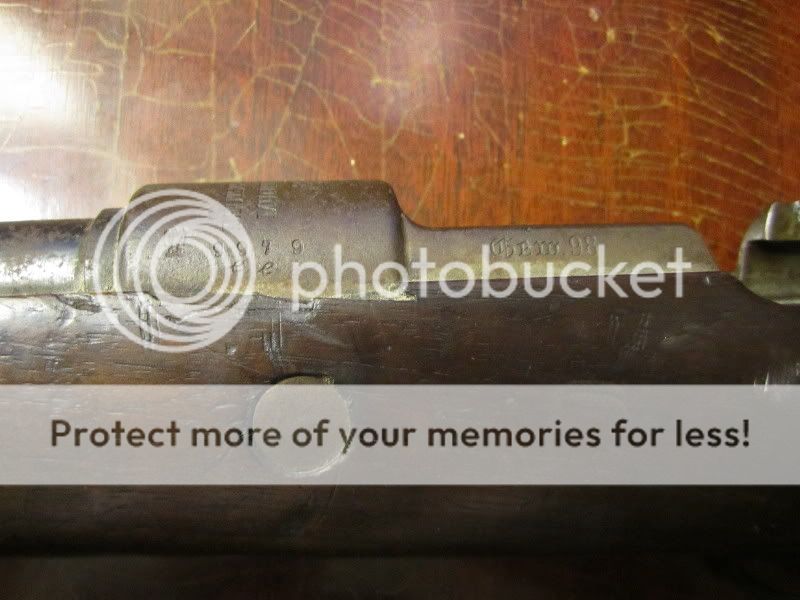
Here are the markings:

small0002.jpg


small0001.jpg


small0005.jpg


small0006.jpg


Sorry for the long post!
 
Last edited:
Deutsche waffen und munitionsfabkrien made gewehr 98 from 1916 still in her imperial trim. She has definitely been sitting in someones basement for a long time. The double suffix letter confirms thr very high production that was reached in 1916. She is in the pre war/early trim with walnut stock, unit disc, and no finger grooves along the sides of the stock.

She is missing the handguard but substitutes can be found.

if she was my rifle, I would give her the steel wool treatment (0000 I found works best), perhaps soak some parts in wd40 on the overnight if they are really rusty, clean and wipe with some gun oil on the metal and wood, and reassemble.

My next task would be to clean the bore as best as I could with patches, then examine the barrel exterior for any imperfections or weak points. If none exist, reassemble completely, hand load some light 8mm mauser shots and take her to the range. The light shots will help push any left over crude out. The first cleaning afterwards you will notice a big difference in bore condition.

For the duffle cut, some other cgn wood experts can chime in.

Nice rifle with plenty of history to boot.
 
Ah-HA!

You have just found yourself the Perfect Christmas Gift, friend. And I don't mean the rifle, I mean that YOU are the lucky guy who gets to do the job.

What you are looking at is a wonderful specimen of a true battlefield pickup, in this case an original Mauser Gewehr 98 built by DWM in Berlin in 1916. The rifle does not have a "broken" stock; that is what is called a "duffle cut", meant to get it into a duffle bag without the muzzle poking out a foot or so.

Duffle cut can be repaired by drilling a hole into both pieces, inserting a piece of steel rod into both pieces and then gobbing everything solid with Acra-Glas. Works.

RUST can be removed through judicious treatment with FINE or EXTRA-FINE steel wool. You steel-wool the rust first, wipe it off and THEN add oil to see what your original finish looks like. If you put the oil on at the beginning, the oil mates with the rust and produces GRINDING COMPOUND and all your original finish disappears, never to return. Use the steel-wool FIRST and THEN the oil and you will preserve what original finish should still be there (which ought to be quite a lot, judging from the photos).

DENTS on the woodwork can be raised with a clothes-iron and a damp washcloth, but don't remove them all. This is a pickup and it should look at least partly like what it is.

You say this came back after War Two? Then likely it saw service with the VOLKSSTURM, right at the end of things.

As far as shooting it is concerned, it should be safe. These were well-made from the best materials and were used for anti-Tank use at times, even though they were not supposed to be. Modern American 8x57 ammo is loaded very much DOWN and will be completely safe if you need that reassurance. Some of the European ammo is pretty hot but it is generally safe. I use just about anything in my 1914 Danzig.

Original performance for this rifle was a 154-grain pointed bullet at 2880 ft/sec. Yes: hotter than a .30-'06. That 29.13-inch barrel really helps in the velocity department! Accuracy? I have one here that will do an honest inch-and-a-quarter at 100 yards.... and it looks just as bad as yours (Polish Army).

You are a Very Lucky Guy!

Hope this helps.
.

Being that this is my 3,000th post, I think I am now entitled to THREE Goats..... and the FIRST one hasn't arrived yet! She had better be a cutie, that's all I can say!
.
 
Ditto on the explanation for the two-piece stock. That is a rifle with was made in the fevered middle years of WWI when every country involved was racing to expend as much human and material capital as they could hoping to outlast the other. (Read Pierre Berton's "Vimy" to understand what I mean). If the rifle survived the trenches, it also survived the peace and into the end years of WWII. Definitely a story to be told if it could talk.

Give the old girl as much attention as she needs. I would never have thought that rust + oil = grinding compound, but it makes sense. There are gentle cleaners that will attack the grime on the surfaces. Try them before using solvents or scrubbers. A competant woodworker will know how to splice the stock pieces together.

There are plenty of M98 parts around, as long as you know enough to distinguish K98 from M98. Good luck.
 
Nice old keeper, and by the way any of you Mauser people have an "extra" back sight like that one? Tried EE to no avail. --- John303.
 
Thank you everyone for the feedback and suggestions. I'm glad to hear it isn't a "crime" to actually work on it and fix it - definitely what I was hoping to hear. Someone mentioned above to be careful not to lower it's value. Any idea what that might be? I don't see too much comparable on the EE...

I have a few follow-up questions:
-Should I take it out of the stock to better clean up both parts? Anything problematic there?
-Is using a light hand-load for a first test shot required? (I don't hand-load myself, and don't know anyone with 8mm Mauser dies.) I was wondering if I should slug the barrel with a bullet (and dowel) first to make sure it's opened up adequately.
-Are modern solvents (Hoppes Elite) ok in the bore? Brushes?
-Finally, how the devil does cutting the stock help it fit better in a duffel bag if you don't also cut the barrel?

I'm going to hit it with some 0000 tomorrow (prior to oiling, of course). We'll see how that goes.
 
To answer your questions:

1. Yes, it always allows you to inspect below the stock line for any damage to the barrel that would send up a red flag before shooting.

2. Light hand loads would be best to help clean out the crude. Surplus ammo and European commercial ammo are loaded quite "hot". With there being some possible crude left in the bore despite your best cleaning efforts, the pressure from these rounds *may* create a ring in the bore if the bullet strikes a debris deposit while travelling down the bore as a result of a pressure spike above the design limits of the barrel tolerance. Lower pressure rounds would start at a low pressure and if they hit anything in the bore, you would get a pressure spike but still be within the limits.

It hasn't happened to me but it can affect the value of the rifle if you go to resell as accuracy and barrel integrity will be in question.

3. Probably a question I should have asked from the beginning, how is the bore ? If the exterior is an indication, it is probably dark and somewhat crudely with the lands being barely visible ?

4. I have used Hoppes # 9 and Gunzilla on some really stubborn bores and it helped bring them back to shooting condition again. I also use brass brushes with no issues. Make sure to clean from the breach end, not from the muzzle end.

5. The stock, when the barrel is removed, is taller than the action and barrel together. Cutting the first few inches off allows the stock to the be the same length as the barrelled action which just happens to be able to fit in one of those G.I. duffel bags. Your fortunate they did not resort to cutting the barrel too! :D

As far as value, your rifle still has the bluing on the barrel and the polished finish on the receiver. Using, say sandpaper or a grinding wheel to remove the rust will damage the original finish and affect the overall value rather negatively. Basically, when cleaning these rifles up to shooting condition, preserving original condition while restoring functionality is key.

Keep us informed as to how the cleaning process goes.
 
I've recently been asked to "have a look at" an M98 belonging to a family friend. Apparently her father (an American) picked it up off the ground in a WWII battlefield. It was smuggled home in a duffle bag, and has been sitting in the back of a closet since then. I'm hoping we'll be able to clean it up and shoot it!

small0000.jpg


It has a broken fore-end, some surface rust, and a healthy amount of closet grime.
small0003.jpg


small0004.jpg


small0008.jpg


I'm hoping some Mauser experts can give me some advice on a few points. First of all, before I go mucking about with this thing I would like to make sure it isn't some super rare collector's item that would be better left as-is. My internet research would seem to suggest that isn't true. It hasn't been re-arsenaled, or anything, but the bolt s/n doesn't match the rest of the rifle and overall it isn't in great shape. Anyone disagree?

Secondly, how do I know if this thing is safe to shoot? I've disassembled and freed up the firing pin to the point that the safety lever will now move. (It was frozen.) It passes some basic safety tests, so I'm not too concerned it will go off unexpectedly...what I AM concerned about is whether it will blow up or something when it does go off. There's no obvious rust pitting in the barrel, chamber or bolt, but is 100 year steel up to the job? Can modern ammo be used, or do I need something lighter?

If anyone has answers to these questions, or any guidance in general on how to approach this I would greatly appreciate it.

Here are the markings:
small0002.jpg


small0001.jpg


small0005.jpg


small0006.jpg


Sorry for the long post!

Send your Unloved M98 my way and I'll make sure she gets pampered and tucked in by 9PM sharp and yes, I'll even play the Barry White tunes! :p

[youtube]x0I6mhZ5wMw&feature=related[/youtube]
 
Update

I thought I might provide an update on my progress...

I spent a significant amount of time working the rifle over with 0000 steel wool over my Christmas holidays. I repaired the stock by epoxying four inches of 1/4" threaded rod into the cleaning rod hole (which I first enlarged in a drill press). The stripped bolt components went into a CLR bath for a few hours as well, which is why the bolt looks significantly better than the barrel or the bare metal receiver. It THINK it looks a lot better, but I'm a bit too close to the project to be unbiased, and now that I look at these pictures (see below) I'm not so sure.

Ah well. It certainly functions a lot better. The action (which I initially opened with the aid of a rubber mallet) is smooth like butter. I took it to the range last night and confirmed it does, in fact, shoot like a dream. It was pretty nice hearing the old girl roar to life after many years stuck in a closet.

At this point, I think I've achieved my goal of breathing a bit of life back into her. Anything further (bead blasting, re-blueing, stock refinishing, etc) would certainly nuke the "I've been in two wars" character it currently exudes. That, and the gun doesn't actually belong to me, so I should probably knock it off before I get anymore attached than I already am.

small2_0002.jpg


small2_0003.jpg


small2_0004.jpg


small2_0005.jpg


small2_0006.jpg
 
Not necessarily a duffle cut, Germans during WW1 started to make stocks in two-pieces to conserve wood.
 
Wasn't this a dove tail done at the butt though ?

That Gewehr 98 looks good too, just like my 1907, amazing what a bit of love and care can do eh ?
 
Back
Top Bottom