Unserialed Long Branches - how common/rare?

I have a 1955 LB receiver that is unserialized. Since these late bodies were usually used as replacements they came with no serial. Mine was fitted with a heavy 30-06 barrel to compare rifling patterns against another identical rifle.

The army's policy is that if a rifle body is replaced, the serial number of the original weapon is transferred to the new receiver. The old receiver would have the serial number barred out, but the number would still be legible. I have seen an SMG C1 in the local museum with it's numbers in this fashion.
 
I was asked to post pictures of my unserialized #4. It is dated 1943. This was a retiremnt gift to a Long branch worker. I don't know if he retired during the war or after.

It is hard to imagine a legitimate gift to him in 1943. Lunch box maybe.

If he retired in 1946, why would the rifle be a mint, unmarked, 1943?

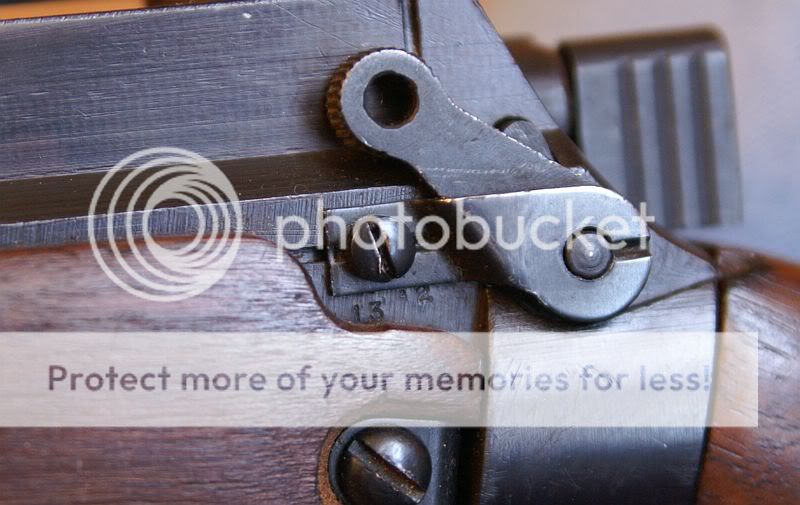
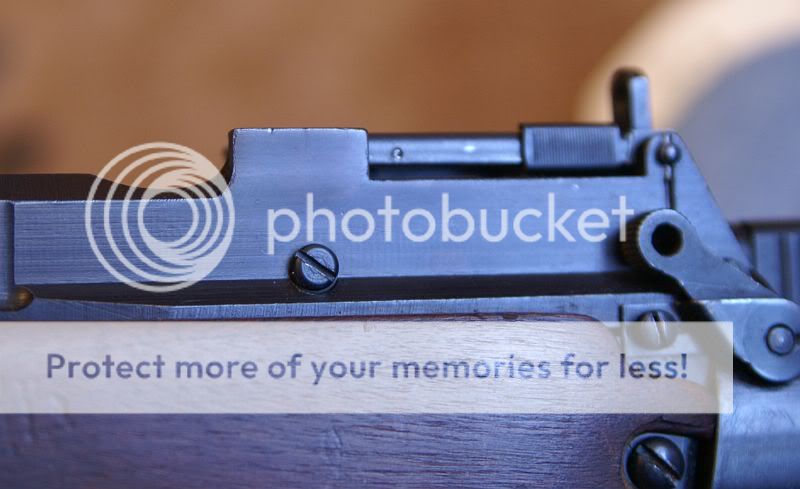
The only mark I can find on the rifle is a C broadarrow on top of the right wrist. Should be visible in the picture, beside the bolt.

Close exam of the bolt face, mag and feedramp suggest it has never been fired.

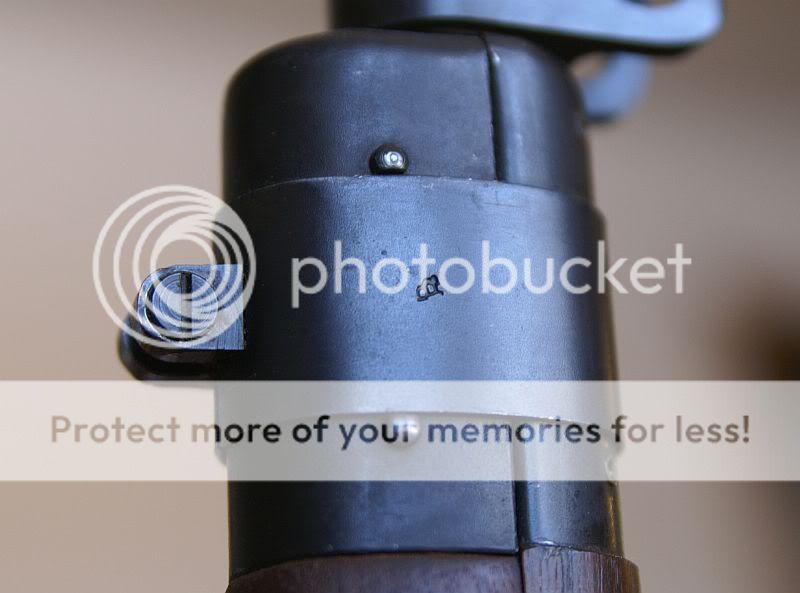
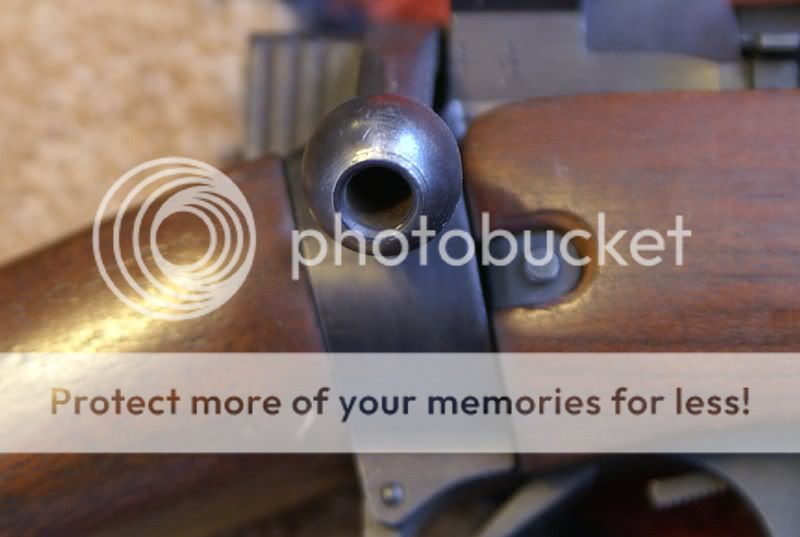
At the muzzle you can see bubba at work, unless there was some Longbranch experiment on shorter barrels. This is 22".

I am assuming this is lunchbox special, unless someone here knows different.
VIRGIN45.jpg

Well your front sight block is on backwards.
 
I don't know the precise production procedure at Long Branch in War Two, but I do know what went on at Enfield in the Great War period.

Parts from all over the plant were assembled into completed rifles in the white and PRIOR to numbering and finishing. Once a rifle was accepted as a unit, it went for Proofing and THEN was serial numbered. At the same time, critical parts were numbered to the main Body of the rifle. Prior to this, only assembly numbers were used and, as anyone knows, these were few and far between and on critical components only.

Once the rifle was numbered, it was stripped down completely. Wood parts went to the wood shop for finishing AS A SET. Metal parts went AS A SET to the metal-finishing shop for browning or whatever method was in vogue.

When these processes were finished the finished and numberd parts were brought together once again with the Body to which they were numbered, the rifle was assembled and went for final inspection, following which it was shipped.

This procedure worked and worked well. There would have been no reason to change it, given that the factory wanted to build a rifle with any accuracy at all. Building a rifle at that time was a great deal more than just slapping together a bunch of plastic parts on genuine "Picatinny" rails and proclaiming to the world that you had "built" a rifle.

To build an unnumbered rifle would have entailed building a complete rifle, then disassembling it, sending the parts to two separate shops for finishing, then bringing the unnumbered parts together once again and rebuilding the rifle from its own LIKE-FINISHED parts. We know that this was actually done on rare occasions, the issue remaining being "on how many occasions?"

I have an unnumbered No. 4 Rifle, a Long Branch 1944 specimen. I have had it for some 20 years. Prior to my obtaining it, it spent 1 week with a dealer friend and, before that, was in the same location since 1945. It remains completely unfired and pristine and the woodwork is finished to exhibition standards. As well, it is the loveliest single set of wood I have ever seen on a Number 4. I have found no reason to believe that it was slapped together out of spare parts the day before I got it.

So the mystery is how to account for the critter.

Right now I'm hanging onto it because it is the only thing in this house that is the same age as myself and is not completely decrepit: a reminder that I myself, once upon a time, was in good condition and unused!

.
 
I doubt that the manufacturing flow at SAL was the same as at Enfield during WWI. It was a recently built plant purposely designed to maunfacture the No. 4 rifle, with a freshly trained workforce. I imagine that the product flow would have had more in common with the auto industry.
I've never worked in a gun factory. Closest was a facility manufacturing 2.75" rocket warheads, and I know that if I had wanted souvenirs, I could have had them. Personnel not actually doing piecework on the line would have had the opportunity for a little private work.
 
Good point regarding procedures, Tiriaq.

Thank you.

Something more to think about.

BTW, my rifle is a standard LB but it has the British-type safety. Another mystery of sorts.
.
 
Just sold this one recently, and expect it will be on the market all kitted out soon.
IMG_4062.jpg

Interesting. Is there a story attached?

They'll need to find a LB bolt with a hole in the knob, among other things.

There were probably hundreds of these rifles made up in the years SAL and Canadian Arsenals were operating. A gentleman in his 90s I was acquainted with who was ex-RCN engineer officer and an inspector of some sort for the RCN in the 50s happened to mention in the course of a conversation about firearms how he would sometimes visit Long Branch in the course of his duties. When a colleague retired they had a rifle built for him at Long Branch "unofficially" in a sort of semi-sporter configuration. Came complete with the paper tags he said. There were probably lots of parts around that were slightly out of spec for military use, but still perfectly serviceable, or just left overs that could be used.

Different place and time.

Smellie, your rifle has a fluted trigger - long gone from production by 1943, but a goody that someone had in a drawer and decided to add as a little extra for that rifle. Just what you'd expect.
 
Last edited:
I have one, looks like a sporter with a short handguard and shortened barrel. It is not a reworked military stock. I read (in a NRA publication I think) that when the last Enfields were taken out of service, surplus receivers were given to the armorers to do with as they pleased. Some attached a random serial number to them, some did not. I had a beautiful Long Branch No.5 in .22 cal. that I believe was one of those. The article said many were made into .22's, hunting rifles, and target rifles. Has anyone else heard of this?
 
pic heavy

I have an un-numbered LB. I don't see any year stamped anywhere in the open. The top handguard is fluted (?). The little parts are stamped with the LB crammed together. I also have a 1945. There are subtle differences in the two. :)

here's some pics:

LB7ax.jpg

LB6ax.jpg

LB5ax.jpg

LB4ax.jpg

LB3ax.jpg

LB2ax.jpg

LB1ax.jpg
 
Last edited:
I've been offered LB's (1941-1944) un-marked, with claims they are everything from "lunch box" walk aways, to showroom samples for the front office.

Just my opinion, but as a collector, I wouldn't pay any more than the standard price for one, using it's year of manufacture, rarity and condition and the only basis for valuation.

I simply don't understand what makes anyone think they'd be worth more than that, given they have no historical significance such as being known and documented experimental pieces, hence items with a rare provenance.

To me, they're not prototypes or experimentally un-marked items, but simply anomalies of unknown origin and have a unique "coffee table" discussion factor, but that's about it from a value perspective. :D

Regards,
Doug
 
Mixmaster

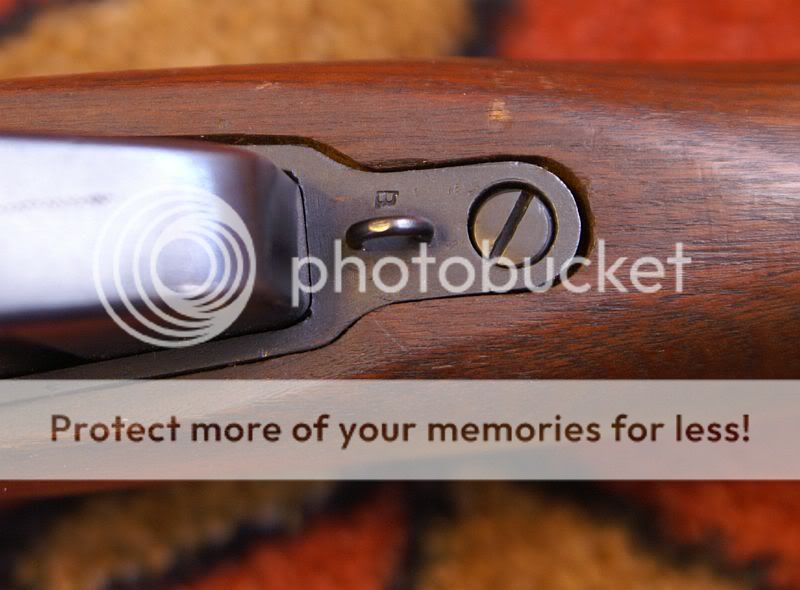
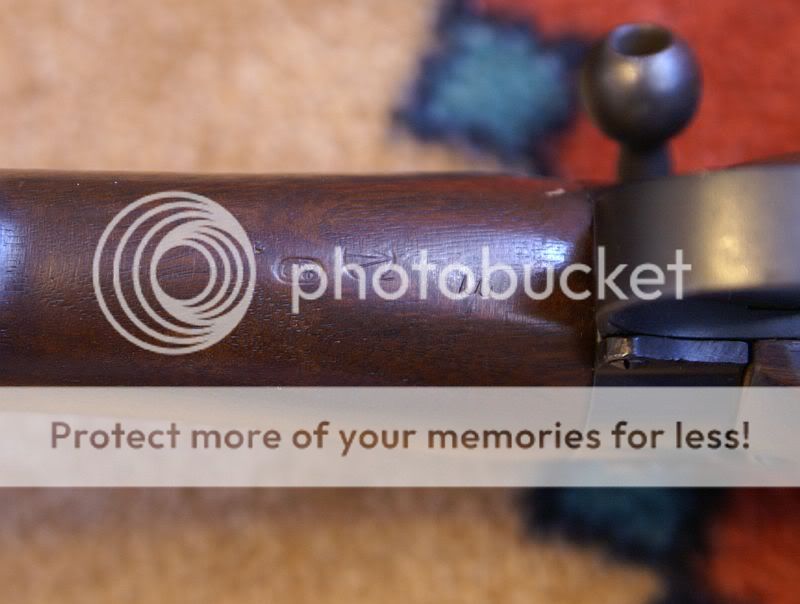
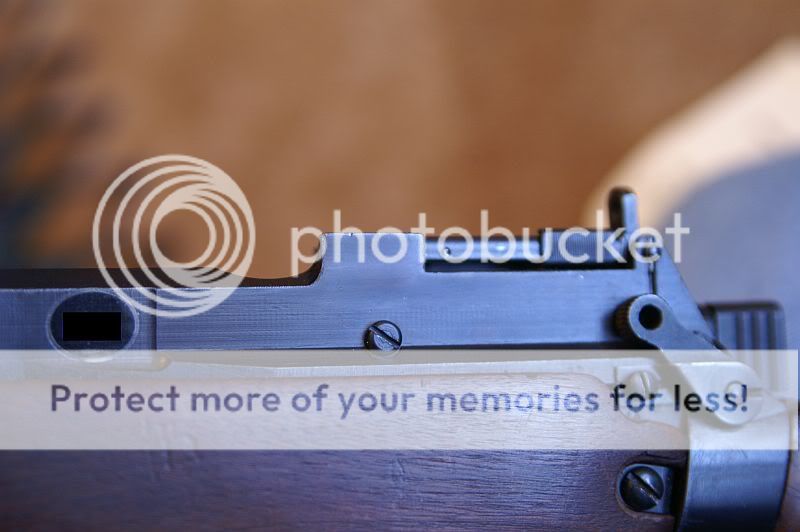
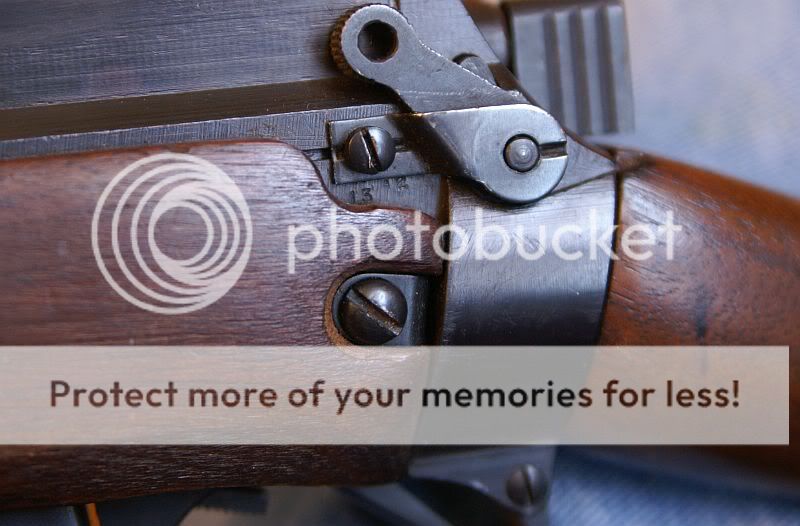
The one I posted pics of is, uh, well, suspect, at best. It appears as though something has been ground or buffed off near to where the Mark # and year would normally have stamped. Although the location does not anywhere near match where my other two are stamped, it does appear to have been scrubbed. The wrist socket looks a bit suspicious as well, seems a bit smoother than it should be.

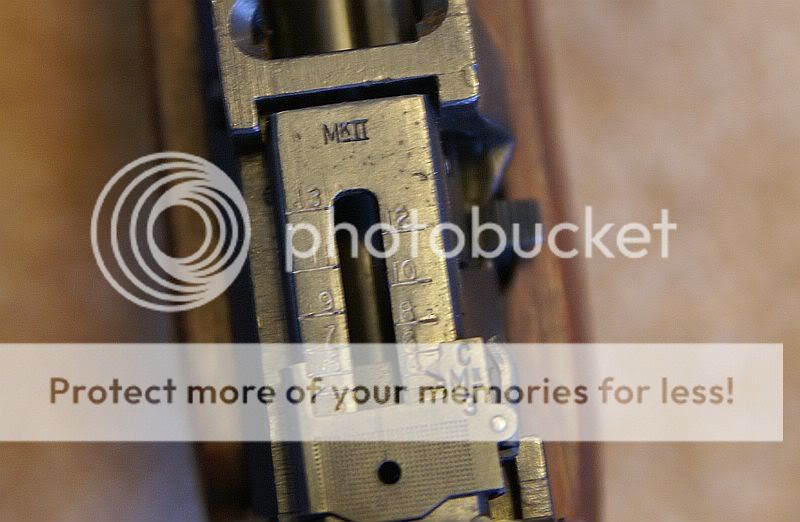
I note that the sight says MkII on the ladder and Mk3 on the other part. Hmmm..... It was likely Mackenzie King's personal rifle.....:p

LB8ax.jpg
 
If I didn't know better, I'd say it's a Brit Gun. They typically have nothing much stamped on them and the left receiver finish looks like that's what it probably is.


But yes, many LB parts on it. Maybe LB did an FTR on it? Or the Canadian Army owned it for a while.

If it was a Long Branch it could only be a 1941 as it has the button bolt head release.

Funny looking proof on the upper band, kind of stylized and different than the normal LB.

Note the rear sight- appears Canadian but has Mk II on it vs the normal Mk III. ??

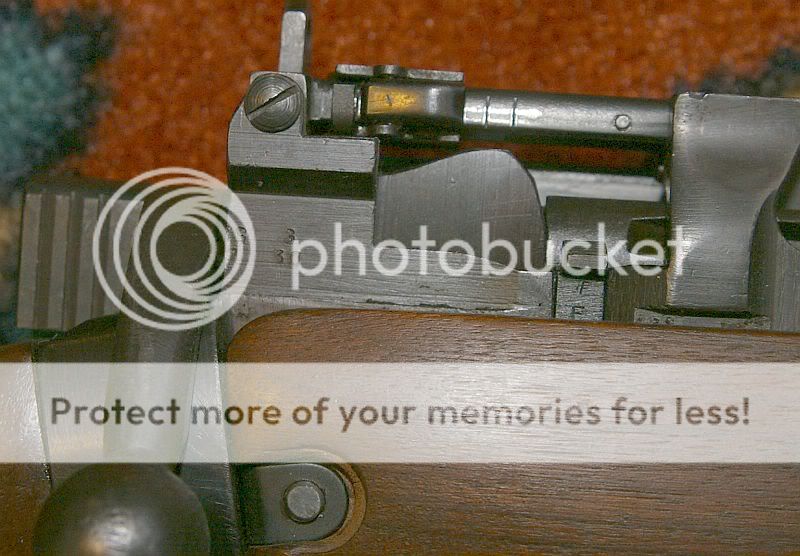
Also- What is that machining on the left of the receiver, left of the ejector screw? Like a vertical cut?
 
Last edited:
Ha...I stick with it being a British Enfield receiver.

Funny thing though...from my readings, the Brits never released blank receivers the way we did. They were much tighter with their rules, referring to a receiver as a "Primary Component" or similar as I recall and guarding them like the Crown Jewels. (paraphrasing Peter Laidler)

This rifle is a bit puzzling.
 
cantom: Here's a better shot of the left receiver side:

LB9ax.jpg


and the wrist socket left side:

LB10ax.jpg

That is a Fazakerly manufactured action, probably a No4Mk2. Can you show a picture of the "cut-off" block on the right side of the receiver?

A number of them were/are available in New Zealand sans serial numbers (threads on gunboards, milsurps ect) so they should be available here too.
 
That is a Fazakerly manufactured action, probably a No4Mk2. Can you show a picture of the "cut-off" block on the right side of the receiver?

A number of them were/are available in New Zealand sans serial numbers (threads on gunboards, milsurps ect) so they should be available here too.

Aggghhhh...right you are Lee Enfield. The cross screw means either No4MkI/3 or No 4 Mk 2.
 
Back
Top Bottom