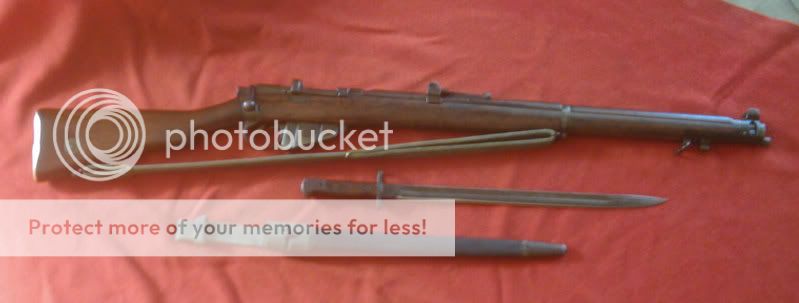
Value after refinish.

Replacing bubba'd bits is one thing, refinishing the metal is quite another.
Examplel I once had a fellow at work ask me to find him a nice No4. The rifle was almost pristine, but had a few minor chips in the suncorite. I loaned him a spray can of "british black" paint to touch up thise chips. THE BLOODY IDIOT WIRE BRUSHED off ALL the original finish and used the touch up paint to do the complete rifle. (used the entire can and Never paid me for it.) To add insult to injury , he then had it drilled and tapped for a scope!
He also wanted a Mk6 Webley, and I found one, but after I saw what he did to the rifle, I bought the pistol for myself.
 
I think what pklassen really wants to do is enjoy restoring a rifle that has been bubba'ed just for the fun of it.

I would say that Lee Enfields No 4 Mk Is are probably the easiest to restore as the parts appear to be much more abundant than any other milsurp I have seen. German rifles, for example, are different flip of the coin.

Nothing quite like holding a restored rifle in your hands and saying to yourself: "I brought this back, nobody else cared, but I did and it shows".

Let us know what you do choose to restore and feel free to post your ideas and progress in the restoration sticky on this board as I am sure we are all eager to see some new ways to restore a rifle back to original configuration.
 
Get some
mother-teresa-pokes-kitten.jpg
 
This thread is getting ridiculous. The OP clearly does not want to hear the correct answer - he just wants to be be coddled about his already decided course of action.

To Summarize:

Most correct SMLE/No.4 rifles in nice original unaltered condition with a few wood nicks and some finish thinning are worth $400+ in the bore is really nice. Some are worth much more.

Most K98's are worth $450 minimum for a captured and rebuilt parts rifle to $2000+ for some original vet bringbacks.

In either case, if you add any new finish or remove and redo any finish on the stock, you have lowered the value from a collectible gun to a "shootable range rifle". the former is valuable to colectors wit hmore money than common sense (at times), while the latter is only marketable as a shooter.

Shooters are worth about $300 at best.

It's simple economics. Why buy a $500+ rifle and purposefully devalue it to a $300 rifle?

You can certainly do so, but no-one is going to validate that behaviour for you on a forum dedicated to collecting original rifles.
 
I had a really hard time convincing a young and impressionable shooter that the apparently new condition of his early wartime Garand was not some statistically phenomenal, overlooked, long-forgotten and never issued rifle that had been a locker queen all of its life. He had obviously spent big money to believe a story.

Buy the rifle not the story. If the Original Poster wants to refinish his rifles, that is his business. But it becomes everyone's business when the next owner and the next owner don't know what has happened. And, if he permanently alters a scarce rifle - great! Mine will rise in value.
 
The OP should just buy a Mitchell Mauser.

They were all Waffen SS, unissued, never fired, and kept under Himmler's mattress.


:p
 
Spiff it up and enjoy your rifle.

Great thread, I got a chuckle out of it. Some of the ethos that applies to antique collecting is now being applied to collecting milsurps. It is a challenge these days to identify an original rifle. Most that I handle have been messed with in some way or another, usualy by private owners long often after they have left military ownership. They are still interesting non the less and it is fun to play detective and figure out if certain parts could have been changed in service, what is correct and what is not. There are many rifles floating around that look nice but are the result of somebody's efforts putting full wood back onto a sporter. Buyer beware.

Whether to restore or not is often an cunundrum that I find myself in. I collect militaria and part of it is collecting firearms, many of which are antiques (100 years old and older). My current collecting focus is on Commonwealth rifles and carbines from the latter half of the nineteenth century.

My hobby is to start out with a Bubba'd rifle, strip it down into its basic components, all gets sorted and goes into my part bins. If a barreled receiver is in good mechanical condition, if I find a suitable barrel, it will probably end up being a project and i will build it back up into a complete rifle or carbine to original specs, with original parts of the same make (Enfield, BSA, LSA, Sparkbrook) and with correct period inspection or proof marks. (I gotta keep a lota parts in my bins). In fact, I spend very many enjoyable hours finding the right bit with the correct markings for that make and model of rifle. The correct marked part is a bit obsessive compulsive, but that is my hobby and what I am into. For some reason a BSA barrel band on an Enfield, bugs me (why are most MLE trigger guards out there made by BSA?). But with some older stuff, finding a part that simply iwill fit and function is a challenge, so I can't be fussy. Some parts are harder to find than others, but if I can't find a part, I will hand fabricate it or have it made.

The essence of most of my projects, is to try to remove the evidence of years of abuse and neglect, to return an arm is back to original spec (mitary or civvy) with a finish that reflects its age. Nothing wrong with honest wear, a hundred year old rifle is ok in my eyes to look well used.

A great deal of time (and money) is invested in each project, but when I am finished, I don't pretend that I have anything other than a parts gun. Yep, it is authentic and to anyone else, it would appear original. If added up, the cost of purchasing the parts and/or paying for gunsmith or machining services, I end up out of pocket $1000 for a rifle that might be worth $500. However, I would only loose if I were to sell, the value to me is in the hours of enjoyment tinkering with it.

I do the same thing with Jeeps and Harleys. I could shell out and buy a complete one, but usualy I'll find an engine somewhere for a deal, buy it and call it a project. I'll start looking for wheels, a frame, a transmission. Here we go again.

So my mission is to gather up Bubbad and beater rifles. What I end up with is good parts in my spares bins and a junk drawer full of bit and shiits that I cannot use for restorations due to being modified or very poor condition. Every once and I while, I will gather up these junk parts and put together a Frankenfield. Anything goes with rebuilding these ones, I get a release for all my Bubba tendancies. I can drill, file, cut, sand, paint, use cold blue, BBQ paint, fit after market accessories, sights and not feel guilty about what i have done. Each Frankenfield is 100% fit to shoot, I enjoy building these ones almost as much as restoring.
bubbas.jpg

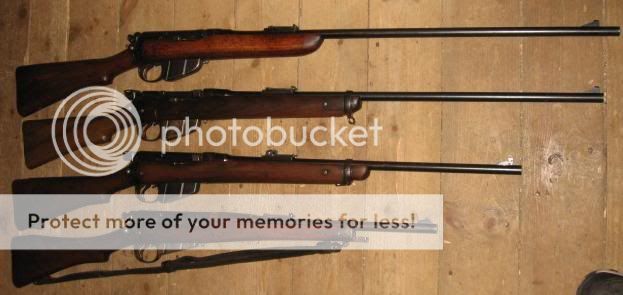
Projects in progress, carbine is built up from reject parts. All have good bores and are very shootable.

pic001-3.jpg

Bubba rifles built with parts that I cannot use on restorations.

77.jpg

Frankenfield in progress.

mlmII.jpg

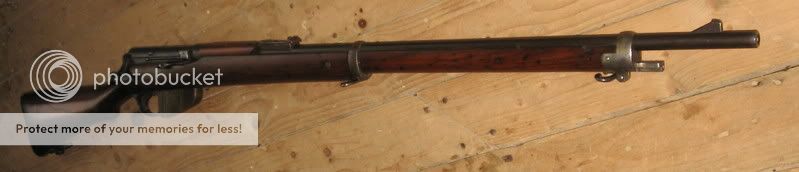
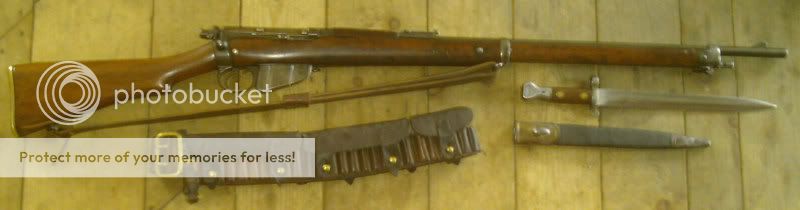
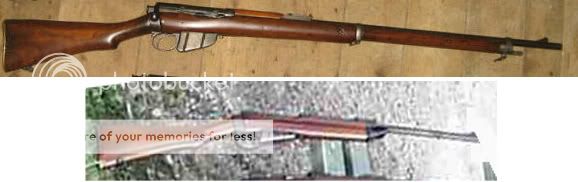
1893 Enfield made Lee Metford Mk.II. Built back up from a receiver. Each piece is Enfield made and correctly marked with a WD broad arrow stamp.

IMG_0088.jpg

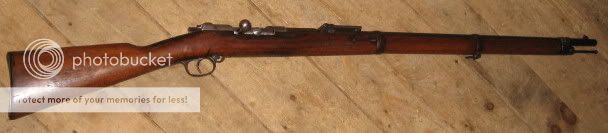
1888 Spandau made Mauser M1871/84. Took a while but found replacment parts with correct 2 digit serial markings.

IMG_0052.jpg

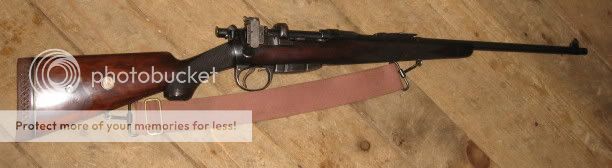
Call me Bubba! BSA made sporting carbine circa 1920.

Martinishortrifle.jpg

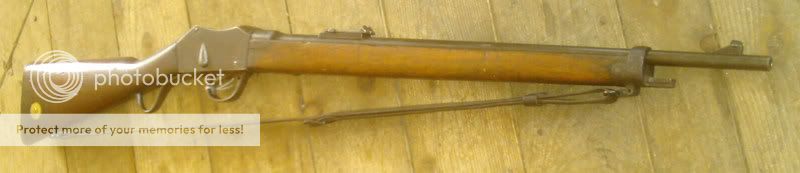
Birmingham Trade made Martini long rifle circa 1910.

MLE1starpic.jpg

1902 Enfield made MLE Mk.I*. I sold this one but made sure that I told the buyer that it was a resto and that the forearm had a grafted front section.

1917no1.jpg

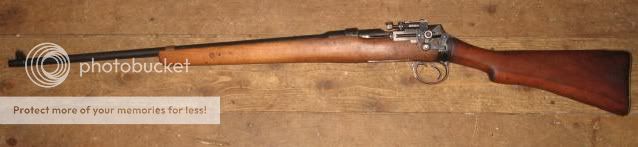
1918 Enfield made Sht.LE mk.III*. Parts gun built up on a barreled receiver with matching bolt. I slow rust blued the metalwork. Nobody would know unless I told them.

bsa3.jpg

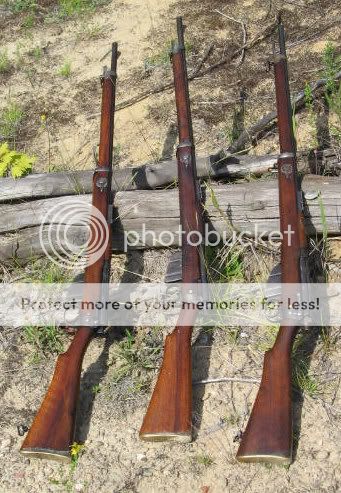
Three nice shooting rifles, one is 100% original, the other two are parts guns.

beforeandafter.jpg

Top rifle is finished project, bottom pic is of how I bought it.

x.jpg

Another Frankenfield. Purpose built up from parts, it is probably the most acurate of the rifles that I shoot.

Where I find myself now, as my collecting interest moves backwards in time period, handling artifacts that have greater historic and collector value. Normaly, if I buy any regular firearm, one of the first things that I do when I get it is to strip it, clean and oil it. I get it squeeky clean enough as if I were to be on inspection parade the next morning. But with these antiques, I have to approach it differently. For example, if I have a 140 year old rifle that has obviously not been disturbed for many, many years., should I strip the action out of the woodwork? Should I remove the lock from the stock inletting to clean in behind the plate? I find myself telling myself "lest is best" and will leave well alone. I find myself in the mindset of what I once considered to be anal collectors. I leave those signs of antiquety alone. If I can tell that the rifle is undisturbed, i will leave that evidence there for the next collector to see. I can't tell ya how much it bugs me to leave old congealed oil and dirt in the cracks and crevices. I want to pull the action from the wood and clean it with oil and fine steel wool.


However, it is way too easy to take a $4000 antique and turn it into a $2000 one without trying.

So I have come full circle, from stripping and refinishing to just a gentle surface cleaning.

As for your project, my feeling is if you take an original $200 milsurp rifle, refinish it to look like new, but do it properly, you will still have a $200 refinished rifle. Maybe if the buyer isn't into collecting and don't care that it is refinished, maybe a bit more $$$.

I understand too well the urge to tinker with something and 'improve it'. So my recommendation is to find a complete beater with good bore and action, then make her pretty. Shoot it and enjoy it, life is way too short.

 
Last edited:
Great thread, I got a chuckle out of it. Some of the ethos that applies to antique collecting is now being applied to collecting milsurps. ...

I do the same thing with Jeeps and Harleys. I could shell out and buy a complete one, but usualy I'll find an engine somewhere for a deal, buy it and call it a project. I'll start looking for wheels, a frame, a transmission. Here we go again.

....

So, are you responsible for the WWII Jeep that left UK after being found at a local auto mechanics garage in use as a utility pusher, and after trading several hands is now in France 'known to be the exact same Jeep that Patton rode in liberating Paris"? The giveaway are the old bolt holes on the hood for the garage's name plate, now proported to be 9mm Schmeiser SMG bullet holes fired by (fill in the blanks).
 
IMG_0088.jpg

1888 Spandau made Mauser M1871/84. Took a while but found replacment parts with correct 2 digit serial markings.

Love that 71/84. I am curious what the serial number is ? I have one from Spandau, same year. I already know someone who owns the "sister" rifle that is (I think) less than a 100 off.

Finding those parts must have taken an age as 71/84 parts are not common. I had a hell of a time looking for a trigger guard swivel as the rear swivel mount on the butt stock was lost long ago. Wonderfully built firearm, heavy as heck!
 
e ca, I have said it time and time again, there is a lot more to collecting and shooting milsurps, than ferreting out perfect examples or restoring them to as issued condition.

These rifles are fun to shoot. Taking them apart, building up decent representative samples, is fun. Building up shooting examples, that aren't quite correct or have chopped wood is a lot of fun as well and leads to intimate experience with many different models. Many of these bubbas, are give aways. Many sell for under $100 as well. Many will have near perfect parts and bores. That can't be said for a lot of "correct milsurps".

For instance, the picture of the rifle MLE you like to shoot and say is your most accurate rifle. The rear sight, No 9, on that rifle, was made between 1907 and 1912. I just recently had one identified myself. The sight was a special order then, going for 18pounds 6. That didn't include installation. That was about $100 C at the time, or the equivalent price of a high end scope today. If it came on that rifle, it is highly likely that the bbl was a special order as well. The rifle I have, has a 1-8in twist rate and 7 grooves, indicating it is Metford style. That just may be a jewel in the rough. It most definitely is the rifle to take to the range and place side bets on. That can be a very decent way to pay for these old girls as well. That is until people get on to it.
 
I think what pklassen really wants to do is enjoy restoring a rifle that has been bubba'ed just for the fun of it.

I would say that Lee Enfields No 4 Mk Is are probably the easiest to restore as the parts appear to be much more abundant than any other milsurp I have seen. German rifles, for example, are different flip of the coin.

Nothing quite like holding a restored rifle in your hands and saying to yourself: "I brought this back, nobody else cared, but I did and it shows".

Let us know what you do choose to restore and feel free to post your ideas and progress in the restoration sticky on this board as I am sure we are all eager to see some new ways to restore a rifle back to original configuration.

Thanks for posting. Atleast a couple people seem to see my goal. Ill be sure to post some progress pics in a month or two.
 
This thread is getting ridiculous. The OP clearly does not want to hear the correct answer - he just wants to be be coddled about his already decided course of action.

To Summarize:

Most correct SMLE/No.4 rifles in nice original unaltered condition with a few wood nicks and some finish thinning are worth $400+ in the bore is really nice. Some are worth much more.

Most K98's are worth $450 minimum for a captured and rebuilt parts rifle to $2000+ for some original vet bringbacks.

In either case, if you add any new finish or remove and redo any finish on the stock, you have lowered the value from a collectible gun to a "shootable range rifle". the former is valuable to colectors wit hmore money than common sense (at times), while the latter is only marketable as a shooter.

Shooters are worth about $300 at best.

It's simple economics. Why buy a $500+ rifle and purposefully devalue it to a $300 rifle?

You can certainly do so, but no-one is going to validate that behaviour for you on a forum dedicated to collecting original rifles.

Well Claven if you've read the whole thread then you should know that i already plan to take a junker or a sporterized milsurp and restore it to make a shooter that looks great but you feel its appropriate to continue to flame me? Also take note that i never asked if i should do this i asked how it would effect value and i dont need or want your permission or any others who insist on flaming me for seeking a little direction.
 
Great thread, I got a chuckle out of it. Some of the ethos that applies to antique collecting is now being applied to collecting milsurps. It is a challenge these days to identify an original rifle. Most that I handle have been messed with in some way or another, usualy by private owners long often after they have left military ownership. They are still interesting non the less and it is fun to play detective and figure out if certain parts could have been changed in service, what is correct and what is not. There are many rifles floating around that look nice but are the result of somebody's efforts putting full wood back onto a sporter. Buyer beware.

Whether to restore or not is often an cunundrum that I find myself in. I collect militaria and part of it is collecting firearms, many of which are antiques (100 years old and older). My current collecting focus is on Commonwealth rifles and carbines from the latter half of the nineteenth century.

My hobby is to start out with a Bubba'd rifle, strip it down into its basic components, all gets sorted and goes into my part bins. If a barreled receiver is in good mechanical condition, if I find a suitable barrel, it will probably end up being a project and i will build it back up into a complete rifle or carbine to original specs, with original parts of the same make (Enfield, BSA, LSA, Sparkbrook) and with correct period inspection or proof marks. (I gotta keep a lota parts in my bins). In fact, I spend very many enjoyable hours finding the right bit with the correct markings for that make and model of rifle. The correct marked part is a bit obsessive compulsive, but that is my hobby and what I am into. For some reason a BSA barrel band on an Enfield, bugs me (why are most MLE trigger guards out there made by BSA?). But with some older stuff, finding a part that simply iwill fit and function is a challenge, so I can't be fussy. Some parts are harder to find than others, but if I can't find a part, I will hand fabricate it or have it made.

The essence of most of my projects, is to try to remove the evidence of years of abuse and neglect, to return an arm is back to original spec (mitary or civvy) with a finish that reflects its age. Nothing wrong with honest wear, a hundred year old rifle is ok in my eyes to look well used.

A great deal of time (and money) is invested in each project, but when I am finished, I don't pretend that I have anything other than a parts gun. Yep, it is authentic and to anyone else, it would appear original. If added up, the cost of purchasing the parts and/or paying for gunsmith or machining services, I end up out of pocket $1000 for a rifle that might be worth $500. However, I would only loose if I were to sell, the value to me is in the hours of enjoyment tinkering with it.

I do the same thing with Jeeps and Harleys. I could shell out and buy a complete one, but usualy I'll find an engine somewhere for a deal, buy it and call it a project. I'll start looking for wheels, a frame, a transmission. Here we go again.

So my mission is to gather up Bubbad and beater rifles. What I end up with is good parts in my spares bins and a junk drawer full of bit and shiits that I cannot use for restorations due to being modified or very poor condition. Every once and I while, I will gather up these junk parts and put together a Frankenfield. Anything goes with rebuilding these ones, I get a release for all my Bubba tendancies. I can drill, file, cut, sand, paint, use cold blue, BBQ paint, fit after market accessories, sights and not feel guilty about what i have done. Each Frankenfield is 100% fit to shoot, I enjoy building these ones almost as much as restoring.
bubbas.jpg

Projects in progress, carbine is built up from reject parts. All have good bores and are very shootable.

pic001-3.jpg

Bubba rifles built with parts that I cannot use on restorations.

77.jpg

Frankenfield in progress.


Martinishortrifle.jpg

Birmingham Trade made Martini long rifle circa 1910.

MLE1starpic.jpg

1902 Enfield made MLE Mk.I*. I sold this one but made sure that I told the buyer that it was a resto and that the forearm had a grafted front section.

1917no1.jpg

1918 Enfield made Sht.LE mk.III*. Parts gun built up on a barreled receiver with matching bolt. I slow rust blued the metalwork. Nobody would know unless I told them.

bsa3.jpg

Three nice shooting rifles, one is 100% original, the other two are parts guns.

beforeandafter.jpg

Top rifle is finished project, bottom pic is of how I bought it.

x.jpg

Another Frankenfield. Purpose built up from parts, it is probably the most acurate of the rifles that I shoot.

Where I find myself now, as my collecting interest moves backwards in time period, handling artifacts that have greater historic and collector value. Normaly, if I buy any regular firearm, one of the first things that I do when I get it is to strip it, clean and oil it. I get it squeeky clean enough as if I were to be on inspection parade the next morning. But with these antiques, I have to approach it differently. For example, if I have a 140 year old rifle that has obviously not been disturbed for many, many years., should I strip the action out of the woodwork? Should I remove the lock from the stock inletting to clean in behind the plate? I find myself telling myself "lest is best" and will leave well alone. I find myself in the mindset of what I once considered to be anal collectors. I leave those signs of antiquety alone. If I can tell that the rifle is undisturbed, i will leave that evidence there for the next collector to see. I can't tell ya how much it bugs me to leave old congealed oil and dirt in the cracks and crevices. I want to pull the action from the wood and clean it with oil and fine steel wool.


However, it is way too easy to take a $4000 antique and turn it into a $2000 one without trying.

So I have come full circle, from stripping and refinishing to just a gentle surface cleaning.

As for your project, my feeling is if you take an original $200 milsurp rifle, refinish it to look like new, but do it properly, you will still have a $200 refinished rifle. Maybe if the buyer isn't into collecting and don't care that it is refinished, maybe a bit more $$$.

I understand too well the urge to tinker with something and 'improve it'. So my recommendation is to find a complete beater with good bore and action, then make her pretty. Shoot it and enjoy it, life is way too short.


Now this is a man who gets it. Your work is truly inspiring. Hopefully one day i could turn my interest in restoring a sporterized milsurp to level of perfection you show in your builds. Thanks for taking the time to post all that i imagine it took a while to put together. Some really great looking rifles there.


 
pklassen, in your original post, you made no mention of restoring a Bubba or sporter. It's understandable that you will take some flak, if you don't make your question clear.
Now, I really like the idea of rebuilding and restoring milsurps. For one thing it's fun and for another, you get to learn a lot. As far as value goes, if you replace all of the parts with original stuff, you might break even. Many rifles out there were redone by the REMEs in depot, for presentation or even personal purposes. They look great. As far as making up a beauty for yourself, beauty is in the eye of the beholder.
As I said above, there is a lot more to collecting and shooting than just all original, in spec specimens.
Now that your aims are clear, go for it, have fun. If you make a bit of money or even clear your expenses, good for you.
 
I dont see why its so frowned upon to refinish a milsurp. I just want something in perfect condition. I think it would be fun to take a ok rifle and make it brand new again and if it gained value then that would be a plus but obviously thats not the case. Ill go ahead and do it anyways for the hell of it and if people look down on me for it then oh well i dont care ill still have an amazing looking rifle to shoot and admire. Thanks for all the info


I think this is why you may have been flamed. You also seemed to indicate that you didn't care what people thought. You also indicated you'd like to refinish the stock and reblue the metal on two of the more valuable and hard to acquire types of milsurps.

You aren't the first poster to come here, a forum decicated to the preservation of military rifles, and get a slightly hostile response to altering highly historical and collectible firearms.

That aside, restoring a bubba is an excellent way to do what you want (have a perfect specimen) without angering the milsurp gods.

I commend you for your willingness to hear what some of our more experienced and knowledgable members have said.

Now go to the restoration sticky and prepare for a moderate to severe case of Enfielditis.
 
Back
Top Bottom