












































You are using an out of date browser. It may not display this or other websites correctly.
You should upgrade or use an alternative browser.
You should upgrade or use an alternative browser.
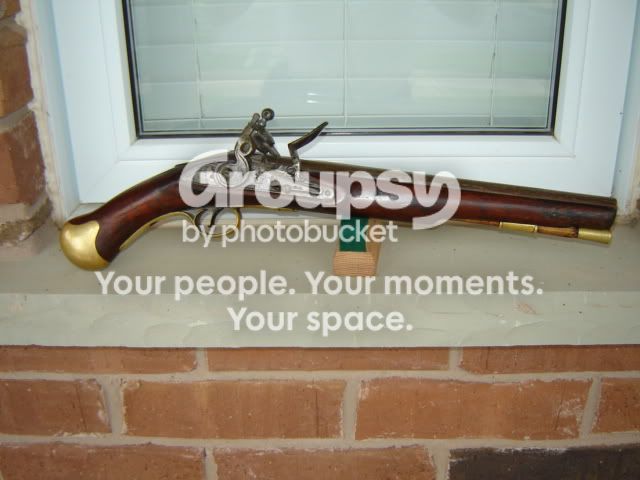
Value?? of this antique firearm?\
- Thread starter Abman
- Start date


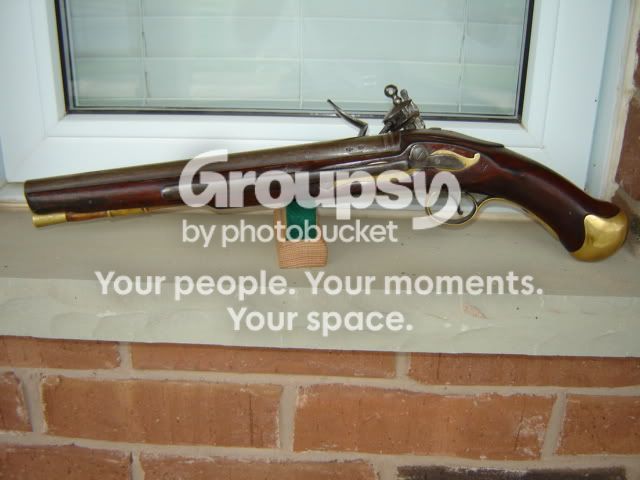
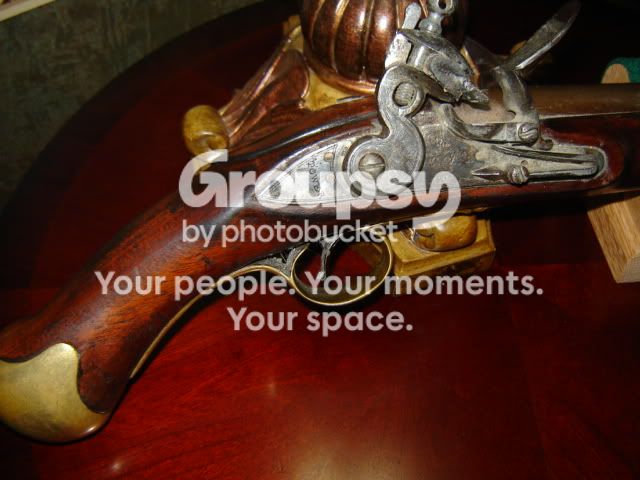
thats a sea service pistol from the early 1800s it looks to be in awsome shape minus the top jaw and topjaw screw , if I were you I'd look up the going price on auction in the UK online then figure out the $ conversion to our $ and price acordingly dont ask on here we'r all colletors and we'r all looking for a deal ......so I wouldnt go by anything here look it up you'll find what you want on the auction sites.

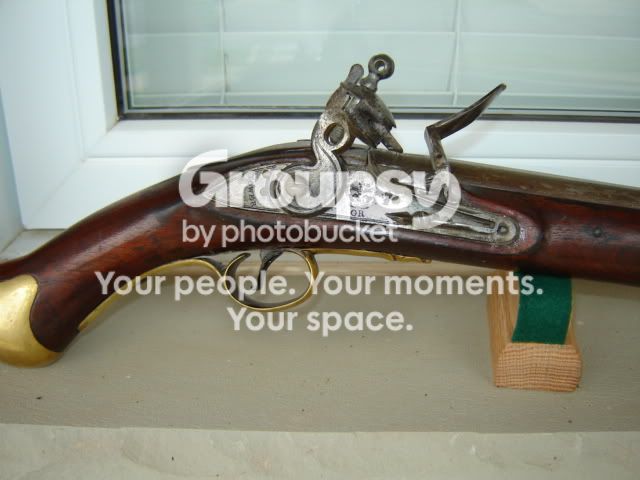
Half of what it was worth before the patina was removed and the brass polished. That makes it of little interest to collectors. The missing parts reduces its value as well.
There's an untouched Long Sea Service Flintlock Pistol(without the belt hook) on a U.S. site, the guy is asking $4950US. You might get half that or less, Canadian.
There's an untouched Long Sea Service Flintlock Pistol(without the belt hook) on a U.S. site, the guy is asking $4950US. You might get half that or less, Canadian.

It is unfortunate that the metal has been cleaned up. As a result, the value has taken a major hit, as Sunray mentioned above. Still, it is a nice piece and still retains some value. I could not tell you what it is worth, as I don't collect that particular type of antique gun.
true what they say above...I'd still look it up in an auction or a few for that matter and come up with an idea of what one in the condition of your pistols going for, more then likely in the 2000 range if thier asking 4000 or 5000 for one in great condition.....still research it carfully first before setting your price.
It appears to be a 'Pattern 1801' British sea service pistol, as defined by De Witt Bailey (Small Arms of the British Forces in America 1664-1815). The Pattern 1801 was similar to the previous sea service pistols dating back to the early 18th century - hence it has an early shape and look to it - except for the India Pattern 'flat' lock with stamped markings and more border decoration than earlier models. This is the most common of the sea service pistols as it was the main type in use during the Napoleonic Wars and the War of 1812.
This appears to be a pretty good example and the issue with the metal noted above is partly caused by reflection in the photographs, I suspect. The brass does not look overly scrubbed and nor does the steel, as shown by the crisp crown and tower markings on the lock and the clear proof and breech marks on the barrel. This does not appear to be as badly scrubbed as many I've seen.
The belt hook and ramrod look as if they might be original, which is a plus - quite often they are replaced. There are some very high quality kit reproductions of this pistol available, so parts are easily obtained (and some of the well-made 'antiqued' replicas are very convincing indeed!)
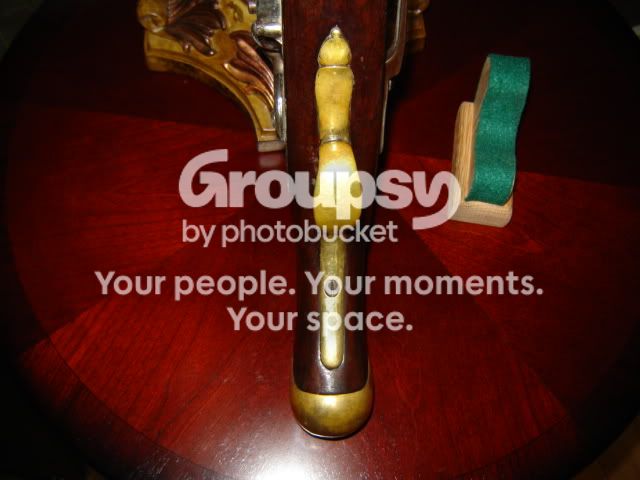
The number on the butt is probably a ship's rack number, or that of a naval shore depot or base. Often they have the number stamped on the trigger guard and the ramrod pipe as well.
The 1801 Sea Service pistol has great historical resonance - this was the pistol used in all of those famous naval engagements of the Napoleonic Wars period, including Trafalgar and the famous frigate actions. You can see it being used in the marvellous Peter Weir film of Patrick O Brian's novel Master and Commander, probably the best film ever made showing naval action of that period.
This appears to be a pretty good example and the issue with the metal noted above is partly caused by reflection in the photographs, I suspect. The brass does not look overly scrubbed and nor does the steel, as shown by the crisp crown and tower markings on the lock and the clear proof and breech marks on the barrel. This does not appear to be as badly scrubbed as many I've seen.
The belt hook and ramrod look as if they might be original, which is a plus - quite often they are replaced. There are some very high quality kit reproductions of this pistol available, so parts are easily obtained (and some of the well-made 'antiqued' replicas are very convincing indeed!)
The number on the butt is probably a ship's rack number, or that of a naval shore depot or base. Often they have the number stamped on the trigger guard and the ramrod pipe as well.
The 1801 Sea Service pistol has great historical resonance - this was the pistol used in all of those famous naval engagements of the Napoleonic Wars period, including Trafalgar and the famous frigate actions. You can see it being used in the marvellous Peter Weir film of Patrick O Brian's novel Master and Commander, probably the best film ever made showing naval action of that period.
it looks exactly the same as one I had a post about here a number of months ago...... my goal is to build one at some point, I spent many days playing around my old friends farm as a child with the one I had posted, beautieful handling and shooting pistol. if I were you I'd find a good repro top jaw and screw then I'd put it over the mantel to admire.

Here are some photos of this pattern of British Sea Service Pistol that I will be posting on EE shortly. This is a very nice Sea Service with excellent markings, date is stamped in the stock of 1803, stock maker marks are clear in the ram rod channel, wood is stamped with ordance store keepers mark. This is still in original flint with original belt hook. The ram rod also appears original showing patina where the ram rod pipe is. The brass has a nice mustard color patina.
More information on these pistols can be found on http://www.militaryheritage.com/pistol1.htm
Road King
More information on these pistols can be found on http://www.militaryheritage.com/pistol1.htm
Road King






















