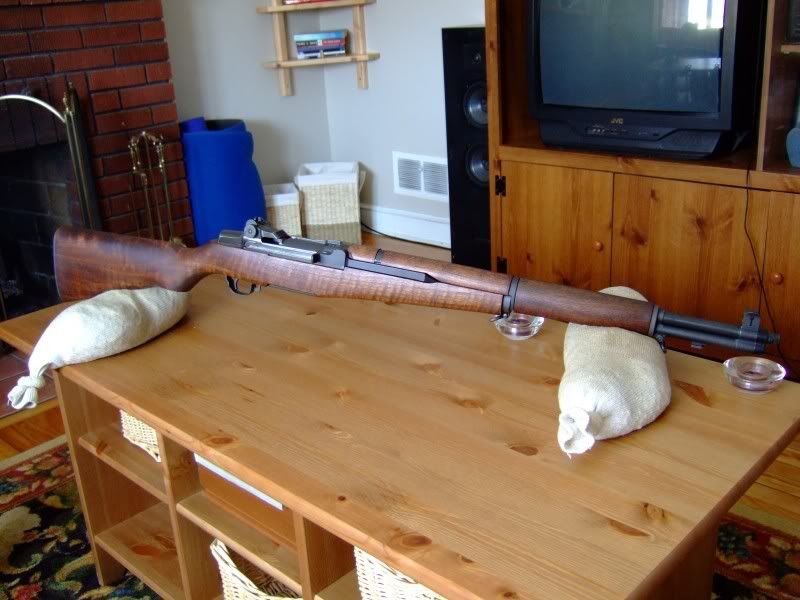
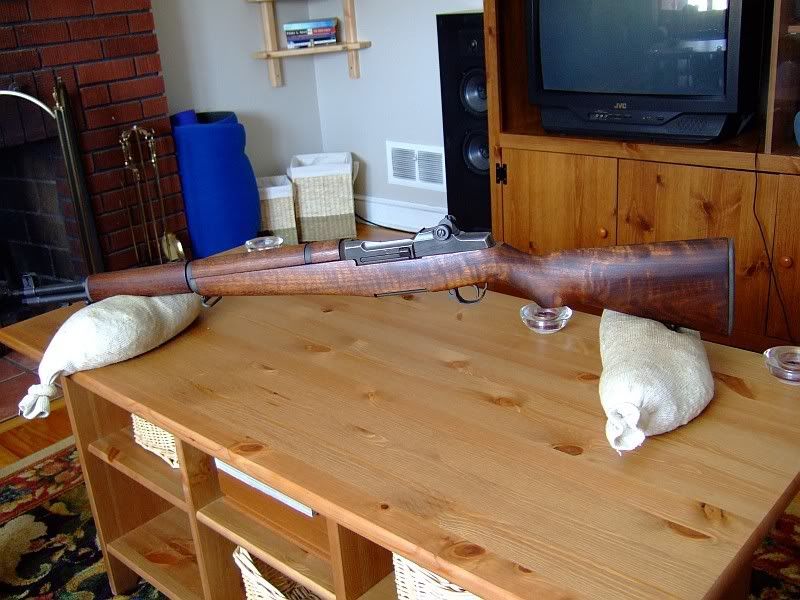
The problem with Danish stocks is that they are usually stamped with a serial number on the butt. They also quite often have a tag inside the fore end that has the soldiers name on it that it was issued to.
You might not detract from its value right away, but in the end, if the barrel is VAR marked and a serious collector wants it, then you will lose value if you replace the stock.
On the other hand, if it still has its original Springfield barrel and you can find a Springfield stock for it, you may even increase the value slightly.
One thing about milsurps, they are like the stock market in many ways. Depending on the economy, they can get either very expensive or very cheap. If you have something that is very unique, the value will pretty much peak out and stay there for a long time.
One thing to consider about Garands in decent condition. They have always kept their value at around one weeks gross pay. Back when they first started to surplus them in the mid sixties, a VG+ specimen would sell for $125. That was a lot of money back then. That kind of money, was approximately what a tradesman would gross in a week. Some were paid more, with overtime etc but with standard 40 hour weeks, that would have been the norm. Even a fair only specimen sold for around $80.
A Garand in VG+ condition will sell for around $800 - $1000, no matter what kind of stock it has on it. IMHO, as much as I like Garands and 1903s, I definitely feel they are overpriced. But that's the way the market goes. Next year, depending on imports, they may be worth half of what they are now. Look at Mosin Nagant rifles as an example. A couple of years ago you couldn't touch one for less than $200 now they are going for $100+ unless you have a more valuable variant. The same goes for SKSs. Garands and any other milsurp is dependent on the availability and the markets.