
ive been hunting over decoys for a while now with a friend who has all the gear needed for a great shoot. I'm slowly accumulating everything I need to go out on my own when he is busy, but until then I was thinking about giving pass shooting a shot. Snows and canadas and mallards are the target. What is some good advice, tips, tricks, tactics etc some of you with experience could share. Thanks guys.













































You are using an out of date browser. It may not display this or other websites correctly.
You should upgrade or use an alternative browser.
You should upgrade or use an alternative browser.
Waterfowl pass shooting advice
- Thread starter langbanger
- Start date


- Location
- Saskatchewan
Superbrad's suggestion is good in Ontario, but without many streams in southern Sask you'll be looking for roosting and watering sloughs (or rivers) and feeding fields.
If hunting typical flights that are resting on sloughs and going out to feed in the fields, watch the flocks going out to feed in the very early morning. If they are flying more than a mile between roost and feeding field you may have a pass shoot. Even better if you can scout the birds a couple days before. You need to be a half mile or so between roost and feeding field so as not to disturb flocks on either side with your shots. Hide on the flight corridor, which will be busy a half hour before sunrise to about a half hour after, and again from about 8:30 or 9:00 to ten or so as they come back to water after feeding. Try to learn to estimate range. It is far too tempting for most folks to sky bust birds at 70-90 yds of range when those within 50 yds are the only shots to take. Pass shooting is unlike decoy shooting, and a long range gun and load is in order. It is pretty much 12 ga, 3" territory. ( or even 3.5" but I've personally never used the ultra mag loads) Pattern your gun with steel shot sizes 2 to BB and figure out what load it likes and and with what choke. If you can afford tungsten iron shot, ( Hevishot) shoot that, it is FAR more effective for long range pass shooting. Bismuth is back on the market, it is pretty good too.
You will shoot behind most birds until you perfect your swing, it is absolutely critical to keep swinging when long range pass shooting, whether swing thru method or sustained lead. I prefer swing thru. "Butt belly beak bang". With lots of air in front of beak.
Forget about using your third shot. If you haven't brought one down with your first two, your third is a crippler, not a game bagger.
You don't need camo. Wear drab coloured clothes ( not too dark) and DON'T MOVE when birds approach and only look up if you are wearing a face mask. If shot birds might land in water don't shoot unless you have chest waders or a dog along. If dead birds land in tall cover mark the fall and look for them immediately, you will lose them unless you have a very good dog.
Have fun!
If hunting typical flights that are resting on sloughs and going out to feed in the fields, watch the flocks going out to feed in the very early morning. If they are flying more than a mile between roost and feeding field you may have a pass shoot. Even better if you can scout the birds a couple days before. You need to be a half mile or so between roost and feeding field so as not to disturb flocks on either side with your shots. Hide on the flight corridor, which will be busy a half hour before sunrise to about a half hour after, and again from about 8:30 or 9:00 to ten or so as they come back to water after feeding. Try to learn to estimate range. It is far too tempting for most folks to sky bust birds at 70-90 yds of range when those within 50 yds are the only shots to take. Pass shooting is unlike decoy shooting, and a long range gun and load is in order. It is pretty much 12 ga, 3" territory. ( or even 3.5" but I've personally never used the ultra mag loads) Pattern your gun with steel shot sizes 2 to BB and figure out what load it likes and and with what choke. If you can afford tungsten iron shot, ( Hevishot) shoot that, it is FAR more effective for long range pass shooting. Bismuth is back on the market, it is pretty good too.
You will shoot behind most birds until you perfect your swing, it is absolutely critical to keep swinging when long range pass shooting, whether swing thru method or sustained lead. I prefer swing thru. "Butt belly beak bang". With lots of air in front of beak.
Forget about using your third shot. If you haven't brought one down with your first two, your third is a crippler, not a game bagger.
You don't need camo. Wear drab coloured clothes ( not too dark) and DON'T MOVE when birds approach and only look up if you are wearing a face mask. If shot birds might land in water don't shoot unless you have chest waders or a dog along. If dead birds land in tall cover mark the fall and look for them immediately, you will lose them unless you have a very good dog.
Have fun!
the spank
CGN Ultra frequent flyer
- Location
- Planet Earth Wearing My Tinfoil Hat
Everything posted above is bang on for prairie pass shooting. Nothing more to add except shoot where they are going not where they have been or in other words hit the northbound end of a southbound goose!! 

I have a spot here on the BC coast where the birds fly parallel to the waterline as the tide comes in. I hide behind a big old stump anchored in the mud . When the birds start to fly by about 30 to 40 yards away, then it is time to start shooting. Sometimes I wait for three hours for the tide and wind to be just right. 15 - to 20 southeast wind and rain help too. Once it gets wilder than that there can be lots of birds flying low but the shot gets blown.
Trickiest thing is to gauge distance as they approach. Too far away still, still too far, too far away, maybe now, damn, they flew past. Shooting at a retreating bird rarely works.
There's a reason we're allowed three shells waterfowling. You shoot the first two to miss and the third one in frustration.
Exciting when it works. Trouble is the shooting is best when the water gets waist deep but I have to trudge back the 300 yards to shore sometimes with a swell trying to knock me off my feet while carrying my shotgun, blind bag and birds before it gets deeper than that.
Trickiest thing is to gauge distance as they approach. Too far away still, still too far, too far away, maybe now, damn, they flew past. Shooting at a retreating bird rarely works.
There's a reason we're allowed three shells waterfowling. You shoot the first two to miss and the third one in frustration.
Exciting when it works. Trouble is the shooting is best when the water gets waist deep but I have to trudge back the 300 yards to shore sometimes with a swell trying to knock me off my feet while carrying my shotgun, blind bag and birds before it gets deeper than that.
Exactly what I was looking for, thanks. I've got a kicks extra full (marketed as pass shooting) that patterns well with 3" bb at 50 yards. I was more concerned about where to sit. I know where a few flocks are roosting and where they are going to feed but it's less than a mile between locations. I don't want to scare them out of their safe zones by shooting too close. I think I have some more scouting to do and leave these guys be for a while.
Superbrad's suggestion is good in Ontario, but without many streams in southern Sask you'll be looking for roosting and watering sloughs (or rivers) and feeding fields.
If hunting typical flights that are resting on sloughs and going out to feed in the fields, watch the flocks going out to feed in the very early morning. If they are flying more than a mile between roost and feeding field you may have a pass shoot. Even better if you can scout the birds a couple days before. You need to be a half mile or so between roost and feeding field so as not to disturb flocks on either side with your shots. Hide on the flight corridor, which will be busy a half hour before sunrise to about a half hour after, and again from about 8:30 or 9:00 to ten or so as they come back to water after feeding. Try to learn to estimate range. It is far too tempting for most folks to sky bust birds at 70-90 yds of range when those within 50 yds are the only shots to take. Pass shooting is unlike decoy shooting, and a long range gun and load is in order. It is pretty much 12 ga, 3" territory. ( or even 3.5" but I've personally never used the ultra mag loads) Pattern your gun with steel shot sizes 2 to BB and figure out what load it likes and and with what choke. If you can afford tungsten iron shot, ( Hevishot) shoot that, it is FAR more effective for long range pass shooting. Bismuth is back on the market, it is pretty good too.
You will shoot behind most birds until you perfect your swing, it is absolutely critical to keep swinging when long range pass shooting, whether swing thru method or sustained lead. I prefer swing thru. "Butt belly beak bang". With lots of air in front of beak.
Forget about using your third shot. If you haven't brought one down with your first two, your third is a crippler, not a game bagger.
You don't need camo. Wear drab coloured clothes ( not too dark) and DON'T MOVE when birds approach and only look up if you are wearing a face mask. If shot birds might land in water don't shoot unless you have chest waders or a dog along. If dead birds land in tall cover mark the fall and look for them immediately, you will lose them unless you have a very good dog.
Have fun!
Pretty much bang on my experience, except I don't have waders so have gone home soaked to the waist a few times after retrieving a bird that fell where it shouldn't have.
beretta boy
CGN Ultra frequent flyer
- Location
- Orillia, Ontario
What little pass shooting I've done in SK (and AB) has mostly been done from a line of shrubs (I think they were called caraganas) fence lines and farm brush piles that the geese were habitually flying over. They tended to pass in a (slightly) higher part of the surrounding elevation and favoured places where the brush line was a little thinner. Pre-scouting pays off big time, especially where the birds haven't been disturbed by shooting (they learn quick). Hide as best you can in any natural cover available, trying to blend in with the available surroundings. You may not think it, but even a pair of full bodied decoys can be a help ... I liked to have them 25-30 yards from your hiding spot. Wherever possible, using the wind to your advantage. Birds will focus on the decoys ... overlooking your hiding spot.
A face mask and gloves helps hide the white of your face and hands ... which can be seen a long ways off. And as mentioned, hold still ... any movement will give you away.
Call very little, if at all. It may help to swing a distant flock in your direction, but, even being regarded as a reasonably good caller, it is usually is unproductive.
If you get the chance, a little clay target practice at long crossing birds can help. Being a decoy shooter, it can surprise you how much lead is required out at 40 yards.
For sustained lead, think couch length or car length rather than the 3 or 4 feet a crosser at 20 yards may take. For swing thru, well, you still need to get well-out in front of them. Try your level best to get a good estimate of range. Limit your shooting to 40 or 45 yards and you will do better and wound (or miss) fewer.
A small foam Hunters seat will keep your hiney from the hard, cold ground and keep your profile much lower. And something to drink ... nice after the long walk in ...and out.
You'll need a gun sock to cover up before and after legal shooting time ... and make sure you've got a bit of light rope or a game lanyard to carry out your birds if successful !
A face mask and gloves helps hide the white of your face and hands ... which can be seen a long ways off. And as mentioned, hold still ... any movement will give you away.
Call very little, if at all. It may help to swing a distant flock in your direction, but, even being regarded as a reasonably good caller, it is usually is unproductive.
If you get the chance, a little clay target practice at long crossing birds can help. Being a decoy shooter, it can surprise you how much lead is required out at 40 yards.
For sustained lead, think couch length or car length rather than the 3 or 4 feet a crosser at 20 yards may take. For swing thru, well, you still need to get well-out in front of them. Try your level best to get a good estimate of range. Limit your shooting to 40 or 45 yards and you will do better and wound (or miss) fewer.
A small foam Hunters seat will keep your hiney from the hard, cold ground and keep your profile much lower. And something to drink ... nice after the long walk in ...and out.
You'll need a gun sock to cover up before and after legal shooting time ... and make sure you've got a bit of light rope or a game lanyard to carry out your birds if successful !

TheCoachZed
CGN Ultra frequent flyer
I've done a lot of duck hunting sans decoys along the Fundy coast in NB, both pass shooting and jump shooting.
In my experience, jump shooting creeks, ponds, etc., is always far more effective than pass shooting. However, my hunting buddies all swear that when the tide, wind, and sun magically align, nothing beats pass shooting.
I hae me doots, personally.
The guys on here no doubt are far better shots than me and have given you sage advice. My advice is, if at all possible, figure out how to jump shoot instead of pass shooting. But if that's all you have, have fun!
In my experience, jump shooting creeks, ponds, etc., is always far more effective than pass shooting. However, my hunting buddies all swear that when the tide, wind, and sun magically align, nothing beats pass shooting.
I hae me doots, personally.
The guys on here no doubt are far better shots than me and have given you sage advice. My advice is, if at all possible, figure out how to jump shoot instead of pass shooting. But if that's all you have, have fun!
fingers284
CGN Ultra frequent flyer
- Location
- Alberta Cowboy Ranges
Spent many many hrs sitting in a patch of buckbrush or fence line shrubbery doing just what you are talking about. The most important variable in pass shooting once you have a spot chosen is wind and weather. A bright sunny calm day is almost a waist of time in most cases...not all, but most. On these types of days flying is easy for them and they take full advantage of this with the height they cruse at. On days like this if the water source and feed spot are close enough that they don't attain altitude to be out of range chances are that the first shot barrage will scatter the roosting birds in all directions- hence the previous posters reference to a mile between roost and field.
Without a doubt the best pass shooting I have had the fortune to be involved in (and I have had some spectacular, high result days) were on days with the dirtiest weather you can stand to be out in...whether it is wind gust to 40 or 50 mph, snow or rain or...jump for joy...all three. I've been on a flyway on a windy day where they were trying to fly down the same 6 ft deep field depression I was using as a cover spot, trying to make headway against the wind...ohh man...gives me a woody just remembering those times, 6 ft high and at 10 mph...same thing for snowy days, if its snowing hard enough that they can't see were they are going, they will fly close enough to the ground that they can...simply nirvana when you can hear them coming but cant see them until they materialize out of the snow at 30 yrds or less. A buddy and I encountered a shoot such as this years ago that when we enquired to the farmer for permission, his emphatic response was "only if you shoot every goose in creation" we tried to accommodate him but ran out of shells....It was an early fall blizzard here in Ab. that day and the birds, snows and Canada's were appearing out of the gloom at 20-30 yards,I don't think the two of us combined missed 3 or 4 shots combined.
Without a doubt the best pass shooting I have had the fortune to be involved in (and I have had some spectacular, high result days) were on days with the dirtiest weather you can stand to be out in...whether it is wind gust to 40 or 50 mph, snow or rain or...jump for joy...all three. I've been on a flyway on a windy day where they were trying to fly down the same 6 ft deep field depression I was using as a cover spot, trying to make headway against the wind...ohh man...gives me a woody just remembering those times, 6 ft high and at 10 mph...same thing for snowy days, if its snowing hard enough that they can't see were they are going, they will fly close enough to the ground that they can...simply nirvana when you can hear them coming but cant see them until they materialize out of the snow at 30 yrds or less. A buddy and I encountered a shoot such as this years ago that when we enquired to the farmer for permission, his emphatic response was "only if you shoot every goose in creation" we tried to accommodate him but ran out of shells....It was an early fall blizzard here in Ab. that day and the birds, snows and Canada's were appearing out of the gloom at 20-30 yards,I don't think the two of us combined missed 3 or 4 shots combined.
TheCoachZed
CGN Ultra frequent flyer
Spent many many hrs sitting in a patch of buckbrush or fence line shrubbery doing just what you are talking about. The most important variable in pass shooting once you have a spot chosen is wind and weather. A bright sunny calm day is almost a waist of time in most cases...not all, but most. On these types of days flying is easy for them and they take full advantage of this with the height they cruse at. On days like this if the water source and feed spot are close enough that they don't attain altitude to be out of range chances are that the first shot barrage will scatter the roosting birds in all directions- hence the previous posters reference to a mile between roost and field.
Without a doubt the best pass shooting I have had the fortune to be involved in (and I have had some spectacular, high result days) were on days with the dirtiest weather you can stand to be out in...whether it is wind gust to 40 or 50 mph, snow or rain or...jump for joy...all three. I've been on a flyway on a windy day where they were trying to fly down the same 6 ft deep field depression I was using as a cover spot, trying to make headway against the wind...ohh man...gives me a woody just remembering those times, 6 ft high and at 10 mph...same thing for snowy days, if its snowing hard enough that they can't see were they are going, they will fly close enough to the ground that they can...simply nirvana when you can hear them coming but cant see them until they materialize out of the snow at 30 yrds or less. A buddy and I encountered a shoot such as this years ago that when we enquired to the farmer for permission, his emphatic response was "only if you shoot every goose in creation" we tried to accommodate him but ran out of shells....It was an early fall blizzard here in Ab. that day and the birds, snows and Canada's were appearing out of the gloom at 20-30 yards,I don't think the two of us combined missed 3 or 4 shots combined.
This. The few good pass shoots I've had were due to snow.
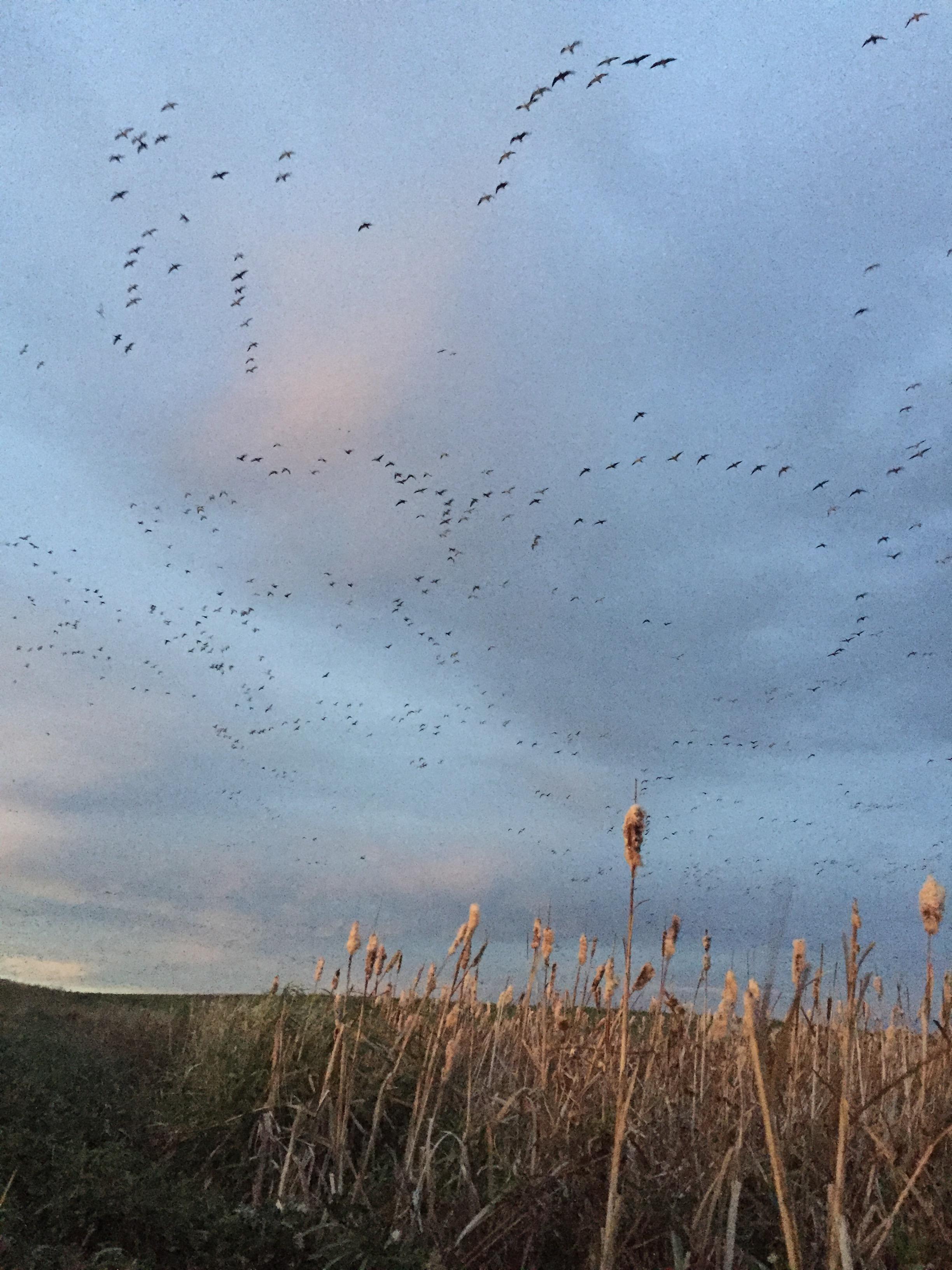
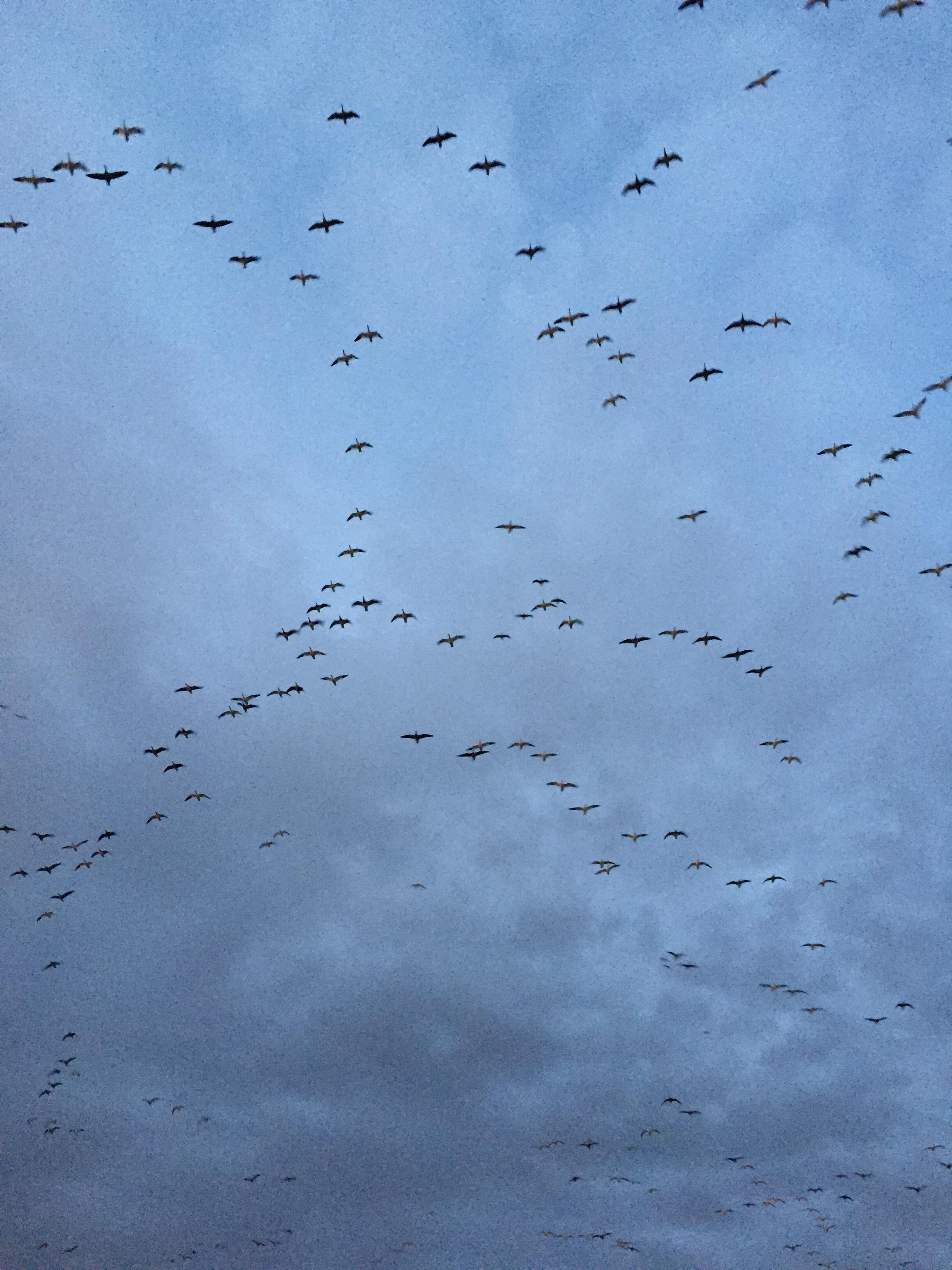
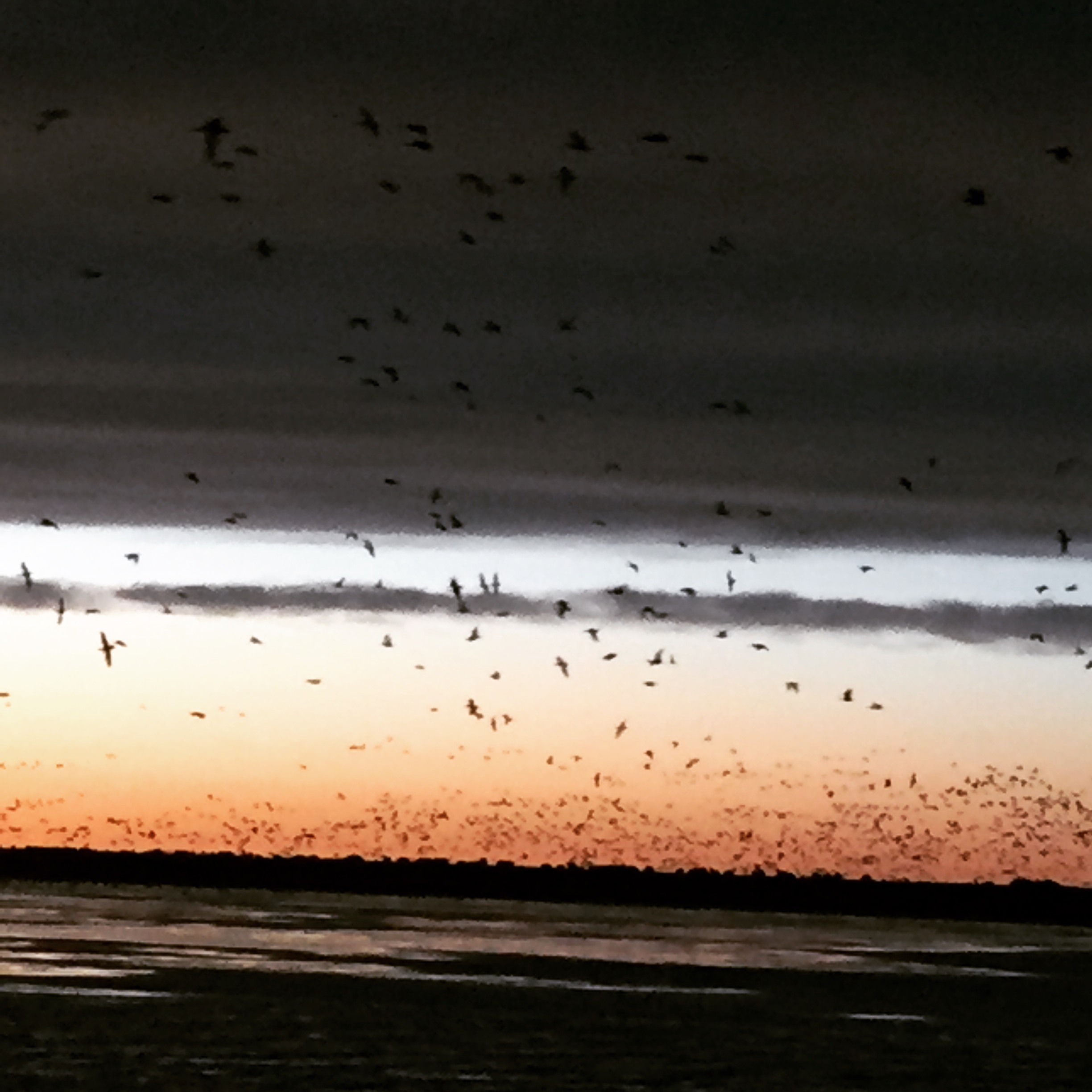
Finally had perfect conditions and got out pass shooting snows last night. It was amazing to see them fly over so close by the thousands it seemed. About 10 min before legal shooting light ended was when the real show started. I underestimated the amount of low flyers and didn't haul out nearly enough shells. Still brought home 6 snows and a duck with the half a box I had.

..... I was thinking about giving pass shooting a shot. Snows and canadas and mallards are the target. What is some good advice, tips, tricks, tactics etc some of you with experience could share. Thanks guys.
Location, location, location...
Rob
the spank
CGN Ultra frequent flyer
- Location
- Planet Earth Wearing My Tinfoil Hat
Location, location, location...
Rob
And a 3.5" 10 gauge semi!!
And a 3.5" 10 gauge semi!!
Actually after legal shooting light they were getting low enough I likely could have whipped them out of the air with a cattail. The wind was really picking up and bringing them down.
fingers284
CGN Ultra frequent flyer
- Location
- Alberta Cowboy Ranges
One of the most memorable experiences ever is sitting in a flyway with 30 or 40 thousand birds raising from a field and passing over you an their way to a roosting water body...the noise and visual aspect is something you will never forget. OHHH and don't look up with your mouth open...that pop-pop sound you hear ain't rain drops falling...$hit happens very unexpectedly !!!






















