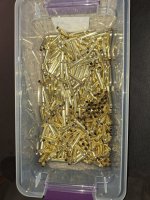
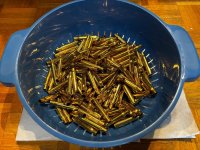
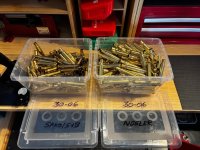
Wet or dry tumblers

DGY

CGN Ultra frequent flyer
Rating - 98.3%
57   1   0
Ok ok wet or dry tumbler and why?
If wet what to buy and where?
If dry(I doubt dry will be the winner here) same?
Some people think I should clean more often they even say I’m a bit of a filthy bastard 😮🙄
Anyway fore away and tell me what I really need to get those brass sparkle like new!! I hope it will get my groups smaller too.
 
Dry has been around forever and still works. No, it won't get the primer pockets as clean as wet but there has been so many tests done about the worth of primer pocket cleaning/uniforming that it's apparent a clean primer pocket looks nice but doesn't improve accuracy.

Wet gets the brass really clean and contains the nasty particles better- dry tumbling can spread dust.

Dry is a bit "easier" throw in your brass and walk away, then strain your brass. No drying or separating pins if you use them.

Small batches I use dry as it's easier. Large batches go in the cement mixer and get the wet treatment (no pins)
 
OP - my own experience pretty much parallels what Gatehouse says in Post #2 - for many years I did not tumble (or anneal) my brass - but that was also in "old days" of oil based sizing lube - so I would do a batch of 50 or so cases - laid out a Terry bath towel and soaked the pile with "white gas" (naphtha - camp stove fuel) - then slosh the cases back and forth in that towel to get that grease off - no doubt that also got grit and other stuff - at least as per the residue left on that towel - I am still not convinced that brass cases need to be "sparkly shiny" - many of my reloads in those days were quite dull and tarnished - but all were "clean" - no sand grit or whatever to score the reloading dies. I had read that old time Africa Guides and some military wanted to see the "anneal" colours on the case - to know that the case actually had been annealed - that can easily be polished off, I found. Then I got a vibratory dry thing - I believe I was using a Hornady brand coconut shell media - the brass came to be "much" more shiny. Then I got a Frankford Arsenal Wet tumbler - stainless steel pins, Lemi-shine powder and Dawn dishwashing soap - and warmish water. I have used that for past 5 years or so - it does NOT get the insides of the primer pockets shiny clean - at least not all of them - but I believe all the crud has been knocked away. But the wet tumbler gets the inside of the cases to be MUCH shinier than that dry tumbler can - but I am not convinced that is important for "accuracy".
 
  • Like
Reactions: DGY
Another wet vs dry thread... Is google and the search function broken?

I see benefits to both.

I dry tumble but I use a very fine walnut media I found at the pet store called lizard bedding. It looks like sand but is less dense. Every other media I have used gets stuck in the primer pockets and/or flash holes. It seems easier to get all the media out of the casings.

I deprime my brass before cleaning. Before use I run my tumbler with used dryer sheets to eliminate dust. I then add a small amount of car polish and mineral spirits to my media.

When I was looking at my photo in the center it looks like one of the casings has an object in it. That is the inside of the casing. They look clean enough to me, inside and out.
 

Attachments

  • 20260319_192341.jpg
    20260319_192341.jpg
    181.7 KB · Views: 22
Last edited:
My process involves both.....step one is deprime brass and wet tumble with SS pins using a squirt of Dawn dish soap and a tblsp of Lemi Shine for 3-4hrs. This ensures primer pockets are completely clean, I refuse to do any type of wire brushing or carbide scrapping in primer pockets as I do not want to alter size from factory.
Then further down in my process after resizing, chamfer and deburr (not primed) I will toss them into a dry tumbler with corncob media laced with a cap full of NuFinish car polish and 2 tblsp of mineral spirits for 1 hr to remove case lube. I find 20/40 grit the best size as it does not plug flash holes.
https://www.basspro.ca/p/frankford-arsenal-platinum-series-rotary-brass-tumbler-lite
https://www.princessauto.com/en/5-lb-metal-vibratory-tumbler/product/PA0008980773
The corncob media I bought years ago from a farm supply store.....I am sure its available some where.
 
Last edited:
  • Like
Reactions: DGY
The best finish I get is with walnut shell and IOSSO case polish tumbler media additive. However I use it as a final step before priming and loading.
I anneal every firing as my first step then clean with a sonic citrus hot wash before resize and trim leaving the spent primers in until this point. Then wash again to remove case lube and dry on my drying rack I made from a piece of butcher block and 1/4" dowels. After they dry I walnut shell tumble with the IOSSO additive until satisfied with shine. Then get the dust off with a little compressed air and ensure no shell in flash hole. Then reload pristine finished cases. Cheers
Edit/Addition: The IOSSO additive provides an anti tarnish coating and provides a much brighter finish than pins or sonic wash alone. The finish is actually better than new.
 
Last edited:
  • Wow
Reactions: DGY
My reloading activity is very small affair - I process brass about 250 pcs at a time. Personally, dirty vs clean brass, I haven't seen any difference in terms of accuracy performance. However, clean brass is less "messy" to store/handle and looks nice too. :)

I use Frankford Arsenal Lite tumbler - table spoon of dishwash soap - no pins. That's it!

Brass_wet tumbled.jpga77171a6-55cf-4af3-aafe-d2e187b9a9ee.jpg
 
  • Like
Reactions: DGY
Remember if you wet tumble it adds an extra step (drying), so if you have a lot of brass to process this might not be the best time wise.

I usually wet tumble, and use a food dehydrator to dry my brass. Wet tumbling leaves a "nicer" clean finish. Just be abosultly sure that you have dried the brass.. Otherwise if you add powder and primer the wet brass will render that useless, or give hang fires.

As for tumblers I use the Frankford Arsenal Lite tumbler with stainless steel pins, I only tumble around 200 rounds for an hour with 2 squirt of dawn dish soap.
 
  • Like
Reactions: DGY
Dry tumbling brass cartridges can generate lead dust, which poses potential health risks if inhaled. This dust can accumulate during the tumbling process. Efficient ventilation and masking helps to mitigate this issue, wet tumbling also eliminates this hazard.

I use wet tumbling without pins. This leaves a micro layer of carbon on the inside of the necks which acts as a lubricant for bullet seating. The primer pockets also remain black, but no issues with seating primers.
 
  • Like
Reactions: DGY
Another wet vs dry thread... Is google and the search function broken?

I see benefits to both.

I dry tumble but I use a very fine walnut media I found at the pet store called lizard bedding. It looks like sand but is less dense. Every other media I have used gets stuck in the primer pockets and/or flash holes. It seems easier to get all the media out of the casings.

I deprime my brass before cleaning. Before use I run my tumbler with used dryer sheets to eliminate dust. I then add a small amount of car polish and mineral spirits to my media.

When I was looking at my photo in the center it looks like one of the casings has an object in it. That is the inside of the casing. They look clean enough to me, inside and out.

That picture is dry tumbled brass?! If so thats impressive.
 
That picture is dry tumbled brass?! If so thats impressive.

That is dry tumbled brass and I'm reloading it for the 4th time. The reptile bedding is my favorite media.

I still have to do a little bit of primer pocket cleaning because they are not completely clean. I find cleaner primer pockets makes seating new primers a lot easier.

I tumble my brass twice; before annealing and after sizing to get the lube off.
 
I bought a f arsenal wet tumbler w ss pins about a year ago.
Waaay better than dry but there is two extra steps for me now.
I remove spent primers before tumbling and I also bought a dryer.
I think it's worth it.
 
Dry tumbling for me. Why? Because it has always performed to my standards; cleaned and polished. I perfer to concentrate on consistant reloading practices, than to commit time to various steps to "washing" brass.
 
  • Love
Reactions: DGY
I do both. They both work ok. They both have learning curves involved. Of all the variables in reloading the wet or dry? question does not rank high in importance.

Wet tumbling cleans primer pockets and inside necks better. If you are slightly OCD wet will be the most satisfying for you. You probably also need to bevel and/or trim more often with wet, and may need to lube inside necks when seating bullets. Some people enjoy the extra steps.

Dry tumbling in walnut shells will make your brass shiny, but leaves carbon inside the necks and primer pockets. Dry tumbling is easier and has less steps involved and is harder to mess up. That carbon inside the neck on a dry tumbled case is not always a bad thing to have. Dry tumbling in walnut media will not peen or otherwise beat up case mouths.

Most of my cleaning is done with vibratory tumbler using walnut shell and some car polish.
 
Last edited:
  • Like
Reactions: DGY
Watching and as a new reloader, is washing (wet or dry) your brass absolutely necessary?

I seen a video once where Erik Cotina stated he never washes brass.
 
  • Like
Reactions: DGY
Watching and as a new reloader, is washing (wet or dry) your brass absolutely necessary?

I seen a video once where Erik Cotina stated he never washes brass.
Is washing or changing oil in your car absolutely necessary? Maybe not if you have electric cars.

I don't clean brass every time, but uncleaned brass will tarnish and corrode faster in storage. Erik C's brass probably wouldn't dare get dirty.

Watching videos is great but learning by your own experience is good, too. Try reloading without cleaning brass.

I went quite a while without any tumbling when i started and it didn't hurt much. The downside is dies get full of crap and eventually that gets transferred to your rifle chamber. You can wipe brass with a rag, too.

 
Last edited:
Here is what I've figured out on my reloading venture, purchase what you can afford and make it work!

If you're budget is unlimited, then go ahead with the wet stainless steel pin set up as I'm sure that you've seen. The dry set up is a tried and true method, the only difference is there is a few extra steps in cleaning it after the tumble? I bought a dry tumbler for $70 and a 55 pound bag of media for $40. That bag will last me a long while. Stainless pins are more expensive but will last in theory forever.

If you budget is unlimited and aren't willing to sacrifice on quality of precision for target or animal harvest, then buy the best of the best in all categories. If you're on a budget, buy cheap on the used market and then upgrade in the future if needed. You may be pleasantly surprised how well dry tumblers work
 
So far I didn’t let my brass get real filthy but I don’t clean them often, even if I am pretty careful with them, and after resizing, trimming when needed, chamfering case mouth, cleaning the primer pocket I swipe them with a rag and use a nylon brush for the inside of the case, so I don’t clean them like most of you do but they are still clean per say!!
 
I have the fart wet tumbler
I tried the pins at first but don’t bother with them anymore
Having to dry the brass afterwards adds another step but it’s better then dealing with the dust from the dry tumbler
A plus with the dry tumbler is you can tumble old tarnished loaded ammo to clean them up, can’t do that with the wet tumbler
 
  • Like
Reactions: DGY
Back
Top Bottom