Wet vs dry

For those that say they get "superior results" with wet versus dry, how are you quantifying that? Are you seeing improved groups and SD/ES? Or is it just a vanity thing for how the brass looks?

I dry tumble with rice. It's not messy at all, and cleans the brass good enough.

I don't see the point in wet tumbling. Seems messy, time consuming and a general pain in the ass. I don't care if my brass doesn't look completely brand new, but what I do care about is what the target looks like, and my time.

Here's a good write-up on the merits of tumbling with rice: Play With Your Food: Clean Brass With Rice
 
Again thanks all.

For what will work best for me I think dry is what I will get again.

For those of you adding brasso etc to your media I would be interested in hearing more. I always vibed dry!.! Lol

For starters, Brasso and any other cleaner containing ammonia is not a great idea for cartridge brass, although it isn't instantly damaging. That said, some reloaders online have said they have been using it for years and have experienced no problems.

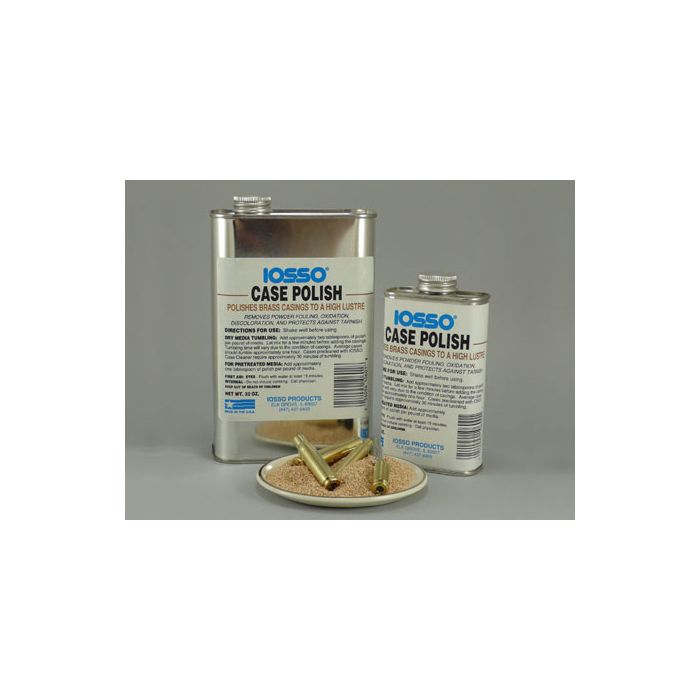
For my perspective, abrasive additives to the polishing media is much better than adding harsh chemicals like ammonia. If ammonia based bore cleaners can etch rifle barrels if left for too long, I choose not to use any product that puts ammonia in contact with my brass. Every kitchen probably has Ajax or Bon-Ami or some other abrasive cleaner - and then there are the abrasive car polishes that others use as additives. NuFinish and Griot’s Garage Complete Polish are mildly abrasive automotive paint polishes, just throw in a couple of tablespoons or whatever amount you decide works. I sprung for a bottle of the Flitz brass cleaner once; it didn't appear to work as well as the automotive paint polishes do.

I have tried both wet and dry case cleaning, side by side. BUT, my dry setup is not the ubiquitous vibrating tumblers of today. I am still using the Thumbler's Tumbler that runs as well today as it did the first day when I bought it at the old White Elephant in Spokane around 1974'ish. So the tumbling action is sealed inside the drum, for those fearing they will get lead poisoning from dry tumbling. I've replaced the big O-ring drive belt two or three times, and one foot on the motor mount had the spot weld fail; I somewhat messily brazed it back in place. One of my brothers is on his third vibratory tumbler. The Thumblers are a high quality tumbler, and dead quiet compared to my brothers' vibratory tumblers.

Both methods clean equally well. N.B. It is not my usual routine to try and restore corroded cases to use - mine never get that way, and there is more than enough range pickups where I shoot that I can discard anything looking funky. In that case, wet metal media may clean better, that I cannot say.

Having tried both, my preference is to continue cleaning and polishing with my Thumbler's Tumbler and treated walnut shell media. I am not anal enough to use corn cob media for a brighter finish. And wet tumbling adds another dimension to the cleaning stage that I've decided is not enough juice for the squeeze.

If you want jewelry shine looking brass, as mentioned above, any non-ammonia product squirted into the dry media once in a while will get you there. Those products are much cheaper than what the reloading industries offer you as additives (which is probably the same stuff, rebottled and with a higher price tag added). Ditto for the cleaning media: walnut is available bagged for pet cage liner, etc at a fraction of the cost Lyman et al offer it for. Places like Harbor Freight sell 25# boxes of walnut media to use as blasting media for cleaning is also very inexpensive.

One of the reasons some reloaders get less impressive results with dry media is they're too cheap to throw their used media away and replace it with fresh media. You guys out there who do this know who you are. You're probably spending more money on your electrical bill running your tumbler four or five times longer to eventually clean your brass than changing the media would cost you.

Raid the wife's canning supplies (or get a lifetime supply of your own for a few bucks) and grab the citric acid powder. A couple of tablespoons or so per gallon of boiling water and you will not only have gleaming brass inside and out, but you will passivate your brass at the same time - meaning it is far more resistant to developing surface tarnish and verdigris over the years. And if you do want to try rehabilitating grungy range pickups, whether tumbling wet or dry, run it through a citric acid bath first. If you haven't tried citric acid before, the change in the brass from just a couple of minutes of being dunked into a boiling water citric acid bath is impressive. The reason for using boiling versus tap water is chemical reactions are accelerated by heat.

My workflow is the fired brass gets deprimed only first, using another one of Lee's few useful tools - their universal decapper. I have come to prefer resizing as a separate stage to decapping for many reasons, although with pistol brass going through the Dillon progressive, I sometimes don't bother. With rifle cases - always.

If I picked up a bunch of dirt covered range brass, it gets hosed off first, run through the media separator to get most of the water out of the cases, and set aside to dry before depriming. Then the decapped brass goes through the Thumbler's Tumbler. Resizing after cleaning removes any media in the flash holes or primer pockets, because the decapping pins are still in the resizing dies.

If I'm bothered by any primer residue remaining in the primer pockets and/or I want shiny brass sitting in the dark in the basement until I head to the range and/or the brass may end up sitting in storage for years before it gets reloaded again, then it gets dunked in a citric acid bath.

It has been turned into a pretty efficient work flow with minimal time and muss and fuss involved. So far it has worked for me for pretty close to 50 years now, and I expect it will continue to work until I go for the long dirt nap. If my Thumbler's goes TU to the point I can't economically replace it, I'll probably buy another one.

BTW, back in the early 70's, on a lifeguard's pay of $.85/hr (that's federal pay boys, lifeguarding at Banff and Kootenay National Park hot springs), until I saved enough money to buy an outrageously priced Thumbler's Tumbler, I tumbled my brass by throwing it in a canvas bag full of rice, and then into the dryers in the shacks with a few sheets to keep the thumping noises down, and ran the dryer for a few hours on the taxpayers' dime. It worked just fine, hillbilly tech or not.

 
For those that say they get "superior results" with wet versus dry, how are you quantifying that? Are you seeing improved groups and SD/ES? Or is it just a vanity thing for how the brass looks?

I dry tumble with rice. It's not messy at all, and cleans the brass good enough.

I don't see the point in wet tumbling. Seems messy, time consuming and a general pain in the ass. I don't care if my brass doesn't look completely brand new, but what I do care about is what the target looks like, and my time.

Here's a good write-up on the merits of tumbling with rice: Play With Your Food: Clean Brass With Rice
Of course it’s how it looks… it’s cleaning after all. Realistically, you could run a brush through the neck and resize/reload so we’re all doing it for “vanity” as you put it. Whether wet or dry.


I built a big kick a$$ wet tumbler that’ll do over 1k 9mm cases or 400 or so .223. Does the job in an hour and the cases will for sure win a beauty pageant against dry cleaned cases. Dry on a towel overnight or in an hour in the sun.
 
Again thanks all.

For what will work best for me I think dry is what I will get again.

For those of you adding brasso etc to your media I would be interested in hearing more. I always vibed dry!.! Lol

I haven't used Brasso. I tried Nu Finish liquid (not paste)car polish years ago and never had reason to try anything else. The first bottle lasted 10 years. Start off with a tablespoon on new media, add a dab when it needs it. I haven't noticed build up on reloading dies, the brass isn't left sticky or oily feeling.
 
For those that say they get "superior results" with wet versus dry, how are you quantifying that? Are you seeing improved groups and SD/ES? Or is it just a vanity thing for how the brass looks?

I dry tumble with rice. It's not messy at all, and cleans the brass good enough.

I don't see the point in wet tumbling. Seems messy, time consuming and a general pain in the ass. I don't care if my brass doesn't look completely brand new, but what I do care about is what the target looks like, and my time.

Here's a good write-up on the merits of tumbling with rice: Play With Your Food: Clean Brass With Rice

That article was a good read. It also reinforces the experiences I had with ultra clean necks causing inconsistencies. I’m overdue to change my media so I think I’ll give rice a try.

This has been a good thread so far.
 
One thing I will say about the Nu Finish is use it sparingly, more won't make it work better. I used 2 tbsp in about 2 liters of walnut media.
 
this is what I like

zNp2R6o.jpg
 
For those that say they get "superior results" with wet versus dry, how are you quantifying that? Are you seeing improved groups and SD/ES? Or is it just a vanity thing for how the brass looks?

I dry tumble with rice. It's not messy at all, and cleans the brass good enough.

I don't see the point in wet tumbling. Seems messy, time consuming and a general pain in the ass. I don't care if my brass doesn't look completely brand new, but what I do care about is what the target looks like, and my time.

Here's a good write-up on the merits of tumbling with rice: Play With Your Food: Clean Brass With Rice

Now that’s an interesting option! Thanks for sharing
 
When I clean brass for my hunting or precision rifles I dry tumble as it's only 100 or so cases at a time. When I clean brass for pistols or 223 range ammo it's tens of thousands of pieces of brass so they go in the cement mixer with water, dawn detergent and citric acid. I don't bother with using stainless pins, they are a pain in the ass and don't get anything actually cleaner. If I am lucky I clean on hot sunny days and dry the brass on a 4x8 drying rack screen. If it's winter they go into several dehydrators to dy.
 
If I clean my brass, which is very seldom, as it doesn't go on the ground or floor, other than a few excptions.

If they look like they need residue from firing cleaned off, they go into an old pillow case, then into the clothes washing machine, using lemshine as a cleaner.

After they're done there, the bag goes into the dryer at high setting for half cycle.

Then they get dumped out of the bag, onto the concrete patio deck, to be sorted for defects, such as split necks, then back to the oven, which is preheated to 500F for ten minutes and out to air cool.

They're not bright shiney pretty, but the offending residues are gone and they're as soft as they were when new.

Some of these cases are over 50 years old and have over 60 reloads on them.
 
I have a Tumblers Tumbler. the big model.
I have probably cleaned over 5000 cases with it.
I COULD NOT BE MORE SATISFIED.
I DEPRIME THE BRASS.
I USE DISH SOAP WITH A BIT OF LEMISHINE.
I ONLY RUN IT FOR ABOUT 1 HOUR. THE BRASS COMES OUT VERY CLEAN.
NO NEED TO REPLACE ANY BROKEN PLASTIC PARTS.
I WOUILD BUY ANOTHER ONE IN A HEARTBEAT.
 
Wet is superior to dry, 2 things though. 1 you have to allow time to dry, 2 don't use too much lemi-shine or leave it in it over too long of time because it will discolour the brass.
https://www.youtube.com/watch?v=ajrM5c6TFI0

What makes it "superior"?

That it gets more likes on social media posts? The chicks dig it? Or you actually see an improvement in performance downrange based on comprehensive testing between wet and dry tumbling?
 
What makes it "superior"?

That it gets more likes on social media posts? The chicks dig it? Or you actually see an improvement in performance downrange based on comprehensive testing between wet and dry tumbling?

For me it’s superior because
1. There’s no lead dust getting into the air. If you’ve had your lead levels checked this really scares you.
2. A lot of the brass I pick up is super dirty range brass which I don’t want anywhere near my dies.

I only load for pistol so I doubt you’d notice any performance difference, but it would be interesting to see some scientific test results with rifle.
 
If I shot more I would consider wet, ( usually tumble 75 rifle brass, or 200 9mm at a time ) the dust does not leave the tumbler until I dump the clean brass through the sifter, its not that bad at all. I do it in my garage and I could sift the brass outside if I wanted or near a running shop vac. You would get way more lead from picking brass off the floor of an indoor range or from the air.
Super dirty brass sucks to clean in a dry tumbler.
Performance difference, not sure. I just shot two separate 3 shot groups at 1039 yards on Saturday. one was 4.75", the other was 3.875". Only 3 shot groups but I was pretty happy with that. Hell I'm using an RCBS 5-0-5 scale still.
 
Back
Top Bottom