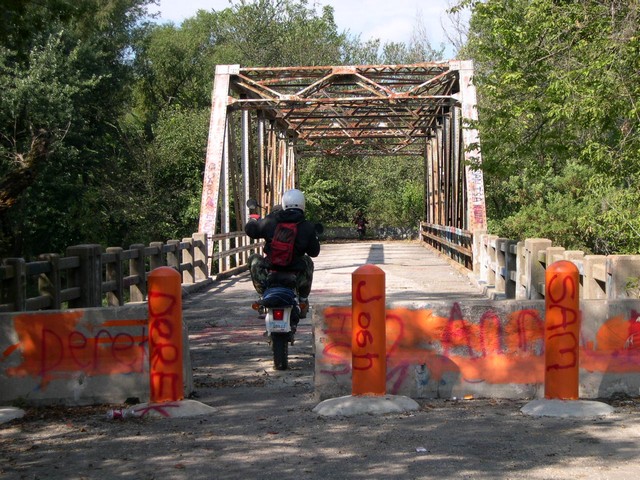
Let’s keep those logging roads open
Citizens Committee for Equal Access to Crown Land strongly disapproves of the Ministry of Natural Resources' dictatorial decision to restrict the public access to selected forest roads.
To see the importance of this issue, one has only to consider the fact that from 1997 to 2003, the extent of forest access road closure effectively doubled to a total of 4,380 kilometers. To make matters worse, the ministry's resolution process regarding such closures does not allow for full disclosure. Residents are only told of road closures in their areas. Should the ministry close a road in the Sudbury district, for example, residents are left with the impression the change is insignificant and limited to only a few kilometers. However, the general public is not made aware that the same process is being repeated in several areas throughout Northern Ontario.
The cumulative effects of these road closures is far from insignificant and yet, there is no method for average citizens to challenge the policy as a whole. Consequently, the ministry has been able to use its authority to systematically undermine the rights of Ontario residents who, up to this point, have had a long history of fair and equal access to Crown land.
It has been said that these restrictions have to be put in place to maintain sustainable fish and wildlife populations. No one would argue environmental protection is an admirable goal. However, our committee feels the burden of such protection will not be felt equally by all parties impacted by road closures. This is especially true given the fact that the ministry and the tourist outfitters are actively working together to deny free access to the public at large.
It seems contradictory that the ministry is content to allow trees to be harvested in certain areas while it plans to restrict public access on the grounds that these same areas contain sensitive ecosystems in need of special protection: Special protection from the general public, but not from the forestry industry.
Such a situation is made all the more troubling because the majority of the cost of logging road construction is paid for by Ontario taxpayers. It doesn't seem appropriate that tax dollars should be spent on roads that are not open to taxpayers.
Further, it must be noted that tourist camp operators will not feel the burden of road closures to the same degree as the rest of us. In fact, with the roads closed, lodge owners can conduct their business on Crown land and still effectively exclude free access to the general public. While this may be beneficial to tourist camps, it is difficult to see how such a situation would lead to improved environmental conditions.
Unless, of course, you were of the view that people have less impact on the environment if they pay for the privilege to access a given area.
The ministry has used provisions under the Roads Access Act and the Crown Land Act in a manner that is misguided. The proposed road closures would seem to suggest that the ministry has chosen to use its authority in a way that is counter to the interest of average citizens.
Both acts do indeed give area managers the authority to close access roads temporarily or for a specific period of time. However, in removing bridges, digging up culverts and erecting barricades, the ministry is effectively creating permanent rather than temporary barriers to entry.
Over time, such actions will permanently and severely restrict the ability of average Canadians to freely access public Crown land. This would seem to go beyond the primary goal of the ministry, which is to preserve the natural environment for all Ontarians to enjoy. How can we all enjoy these natural areas, if only a privileged few have access to them?
Another reason given for the need to close forest access roads has been a concern for public safety. While safety is also important, the bridges and culverts used on these roads are designed to handle the load factor of fully laden logging trucks. Further, these bridges and culverts have a life expectancy of at least 25 years. Given the loads these structures have to carry while in the service of the forestry industry, it seems difficult to imagine how they would be unduly stressed by the passage of an individual's car, ATV or pick-up truck.
If the ministry has concerns about safety on forest access roads, those concerns can be adequately addressed through the appropriate use of warning signs. Individuals can then decide for themselves whether to proceed, without the need for road closures.
Further, should the planned road closures go forward, it will have economic consequences that will extend into virtually every community in Ontario. One has only to consider the potential negative impact present and future road closures will have on recreational vehicle sales. After all, what individual would choose to purchase an expensive ATV or four-wheel-drive truck when they can no longer access the roads for which these vehicles were designed? Road closures will also adversely affect the sale of hunting and fishing gear, gasoline and camping equipment. This is a direct threat to the existence of every small business catering to the outdoor industry, whether it be the bait shop, gas station or local country store.
Lastly, the policy of closing access roads will also adversely impact the sale of hunting and fishing licences as well as deer and moose tags. Given that the ministry receives revenue from the sale of these licences and tags, it would seem that the road closures are counter to the ministry's own interests as well.

















































 ..
..