What did the Dutch Resistance use for rifles?

AdrianM

Regular
Rating - 100%
38   0   0
Both my grandparents were in Holland when it was occupied by the Nazi's. From what I have read, there was a small Dutch military resistance. What did these Dutch fighters use for rifles? Dutch Mannlichers? Whatever they could get their hands on?

I'd like to have a rifle representative of the family history...even though my grandfather was too young to fight. What would be a good representative rifle?

Adrian
 
Found the quote below on a bomber command website that also talks about the Dutch resistance, there is a museum wedsite as well but no detail to speak of. The page this came from also shows a former resistiance member standing beside an M1 Carbine that was dropped by the Allies.. he never turned it in at the end of the war.

In early 1943 the family awoke to find a horse and wagon in front of their house. No people were to be seen. The wagon was loaded with rifles, bren guns, bazookas, and ammunition -enough armament to supply 25 men. The guns and ammunition had been dropped by Bomber Command and brought to the hideout by other members of the Resistance unknown to the Groenvelds. The weapons were stored in the hideout and used regularly by Resistance members in the area until the end of the war.

Apparently Allies did not start dropping weapons in Holland in any significant amount until 1943..

The quote below is from a research paper from the University of Tenn.

In August 1944, the SOE was able to drop 30,000 hand weapons into
Holland, where most were quickly hidden by members of the Dutch Resistance. The
Nazis were able to detect 15,000 of the weapons, but the remaining arms helped the
Dutch Forces of the Interior provide substantial help to the liberating armies in the
eastern and northern parts of the country.

 
Both my grandparents were in Holland when it was occupied by the Nazi's. From what I have read, there was a small Dutch military resistance. What did these Dutch fighters use for rifles? Dutch Mannlichers? Whatever they could get their hands on?

I'd like to have a rifle representative of the family history...even though my grandfather was too young to fight. What would be a good representative rifle?

Adrian

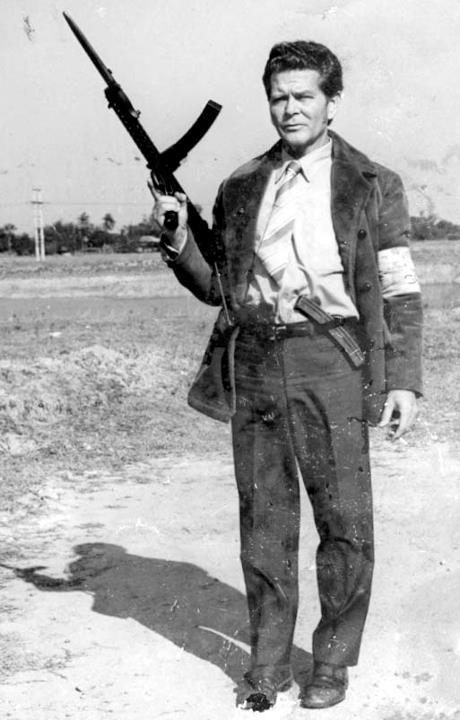
My grandfather was a leader in the Dutch resistance and Dutch military during the war. The two firearms I know that he used during the war, since the family still has these, are a Walther P38 pistol ("liberated" from a Nazi) and a Lee Enfield 303 rifle. The easy answer to your question is that members of any resistance movement will use whatever they can get their hands on; this would appear to have been no different for the Dutch resistance during WW2.
 
tumblr_lrgg0ndowP1qm5ws0o1_500.jpg

W A S Ouderland was born in December 1917 in Amsterdam, The Netherlands.

My personal weapon was the L2A3, but I never got a bayonet. I'm jealous.


Yup, insurgents use anything.
 
Found the quote below on a bomber command website that also talks about the Dutch resistance, there is a museum wedsite as well but no detail to speak of. The page this came from also shows a former resistiance member standing beside an M1 Carbine that was dropped by the Allies.. he never turned it in at the end of the war.

In early 1943 the family awoke to find a horse and wagon in front of their house. No people were to be seen. The wagon was loaded with rifles, bren guns, bazookas, and ammunition -enough armament to supply 25 men. The guns and ammunition had been dropped by Bomber Command and brought to the hideout by other members of the Resistance unknown to the Groenvelds. The weapons were stored in the hideout and used regularly by Resistance members in the area until the end of the war.

Apparently Allies did not start dropping weapons in Holland in any significant amount until 1943..

The quote below is from a research paper from the University of Tenn.

In August 1944, the SOE was able to drop 30,000 hand weapons into
Holland, where most were quickly hidden by members of the Dutch Resistance. The
Nazis were able to detect 15,000 of the weapons, but the remaining arms helped the
Dutch Forces of the Interior provide substantial help to the liberating armies in the
eastern and northern parts of the country.


Very interesting as I actually know some Groenvelds,they're friends of the family.

 
They used Prototype Series of Sterlings during operation Market Garden

NO, they used a very limited number of the Patchett design, with a Sten mag, according to SMGs of the world, not more than a hundred were produced. Curved mag didn't come till about 1953. Lest we forget, Being a resistance member became a lot more popular after the capitulation and brought with it a measure of prestige. No one wanted to be remembered as a collaborator, which was also a popular occupation in Holland and France.;)


Grizz
 
attachment.php

I've always wanted to say "Alle gevechtstanks zijn in de werkplaatzen", since it was on the big list of sentences I had to learn, so I'll say it now, for no good reason.
Patchet_SMG.jpg
 
Last edited:
Back when the CF had the SMG C1 (Sterling) I brought in a sten mag just to see if it would function in a C1 and it did, I have always wished I had brought a MP40 mag along to see if that would feed also. To late now by about 20 years.
 
The conventional partisan theory is to use one gun to kill an occupier and steal his gun. The other source would be from soldiers who deserted or refused to be captured. However in a place were the army capitulated in 1940, the availability of military firearms would be low. Whatever Britain or the US had to spare would be the answer.

FWIW, a number of British No.4T sniper rifles were delivered to the Resistance in France. The Maquis, or some parts of it, were sufficiently organized to be able to engage in limited warfare including assassinations and strategic attacks.
 
lol... I had some Jewish friends who were IN France during WW2 posing as Christians. According to them, the famed "French Resistance", for the most part, did not exist in any meaningful form until after the allies were there liberating them.

This tends to be believable IMHO - France was a very popular vacation spot for German troops on leave - lots of photos show them lounging about in paris cafes - they certainly weren't worried the populace would poison them or shoot them in the alleys.

The WW1 french were fierce warriors, by WW2 their stomach for a repeat of La Grande Guerre elicited a very different reaction once it became clear the Germans would be victorious in 1940.
 
My grandfather was a leader in the Dutch resistance and Dutch military during the war. The two firearms I know that he used during the war, since the family still has these, are a Walther P38 pistol ("liberated" from a Nazi) and a Lee Enfield 303 rifle. The easy answer to your question is that members of any resistance movement will use whatever they can get their hands on; this would appear to have been no different for the Dutch resistance during WW2.

My wife's grandfather was ALSO a leader in the Dutch resistance. Apparently there is a book written about his exploits... some of the stories I've heard are absolutely sobering...
 
lol... I had some Jewish friends who were IN France during WW2 posing as Christians. According to them, the famed "French Resistance", for the most part, did not exist in any meaningful form until after the allies were there liberating them.

This tends to be believable IMHO - France was a very popular vacation spot for German troops on leave - lots of photos show them lounging about in paris cafes - they certainly weren't worried the populace would poison them or shoot them in the alleys.

The WW1 french were fierce warriors, by WW2 their stomach for a repeat of La Grande Guerre elicited a very different reaction once it became clear the Germans would be victorious in 1940.

From my limited exposure in uni level history courses what Claven says above is pretty accurate. Very limited resistance (more along the lines of rival crime gangs fighting each other while taking advantage of the Germans when opportunity arose).

Army of Crime is on Netflix, it tells of Armenians in Paris taking on the Germans as well as they could.
 
My great grandfather and grandfather where both in the resistance my great grandfather was a hunter before the war.
The Germans showed up on his door step to confiscate his (registered?) guns.
Fortunate he had a few they didn't take.
As I recall by my knowledge they weren't very well equipped.
I came to Canada 7 years ago. My hometown is Groesbeek.
For those interested Google it.
My hometown has a great connection with Canada.

My respect for Canada has always been great.
As a young boy I greated Canadian ww2 veterans to my hometown for the yearly memorial.
My family had just after the war a few Canadian graves whom we maintained until commonwealth cemeteries where established.

I loved Canada as a small boy. Now living here it has grown more.

Cheers
 
Back
Top Bottom