













































You are using an out of date browser. It may not display this or other websites correctly.
You should upgrade or use an alternative browser.
You should upgrade or use an alternative browser.
What semi-auto chambering would you choose?
- Thread starter 350 Mag
- Start date

prosper said:50AE? 44 mag? 44 automag?
Were not listed in the poll.
For obvious reasons, find one person that uses it for CCW?
Conceable/carryable ???
That was one of the stipulations..
Have you ever held one of those...your going to carry it around all day?
Please tell me where I get a CCW holster for one of these?
Last edited:
350 Mag said:You would honestly choose 9mm for woods carry for self-defense against Black Bear?
First of all, black bears will generally be more scared of you than you are of them, and unless you piss them off or place yourself between a female and her cub, black bears pose no threat to you. Now in the event that you do piss one off somehow, then none of the choices above is adequate to protect yourself against a charging bear. By the time the bear is close enough for you to be able to place your shots, a charging bear will have enough forward momentum to close that distance and be on you no matter what pistol bullet(s) you managed to pump into it.
So... having eloquently eliminated that criteria, I choose the 9mm. Probably not the most effective of the offered choices if you consider it in isolation, but certainly the most effective for me if you look at it from a system point of view: shooter-pistol-ammo.
350 Mag said:Were not listed in the poll.
For obvious reasons, find one person that uses it for CCW?
Conceable/carryable ???
That was one of the stipulations..
Have you ever held one of those...your going to carry it around all day?
Please tell me where I get a CCW holster for one of these?
I'd like to give it a go

I AM a bit bigger than the average bear, though
prosper said:I'd like to give it a go
I AM a bit bigger than the average bear, though
Someone had a picture here of a guy who had Desert Eagle stuffed into holster inside belt.
I guess if your 6'4" and over 300 pounds have at er.
Harry Potter said:First of all, black bears will generally be more scared of you than you are of them, and unless you piss them off or place yourself between a female and her cub, black bears pose no threat to you. Now in the event that you do piss one off somehow, then none of the choices above is adequate to protect yourself against a charging bear. By the time the bear is close enough for you to be able to place your shots, a charging bear will have enough forward momentum to close that distance and be on you no matter what pistol bullet(s) you managed to pump into it.
So... having eloquently eliminated that criteria, I choose the 9mm. Probably not the most effective of the offered choices if you consider it in isolation, but certainly the most effective for me if you look at it from a system point of view: shooter-pistol-ammo.
Seeing as you have not personally witnessed or read about an occurance where a 10mm failed to kill a Black Bear you are making an UN-TRUE statement which is NOT backed up by ANY facts.
But you are right...A shotgun or large bore rifle would be best to stop a charging bear.
The question wasn't which one of these cartridges WOULD stop a charging BLACK BEAR.
The question was if you could have only 1 semi-auto and had to use it for personal protection at home, in the street or in the woods which one to choose.
No-brainer. 10mm
This is quote of article written on the 10mm.
http://ww w.gunsandammomag.com/gun_columns/skelton_0304/
Stories of questionable stopping power in law enforcement circles have surrounded the full-house 10mm since its inception, citing overpenetration. I find these claims problematic at best. A Mexican law enforcement acquaintance of mine from Chihuahua would be one of the first to testify--based on personal experience--as to the efficiency of the 10mm. After being shot at close range with one, my acquaintance watched as his assailant then turned and killed two other policemen with one shot each from a Colt 10mm. The assailant was finally killed by another agent. My friend almost bled to death as a result of a 10mm HydraShok in his biceps.
Thankfully, fans of the 10mm are still around. One of them is Ted Nugent, who fancies the Glock 20. Glock is one of the few manufacturers still offering guns chambered for the 10mm. Ted has shot literally thousands of rounds through his Glocks with no problems and firmly believes, as I do, that the 10mm is undeserving of its current fate.
Ted, while carrying his 10mm as backup on a South African safari, finished a Cape buffalo with a 180-grain Cor-Bon that completely penetrated the beast's neck vertebrae. He has taken elk, caribou, bear, hundreds of hogs, rams, oryx, warthog, eland and zebra with his Glock 20.
It's never too late to resurrect a dying, neglected cartridge (just take a look at the .38 Super). So if you haven't experienced the 10mm, give it a try.
It'd be a shame to let 'er die.
Last edited:

350 Mag said:Quote:
DoubleTap 10mm
135gr JHP @ 1600fps - 11.0" / .70" frag nasty
155gr Gold Dot JHP @ 1475fps - 13.5" / .88"
165gr Gold Dot JHP @ 1400fps - 14.25" / 1.02"
165gr Golden Saber JHP @ 1425fps - 14.75" / .82"
180gr Golden Saber JHP @ 1330fps - 16.0" / .85"
180gr XTP @ 1350fps – 17.25” / .77”
180gr Gold Dot JHP @ 1300fps - 15.25" / .96"
200gr XTP @ 1250fps - 19.5" / .72"
230gr Equalizer @ 1040fps - 11.0" and 17.0" / .62" and .40"
DoubleTap .45ACP
185gr Gold Dot JHP @ 1225fps - 12.75" / .82"
200gr Gold Dot JHP @ 1125fps - 14.25" / .88"
230gr Gold Dot JHP @ 1010fps - 15.25" / .95"
DoubleTap 9X25
115gr Gold Dot JHP @ 1800fps - 10.0" / .64" frag nasty
125gr Gold DOt JHP @ 1725fps - 15.0" / .74"
147gr Gold Dot JHP @ 1550fps - 17.5" / .68"
]
What do you think the results woudl look like if the same bullets were used? 200gr 10mm XTP vs 200gr 45 XTP? You may find the results much closer....I don't see much of a difference between the 2-In both circumstances you are asking a cartridge to perform beyond it's parameters.
Anyway, your poll has too many conditions to be of any real value. Not being able to handload a cartridge to it's maximum potential makes it pointless....
Last edited:
Gatehouse said:What do you think the results woudl look like if the same bullets were used? 200gr 10mm XTP vs 200gr 45 XTP? You may find the results much closer....I don't see much of a difference between the 2-In both circumstances you are asking a cartridge to perform beyond it's parameters.
Anyway, your poll has too many conditions to be of any real value. Not being able to handload a cartridge to it's maximum potential makes it pointless....
Just simply pointing out the fact the 10mm Auto is a do-it-all cartridge. Carry-able sized pistol, high capacity, accurate, powerful, and can be used for hunting deer sized game.
It is the ONLY cartridge on THAT list that can perform all the criteria or at least have a chance. The others simply are not up to the task.
4 inchs of penetration is alot when it comes to protection against 4 legged predators.
I would expect the 45 in a 200gr XTP would still be 3-5 inchs less penetration than the 10mm because it is slower. The gelatin tests prove it.
You can dream all you want...using factory 45 ACP brass you will not be able to out-perform the 10mm using handloads or NO handloads.
Those DoubleTap loadings are near MAX.
I know for a personal fact you will have tough time surpassing DoubleTap velocities unless you go ABOVE printed data in reloading manuals...not a good idea.
Just for ####s and grins...compare the DoubleTap 230gr GoldDot 45 ACP load to the Speer #13 manual...
The MAX velocity listed in the Speer manual for a 45 ACP GoldDot 230gr is 893 fps.(4.4 inch Sig) Doubletap 45 ACP is 1010 fps(5" 1911).
McNett has his own pressure testing equipment and his OWN secret powders.
He knows his stuff, and his ammo maybe even a little too HOT for factory loading.
Last edited:
This excerpt was taken right out of FBI's selection for a NEW service pistol following several failures of 9mm and 38 Special to have adequate stopping power. They eventually adopted a low velocity 10mm...Then S&W designed the 40S&W and the rest is history.
THE FBI rejected the .45 ACP.
Reasons for Adoption of 10mm
1. Initial Test Results (12/88-1/89) on which decision based:
a. .38 Special +P - 158 gr lead hollow point
success rate meeting 12” minimum: 67.5%
wound volume (cubic inches of tissue disrupted): 2.16
average penetration: 11.76 test barrel average group: 2.992
service weapon average group: 10.863
b. 9mm Subsonic - 147 gr jacketed hollow point
success rate meeting 12” minimum: 67.5%
wound volume (cubic inches of tissue disrupted): 2.82
average penetration: 13.84 test barrel average group: 2.305
service weapon average group: 2.774
c. .45 ACP - 185 gr jacketed hollow point
success rate meeting 12” minimum: 92.5%
wound volume (cubic inches of tissue disrupted): 3.98
average penetration: 19.95 test barrel average group: 2.040
service weapon average group: 4.319
d. 10mm FBI Load - 180 gr jacketed hollow point
success rate meeting 12” minimum: 97.5%
wound volume (cubic inches of tissue disrupted): 4.11
average penetration: 17.90 test barrel average group: 0.893
service weapon average group: 2.550
Common Questions:
1. Since the .45 tested so well, why not adopt it instead of a new gun/caliber??
first, the 10mm tested better, albeit marginally better, than the .45 and we were committed
to adopt the best round. Nevertheless, the 10mm has far superior accuracy, allows for slightly
higher capacity than similar sized .45 weapons, is a new cartridge with room for further improvement
whereas the .45 has been around for 80 years and is as good as it is ever going to be, and the recoil
of the 10mm is softer than that of a comparably sized .45
second, related answer is that even had the FBI adopted the .45, a new weapon would have still been
required. In 1987 we determined that there was no current weapon with all the features in one package
that we desired. Regardless of caliber, the FBI would still have specified and procured a new weapon.
third, the difference between the two is marginal and had the Director said “go with the .45”, we
would have done so gladly. However, based on the results of the testing, we would not recommend
the 9mm for adoption as the FBI issued round.
2. Since you developed the 10mm, why not do the same thing with the 9mm??
The 9mm has been in existence since 1902. It is actually an older cartridge than the .45.
In that time, so many variations and designs have been tried that it is hard to imagine
anything new that could be attempted. For example, Federal Cartridge Corp. has 19 different
9mm loadings available. The currently produced 147 grain loadings are the upper practical
limit for the caliber in terms of weight. Heavier bullets have not proven feasible, and
everything else that you can think of has been tried.
3. Aren’t you afraid of over-penetration??
Û The fear of over-penetration is a misconception which was created back when law
enforcement was trying to overcome misinformed public resistance to the use of hollow
point ammunition. In the process, we began to believe it ourselves. First, our
lawyers are unaware of any successful legal action resulting from the injury of a
bystander due to a round over-penetrating the subject. We are aware of numerous
instances of Agents/officers being killed because their round did not penetrate enough
(Grogan and Dove, for example). Further, if you examine shooting statistics you will
see that officers hit the subject somewhere around 20-30% of the time. Thus 70-80%
of the shots fired never hit their intended target, and nobody ever worries about them -
only the ones that might “overpenetrate” the bad guy. Third, as our testing shows, even
the most frangible bullets designed specifically for shallow penetration will plug up
when striking wood or wallboard and then penetrate like full metal jacketed ammunition.
We are aware of successful legal actions where an innocent party has been struck by a shot
passing through a wall, but as we have proven, ALL of them will do that.
Another overlooked factor is that frequently the bullet must penetrate some obstacle
before reaching the desired target area, such as glass, clothing, arms, etc. If all of
our shots were at the subject’s unobstructed, frontal chest area then the required
penetration could be less, but such ideal conditions are seldom present.
4. How much does the gun cost??
The weapon with standard night sights, three grip options and seven magazines (2 nine round,
4 11 round and 1 fifteen round) costs the FBI $295 a copy. We doubt you will be able to get
them for that as I believe S&W is looking upon us as a “loss leader”. We anticipate their
contract price for departmental orders will be in the $400+ range.
5. What about women and small handed shooters??
We do not anticipate any major problems. Our experience is that they have difficulty with
revolvers for two reasons: the requirement for a long, heavy double action trigger pull
for every shot fired, and the extremely inefficient shape of revolver grips for the transmission
of recoil into the hand. The recoil is focussed on the bone structure of the small hand, and
before long bruises the hand and thumb bones. Every shot fired is then painful to the shooter.
The pistol (any pistol) softens the recoil by virtue of the energy absorbing action of the slide,
and transmits it into the hand more efficiently and in a manner not damaging to the hand. We
have found that they shoot better, shoot more often, and enjoy it for the first time - all of
which translates into a better shooter - because there is no pain or discomfort in the hand.
Further, only the first shot is double action, and that is shorter and smoother than on our
revolvers. Most of their shooting is done in the short, single action mode which follows the
first shot. The average double action trigger weight of our 10mm pistol is 11.5 pounds, and
the average single action trigger is 6 pounds.
Secondly, the weapons have three different grip shapes available so we will be better able to
fit the weapon to the individual Agent’s hand.
6. Isn’t the gun going to be large and heavy??
The weapon is actually smaller in overall dimensions than our currently issued Smith & Wesson
M13 revolver with a three inch barrel. Our 10mm pistol is approximately one-quarter inch shorter
in over all length, about the same over all height, and three-eights of an inch thinner than the
M13. So it carries far more comfortably and unobtrusively, especially if a good weight bearing
holster is used. A fully loaded M13 weighs 35 ounces. The Model 1076 fully loaded weighs just
over 43 ounces, only 5 ounces more than a fully loaded SigSauer P226. Empty, it is only about
3.5 ounces heavier than the empty M13.
7. How long will the transition take??
About two years. The bottleneck is our gunvault. They estimate they can process 100
guns a week, so our distribution is based on that rate. 9500 Agents equals 95 weeks,
and that is not counting weapons processed for issuance to New Agent Classes.
8. Will your contract eat up S&W’s production to the extent that nobody else can get them for awhile??
No. S&W’s production capability is far in excess of our 100 gun a week delivery requirement.
For example, Virginia State Police contracted with S&W for about 2200 of the weapons, identical
to ours but with a five inch barrel instead of our 4.25” inch barrel, and they received their
entire order by July, 1990. Their transition is complete, and all of their troopers are now
armed with the 5” version of our gun, called the Model 1026.
9. Is anyone else making 10mm pistols??
Yes. For example, Colt has their Double Eagle double action pistol available in 10mm and
their single action Delta model.
Ruger is developing one that should appear sometime this year. Sig-Sauer is developing
one, and I believe it will appear in one to two years. Glock has chambered their weapon
in 10mm.
10. Do you anticipate shoulder weapons in 10mm??
Û Yes. Colt, Ruger and H&K are all working on developing a 10mm shoulder weapon and or submachine gun.
11. Can police departments get ammunition tested that they are interested in??
Yes. We will be happy to test ammunition for police. We will require 300 rounds for the
test, and need to know what firearm they want it tested in. Contact our Ballistic Technician
Ted Hollabaugh at (PHONE # DELETED) to arrange the testing, or determine if the round may
have already been tested.
12. Why didn’t the 9mm do better - that is surprising??
The 9mm is no more effective than the .38 Special, which should not be surprising since
they are the same caliber bullets (.35 caliber) at the same range of velocities and bullet
weights.
13. Are you saying the 9mm is no good??
No. We are saying it is as good as the .38 Special which has served us for a long time.
It has severe limitations which we are not willing to accept. It is woefully inadequate
for shooting at people in cars, for example, and over half of our shootings involve
vehicles. It is a marginally adequate wounding agent. We have had a number of 9mm
shootings over the past couple of years, and if you define a good shooting as one in
which the subject stops whatever he was doing when he gets shot, we have yet to have a
good one, and we are hitting our adversaries multiple times. We have shot half a dozen
dogs in the past year and have not killed one yet, although we have run up a significant
veterinary bill. The 9mm with proper ammunition is not a bad round. It is just nowhere
near as effective as the 10mm and .45 offerings, and the disparity between it and the
larger calibers has remained a constant throughout all the testing we have done over the
past two years.
14. What is different about your pistol other than the caliber??
Nothing revolutionary. It is a composite of the features we identified as desirable, all of which
existed in varying degrees among available weapons. It is an all steel, conventional double
action pistol with no manual safety, and no magazine disconnector. It has a 40,000 round
warranty on the slide and the frame, which is important to us because we expect a weapon
to be able to last an Agent’s career. Although we will replace the weapon if something better
comes along, we do not want to be in the position of having to replace it simply because
it is worn out in a few years. In a 20 year career, an Agent will fire at least 40,000 rounds.
15. Will your gun handle the hot stuff on the market??
Yes. Several hundred rounds of higher velocity ammunition have been fired through the pistols
by the FTU without visible problems. Smith & Wesson initiated a program to fire a M1076 to
destruction with the hottest commercial ammunition on the market (Norma), but discontinued
the test after approximately 18,000 rounds. Nothing had broken, and they had more pressing
matters to spend their time on. However, although illuminating, this is insufficient data
at this time to project the longevity of one of these pistosl which is fed a steady diet
of the “hot” loads.
16. How much time will be necessary to train Agents with the new weapon??
Recruits are no problem. They start clean on day one learning the skills they need, and by the
time they graduate (112 hours and over 5500 rounds later) they are better, more proficient
shooters than we produced with revolvers. The problem is the field Agent who has spent years
learning and ingraining revolver skills and habits. With them, we must break the old habits
and instill new, different skills which apply to shooting pistols, such as a different grip,
different trigger control technique, and different operating features. We will require a five
day transition training for each Agent, and budget 2000 rounds per Agent for that purpose.
The few who still are not sufficiently proficient to be issued the weapon will receive regular
remedial training until such time as they are.
17. Will you continue to allow revolvers??
Only temporarily. Once the transition is completed, the FBI will be a pure pistol agency.
There will be no revolvers. We have a personally owned pistol program now whereby an Agent
can purchase a pistol (either 9mm or .45) and be authorized to carry it. The personally
owned pistol program will continue unchanged, so the Agent can choose to carry the issued
10mm, or a personally owned 9mm or .45. Currently, we authorize all the Smith & Wesson and
Sig-Sauer pistols for personally owned use, and the new weapons in those calibers plus 10mm
and .40 S&W will be added to the list as they become available.
18. What is the best round in?
9mm - the Federal 147 grain HydraShok
.45 - the Federal 230 grain HydaShok
10mm - the FBI load, a 180 grain Sierra bullet at 980 feet per second
.380 - there isn’t one. The full metal jacketed round is the best of a bad choice,
but only because it might penetrate.
.357 - we haven’t found one that is sufficiently better than the best .38 load to justify
all the sound and fury of shooting it, unless you need the increased effective range which
the higher velocity gives you. We have only tested five so far, and none of them stands out.
.38 Special - the Federal 147 grain HydraShok
NOTE: there are a lot of rounds we have not tested, so all of the above recommendations
are strictly limited to those we have tested. The testing is continuing, and in time we will
have an even better basis for comparison.
19. Can we get copies of the test results?
Yes. Send a letter to the Firearms Training Unit (attn: Ted Hollabaugh) at Quantico and he
will send a copy to you. Or call him at (703) 640-1386.
20. Isn’t shot placement the most important requirement in a shooting incident, and doesn’t that
make the issue of caliber less important??
Shot placement is obviously critical, and our test criteria presume that the shot is placed in the
vital area of the body which contains the brain, upper spinal cord, heart and aorta/vena cava.
This area runs from just above the eyes to the diaphragm, and is about 4 inches wide. But, as
our experience in Miami amply illustrates, shot placement is only the first part of the equation.
Jerry Dove placed his shot perfectly. Bullet performance is critical to translate shot placement
into an effective, incapacitating wound. If shot placement was all that mattered, we could arm
all Agents with .22’s. Secondly, perfect shot placement may be difficult to attain in the stress
and dynamics of a shooting incident. The larger calibers offer a “margin of error” in that where
a smaller bullet may just miss the aorta, for example, the larger one in the same placement will
damage it. A good example is killing a 400 pound pig with a .22, something commonly done on the farm.
If the shot placement is exactly right, the pig is instantly killed. If it is off less than an inch,
the pig goes wild and the process of killing it becomes rather lengthy and involved, whereas a larger
caliber would succeed with a larger margin of miss than an inch. (Larger calibers are not used because
they ruin too much of the pig - a consideration that does not come into play in a shooting incident -
and besides which, nobody is going to die if the pig is not instantly killed anyway. In shootings,
just the opposite is true).
THE FBI rejected the .45 ACP.
Reasons for Adoption of 10mm
1. Initial Test Results (12/88-1/89) on which decision based:
a. .38 Special +P - 158 gr lead hollow point
success rate meeting 12” minimum: 67.5%
wound volume (cubic inches of tissue disrupted): 2.16
average penetration: 11.76 test barrel average group: 2.992
service weapon average group: 10.863
b. 9mm Subsonic - 147 gr jacketed hollow point
success rate meeting 12” minimum: 67.5%
wound volume (cubic inches of tissue disrupted): 2.82
average penetration: 13.84 test barrel average group: 2.305
service weapon average group: 2.774
c. .45 ACP - 185 gr jacketed hollow point
success rate meeting 12” minimum: 92.5%
wound volume (cubic inches of tissue disrupted): 3.98
average penetration: 19.95 test barrel average group: 2.040
service weapon average group: 4.319
d. 10mm FBI Load - 180 gr jacketed hollow point
success rate meeting 12” minimum: 97.5%
wound volume (cubic inches of tissue disrupted): 4.11
average penetration: 17.90 test barrel average group: 0.893
service weapon average group: 2.550
Common Questions:
1. Since the .45 tested so well, why not adopt it instead of a new gun/caliber??
first, the 10mm tested better, albeit marginally better, than the .45 and we were committed
to adopt the best round. Nevertheless, the 10mm has far superior accuracy, allows for slightly
higher capacity than similar sized .45 weapons, is a new cartridge with room for further improvement
whereas the .45 has been around for 80 years and is as good as it is ever going to be, and the recoil
of the 10mm is softer than that of a comparably sized .45
second, related answer is that even had the FBI adopted the .45, a new weapon would have still been
required. In 1987 we determined that there was no current weapon with all the features in one package
that we desired. Regardless of caliber, the FBI would still have specified and procured a new weapon.
third, the difference between the two is marginal and had the Director said “go with the .45”, we
would have done so gladly. However, based on the results of the testing, we would not recommend
the 9mm for adoption as the FBI issued round.
2. Since you developed the 10mm, why not do the same thing with the 9mm??
The 9mm has been in existence since 1902. It is actually an older cartridge than the .45.
In that time, so many variations and designs have been tried that it is hard to imagine
anything new that could be attempted. For example, Federal Cartridge Corp. has 19 different
9mm loadings available. The currently produced 147 grain loadings are the upper practical
limit for the caliber in terms of weight. Heavier bullets have not proven feasible, and
everything else that you can think of has been tried.
3. Aren’t you afraid of over-penetration??
Û The fear of over-penetration is a misconception which was created back when law
enforcement was trying to overcome misinformed public resistance to the use of hollow
point ammunition. In the process, we began to believe it ourselves. First, our
lawyers are unaware of any successful legal action resulting from the injury of a
bystander due to a round over-penetrating the subject. We are aware of numerous
instances of Agents/officers being killed because their round did not penetrate enough
(Grogan and Dove, for example). Further, if you examine shooting statistics you will
see that officers hit the subject somewhere around 20-30% of the time. Thus 70-80%
of the shots fired never hit their intended target, and nobody ever worries about them -
only the ones that might “overpenetrate” the bad guy. Third, as our testing shows, even
the most frangible bullets designed specifically for shallow penetration will plug up
when striking wood or wallboard and then penetrate like full metal jacketed ammunition.
We are aware of successful legal actions where an innocent party has been struck by a shot
passing through a wall, but as we have proven, ALL of them will do that.
Another overlooked factor is that frequently the bullet must penetrate some obstacle
before reaching the desired target area, such as glass, clothing, arms, etc. If all of
our shots were at the subject’s unobstructed, frontal chest area then the required
penetration could be less, but such ideal conditions are seldom present.
4. How much does the gun cost??
The weapon with standard night sights, three grip options and seven magazines (2 nine round,
4 11 round and 1 fifteen round) costs the FBI $295 a copy. We doubt you will be able to get
them for that as I believe S&W is looking upon us as a “loss leader”. We anticipate their
contract price for departmental orders will be in the $400+ range.
5. What about women and small handed shooters??
We do not anticipate any major problems. Our experience is that they have difficulty with
revolvers for two reasons: the requirement for a long, heavy double action trigger pull
for every shot fired, and the extremely inefficient shape of revolver grips for the transmission
of recoil into the hand. The recoil is focussed on the bone structure of the small hand, and
before long bruises the hand and thumb bones. Every shot fired is then painful to the shooter.
The pistol (any pistol) softens the recoil by virtue of the energy absorbing action of the slide,
and transmits it into the hand more efficiently and in a manner not damaging to the hand. We
have found that they shoot better, shoot more often, and enjoy it for the first time - all of
which translates into a better shooter - because there is no pain or discomfort in the hand.
Further, only the first shot is double action, and that is shorter and smoother than on our
revolvers. Most of their shooting is done in the short, single action mode which follows the
first shot. The average double action trigger weight of our 10mm pistol is 11.5 pounds, and
the average single action trigger is 6 pounds.
Secondly, the weapons have three different grip shapes available so we will be better able to
fit the weapon to the individual Agent’s hand.
6. Isn’t the gun going to be large and heavy??
The weapon is actually smaller in overall dimensions than our currently issued Smith & Wesson
M13 revolver with a three inch barrel. Our 10mm pistol is approximately one-quarter inch shorter
in over all length, about the same over all height, and three-eights of an inch thinner than the
M13. So it carries far more comfortably and unobtrusively, especially if a good weight bearing
holster is used. A fully loaded M13 weighs 35 ounces. The Model 1076 fully loaded weighs just
over 43 ounces, only 5 ounces more than a fully loaded SigSauer P226. Empty, it is only about
3.5 ounces heavier than the empty M13.
7. How long will the transition take??
About two years. The bottleneck is our gunvault. They estimate they can process 100
guns a week, so our distribution is based on that rate. 9500 Agents equals 95 weeks,
and that is not counting weapons processed for issuance to New Agent Classes.
8. Will your contract eat up S&W’s production to the extent that nobody else can get them for awhile??
No. S&W’s production capability is far in excess of our 100 gun a week delivery requirement.
For example, Virginia State Police contracted with S&W for about 2200 of the weapons, identical
to ours but with a five inch barrel instead of our 4.25” inch barrel, and they received their
entire order by July, 1990. Their transition is complete, and all of their troopers are now
armed with the 5” version of our gun, called the Model 1026.
9. Is anyone else making 10mm pistols??
Yes. For example, Colt has their Double Eagle double action pistol available in 10mm and
their single action Delta model.
Ruger is developing one that should appear sometime this year. Sig-Sauer is developing
one, and I believe it will appear in one to two years. Glock has chambered their weapon
in 10mm.
10. Do you anticipate shoulder weapons in 10mm??
Û Yes. Colt, Ruger and H&K are all working on developing a 10mm shoulder weapon and or submachine gun.
11. Can police departments get ammunition tested that they are interested in??
Yes. We will be happy to test ammunition for police. We will require 300 rounds for the
test, and need to know what firearm they want it tested in. Contact our Ballistic Technician
Ted Hollabaugh at (PHONE # DELETED) to arrange the testing, or determine if the round may
have already been tested.
12. Why didn’t the 9mm do better - that is surprising??
The 9mm is no more effective than the .38 Special, which should not be surprising since
they are the same caliber bullets (.35 caliber) at the same range of velocities and bullet
weights.
13. Are you saying the 9mm is no good??
No. We are saying it is as good as the .38 Special which has served us for a long time.
It has severe limitations which we are not willing to accept. It is woefully inadequate
for shooting at people in cars, for example, and over half of our shootings involve
vehicles. It is a marginally adequate wounding agent. We have had a number of 9mm
shootings over the past couple of years, and if you define a good shooting as one in
which the subject stops whatever he was doing when he gets shot, we have yet to have a
good one, and we are hitting our adversaries multiple times. We have shot half a dozen
dogs in the past year and have not killed one yet, although we have run up a significant
veterinary bill. The 9mm with proper ammunition is not a bad round. It is just nowhere
near as effective as the 10mm and .45 offerings, and the disparity between it and the
larger calibers has remained a constant throughout all the testing we have done over the
past two years.
14. What is different about your pistol other than the caliber??
Nothing revolutionary. It is a composite of the features we identified as desirable, all of which
existed in varying degrees among available weapons. It is an all steel, conventional double
action pistol with no manual safety, and no magazine disconnector. It has a 40,000 round
warranty on the slide and the frame, which is important to us because we expect a weapon
to be able to last an Agent’s career. Although we will replace the weapon if something better
comes along, we do not want to be in the position of having to replace it simply because
it is worn out in a few years. In a 20 year career, an Agent will fire at least 40,000 rounds.
15. Will your gun handle the hot stuff on the market??
Yes. Several hundred rounds of higher velocity ammunition have been fired through the pistols
by the FTU without visible problems. Smith & Wesson initiated a program to fire a M1076 to
destruction with the hottest commercial ammunition on the market (Norma), but discontinued
the test after approximately 18,000 rounds. Nothing had broken, and they had more pressing
matters to spend their time on. However, although illuminating, this is insufficient data
at this time to project the longevity of one of these pistosl which is fed a steady diet
of the “hot” loads.
16. How much time will be necessary to train Agents with the new weapon??
Recruits are no problem. They start clean on day one learning the skills they need, and by the
time they graduate (112 hours and over 5500 rounds later) they are better, more proficient
shooters than we produced with revolvers. The problem is the field Agent who has spent years
learning and ingraining revolver skills and habits. With them, we must break the old habits
and instill new, different skills which apply to shooting pistols, such as a different grip,
different trigger control technique, and different operating features. We will require a five
day transition training for each Agent, and budget 2000 rounds per Agent for that purpose.
The few who still are not sufficiently proficient to be issued the weapon will receive regular
remedial training until such time as they are.
17. Will you continue to allow revolvers??
Only temporarily. Once the transition is completed, the FBI will be a pure pistol agency.
There will be no revolvers. We have a personally owned pistol program now whereby an Agent
can purchase a pistol (either 9mm or .45) and be authorized to carry it. The personally
owned pistol program will continue unchanged, so the Agent can choose to carry the issued
10mm, or a personally owned 9mm or .45. Currently, we authorize all the Smith & Wesson and
Sig-Sauer pistols for personally owned use, and the new weapons in those calibers plus 10mm
and .40 S&W will be added to the list as they become available.
18. What is the best round in?
9mm - the Federal 147 grain HydraShok
.45 - the Federal 230 grain HydaShok
10mm - the FBI load, a 180 grain Sierra bullet at 980 feet per second
.380 - there isn’t one. The full metal jacketed round is the best of a bad choice,
but only because it might penetrate.
.357 - we haven’t found one that is sufficiently better than the best .38 load to justify
all the sound and fury of shooting it, unless you need the increased effective range which
the higher velocity gives you. We have only tested five so far, and none of them stands out.
.38 Special - the Federal 147 grain HydraShok
NOTE: there are a lot of rounds we have not tested, so all of the above recommendations
are strictly limited to those we have tested. The testing is continuing, and in time we will
have an even better basis for comparison.
19. Can we get copies of the test results?
Yes. Send a letter to the Firearms Training Unit (attn: Ted Hollabaugh) at Quantico and he
will send a copy to you. Or call him at (703) 640-1386.
20. Isn’t shot placement the most important requirement in a shooting incident, and doesn’t that
make the issue of caliber less important??
Shot placement is obviously critical, and our test criteria presume that the shot is placed in the
vital area of the body which contains the brain, upper spinal cord, heart and aorta/vena cava.
This area runs from just above the eyes to the diaphragm, and is about 4 inches wide. But, as
our experience in Miami amply illustrates, shot placement is only the first part of the equation.
Jerry Dove placed his shot perfectly. Bullet performance is critical to translate shot placement
into an effective, incapacitating wound. If shot placement was all that mattered, we could arm
all Agents with .22’s. Secondly, perfect shot placement may be difficult to attain in the stress
and dynamics of a shooting incident. The larger calibers offer a “margin of error” in that where
a smaller bullet may just miss the aorta, for example, the larger one in the same placement will
damage it. A good example is killing a 400 pound pig with a .22, something commonly done on the farm.
If the shot placement is exactly right, the pig is instantly killed. If it is off less than an inch,
the pig goes wild and the process of killing it becomes rather lengthy and involved, whereas a larger
caliber would succeed with a larger margin of miss than an inch. (Larger calibers are not used because
they ruin too much of the pig - a consideration that does not come into play in a shooting incident -
and besides which, nobody is going to die if the pig is not instantly killed anyway. In shootings,
just the opposite is true).
10mm is a great cartridge. Lets not forget that one has to adequately conceal this pistol and the pistol must fit him PROPERLY for it to be of utmost value. For most of us the 10mm scene does not lend itself well to those of us with short digits or smaller hands.
350Mag,
I applaud a man who can back up his opinion. It is of interest to point out that the .357 SIG in the charts you produces nearly identicle penetration levels as the 10mm.
TDC
350Mag,
I applaud a man who can back up his opinion. It is of interest to point out that the .357 SIG in the charts you produces nearly identicle penetration levels as the 10mm.
TDC
TDC said:10mm is a great cartridge. Lets not forget that one has to adequately conceal this pistol and the pistol must fit him PROPERLY for it to be of utmost value. For most of us the 10mm scene does not lend itself well to those of us with short digits or smaller hands.
350Mag,
I applaud a man who can back up his opinion. It is of interest to point out that the .357 SIG in the charts you produces nearly identicle penetration levels as the 10mm.
TDC
Thanx,
Your right. A G20 would not fit most neither would larger frame S&W.
Witness Pistols are very ergonomic and fit me quite well.
This would be a great platform. 1911 single stack.
Kimber Custom II in 10mm Auto.


The FBI rejected the .45ACP as a standard issue cartridge. And did the same to the 10mm shortly after its acceptance into the FBI. They switched to .40 S&W. yet, strangely the FBI SWAT and HRT seem to prefer the .45 ACP...
I am also going to tell you that I think you that you have in essence tried to create a viral meme regarding how perfect 10mm is. You have essentially admitted as much. Thanks for this fine example of guerilla marketing.
I am also going to tell you that I think you that you have in essence tried to create a viral meme regarding how perfect 10mm is. You have essentially admitted as much. Thanks for this fine example of guerilla marketing.

350 Mag said:Were not listed in the poll.Originally Posted by prosper
50AE? 44 mag? 44 automag?
For obvious reasons, find one person that uses it for CCW?
Conceable/carryable ???
That was one of the stipulations..
Have you ever held one of those...your going to carry it around all day?
Please tell me where I get a CCW holster for one of these?
Actually it didn't seem that bad.
Even with an in the pants holster. 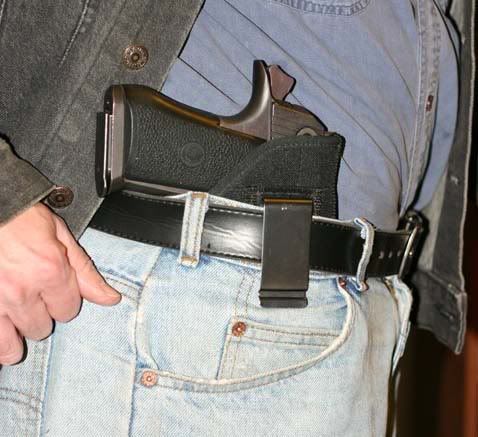
The gun is a little bigger than a 1911. Lots of people would carry a 1911 so why not a Desert Eagle?
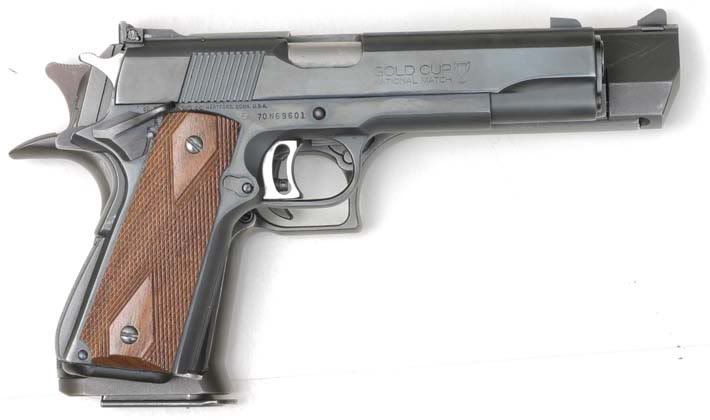
Last edited:
Maple Leaf Pilgrim said:I am also going to tell you that I think you that you have in essence tried to create a viral meme regarding how perfect 10mm is. You have essentially admitted as much. Thanks for this fine example of guerilla marketing.
10mm is KING. If we would have had it in WWII the war would have been over in 1944.

350 Mag said:10mm is KING. If we would have had it in WWII the war would have been over in 1944.

I'd take a 9mm, honestly I'm not crazy about the caliber but wherever you are and whatever the circumstances you'll always find 9mm ammo, kinda like .22lr. We can argue till the end of time about calibers performance but what it comes down to is shooter performance. I dare say that there is nothing in Canada that cannot be taken out with a small caliber if you know where to shoot it (less the panic factor).
I voted for 10mm. It's a versatile round, and it's factory loadings are suitable for hunting and self defence. It's also quite controllable.
If handloading is available, then I would go with the .38 super.
Not on the list, but still a factory round, is 9x23. That would be my prefered round.
If handloading is available, then I would go with the .38 super.
Not on the list, but still a factory round, is 9x23. That would be my prefered round.

DARKARCHER
Regular
- Location
- gods country
id have to say .45acp as well altho a for blackbear a desert eagle in 44mag would be nice but its not on the list






















