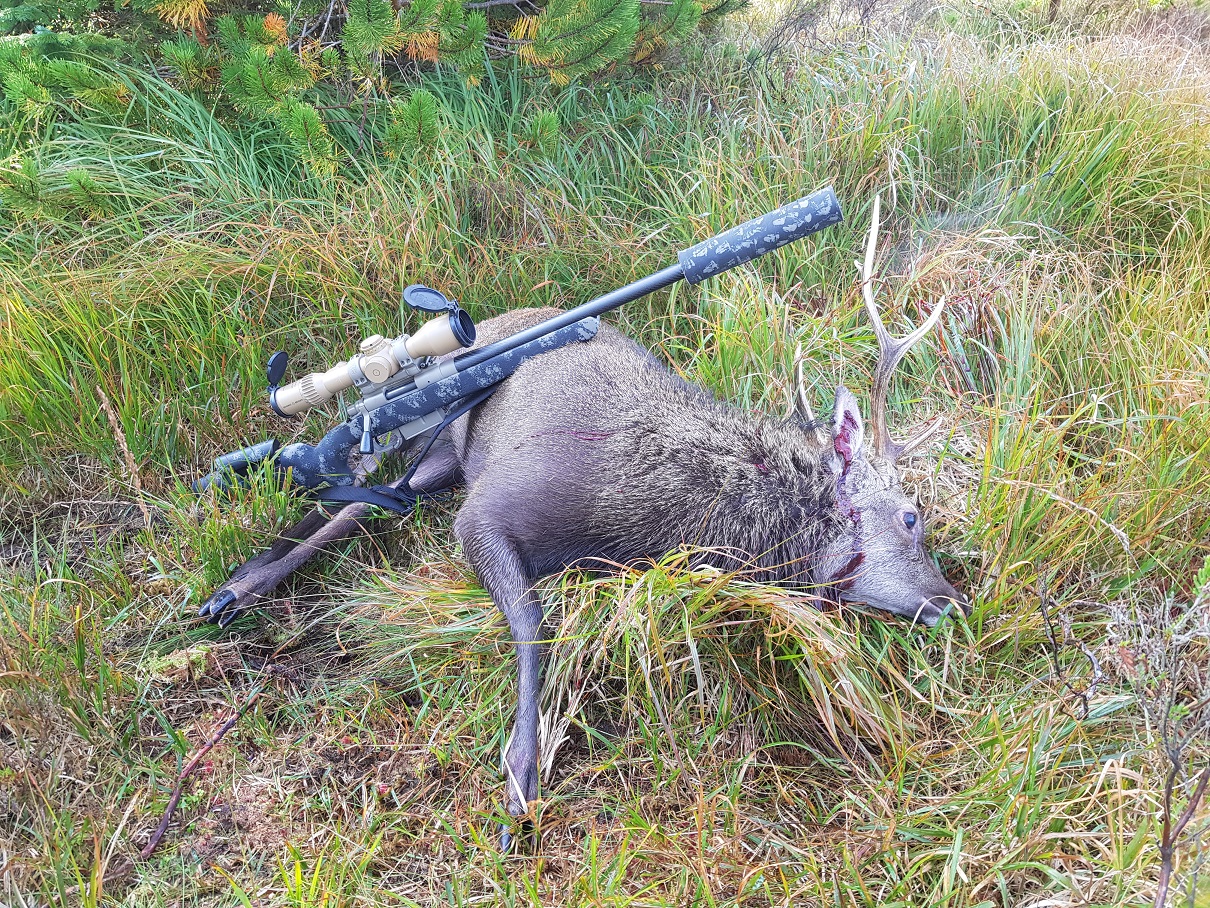
Sounds like you want a long range target scope to use for everyday hunting. Wrong tool for the job, as most animals are still taken inside 200 yards. Not everyone is shooting animals at 600-900 yards as many articles and videos would have one believe. (Remember these are typically sponsored by the manufacturers and therefore the message is skewed to their marketing plans.)
My opinion is just that...my opinion...but it is based off hunting for 38 years, a wide variety of animals, in a wide variety of terrain, with many different rifle/scope/cartridge combinations, and yet my average shot distance is just 132 yards! (this does not include the game I just took on my recent African Plains Game hunt, where my longest shot was on a bontebok at 225 yards. I have taken game at 5 yards, out to 475 yards, and I have less than a handful of game taken at more than 350 yards.)
Honestly, a Leupold VX-3 3.5-10x40 will meet 90% of your needs, is a rugged, reliable scope, that is lightweight and fits almost any rifle, and has a lifetime warranty. If you prefer BDC type reticles, I find the B&C reticle from Leupold to be the simplest and least obstructive of those available. The warranty centre is in Okotoks, AB and has a quick turn around time, and has provided excellent service over the past two decades when I needed their services. (also from falls and scope damage suffered in the field)
In your budget range, you could also look at their newer models if used isn't your cup of tea. Going up to a VX-5HD 2-10x42 will get you more features that you may desire over the simple VX-3, have great glass, and still provide great service. New, you will pay more, but I saw these on sale this spring for $1500. A little more can get you the Firedot reticle for an illuminated option; great for low light on moose and bear in the dark timber or first/last light. There is also a new VX-4HD line that may be better suit your needs and budget.
I would never put a FFP scope on a hunting rifle...but that is just my preference. At low magnification it is hard to make out the reticle in the daylight, even if it illuminated (I do have one on my Bergara 22LR for learning to shoot out to 2-300 yards with it).
If you have adjustable turrets, then capped turrets is definitely a must have for aa hunting rifle. Seen/heard too many stories about guys missing/wounding game, or missing shot opportunities due to turret issues or wrong settings when a shot opportunity presented itself.
Larger diameter tubes on scopes are for elevation adjustment only. They do not provide any additional brightness under low low light conditions, despite what most people will tell you (this straight from technicians from scope manufacturers).
Exit Pupil diameter, based off the objective lenses size, determine how much light is transmitted to your pupil to aid in seeing your target better. 42mm obj. lens/power mag setting @ 6 = 7mm, the maximum size of the younger human pupil. As we age our pupils cannot open as wide as when we were younger. By the time we are approaching 50, we are closer to 6 mm, and after 60, at 5 mm. So a larger objective bell on a scope becomes a waste as your eye can no longer receive all the light being transmitted to it. For example as I am in my late 50's, I do not turn up my magnification under low light to more than 7X, as I find that I can still see targets clearly at this magnification at last shooting light with the 6mm exit pupil, with my aging eyes, through field testing.
And then there are the issues of increased size and weight, as well as cost, with larger scopes that can create other issues. A larger scope is heavier, and may move during recoil if not secured properly in the rings and bases on heavier recoiling rifles. It is also easier to bang the scope and knock it out of zero while in transport, or during hunting activities. It can also adversely affect the weight and balance of your hunting rifle, and how it handles in the field.
Other quality scopes you could look at, that I can also recommend from personal experience, within your budget, also include Swarovski, Zeiss, Kahles, and Trijicon (used and/or new, depending on make and model). Warranty service also used has been on Swarovski, but takes a few months, as their warranty centre is in Rhode Island, USA. I have not needed warranty service on the other makes, as yet.
On a hunting scope, the KISS principle helps mitigate a lot of potential issues that plague many hunters in the field each year. Use the right tool for the job, not one some promoter is telling you is the greatest/latest whizbang optic that guarantees you to shoot tiny critters at extremely long distances!
Hope this helps.
Best of luck on your quest!















































 , and tubes over 30mm( 1” are preferred to me) or 50mm plus bells. Keep it is simple keep light for a big game hunting rifle is the way to go in my opinion. They used to say 1x of magnification per 100 yard of targets. So theoretically 3-9 would bring you all the way to 900 yards… maybe that is pushing it but it is plenty for up to 500 yards and since I never shot anything past 300 I’m fine with my choices! Never felt under scoped with what I have. Target and varmint shooting that is a different story probably.