
The performances of all major battle rifles from ww2 are so comparable that its a completely moot point to differentiate between them. None of the small nuances between them would have really any major differentiating effect on a hit imo, and your target will not know the difference. They are all FMJ battle rifle rounds, in the same velocity range, coming out of similar length barrels and are all at or close to being a .30 cal bullet.













































You are using an out of date browser. It may not display this or other websites correctly.
You should upgrade or use an alternative browser.
You should upgrade or use an alternative browser.
Which round shot by a rifle had the most devastating effect during WW2?
- Thread starter Nelson84
- Start date
Eaglelord17
CGN Ultra frequent flyer
- Location
- Sault Ste. Marie
I saw a you tube vid of some Americans in Afghanistan. The Americans encountered what they said was a "sniper" {read, slow deliberate fire} from what I'd say was 1200 yards or better. This "sniper" was using a No4Mk1 with ball ammo when the call for corpsman came out. One of the American kids caught the round through the triceps area on his left arm {lucky it missed bone and artery} they, including the wounded kid were laughing about it as the corpsman was wrapping him up.
Lucky shot on the part of the Afgan Taliban? Maybe, it took him 4 or 5 rounds to zero in the Yanks... all the while under fire from a "SAW" {damn thing couldn't hit the broad side and the Afgan knew it!}
The Americans eventually called in an air strike if you can believe that ( for 1 guy, with an antiquated rifle and 60 year old ammo) and they couldn't even get that right. The air strike hit a small group of houses in what looked like the next village.
Anyhow, the wound was small with no tumbling backside blowout. Straight through and through. I'll bet the kid was asking for pain meds the next day though!
Quick Thread Derail. The thing you have to remember about that particular engagement is that the Americans (and Canadians) do not have a long range squad level weapon (platoon level will have approximately 2 C6 MG's though). The Soviets faced that problem when they first invaded Afghanistan, as that was all the Afghani's had. Thread Derail over.
The rounds everyone agreed had the least devastating effect were the 6.5 rounds used by the Italians and Japanese. Both nations adapted different rounds to have more effect (even if the Italians only did for a short period of time due to logistical concerns). If I remember correctly the 7.7x58 Arisaka round is based off the .303 British bullet due to the Japanese being impressed with the stopping power it had. So .303 British would get my vote.

BeaverMeat
CGN Ultra frequent flyer
- Location
- Nanaimo, B.C.
7.92x57
Not only from the K98' but from this bad mofo...
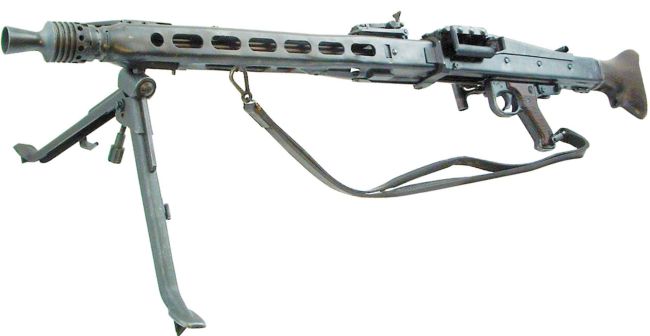
I think 1200rpm of 8mm is very much devastating. Yes, it is a machine gun. But the combination of the rounds fired from the K98 and MG34/42 should amount for something.
But, this is A biased opinion as I enjoy shooting 8mm over most .30 cals.
Not only from the K98' but from this bad mofo...
I think 1200rpm of 8mm is very much devastating. Yes, it is a machine gun. But the combination of the rounds fired from the K98 and MG34/42 should amount for something.
But, this is A biased opinion as I enjoy shooting 8mm over most .30 cals.
Last edited:

BeaverMeat
CGN Ultra frequent flyer
- Location
- Nanaimo, B.C.
After some research, I retract my statement about 7.92x57.
7.62x54r
Why?
When you account for the shear amount of casualties which this round has afflicted (20 million). It is easy to argue that this round had the most "devastating effect" in the long run during WWII.
I understand .303 and 30-06 where the rifle rounds used by the winning side, I can understand the bias toward them. But WWII was not won by rifles alone.
7.62x54r
Why?
When you account for the shear amount of casualties which this round has afflicted (20 million). It is easy to argue that this round had the most "devastating effect" in the long run during WWII.
I understand .303 and 30-06 where the rifle rounds used by the winning side, I can understand the bias toward them. But WWII was not won by rifles alone.

The one used to kill Vladimir Efimovich in 1941. Chief of Staff Western Front.
Well if you want to put it that way, the rounds from the Typhoon that wounded Rommel and put him out of action.

Grizz
It was not a rifle round, but from a pistol. A .32 caliber round fired from a Walther PPK when Hitler pulled the trigger and shot himself.
Initially this is what I thought this thread was about -- history changing bullets.
I thought we would read about snipers killing company commanders and things like that.
Ah well. I have only shot a lee enfield .. and round energy down-range is VERY impressive, especially when compared to friends' .308, 6.5x55, 556 or even 30-06 rifles. Not exactly a scientific test, but propane tanks fall over at 200m first shot, every shot. Hah.
If you want to get interested in some long range science, there is a gent on youtube going by the name of Mag30th who does some incredible 1000yd shots with old milsurp rifles.. and iron sights.
I saw that video of the american section pinned down by one hajji with an enfield and just had to laugh. thousands and thousand of dollars of armament, training, armour and airpower.. against a guy in rags with an antique bang stick.
My vote would have to go to the 8x63 Swedish. 218 grain bullets at 2500fps. Designed for their machine guns and some modified K98 rifles.
The only thing is, even though there are rumors that Finland used the cartridges in some of their machine guns, that's all I've ever heard about it actually being used in WWII. It may be just that, a rumor.
I have a K98 that I modified to accept the cartridge. Marstar was dumping them at ridiculously low prices, under 10 cents per round, delivered to my doorstep. Everything in crates, 100 rounds on cloth belts inside of paper boxes.
The stuff is powerful. I pulled the original bullets and loaded some 190 grain soft points. The rifle was uncomfortable for me to shoot a lot. Anyway, it was even cheaper, when I stripped all of the cases out of the belts and sold the belts to a fellow with a Browning machine gun in 30-06.
IIRC, the Swedes fitted the K98s that were converted to the cartridge with muzzle brakes. They later sold the rifles to Israel.
The only thing is, even though there are rumors that Finland used the cartridges in some of their machine guns, that's all I've ever heard about it actually being used in WWII. It may be just that, a rumor.
I have a K98 that I modified to accept the cartridge. Marstar was dumping them at ridiculously low prices, under 10 cents per round, delivered to my doorstep. Everything in crates, 100 rounds on cloth belts inside of paper boxes.
The stuff is powerful. I pulled the original bullets and loaded some 190 grain soft points. The rifle was uncomfortable for me to shoot a lot. Anyway, it was even cheaper, when I stripped all of the cases out of the belts and sold the belts to a fellow with a Browning machine gun in 30-06.
IIRC, the Swedes fitted the K98s that were converted to the cartridge with muzzle brakes. They later sold the rifles to Israel.

A Typhoon isn't really a round shot by a rifle, if you want to be pedanticWell if you want to put it that way, the rounds from the Typhoon that wounded Rommel and put him out of action.
Grizz
.
Didn't the British MK VII ammo have a tendency to tumble upon impact ?
Yes, that's what it was designed to do. There was an aluminum cone in every bullet, in the nose, under the jacket. This made them unstable as soon as they hit anything.

A Typhoon isn't really a round shot by a rifle, if you want to be pedantic
Guess that also means the 2 x 40mm cannon equipped Hurricane MKIID (The tin can opener) is out too..

7.92x57
Not only from the K98' but from this bad mofo...
I think 1200rpm of 8mm is very much devastating. Yes, it is a machine gun. But the combination of the rounds fired from the K98 and MG34/42 should amount for something.
But, this is A biased opinion as I enjoy shooting 8mm over most .30 cals.
I agree with you, Full Auto 8mm sucks BIG TIME if your in the sights and being shot at!


This is 1/2 inch steel plate shot from about 85-90 meters if I remember correctly. The bullet that penetrated is 8mm AP that I happen to have. The other non penetrating shots are 300 Win Mag in the center. HXP L1A1 Ball .303 on the top left. And lastly 7.62.39 center right. Also just under my thumb you can see the out line of a .303 bullet that hit the dirt and slammed into the plate sideways

A Typhoon isn't really a round shot by a rifle, if you want to be pedantic
 I do. I have to try really hard to stop myself, and often fail.

The first one is in two parts ...
Infantry Weapons and their Effects (WWII and Korean era U.S. Training Films) http://www.milsurps.com/content.php...cts-(WWII-and-Korean-era-U.S.-Training-Films)
Automatic Weapons: American vs. German (U.S. Training Film)http://www.milsurps.com/content.php?r=446-Automatic-Weapons-American-vs.-German-(U.S.-Training-Film)
Fundamentals of Ballistics (Department of Defence 1949)http://www.milsurps.com/content.php?r=411-Fundamentals-of-Ballistics-(Department-of-Defence-1949)
Regards,
Doug
Infantry Weapons and their Effects (WWII and Korean era U.S. Training Films) http://www.milsurps.com/content.php...cts-(WWII-and-Korean-era-U.S.-Training-Films)
"Infantry Weapons and Their Effects" is an official WWII era training film which demonstrates the use of standard issue U.S. infantry weapons and their effects on various targets. This is a really interesting and unusual video. See rifles, pistols & heavy machine guns shoot into & through steel German helmets, concrete walls, 12 inch tree trunks, & more. Part 2 was produced in 1953 and focuses on U.S. PISTOL CALIBER .45, SUBMACHINE GUN CALIBER .45, U.S. CARBINE, CALIBER .30. MECHANICAL CHARACTERISTICS, OPERATION, AND USE IN COMBAT.
Automatic Weapons: American vs. German (U.S. Training Film)http://www.milsurps.com/content.php?r=446-Automatic-Weapons-American-vs.-German-(U.S.-Training-Film)
Fundamentals of Ballistics (Department of Defence 1949)http://www.milsurps.com/content.php?r=411-Fundamentals-of-Ballistics-(Department-of-Defence-1949)
Regards,
Doug
Military Calibres Wound Pofiles
http://i161.photobucket.com/albums/t219/Alan_de_Enfield/PenetrationByCalibre_zps27281e51.jpg
The picture looks interesting but it is the size of a postage stamp on my screen and cannot be read. Is there a trick to making these photobucket images bigger? People use photobucket all the time on here and it drives me nuts as I can never see any detail.
- Location
- Ottawa origanally Muskoka
Russian 7.62x54R 147gr bullets do the same thing. Hollow steel jacket lead core in the base only, impact causes the core to shift and bend the jacket, bullet tumbles like a corkscrew.
The HE rounds used by Russian snipers on german invaders was also quite devastating.
The snipers would be armed with SVTs and wait until the second wave of Germans advanced, then they'd literally light em up. This demoralized the first wave causing them to faulter (sudden screams of agony and rifle fire from behind) and the remnants of the 2nd and all of the 3rd wave would also be demoralized watching their fellow soldiers be gut shot with explosive rounds will do that.
The 7.62x54R was the highest velocity 30cal round when shot from the 1891 or 91/30 but when shot from any other rifle variant it was surpassed by the 30-06. The advantage in velocity was achieved by having a longer barrel not by the ammunition its self.
Of the 4 main powers in the european theater and their respective ammunitions I would rate the 303B on the low end, followed by the 8mm mauser then a near tie for power between the 30-06 and 7.62x54R.
All of which are very close to one another with the 303 being the only one with any real gap between the lott.
.....I edited this post to include the proper bullet designation for the 303, I didn't double the post? WTH?
The HE rounds used by Russian snipers on german invaders was also quite devastating.
The snipers would be armed with SVTs and wait until the second wave of Germans advanced, then they'd literally light em up. This demoralized the first wave causing them to faulter (sudden screams of agony and rifle fire from behind) and the remnants of the 2nd and all of the 3rd wave would also be demoralized watching their fellow soldiers be gut shot with explosive rounds will do that.
The 7.62x54R was the highest velocity 30cal round when shot from the 1891 or 91/30 but when shot from any other rifle variant it was surpassed by the 30-06. The advantage in velocity was achieved by having a longer barrel not by the ammunition its self.
Of the 4 main powers in the european theater and their respective ammunitions I would rate the 303B on the low end, followed by the 8mm mauser then a near tie for power between the 30-06 and 7.62x54R.
All of which are very close to one another with the 303 being the only one with any real gap between the lott.
.....I edited this post to include the proper bullet designation for the 303, I didn't double the post? WTH?
Last edited:
- Location
- Ottawa origanally Muskoka
Russian 7.62x54R 147gr bullets do the same thing as the British Mk VII bullet. Hollow steel jacket lead core in the base only, impact causes the core to shift and bend the jacket, bullet tumbles like a corkscrew.
The HE rounds used by Russian snipers on german invaders was also quite devastating.
The snipers would be armed with SVTs and wait until the second wave of Germans advanced, then they'd literally light em up. This demoralized the first wave causing them to faulter (sudden screams of agony and rifle fire from behind) and the remnants of the 2nd and all of the 3rd wave would also be demoralized watching their fellow soldiers be gut shot with explosive rounds will do that.
The 7.62x54R was the highest velocity 30cal round when shot from the 1891 or 91/30 but when shot from any other rifle variant it was surpassed by the 30-06. The advantage in velocity was achieved by having a longer barrel not by the ammunition its self.
Of the 4 main powers in the european theater and their respective ammunitions I would rate the 303B on the low end, followed by the 8mm mauser then a near tie for power between the 30-06 and 7.62x54R.
All of which are very close to one another with the 303 being the only one with any real gap between the lott.
The HE rounds used by Russian snipers on german invaders was also quite devastating.
The snipers would be armed with SVTs and wait until the second wave of Germans advanced, then they'd literally light em up. This demoralized the first wave causing them to faulter (sudden screams of agony and rifle fire from behind) and the remnants of the 2nd and all of the 3rd wave would also be demoralized watching their fellow soldiers be gut shot with explosive rounds will do that.
The 7.62x54R was the highest velocity 30cal round when shot from the 1891 or 91/30 but when shot from any other rifle variant it was surpassed by the 30-06. The advantage in velocity was achieved by having a longer barrel not by the ammunition its self.
Of the 4 main powers in the european theater and their respective ammunitions I would rate the 303B on the low end, followed by the 8mm mauser then a near tie for power between the 30-06 and 7.62x54R.
All of which are very close to one another with the 303 being the only one with any real gap between the lott.
Winchester30-30
Regular
- Location
- Fraserwood, MB
The 14.5 MM russian anti tank round its a pretty big round, got to shoot one in virden! couldnt imagine shooting that thing all day






















