












































You are using an out of date browser. It may not display this or other websites correctly.
You should upgrade or use an alternative browser.
You should upgrade or use an alternative browser.
WK-180 Piston Rods
- Thread starter Rfn
- Start date

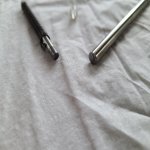
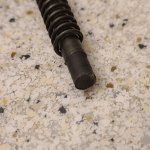
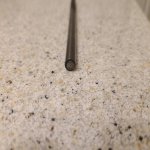



was the bushing it runs thru deformed at all? it looks like any flexing would be concentrated in that one area as opposed to the original which is mostly the same diameter the entire length with just a small protrusion to hold the spring. what's with the colour transition near the break? is the bottom picture clean steel or is carbon/dirt smeared into the grain?
It's my understanding that over 15,000 WKs have been made and sold. That being said I am unaware whether their workforce has proportionatly increased. I suspect that in the given political environment and with contracts signed for X pistons etc. That it could be more effective for them to focus on getting the majority out of the door and bringing in incremental improvements.
For example until they can find a better piston rod at an acceptable price they have to keep using the old ones they have in stock or ordered. Even once the new one is ready they may have a 1000 of the old one to get through.
KD are not daft, they changed from the magnetic handle to the screw in on customer demand (the magnetic one marred the receiver in a way that didn't impact function but people didn't like it), then when that one started breaking it took them a while to fix it. But they made sure the fix didn't break other things.
It could well be that changing what the piston is made of risks negatively impacting the bolt carrier.
My personal hope is that a higher grade of steel would resolve the snapping issue.
For example until they can find a better piston rod at an acceptable price they have to keep using the old ones they have in stock or ordered. Even once the new one is ready they may have a 1000 of the old one to get through.
KD are not daft, they changed from the magnetic handle to the screw in on customer demand (the magnetic one marred the receiver in a way that didn't impact function but people didn't like it), then when that one started breaking it took them a while to fix it. But they made sure the fix didn't break other things.
It could well be that changing what the piston is made of risks negatively impacting the bolt carrier.
My personal hope is that a higher grade of steel would resolve the snapping issue.
I just bought one. Havent shot it yet, but seems like a straight simple design. Maybe the issue is at the other end. Does the bolt move freely? Does the rod move freely? If the bolt is fouled or has any obstructions, burrs, or missalignment, the gas portion could work perfect, but if the rod has no has no where to go, something will break. in this case the weakest point was the rod...
My 2 cents without seeing it.
Edit- wow, missed alot replies on that convo, page wouldn't load proper. Sorry for the generic reply.
By the look of the break( to me), the way the rod has a sharp edge instead of a taper at the change in size would create a weak point...
My 2 cents without seeing it.
Edit- wow, missed alot replies on that convo, page wouldn't load proper. Sorry for the generic reply.
By the look of the break( to me), the way the rod has a sharp edge instead of a taper at the change in size would create a weak point...
Last edited:
https://ibb.co/qCYjyLj
T81 vs wk180 vs vz58
- fat springs
- increase in size not decrease where the spring is
- tapered not sharp edge
- smaller weak area
I would try to beef up the rod, taper it where it enters the block and Maybe instead of a nylon bushing, make it an actual piece of steel, thinner wall to accommodate a thicker rod, then move the spring forward to clear the barrel nut to accommodate a beefier spring. Essentially a 2 piece rod...
https://ibb.co/XLym2Wp
Pardon the crude scribble...
T81 vs wk180 vs vz58
- fat springs
- increase in size not decrease where the spring is
- tapered not sharp edge
- smaller weak area
I would try to beef up the rod, taper it where it enters the block and Maybe instead of a nylon bushing, make it an actual piece of steel, thinner wall to accommodate a thicker rod, then move the spring forward to clear the barrel nut to accommodate a beefier spring. Essentially a 2 piece rod...
https://ibb.co/XLym2Wp
Pardon the crude scribble...
https://ibb.co/qCYjyLj
T81 vs wk180 vs vz58
- fat springs
- increase in size not decrease where the spring is
- tapered not sharp edge
- smaller weak area
I would try to beef up the rod, taper it where it enters the block and Maybe instead of a nylon bushing, make it an actual piece of steel, thinner wall to accommodate a thicker rod, then move the spring forward to clear the barrel nut to accommodate a beefier spring. Essentially a 2 piece rod...
https://ibb.co/XLym2Wp
Pardon the crude scribble...
That’s very interesting…
Comparing those three, the smaller diameter of the WK rod is obvious, as is the design. The gradual taper and flare of the beefier rods as opposed to the sharp shoulders of the WK rod.
Correct me if I’m missing anything, but so far what have we identified as the possible problem?
1. Design? (too thin? no taper/flare as opposed to other pistons?) When multiple rods break at the same point, that’s obviously the first place to investigate, right?
2. Over gassing?- the new adjustable block should address this (got one on the way, fingers crossed!)
3. Possible tempering issues? (too hard/brittle?) or wrong choice of steel? No idea on that one, above my pay grade.
Am I missing anything?
Correct me if I’m missing anything, but so far what have we identified as the possible problem?
1. Design? (too thin? no taper/flare as opposed to other pistons?) When multiple rods break at the same point, that’s obviously the first place to investigate, right?
2. Over gassing?- the new adjustable block should address this (got one on the way, fingers crossed!)
3. Possible tempering issues? (too hard/brittle?) or wrong choice of steel? No idea on that one, above my pay grade.
Am I missing anything?

Are these piston snaps happening randomly without a common denominator - would there be anything one can do to mitigate this from happening? I would assume it's not related to a particular grain of bullet or brand of round, etc. Are there any signs of a failing rod, or do these just break and there's nothing we can do it about it ahead of time?


My thoughts exactly,and I think this discussion is proof of that.
Whatever the issues are, no one can deny there is a problem here. We can all agree on that.
My hopes is that someone with manufacturing capability and know-how will read this thread, recognize a potential market for a solution, and address this issue.
Whatever the issues are, no one can deny there is a problem here. We can all agree on that.
My hopes is that someone with manufacturing capability and know-how will read this thread, recognize a potential market for a solution, and address this issue.
You would think that aftermarket pistons would be everywhere.
1) Pistons that never break.
2) Longer pistons that work with rifle-length gas systems.
Sounds like there would be a good market for anyone who wanted to make them.
The one I saw had 15000 rounds on it, and a loose gas block. Not sure how much could have saved that.
Replacement WK pistons are 24$ per. After market pistons are $60. I think for a lot of people (including the manuf) these were made as cheap guns, but now that the OIC has happened, they're being used much more intensively than anyone could have expected a couple of years ago.






















