












































You are using an out of date browser. It may not display this or other websites correctly.
You should upgrade or use an alternative browser.
You should upgrade or use an alternative browser.
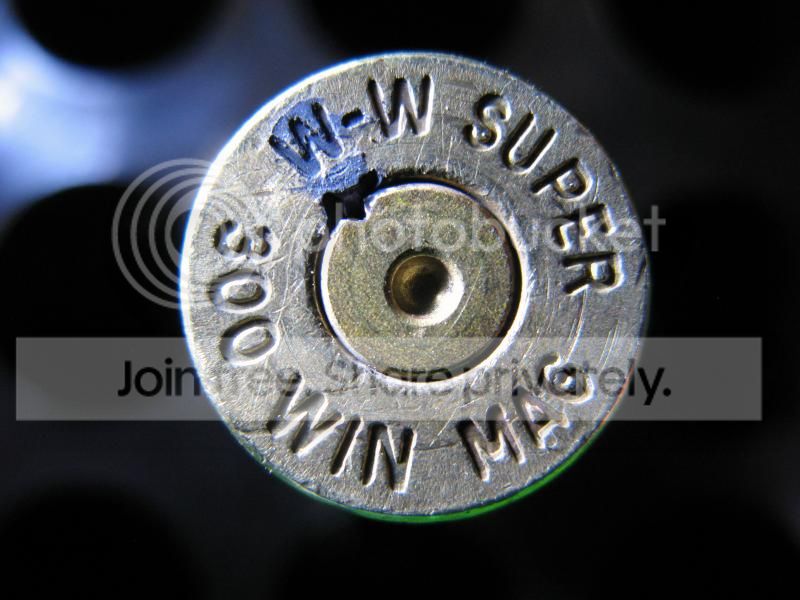
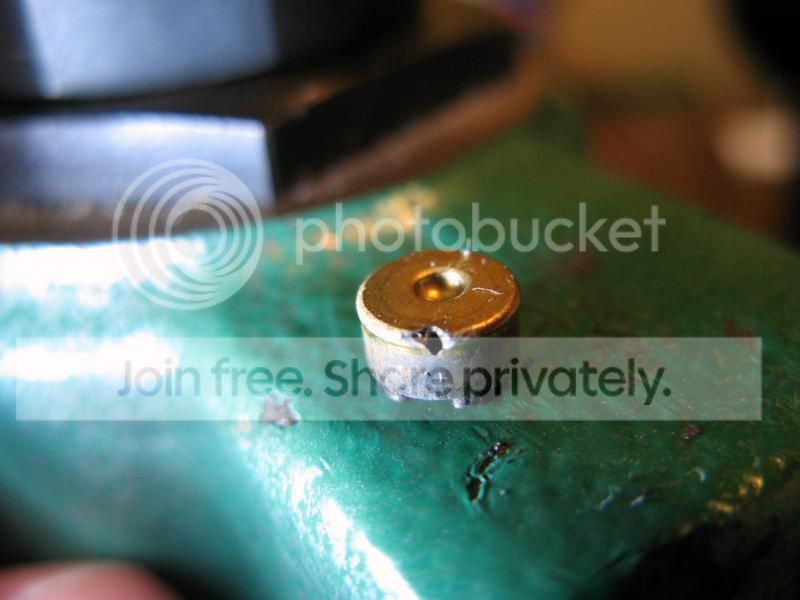
WLRM rupture
- Thread starter b2driver
- Start date


back40sniper
CGN Regular
- Location
- South east Sask.
You will want to give Beth an email at beth@graywoodsporting.com and tell her what happened and what lot # of primers you have. Am currently trying to get winchester to repair damage to my bolt face. Good luck.

I had the same thing happen a few years ago with Remington LR primers ruined the bolt on my Sako hunter. got in touch with Remington, they paid for a new bolt and sent me a cheque to buy a brick of primers. I sent them the primers in the flat that were unused and some of the damaged ones
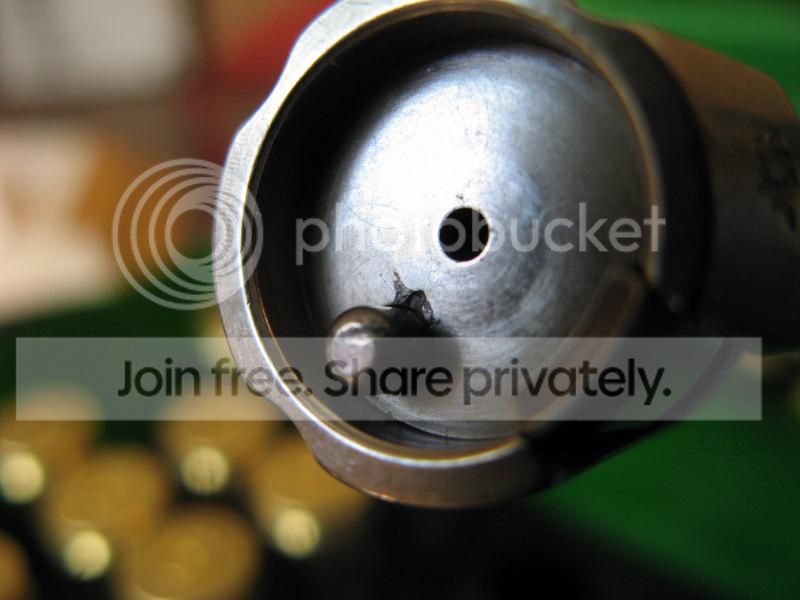
Ya, there's a mark on the ejector pin as well, kind of hard to see in the pic, but it's scored a little.
I decapped the rest of the brass (I prep my entire lot at one time), took them and the remaining 200 or so primers, inerted them and chucked 'em. Might have been a little hasty on that as I could have gotten a cheque. Just wanted them gone.
Back to CCI's. Put a dozen or so rounds through the rifle this morning, nothing unusual on the case heads or primers.
I'll look into contacting Winchester about the bolt, but I'm not holding my breath. The rifle seems to have taken it in stride. Maybe I will too.
I decapped the rest of the brass (I prep my entire lot at one time), took them and the remaining 200 or so primers, inerted them and chucked 'em. Might have been a little hasty on that as I could have gotten a cheque. Just wanted them gone.
Back to CCI's. Put a dozen or so rounds through the rifle this morning, nothing unusual on the case heads or primers.
I'll look into contacting Winchester about the bolt, but I'm not holding my breath. The rifle seems to have taken it in stride. Maybe I will too.

Is there a recall or just lots of reports of issues with them?
Kinda worried since I have 2 bricks of them on my desk. I use them mostly for light load, cast bullet shooting so hopefully the pressure is low enough to not have to worry. (I'm not talking low end of normal pressure but 1/3 to 1/2 normal pressure.) I was going to use them in my 300WM regular loads but I may avoid them for that now. I have about 400 CCI LR mag primers left which for me is about 18-24 months in my 300WM.
Kinda worried since I have 2 bricks of them on my desk. I use them mostly for light load, cast bullet shooting so hopefully the pressure is low enough to not have to worry. (I'm not talking low end of normal pressure but 1/3 to 1/2 normal pressure.) I was going to use them in my 300WM regular loads but I may avoid them for that now. I have about 400 CCI LR mag primers left which for me is about 18-24 months in my 300WM.
I have used the exclusively in my .338 RUM loads and have never experienced an issue. I have also used them in a number of other calibers when using ball powders. Some of the loads have been very hot too and nary an issue.

back40sniper
CGN Regular
- Location
- South east Sask.
I have used only Win primers for years as they were always easy to get locally. Had this bad primer experience and did a search,and this seems to be an ongoing thing. Pressure doesn't seem to matter, my primers let go with starting loads and you can see it is manufacturing flaw where the metal is too thin at the bend. Winchester is going to cover bolt so all is good for now.
My bad lot of primers were DHL206G.
My bad lot of primers were DHL206G.
When you have damage to the bolt as pictured by the OP does it need to be replaced right away or can you still safely shoot the gun? I have a 6mm rem 700 with a smaller gouge due to a blown primer and I wonder if I need to replace the bolt, what would the cost be to replace it?

These type primers rupture because the the primer cup was too hard when formed unto the cup leaving the curvature at the 90 degree bend brittle. And this can happen with any type and make primer, I had the same thing happen in 1974 with a bad brick of Remington primers, and Remington replaced the bolt and brick of primers.
Below is not the same problem, the primers were OK but the poster who took this photo said it was cheaper to replace his AR15 bolt than worry about loose primer pockets. Which in my opinion is pure stupidity for not inspecting his cases and showing little for the care of his rifle.

Kenny_G2
A good primer will "flow" into the eroded hole in the bolt face and not rupture, firing another bad primer may rupture at the hole in the bolt face and leak again. There are a lot of people with rifles that have high pressure erosion/pits in their bolt face and they keep shooting their rifles. The main point here is to make people aware that the ammunition manufactures are responsible for any damage done because of defective components. On the other hand the ammunition manufactures are not responsible for you overloading your cases and causing excessive chamber pressure and resulting damage. You may need to twist a few arms and fight your way through the company's dragging their feet but it their defective product that caused the problem.
I do not know the history of your pictured cartridge case and how many times it was reloaded and how tight the primer pocket was. BUT over resizing your cases/ excessive shoulder bump will cause excessive head clearance and thus cause the primer to back out of the primer pocket and stretch/flow further than normal. Simply meaning you need to find the cause before blaming anyone but yourself first for what happened on a reloaded cartridge.
I use pin gauges to inspect my primer pockets for the correct diameter corresponding to my primers diameter.

And with any case with a loose feeling primer pocket I use a Lee depriming tool to test the primer. If the primer can be pushed out with just finger pressure the case goes in the scrap brass bucket. As you can see once you have a damaged bolt face you will give a little more care and attention to your primers and cases.

Below is not the same problem, the primers were OK but the poster who took this photo said it was cheaper to replace his AR15 bolt than worry about loose primer pockets. Which in my opinion is pure stupidity for not inspecting his cases and showing little for the care of his rifle.
Kenny_G2
A good primer will "flow" into the eroded hole in the bolt face and not rupture, firing another bad primer may rupture at the hole in the bolt face and leak again. There are a lot of people with rifles that have high pressure erosion/pits in their bolt face and they keep shooting their rifles. The main point here is to make people aware that the ammunition manufactures are responsible for any damage done because of defective components. On the other hand the ammunition manufactures are not responsible for you overloading your cases and causing excessive chamber pressure and resulting damage. You may need to twist a few arms and fight your way through the company's dragging their feet but it their defective product that caused the problem.
I do not know the history of your pictured cartridge case and how many times it was reloaded and how tight the primer pocket was. BUT over resizing your cases/ excessive shoulder bump will cause excessive head clearance and thus cause the primer to back out of the primer pocket and stretch/flow further than normal. Simply meaning you need to find the cause before blaming anyone but yourself first for what happened on a reloaded cartridge.
I use pin gauges to inspect my primer pockets for the correct diameter corresponding to my primers diameter.
And with any case with a loose feeling primer pocket I use a Lee depriming tool to test the primer. If the primer can be pushed out with just finger pressure the case goes in the scrap brass bucket. As you can see once you have a damaged bolt face you will give a little more care and attention to your primers and cases.
Thanks for the informative post, the gouge on my bolt face is smaller than even the smallest one on that AR15 bolt face so it should be good but I will be checking my brass.
I don't run any of my reloads real hot so I think it was either a loose primer pocket or the primer itself. I primed a few hundred 243 and 6mm last night and I could tell with the hand primer which brand of brass I was using just by feel, federal and imperials were by far the loosest, remington was the tightest, winchester was right in the middle and the nicest to work with. The depriming tool would be a good addition to my bench for testing when I get a loose feeling one. Thanks for the info.
I don't run any of my reloads real hot so I think it was either a loose primer pocket or the primer itself. I primed a few hundred 243 and 6mm last night and I could tell with the hand primer which brand of brass I was using just by feel, federal and imperials were by far the loosest, remington was the tightest, winchester was right in the middle and the nicest to work with. The depriming tool would be a good addition to my bench for testing when I get a loose feeling one. Thanks for the info.

I've currently had ruptures on the shoulder area of the primer using these in light 338/06 loads and moderately hot 416 Ruger loads resulting in some minor scaring on my 338/06 bolt. My lot number is DHL209G that's the brick that's given me problems. I also have two more bricks with lots FEL255G & EEL242G. Anyone know if certain lots have been singled out yet?





















