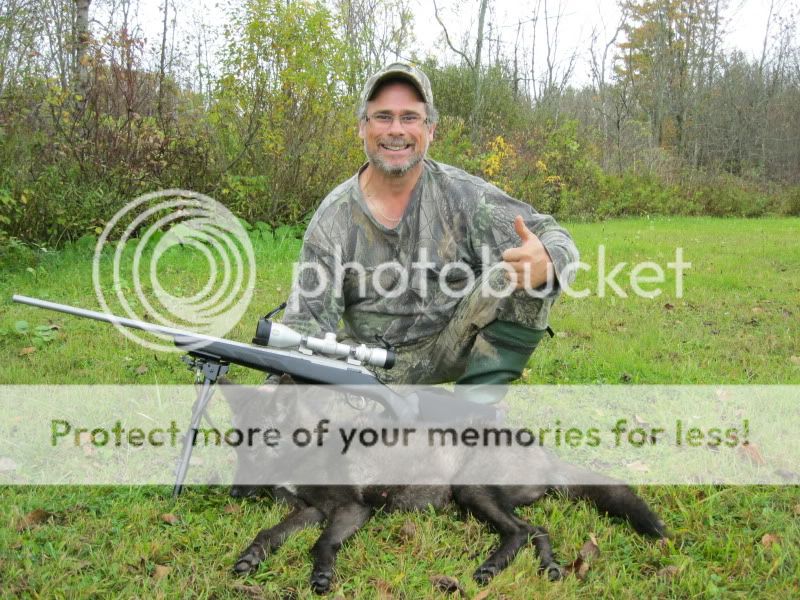
Wolf/Coyote hunting.

RT

CGN frequent flyer
Super GunNutz
Rating - 100%
174   0   0
Whats the best way to hunt wolfs or coyotes? Do electronic call actually work? I realize a gut pile would be helpful, but without one whats the beast way to go about hunting them?

Mostly thick brush in this part of the province.
 
Calling is the most productive method of hunting coyotes. Electronic calls work, but so do much cheaper and easy to carry mouth blown calls. There is a lot of information out there about calling coyotes if you look for it, or search this forum. Google is your friend, and there are many different techniques that will work. Research and experimenting are essential.

I have posted this on this forum before, and I apologize to those who saw it already, but I'll stick it here once more as a "starting point" for advice.

The first rule of coyote hunting is to hunt where there are coyotes.

We call coyotes that have been called before and not killed "educated" coyotes. If yours are educated, and hunting pressure will educate many for sure, they will be very hard to call. You may have to try something "different" to get their curiosity aroused. That is a very wide topic, so I will stick to generalities we use as SOP.

If they know you are there, they will not come. No sky lining; no walking across open areas if possible; stick to edges; use depressions; do not be easily visible from far away at any time.
No noise. You are going to call an animal with a sound, so don't make any noises that sound like coyote hunters. No talking; no slamming truck doors; no noise you can avoid; approaching the area while keeping a ridge between you and the area masks sound well.

Control your scent plume so it does not enter the area you intend to call to. We do not use any scent masking soaps, sprays, clothing, or whatever, because we believe they are useless and the only way to avoid a coyote's nose is to not let him smell you. One exception is we will often deliberately allow our scent into an open area down wind. Often coyotes will circle down wind to get a smell of what's making the noise. If the open area is large enough, they must expose themselves to do so. Often, in that moment they get your scent, they will stop to think it over for a few seconds. THAT is a good time to shoot, because they will likely leave after they decide what you are.

Break up your outline somehow. Brush in front (as long as you have a shooting lane) or behind you will do that. Do not move around any more than you must. We like to hunt in pairs. One guy gets fairly hidden, sometimes giving up long range vision, and does the calling. The other sets up to cover the approaches from an angle that allows him to see well, but the animal will be looking elsewhere for the source of the sounds. Decoys can work for this distraction too, if you are alone.

We use mouth calls exclusively. We walk lots and we hate carrying crap. That's the only reason to avoid the electronics that we can think of; that and the cost, and cold batteries. We have howlers, but use them mostly for "location" calls and then move in and use "dying prey" type calls. We believe only dominant animals will really approach a stranger in their territory, so howlers are less productive than prey type calls. We want the insecure ones too.

Call "softly" the first time in case they are close; you don't want to scare them. We call for 30 seconds to a minute and then sit for 5 and watch. The next set of calls can be louder. Watch very, very carefully. Binoculars are a real help, even in the bush. You cannot pay too much attention. Around here, if you see a magpie coming to the call, pay close attention to that direction. Coyotes and magpies hang out a lot together. Pay attention to the really unexpected directions too. Make head movements slow and steady rather than quick glances. Move nothing more than you have to.

The length of time we call a particular set up depends on how long we think a coyote would take to come from the farthest ranges we think the call is reaching. Wind knocks down calls really quickly, so your range is short. Calling from a ridge on a calm evening will reach a long way. Experience is likely the only teacher here. We have had coyotes over half an hour into the set, but most of the time 15 minutes will tell you what you need to know. Be very careful once you decide the set is done. Stand up slowly and have a long look around. The new angle will reveal all those coyotes you called but have not yet seen (and there will be a depressingly large number of them). You may get a shot if you don't create too much of a spectacle so that the dog has to figure out what the H*** just moved. But chances will not last long.

If you are going to just move and try again, don't talk, don't make noise, don't expose yourselves any more than you must. They may be watching. We move far enough to enter a "new" area that we think holds animals that have not yet heard us. In a big wind that may not be far; on a calm day that may be half a mile or more. We avoid calling the same area more than a couple of times a winter. Educated coyotes and all that.

Shooting sticks or tripods are essential. We use .22-250s or .243 and one 6mm Rem as dedicated coyote rifles. Coyotes are, pound for pound, a very tough animal. They are also small targets. You need to be able to shoot well, and shoot quickly at times with some honest power too. Multiples get really interesting. We agree before hand about left side/right side etc. and who will shoot first.

 
Electronic calls as well as mouth blown calls work very well for coyotes and can also work to bring in wolves as well. I have yet to have a wolf come in while calling for coyotes even when I know from the sign I see they are in the area as well, but have heard of a few that have responded for other people. Actually had a wolf come in while a friend and I were grunting and rattling for deer, but was in and out so quick there was no chance for a good shot and was missed clean on the run with my muzzleloader! Baiting works too so long as it is legal in your area, a friend of mine gets plenty of wolf pictures on his trail cams set up for bear hunting.
 
Calling works well whether its hand calls or Electronic. The hardest coyote to call is the Eastern as most of them are not in open fields and spend most time hid in cover. Learning to call and work the eastern coyote to opening areas for a proper kill shot is the most frustrating part of the game but it can be done. Eastern coyotes do not run for hundreds and hundreds of yards in the open like the Western cousin, but rather will do short dashes into the open fields if they hear and see a decoy in the early and late hours of the day. Percentages drop through the day to Mid day time range.

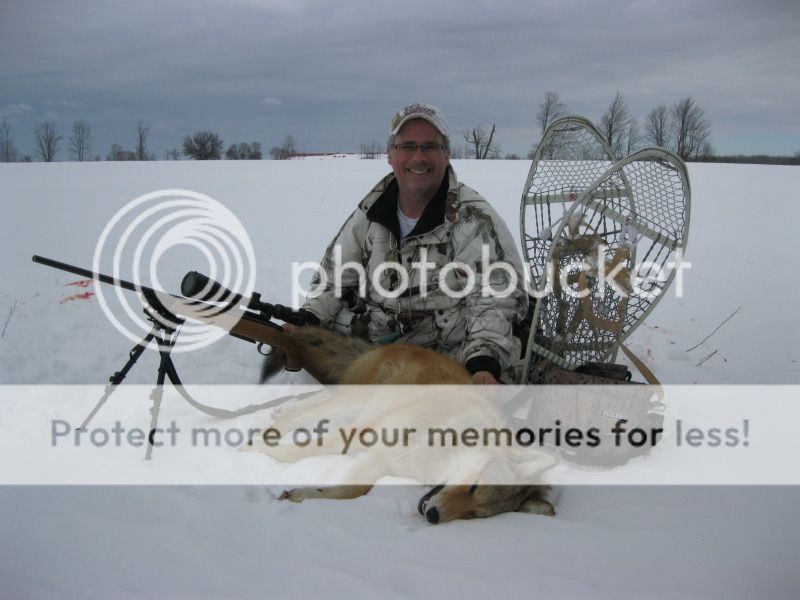
Its a much better choice to try and hunt the eastern with a snow base in fields as they are much easier to see. They do have a habit to come to the edge of cover and stand and scope the opening calling area before committing. This makes for smart and educated animals when they learn the game and are much harder to see with a natural Non snow terrain.

Not sure if you live in or close to the Peterbough or the Owensound areas but in January there will be a coyote hunting workshop being held in both places that I will be presenting a calling and hunting seminar.

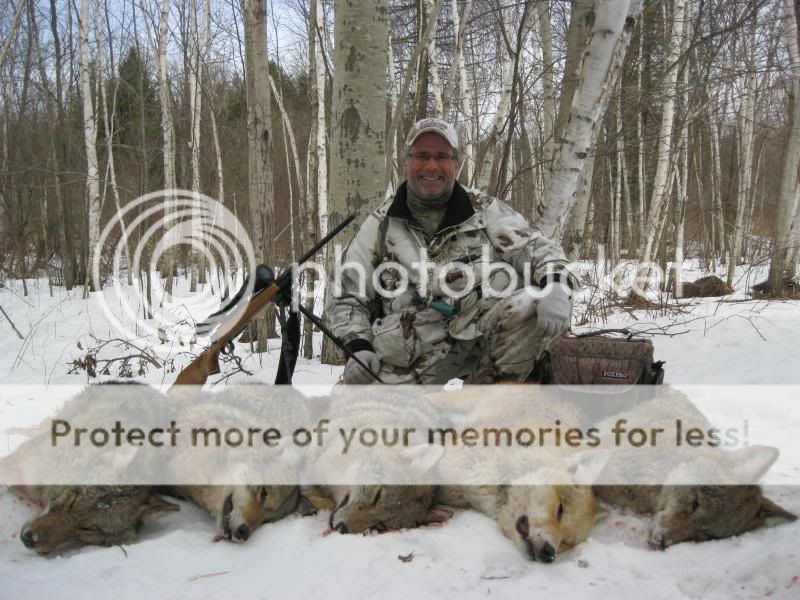
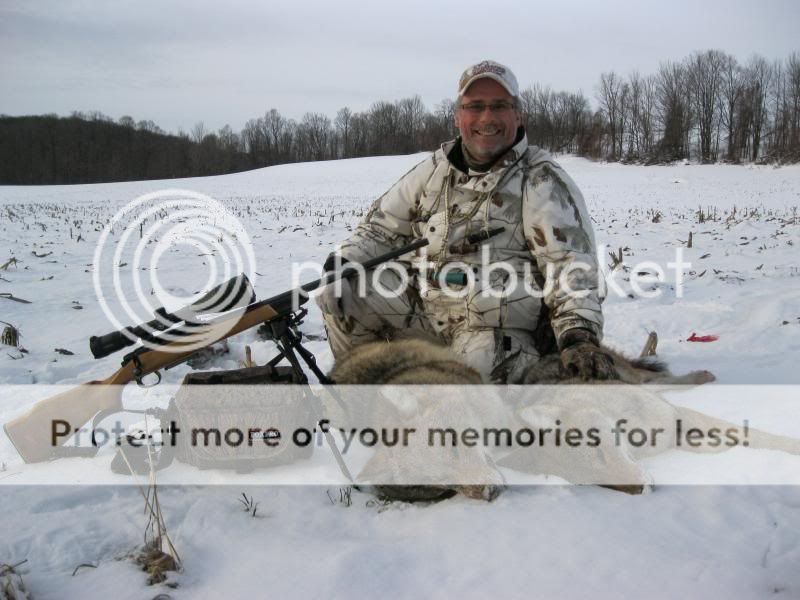
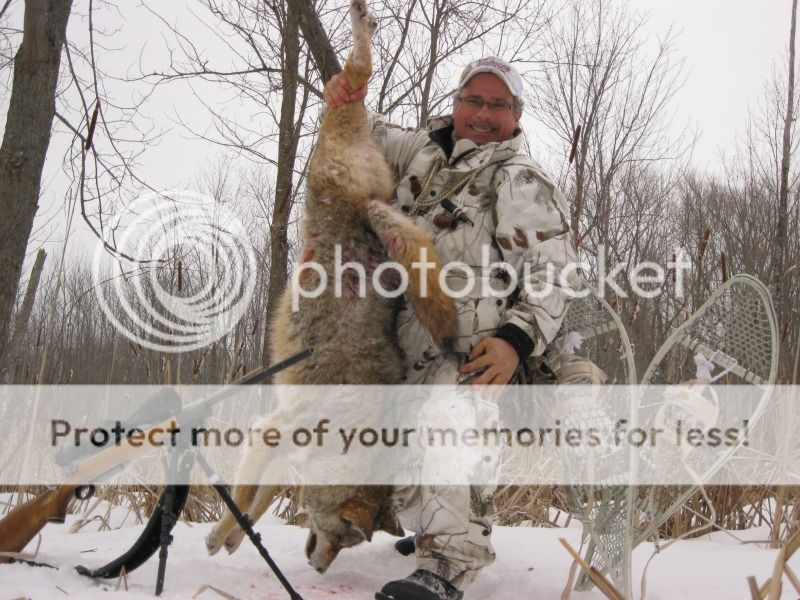
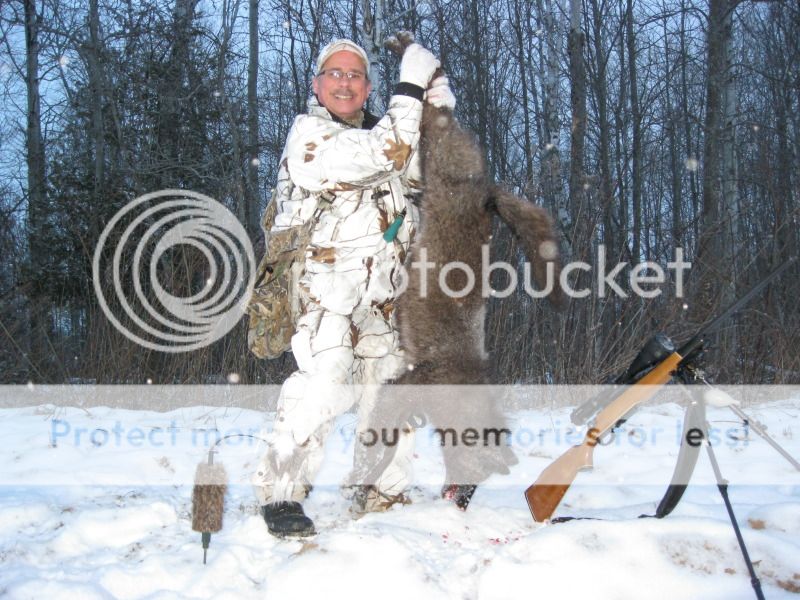
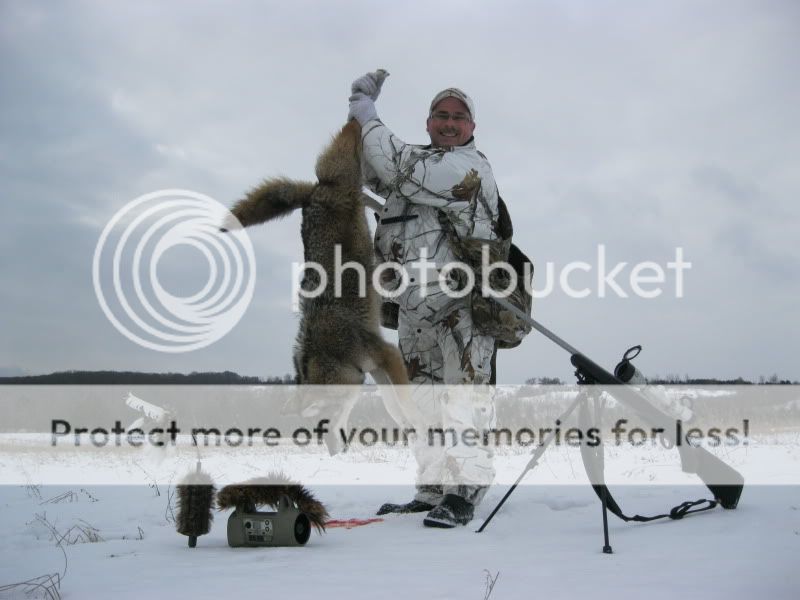
Do caller work ? you bet your backside they do !

Picture1674_zps35838dff.jpg


Picture1659_zps8962b266.jpg


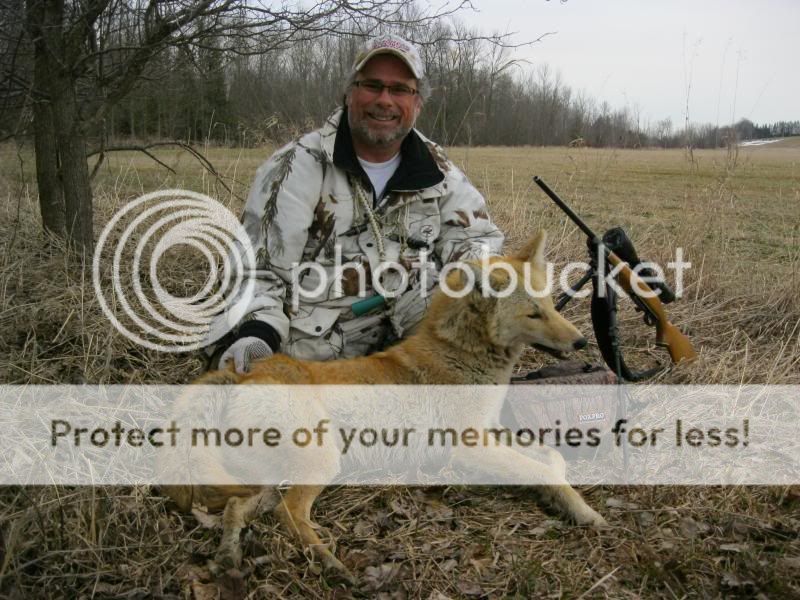
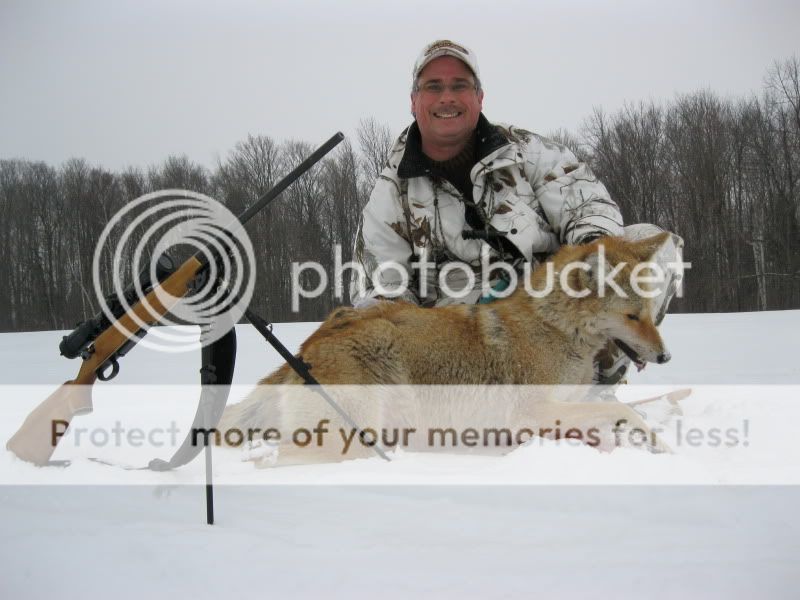
EasterYote003_zpse1f5da3e.jpg
 
Last edited:
Good luck this year AJ.......

As mentioned, hunt where they are, not necessarily where the farmer or whomever said. Do your own scouting, not many shortcuts in coyote hunting. The wind is king, being quiet and not seen are close seconds.

If there is a farm kill I leave it and setup in the best spot over it if I can and don't call unless I think I can get some territorial issues started.
When I simply setup to call I like to start with a hand call, over time get louder, turn the e caller on low/med and quit the hand call when I see movement. Kind of a bait and switch to get and keep the focus on the e caller/decoy as he comes in.


I also like a cross wind with the caller/decoy upwind of me. I have fooled their eyes with a ghillie and fooled their ears by being quiet, but I've never fooled their nose.

....and what AJ said.......
 
Get good at long range plinking and spot and stalk, if you wanna call it that out on the flats!! ;)

Sleeping out in the snow in the sun is a nice surprise or even on bales, but those moments are few and far between.

They always seems to stop or slow down and turn around when on a run, have plugged many that way.Not really a technique, more of luck when out on a stroll.

I always have my distress calls on me no matter where I am hunting, as like others have stated calling is the prime method.However most of my coyotes have been targets of opportunity and not planned.
 
Wolves will be a challenge, and are most easily encountered when hunting something else. A canine distress call will apparently get them to stop and hold their position when they would otherwise bolt, their curiosity gets the better of them. I've shot quite a few and all were happened upon in long openings in the bush, usually rivers, lakes for whatever reasons don't seem to produce as many opportunities around here. Hunting something else puts the cards in your favour, as in the end they are where the game is, as well, and generally humans and wolves use pretty similar tactics sharing the same preferences for open sight lines. It'll take lots of time, or just good luck, but you'll get them with enough time in the bush.
 
EasterYote003_zpse1f5da3e.jpg
[/QUOTE]

Pretty strange looking coyote, doesn't even appear to have the characteristic black tail tip. Neighbor's not missing a dog, is he ? :)

Grizz
 
^^^^^Has the colours of a fox if you ask me.

This is an interesting topic, I have hunted coyotes a fair bit, but wolves are new to me and I am slowly getting more involved in hunting them. Hunting coyotes is pretty challenging around my area, but at least you can draw them out into the open with a bait or calling. Wolves I find are nearly impossible to see unless your really trying hard to run into them and I find that I bump them out of an area often and rarely get even a small window for a shot.
 
^^^^^Has the colours of a fox if you ask me.

This is an interesting topic, I have hunted coyotes a fair bit, but wolves are new to me and I am slowly getting more involved in hunting them. Hunting coyotes is pretty challenging around my area, but at least you can draw them out into the open with a bait or calling. Wolves I find are nearly impossible to see unless your really trying hard to run into them and I find that I bump them out of an area often and rarely get even a small window for a shot.

Can you bait wolves in Saskatchewan ? Works for a lot of people here.

Grizz
 
Them orange coyotes are becoming a lot more common in Ontario. I have a 56lb orange one that is hanging in my gun room right now.....

I'm not taking a shot at ya , only just forwarding some info. There was Orange phase back 40-45 year ago in Ontario as my grandfather caught them all the time in Traps on his line...
 
Guys, I have had a quit a number of people interested in info on these workshops.

You will have to call the OFAH as they are setting this up,ask for Jim Magee. I was just asked if I would do the calling/hunting part and thought there maybe some interest with it.

Thx Adrian
 
Last edited:
I haven't seen a black one yet, we do get various degrees of brown, spotted one pure black across the shoulders and back while deer hunting this year. We've been seeing one or two nearly pure white as well over the last couple deer seasons.
 
Whats the best way to hunt wolfs or coyotes? Do electronic call actually work? I realize a gut pile would be helpful, but without one whats the beast way to go about hunting them?

Mostly thick brush in this part of the province.

I think you would find that an electronic caller provides you with the most/best opportunities. Hunting in the thick Ontario bush, the advantage of the electronic call is that it could be placed out on a frozen lake, allowing you to be concealed some distance away. Whereas with a mouth call, the heavy cover prevents you from watching his approach, then by the time you're aware of him, the range might be too close to for you to find him in your scope, and the action too fast to enable you get make a shot.
 
Back
Top Bottom