Specifically states Wolf pelt must be harvested, I assume because it's a fur bearing animal. I also assume Wolf license required to hunt Coyotes but does a Coyote pelt have to be harvested and used as well?? I can't imagine how the license would apply for a hybrid who's numbers are apparently on the rise!













































You are using an out of date browser. It may not display this or other websites correctly.
You should upgrade or use an alternative browser.
You should upgrade or use an alternative browser.
Wolf License in Ont
- Thread starter senior70
- Start date

https://www.ontario.ca/files/2026-03/mnr-2026-ontario-hunting-regulations-summary-en-2026-03-10.pdf
Page 90 for wolf/coyote regs.
Page 90 for wolf/coyote regs.

Legally all fur bearing animals must be processed properly. Technically illegal to kill coyotes and not process the fur although most just dispose because theyre worth nothing and you can end up with a bill sending fur to auction. Its a sad state when the world thinks fur is taboo yet its what helped humans survive for thousands of years. No fur is ok but wearing leather in all its forums goes un noticed. Guess they think it comes from somewhere else. Bunch of two faced A Holes with nothing better to do. PETA is completely a bunch of rich women mostly without a clue of reality. The world is more assinine every day
I've been removed from peta eventsLegally all fur bearing animals must be processed properly. Technically illegal to kill coyotes and not process the fur although most just dispose because theyre worth nothing and you can end up with a bill sending fur to auction. Its a sad state when the world thinks fur is taboo yet its what helped humans survive for thousands of years. No fur is ok but wearing leather in all its forums goes un noticed. Guess they think it comes from somewhere else. Bunch of two faced A Holes with nothing better to do. PETA is completely a bunch of rich women mostly without a clue of reality. The world is more assinine every day
Birds of a feather PALI've been removed from peta events
Hunting coyote for fur in Ontario requires a valid Outdoors Card, a small game licence, and up to two wolf/coyote tags per calendar year. It is crucial to check specific Wildlife Management Units (WMUs) for regulations, as some areas, particularly around provincial parks, have closures. It is illegal to waste the pelt.
Key Regulations and RequirementsLicensing: You need a valid Ontario Outdoors Card and a Small Game License.Tags: A maximum of 2 wolf/coyote tags can be purchased per calendar year.
Tags are required in specific WMUs.Season: Generally, coyotes are hunted from the fall through winter when the fur is prime.
However, they can be hunted year-round in many areas. Always check the current Ontario Hunting Regulations Summary.
Prohibited Areas: Hunting is banned in and around Algonquin Provincial Park, Killarney Provincial Park, Queen Elizabeth II Wildlands Provincial Park, and Kawartha Highlands Provincial Park.Waste Prohibition: It is illegal to abandon or allow the pelt of a wolf or coyote to spoil or be destroyed if hunted for fur.
Fur Handling and MarketPelts: Prime fur is typically found in winter, particularly on larger coyotes with thick, gray-brown coats.Preparation: Proper cleaning, skinning (usually case-skinning), and stretching are required for the fur market.
Market: While Western Canadian coyotes are in higher demand, Eastern coyotes (Ontario) have a market if the fur is of high quality.Important InformationSafety & Compliance: Always ensure you have permission to hunt on private land.
Regulations: Refer to the Ontario Hunting Regulations Summary for the most up-to-date information on tag requirements and season closures.Tagging/Transporting: Be sure to follow the tagging and transporting rules to legally transport your pelt.
Tanning: For personal use, you must follow regulations for treating or selling pelts.
Legal Information regarding the wolf/coyote huntWolf and coyote | Ontario Hunting Regulations SummaryTan, treat or preserve wild animal pelts | ontario.ca
Key Regulations and RequirementsLicensing: You need a valid Ontario Outdoors Card and a Small Game License.Tags: A maximum of 2 wolf/coyote tags can be purchased per calendar year.
Tags are required in specific WMUs.Season: Generally, coyotes are hunted from the fall through winter when the fur is prime.
However, they can be hunted year-round in many areas. Always check the current Ontario Hunting Regulations Summary.
Prohibited Areas: Hunting is banned in and around Algonquin Provincial Park, Killarney Provincial Park, Queen Elizabeth II Wildlands Provincial Park, and Kawartha Highlands Provincial Park.Waste Prohibition: It is illegal to abandon or allow the pelt of a wolf or coyote to spoil or be destroyed if hunted for fur.
Fur Handling and MarketPelts: Prime fur is typically found in winter, particularly on larger coyotes with thick, gray-brown coats.Preparation: Proper cleaning, skinning (usually case-skinning), and stretching are required for the fur market.
Market: While Western Canadian coyotes are in higher demand, Eastern coyotes (Ontario) have a market if the fur is of high quality.Important InformationSafety & Compliance: Always ensure you have permission to hunt on private land.
Regulations: Refer to the Ontario Hunting Regulations Summary for the most up-to-date information on tag requirements and season closures.Tagging/Transporting: Be sure to follow the tagging and transporting rules to legally transport your pelt.
Tanning: For personal use, you must follow regulations for treating or selling pelts.
Legal Information regarding the wolf/coyote huntWolf and coyote | Ontario Hunting Regulations SummaryTan, treat or preserve wild animal pelts | ontario.ca
The Algonquin wolf myth still alive and well. When I lived around Bancroft all those boundary areas south of the park people shot em. Didn’t know anyone who sold coyote or “wolf” pelts (guys further south would keep ears and tails for some bounty that never materialized, same as I’ve never meet anyone who sold or sent to auction red squirrel pelts.

lucky07
CGN frequent flyer
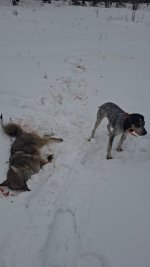
Funnest way to do it. We got 52 this year.Hunting by running coyotes with dogs is a thing sorta similar to using dogs to run deer for hunting in certain parts of Ontario.

redshooter
CGN Ultra frequent flyer
- Location
- Central Ontario
Algonquin Wolf myth?
I'm a bit confused, there's a pack in the area, rarely seen, but it's present.
I'm a bit confused, there's a pack in the area, rarely seen, but it's present.
The myth of it being a special distinct species/sub species. The hunting ban in and around the park exists because of this misinformation.Algonquin Wolf myth?
I'm a bit confused, there's a pack in the area, rarely seen, but it's present.
Doesn’t really matter like I said before knew lots of guys who’d shoot em/run em over with their sled/whatever whenever given the opportunity.
One of the funnest hunts there is. It’s what many breeds of dogs were born for!! I love hunting with dogs.

Hunting coyote for fur in Ontario requires a valid Outdoors Card, a small game licence, and up to two wolf/coyote tags per calendar year. It is crucial to check specific Wildlife Management Units (WMUs) for regulations, as some areas, particularly around provincial parks, have closures. It is illegal to waste the pelt.
Key Regulations and RequirementsLicensing: You need a valid Ontario Outdoors Card and a Small Game License.Tags: A maximum of 2 wolf/coyote tags can be purchased per calendar year.
Tags are required in specific WMUs.Season: Generally, coyotes are hunted from the fall through winter when the fur is prime.
However, they can be hunted year-round in many areas. Always check the current Ontario Hunting Regulations Summary.
Prohibited Areas: Hunting is banned in and around Algonquin Provincial Park, Killarney Provincial Park, Queen Elizabeth II Wildlands Provincial Park, and Kawartha Highlands Provincial Park.Waste Prohibition: It is illegal to abandon or allow the pelt of a wolf or coyote to spoil or be destroyed if hunted for fur.
Fur Handling and MarketPelts: Prime fur is typically found in winter, particularly on larger coyotes with thick, gray-brown coats.Preparation: Proper cleaning, skinning (usually case-skinning), and stretching are required for the fur market.
Market: While Western Canadian coyotes are in higher demand, Eastern coyotes (Ontario) have a market if the fur is of high quality.Important InformationSafety & Compliance: Always ensure you have permission to hunt on private land.
Regulations: Refer to the Ontario Hunting Regulations Summary for the most up-to-date information on tag requirements and season closures.Tagging/Transporting: Be sure to follow the tagging and transporting rules to legally transport your pelt.
Tanning: For personal use, you must follow regulations for treating or selling pelts.
Legal Information regarding the wolf/coyote huntWolf and coyote | Ontario Hunting Regulations SummaryTan, treat or preserve wild animal pelts | ontario.ca
I'll add to this that zones 43–45, 59, 60*, 61–74, 75*, 76–95 do not have a tag requirement. You can kill as many as you want all year long.
I'll add to this that zones 43–45, 59, 60*, 61–74, 75*, 76–95 do not have a tag requirement. You can kill as many as you want all year long.
 That is mostly Southern Ontario correct...
redshooter
CGN Ultra frequent flyer
- Location
- Central Ontario
There's a pack of Timber Wolves, or if you like Eastern/Algonquin Wolves, not a myth, and not coyotes, they ran down a Deer on a lake just off Monk Rd about 15 years ago.The myth of it being a special distinct species/sub species. The hunting ban in and around the park exists because of this misinformation.
Doesn’t really matter like I said before knew lots of guys who’d shoot em/run em over with their sled/whatever whenever given the opportunity.
Be a shame if a bunch of morons killed them off because they think they are Coyotes...
They don’t get killed because people think they’re coyotes. Not sure what your confusion is between fictional nomenclature that affords special status and the existence of wolves in central Ontario.There's a pack of Timber Wolves, or if you like Eastern/Algonquin Wolves, not a myth, and not coyotes, they ran down a Deer on a lake just off Monk Rd about 15 years ago.
Be a shame if a bunch of morons killed them off because they think they are Coyotes...
Coyotes down in southern Ontario kill alot of deer. We get the odd wolf down here but its rare. We are over run with coyotes. No limits and open year round down here. Pelts are worthless but there was a guy on the reserve that always wanted them if they weren't mangy

In BC, from what I read, no tag is required if you own a BCId/hunting/fishing license. And ....wait for.... it, .....
"Indigenous Harvesting: Status Indians who are BC residents do not need a license to hunt for food.
Indeed, BCers eat very little wolve but some do.
"Indigenous Harvesting: Status Indians who are BC residents do not need a license to hunt for food.
Indeed, BCers eat very little wolve but some do.
redshooter
CGN Ultra frequent flyer
- Location
- Central Ontario
Eastern Timber Wolf, aka, Eastern Wolf, aka Algonquin Wolf, please point out the "fictional nomenclature"...






















