












































You are using an out of date browser. It may not display this or other websites correctly.
You should upgrade or use an alternative browser.
You should upgrade or use an alternative browser.
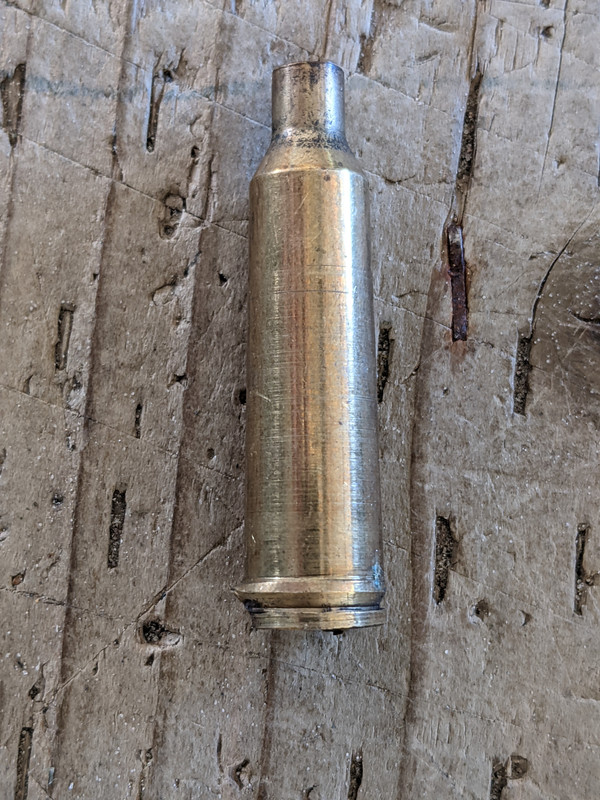
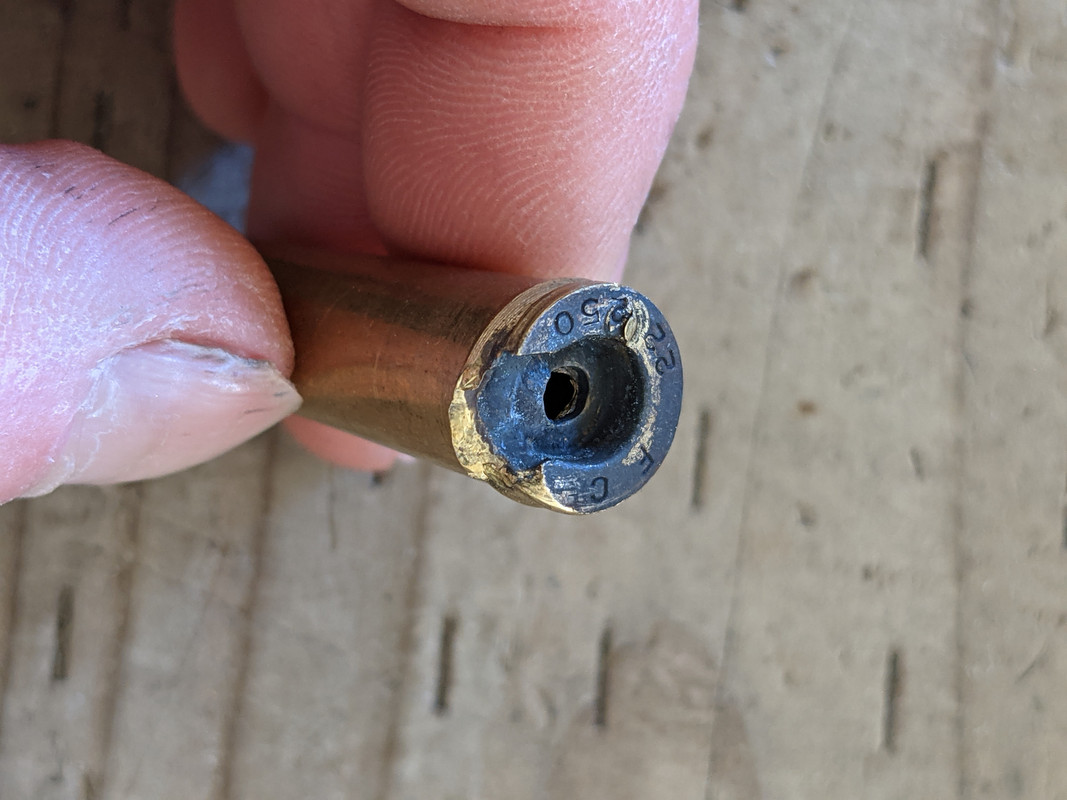
Wonder what happened here...
- Thread starter Ruger007
- Start date


- Location
- Haliburton County, Central Ontario
Well, it started life as a Federal 22-250 it would appear. Possibly fired in an incorrect chamber?
Yikes.
Heres my wild guess. A compressed load a few grains over max on a well used piece of brass fired in a gun that had the chamber polished with a rock, then extracted with a rubber mallet to the bolt. Range brass can tell some some crazy stories.
Heres my wild guess. A compressed load a few grains over max on a well used piece of brass fired in a gun that had the chamber polished with a rock, then extracted with a rubber mallet to the bolt. Range brass can tell some some crazy stories.
Sunray?


Yikes.
Heres my wild guess. A compressed load a few grains over max on a well used piece of brass fired in a gun that had the chamber polished with a rock, then extracted with a rubber mallet to the bolt. Range brass can tell some some crazy stories.
I'm almost the same except different action. Rough chamber, hot load. Casing was still expanded in chamber and extractor ripped through rim while semi-auto cycled. Wild guess.

- Location
- Van. Is. B.C.
Could it be someone has a BLR that was disassembled and reassembled with head spacing issues? I have heard that they are a bear to time but don’t know if you can fire with bolt out of battery.

Sunray?
where the HE double hockey sticks is he whan you need him

Someone was lucky.
Dramatic overpressure that caused a failure of the case head. Takes a lot of pressure to cause the solid head to flow like that.
I expect the extractor departed the firearm. You can see where the ejector was. Looks as if the extractor was one of the sliding types set in the right hand locking lug.
Dramatic overpressure that caused a failure of the case head. Takes a lot of pressure to cause the solid head to flow like that.
I expect the extractor departed the firearm. You can see where the ejector was. Looks as if the extractor was one of the sliding types set in the right hand locking lug.
I found the pic of my buddies Remington 742 30:06 that did something like that but it's not near as destructive as I remembered.
View attachment 496328
A stuck case/hard extraction resulted in the extractor ripping through the rim. If you look at the primer and the condition of the case head, there is no indication of excess pressure.
That sort of rim damage is quite common with the AG42B.


Someone was lucky.
Dramatic overpressure that caused a failure of the case head. Takes a lot of pressure to cause the solid head to flow like that.
I expect the extractor departed the firearm. You can see where the ejector was. Looks as if the extractor was one of the sliding types set in the right hand locking lug.
Yeah, Keith would send you home for that. The chamber wouldn't be the only thing getting reamed.

- Location
- Saskatchewan
How would anybody know if "someone was Lucky?" they also Might have blown up the barrel, split the stock and lost both eyes and some fingers. Could have bled out on the way to get help. Someone was certainly careless, maybe stupid, but I'm not so sure about "lucky" ...
How would anybody know if "someone was Lucky?" they also Might have blown up the barrel, split the stock and lost both eyes and some fingers. Could have bled out on the way to get help. Someone was certainly careless, maybe stupid, but I'm not so sure about "lucky" ...
The case is fire formed to the chamber. No report of anything on the range except for the case. The failure was through the extractor cut. Gas was vented off as designed. Not to the rear. Any gas discharge from the loss of the primer would have been handled by the provisions built into the mechanism. Few modern designs allow gas to travel back along the striker assembly or along the exterior of the bolt toward the shooter's eyes. The failure was not in the vicinity of any fingers. So yes, it could have been worse - a lot worse - but there is no evidence of anything more than a failed case, gas and debris being ejected in the designed direction. I have seen catastrophic case failures in which there was a full 360 degrees of separation, coupled with brass flow. Note that the OP found the ruptured case. This means that it was possible to open the bolt and remove the failed casing. Someone was working with the rifle after the mishap. It would be interesting to know what make and model of rifle was involved. Something with a counterbored bolt face, sliding extractor, and a chamfered chamber mouth. The case does show reamer marks; whether these would be as obvious on a case fired with normal pressure, who knows?
Last edited:
It was found in the brass bucket. I don't know what it came from. There was a couple more in the bucket that had flattish primers. But nothing out of the ordinary. Might not have even been the same gun. But this one definitely caught my eye.






















