working up load for 303 no4mk1

toddpotiphar

Member
Rating - 0%
0   0   0
Location
Hilda
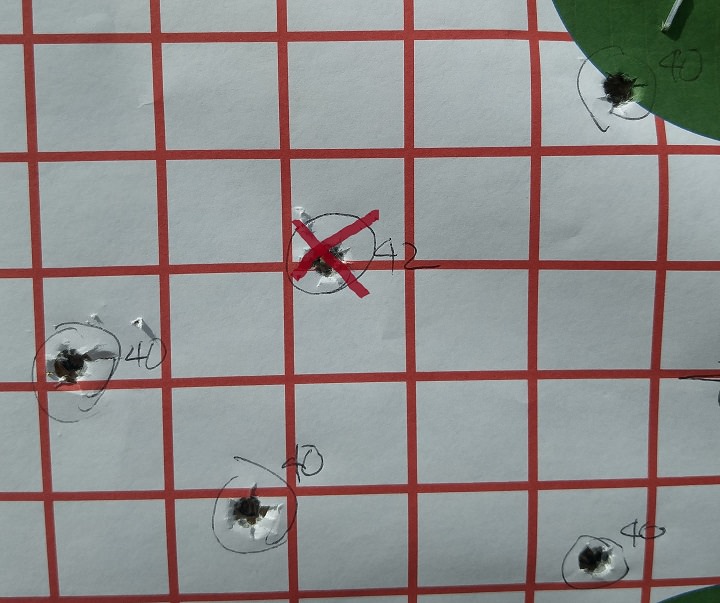
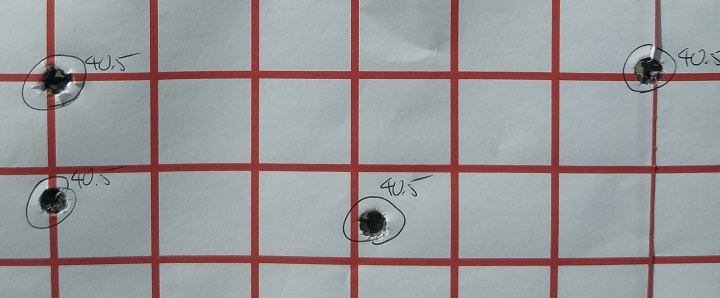
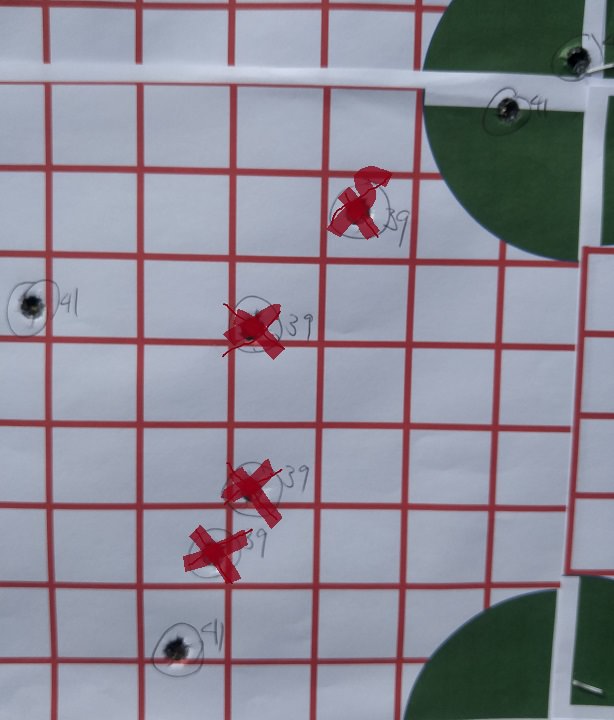
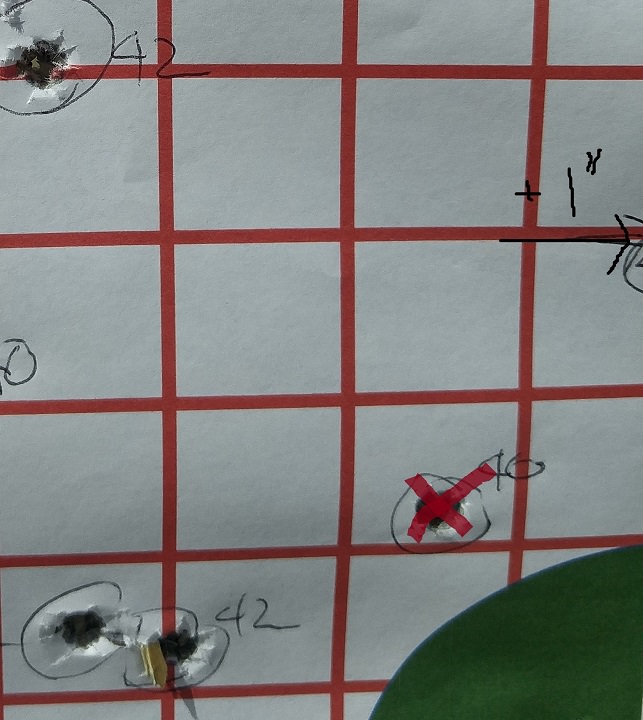
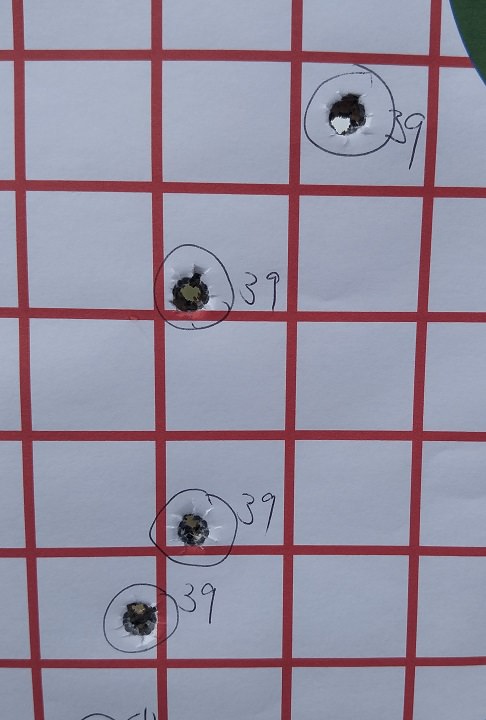
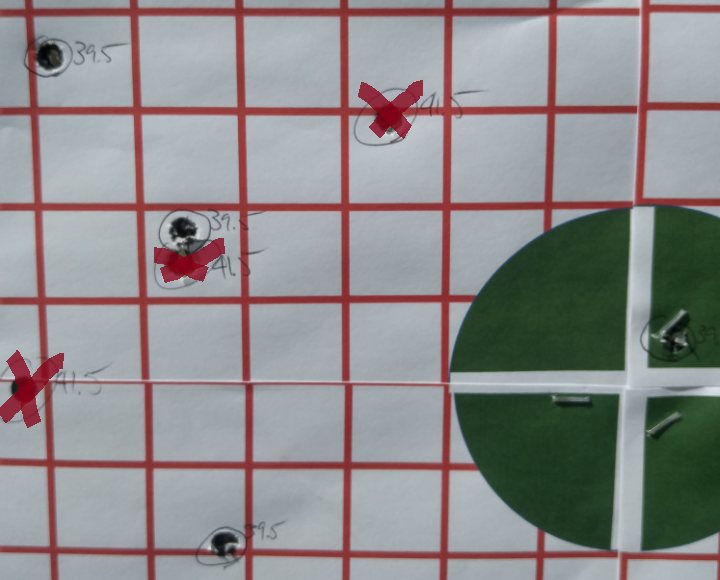
I'm working up a hunting load for a 303 and did some OCW work a few days ago. I loaded IMR 4064 in .5 grain increments under 180 gr Sierra Pro Hunters. These were shot at 200 yards with the wind 20-35km at 90-180 degrees. (It obviously wasn't the best day for this kind of shooting work, but it was the day I had so I made use of it.)
vkuipoQ.jpg

5xZza9j.png

NKxYS9X.jpg

ZDq5F3D.jpg

NcM5fvj.jpg

LQU8Nmw.jpg

p4B2Wf3.jpg


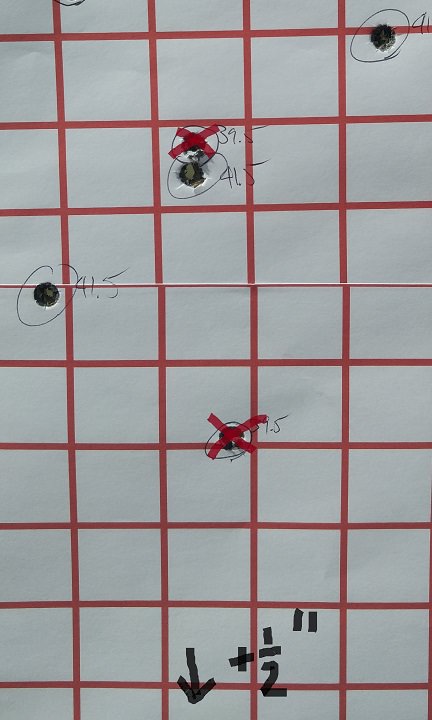
I'm under the impression that what I should be looking for is the load with the least vertical stringing, so here is a summary of the load data with group size measured for vertical only.

39gr/4.25"/2151fps/es25/sd11.35
39.5gr/5.375"/2186fps/es34/sd16.54
40gr/4.375"/2206fps/es69/sd29.35
40.5gr/1.625"/2260fps/es33/sd15.00
41gr/7.5"/2298fps/es44/sd19.89
41.5gr/9.125"/2295fps/es41/sd18.46
42gr/3.750"/2409fps/es29/sd12.25

It seems to me like 40.5 is the clear winner, and it might be worth running some more loads between 40 and 41 gr. I'm curious to know what kind of accuracy others have gotten out of their 303s. Am I in the ballpark of what is to be expected out of these rifles?
 
Is that full length sized brass or neck sized only?

If it is full length sized brass then try backing off the die a bit to neck size your "fire formed" brass and try this again.

If your gun has a particularly large chamber you would be better served to neck size only your brass to extend the brass life and that will probably change your results.

I have not loaded for 303 Brit in a number of years, when I did I full length sized not knowing what I know now about the gun, had a bunch of banana cases that had to be tossed after a second shot. This was a No. 1 Mk III* though, it has a cavernous chamber though, your No 4 is probably better but most Lee Enfield chambers are quite large.

I would love to hear how it all turns out, 303 Brit for a sporter is on my list behind a few others, ha ha.
 
Question, does your rifle have a full military fore stock or has the stock been cut down.

The military Enfield rifles were tuned for accuracy by the amount of up pressure at the fore end tip.
 
Good bullet and powder selection.

41.5 looks like the load.

OOps: I meant the 40.5 gr load.

This load is accurate and would be easier on your brass.

If it was me, I would try again with 40.5, 42.0, 42.5 and 43.0, just to see if there is accuracy with a hotter load.
 
Last edited:
I have a FL die that I lower only as much as necessary to resize the neck. It's been sporterized, unfortunately.

41.5 gr looks good on paper until you see the arrow at the bottom of the picture to the one hole that's a half inch lower. I suppose it could be a flyer except that all the shots felt really good when shot them. I like the velocity of 42 gr better, but I don't see any huge advantage to raising pressure too much for gun that'll knock down deer at 200 yards.
 
I have a FL die that I lower only as much as necessary to resize the neck. It's been sporterized, unfortunately.

A full stocked military No.4 was to have 2 to 7 pounds of up pressure at the fore end tip.

And the older Remington 700 without a free floating barrel had 3 to 9 pounds of up pressure at the fore end tip. (on shorter fore end)

Bottom line, there are two ways to tune a rifle.

1. The Military tuned the rifle to issued ammunition.
2. Tune the ammunition to the rifle with reloads.

Most shooter think free floating the barrel aids accuracy, but on the No.4 Enfield rifles I have had, having the rear of the fore stock fitting tightly in the draws area and up pressure at the fore end tip improved accuracy.
 
Back
Top Bottom