











































Note: The data is subject to change based on my research on each of these firearms.
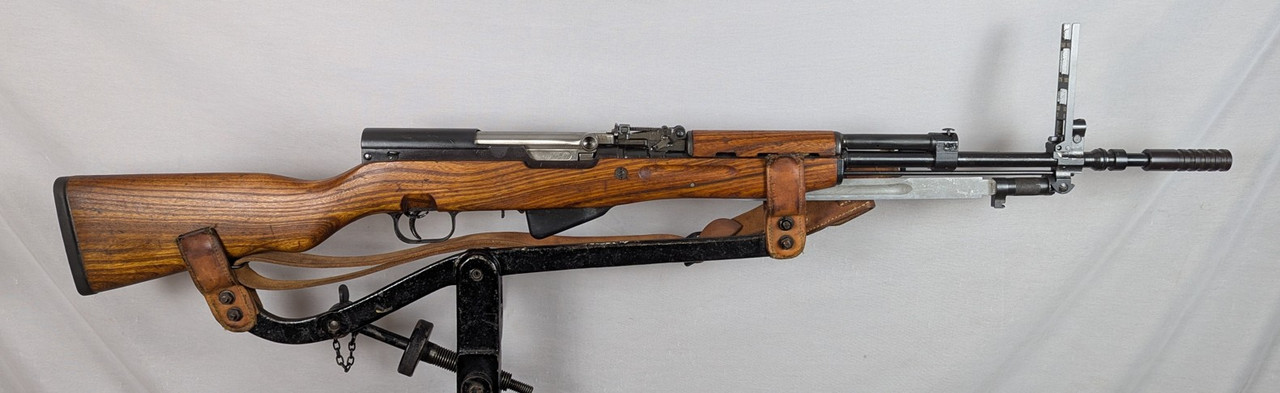
M59/66A1 PAP (Poluautomatska Puška)
(AKA ‘’Papovka’’)
Made by Zastava Arms (Застава оружје)
SN# A-710047
1987 (Prefix A)
Production (M59/66A1): 1986 – 1989.
7,62x39mm (M43)
10 Rd. Double stack Integral Box magazine (Pinned to 5 rd. for Canada) - (Non-removable)
Semi-automatic (Gas-operated reloading)
Designed by Sergei Simonov.
The nickname "papovka" is derived from PAP, the abbreviation for poluautomatska puška, in Serbian for "semi-automatic rifle". Integrated fixed barrel grenade launcher (spigot); Gas shut-off valve (selector) for grenade launching; Folding grenade sight; Grenade launcher: The M59/66A1, has a 22mm rifle grenade launcher permanently attached to the muzzle of the barrel, with a gas selector/cutoff valve and a specific folding rear sight; Wooden stock with rubber butt plate. The rifle was fitted with a folding scale sight for use when launching grenades. This sight is normally locked in the folded position at the top of the gas block. Before firing a rifle grenade, the sight is unlocked by pressing a switch on the gas port. This action also closes the gas port in the barrel, preventing the semi-automatic action from cycling during grenade launch. The sight scale can then be raised and locked in the upright position; Barrel: Unlike many other variants (such as the Russian or Chinese), the barrel of the Yugoslavian SKS is generally not chrome lined. This can potentially improve accuracy, but requires more thorough cleaning, especially after using corrosive ammunition; Bayonet: It is equipped with a folding blade-type bayonet, as opposed to the spike-type bayonet found on some early Soviet SKS-45 (1949) or Chinese Type-56 models. The M59/66 is equipped with an unusual bayonet mount that also serves as a mount for the front sight and folding grenade launcher sight. The original Soviet blade bayonet standard on the SKS had to be replaced with a unique 23 cm Yugoslavian folding bayonet to accommodate the new mount placement; Design peculiarities: Differs from later Soviet SKSs by the initial absence of a chromed barrel and its unique modifications for the role of grenade launcher; Soviet license: Yugoslavia obtained the production rights under license from the Soviet SKS in 1959; Military adaptations: The M59/66 has been adapted for combat missions, incorporating grenade launching and night vision capabilities, making it versatile; Symbol: Represents Yugoslav engineering and its desire for independence from the superpowers; History and Value: Produced by Zastava Arms, the M59 entered service in 1959, followed by the M59/66 in 1966. It was the standard-issue rifle of the Yugoslav People's Army until the 1980s, when it was replaced by the Zastava M70 assault rifle (a variant of the AK-47).
On the civilian market, these rifles are valued for their build quality (often considered superior to some Chinese versions) and their historical significance.
Last edited: