





























ZULU Weapons & SA Rifles

Little did I know then, that my “Gun Running” actitivities would start a few years later by shipping (Smuggling) guns to Rhodesians fighting a desperate “Bush War” against the dreaded commies! Strictly illegal but how could it be wrong, when those same people had run to England to help her in WWII. Yes History is an amazing subject, and the real truth is hardly ever known.


John,

any chance we might ever get a post dedicated to this subject?

I'm sure many of us who followed closely the bush war in Rhodesia (..along with the following collapse/failure of the country post being betrayed/sold-out via the Lancaster House Agreement in 1979...) would be very interested in the subject sir.

Good on you for supporting the cause/our kin in Rhodesia, which our country (Canada) chose unfortunately to ignore/throw under the bus...
 
John,

any chance we might ever get a post dedicated to this subject?

I'm sure many of us who followed closely the bush war in Rhodesia (..along with the following collapse/failure of the country post being betrayed/sold-out via the Lancaster House Agreement in 1979...) would be very interested in the subject sir.

Good on you for supporting the cause/our kin in Rhodesia, which our country (Canada) chose unfortunately to ignore/throw under the bus...

My country at that time, Great Britian, also chose to ignor thier plight. Rhodesia was the "Bread Basket" of Africa and able to export a surplus of corn, sorgum, cotton etc When I visited a few years ago all I saw was run down farms with broken down tractors parked in the bush, now the country can hardly feed herself. Rhodesia even exported "Flowers" to Europe. I have a Rigby DR in .470 NE and the former owner as a Rhodesian farmer shot over 150 Cape Buffalo to keep them out of his flowers. How times have changed.
 
My country at that time, Great Britian, also chose to ignor thier plight. Rhodesia was the "Bread Basket" of Africa and able to export a surplus of corn, sorgum, cotton etc When I visited a few years ago all I saw was run down farms with broken down tractors parked in the bush, now the country can hardly feed herself. Rhodesia even exported "Flowers" to Europe. I have a Rigby DR in .470 NE and the former owner as a Rhodesian farmer shot over 150 Cape Buffalo to keep them out of his flowers. How times have changed.

..a damn shame it is...

Perhaps soon enough the likes of Mugabe will be gone. ...although it's sure to be another case of "Meet the new boss, same as the old boss"..
 
Very nice collection of rifles but the spear collection is outstanding. Anyone know what rifles the Lord Strathcona Horse were using there? I know there were a bunch of guys from the Calgary, High River & Cochrane areas that went and I'm sure they had to provide their own 2 horses. It doesn't seem like there's much information around on this war from the Canadian side.
 
Very nice collection of rifles but the spear collection is outstanding. Anyone know what rifles the Lord Strathcona Horse were using there? I know there were a bunch of guys from the Calgary, High River & Cochrane areas that went and I'm sure they had to provide their own 2 horses. It doesn't seem like there's much information around on this war from the Canadian side.

I have no info on the Lord Strathcona Horse, but I do have the following with Canadian Boer War connections:

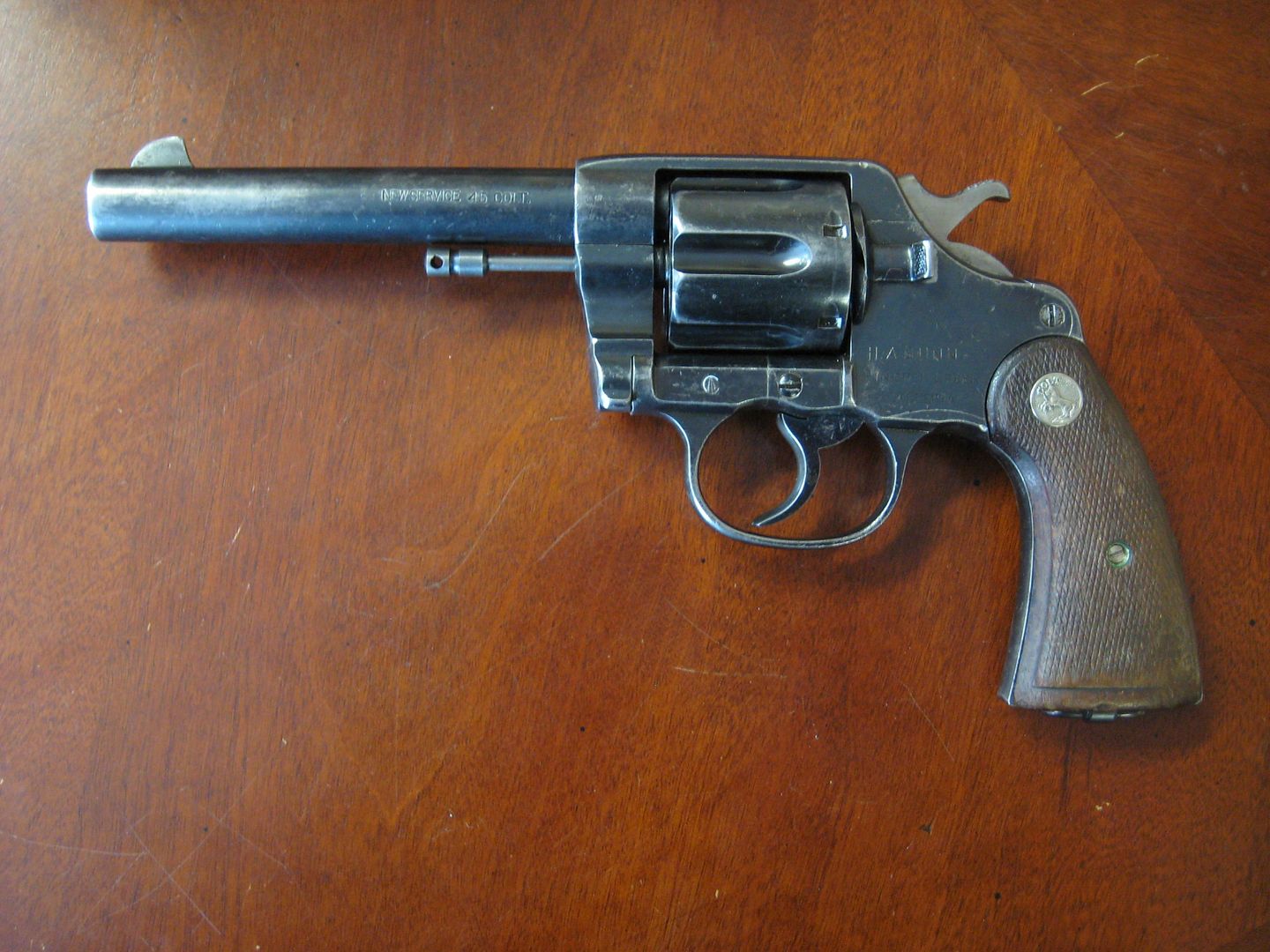
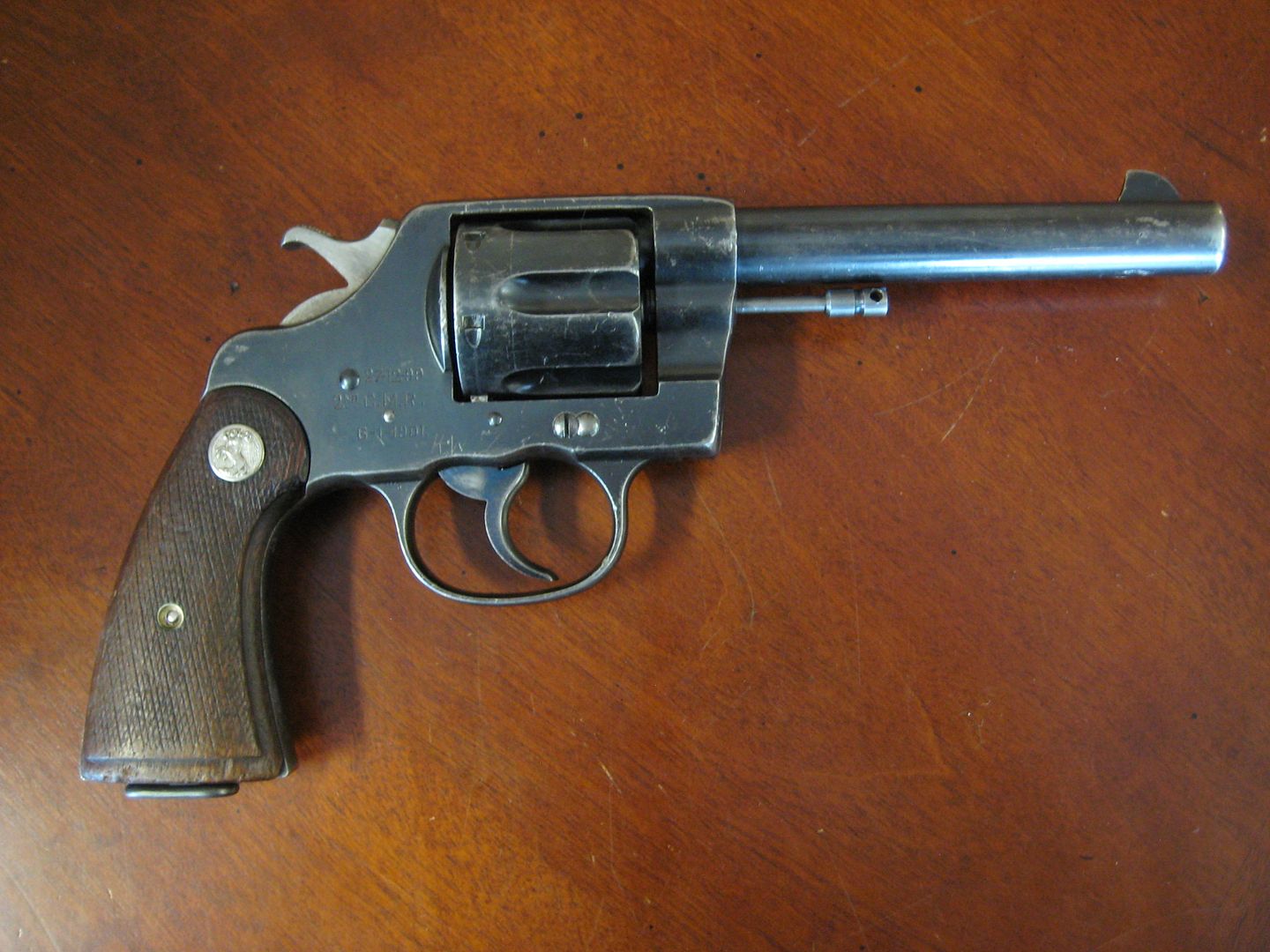
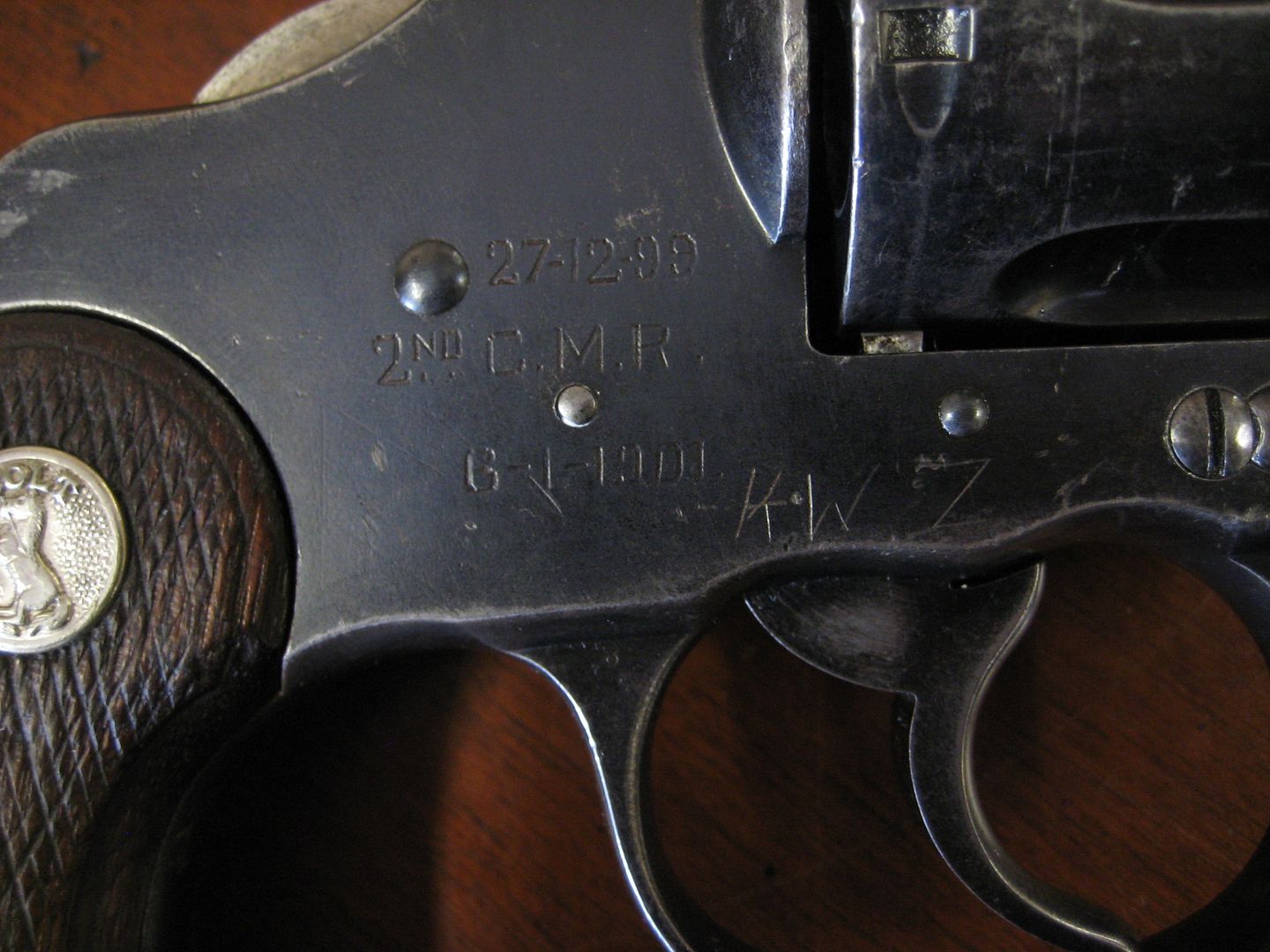
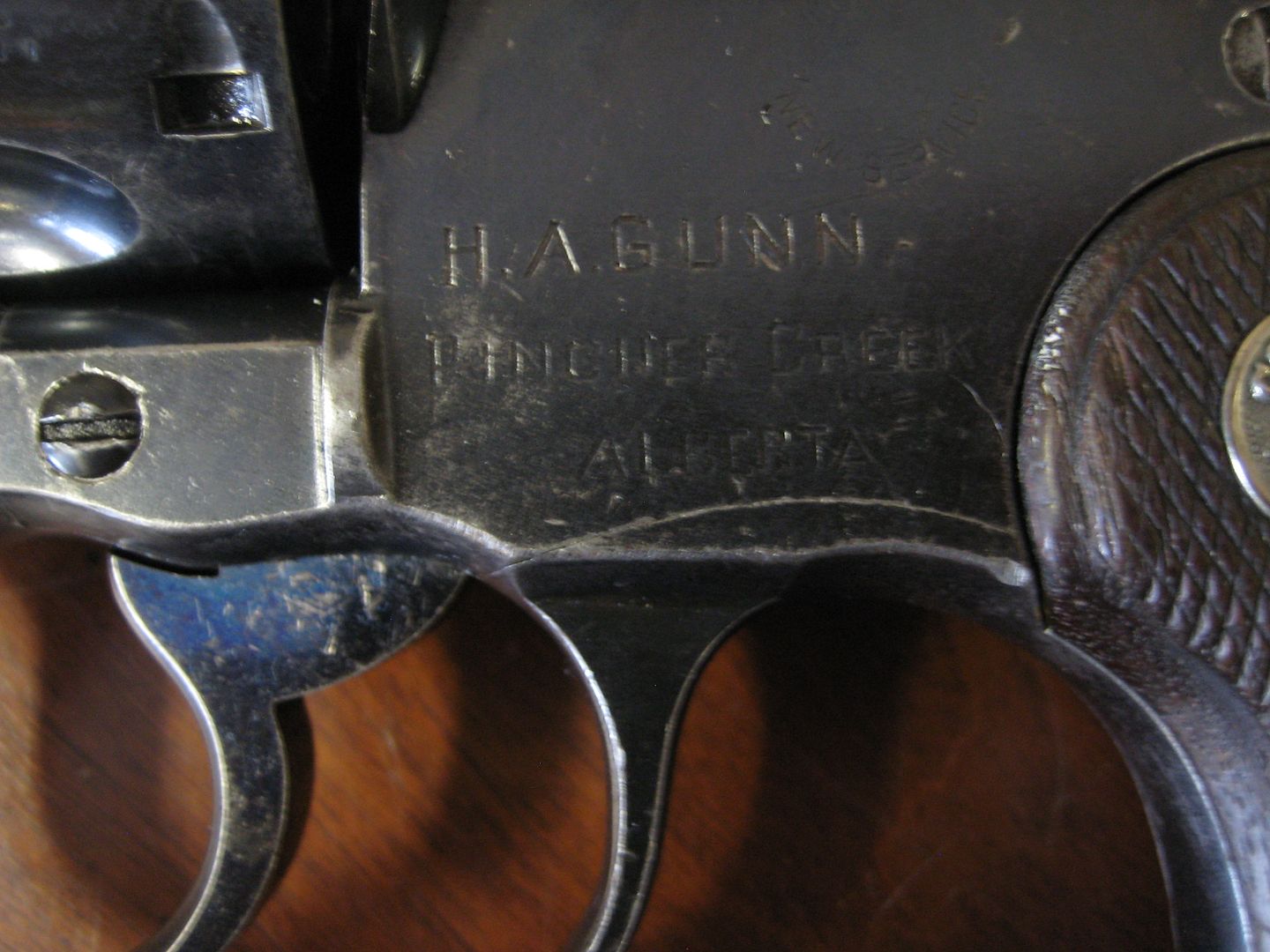
Colt New Service issued to Hugh Arthur Gunn of the Canadian Mounted Rifles.

IMG_0352.jpg


IMG_0353.jpg


IMG_0356.jpg


IMG_0357.jpg


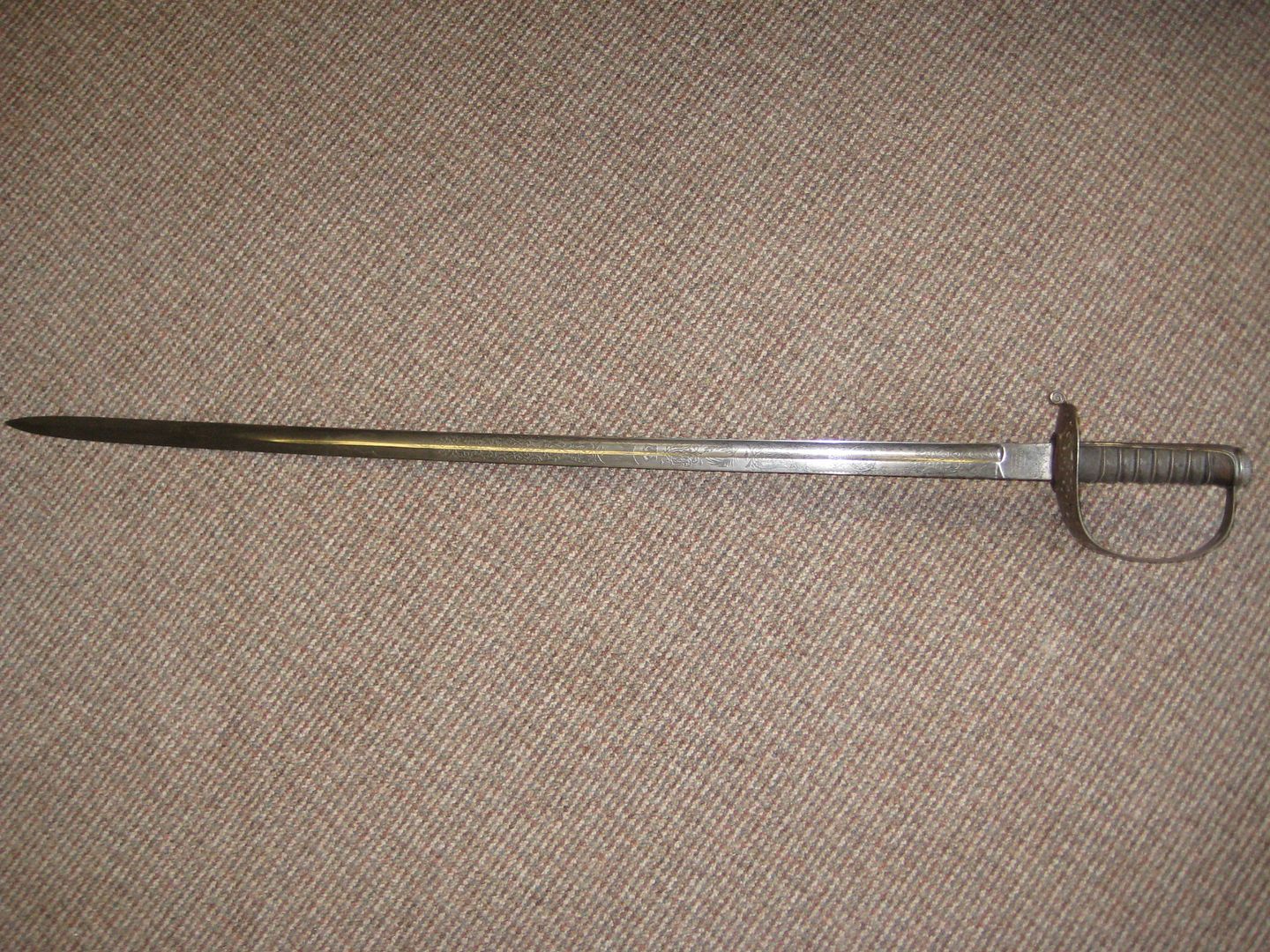
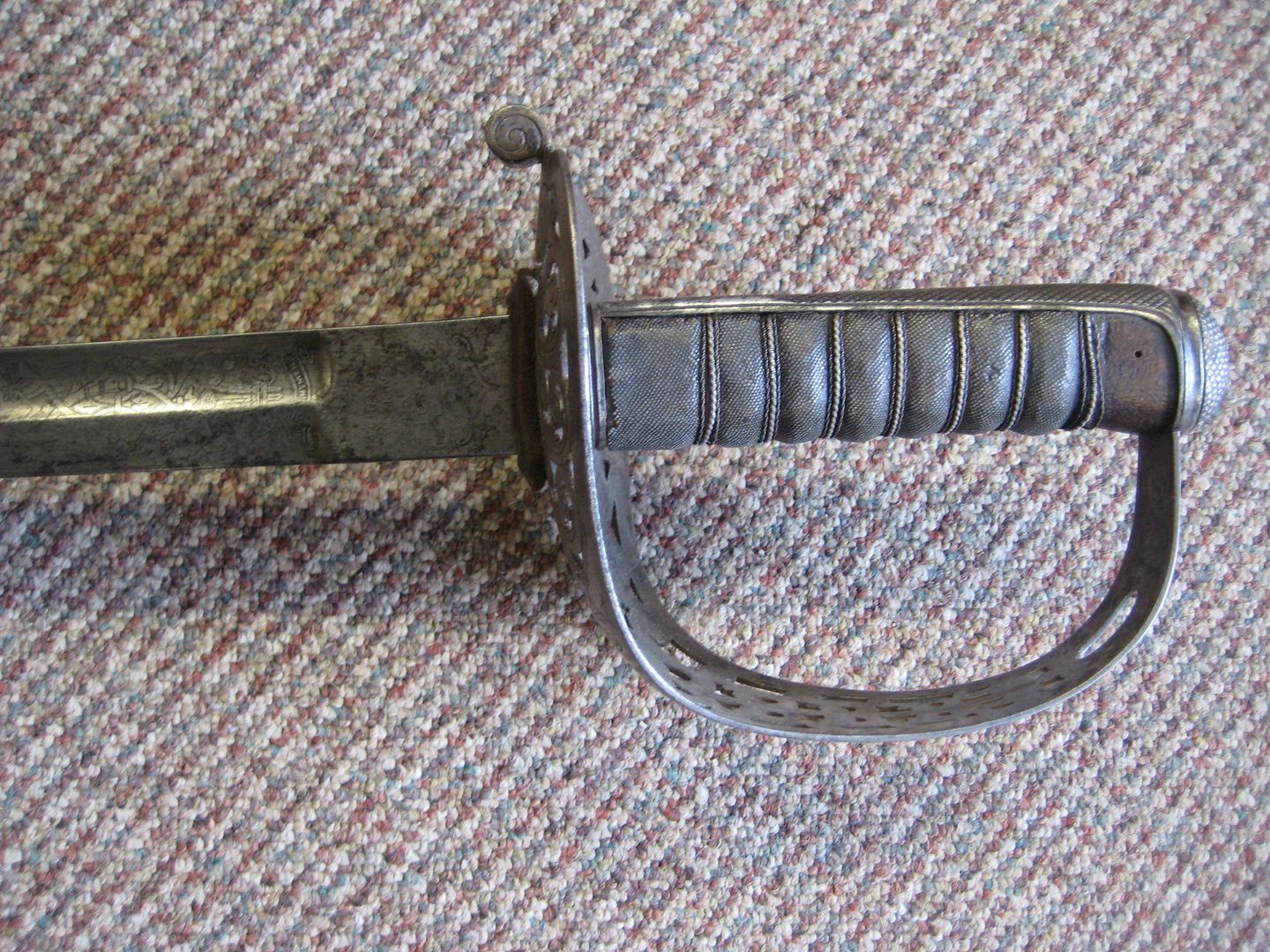
1896 Cavalry Sword issued to Lt Frederic Kelly Gascoyne Esq of the 20th Hussars who served in South Africa durring the Boer War/

IMG_0344.jpg


IMG_0346.jpg


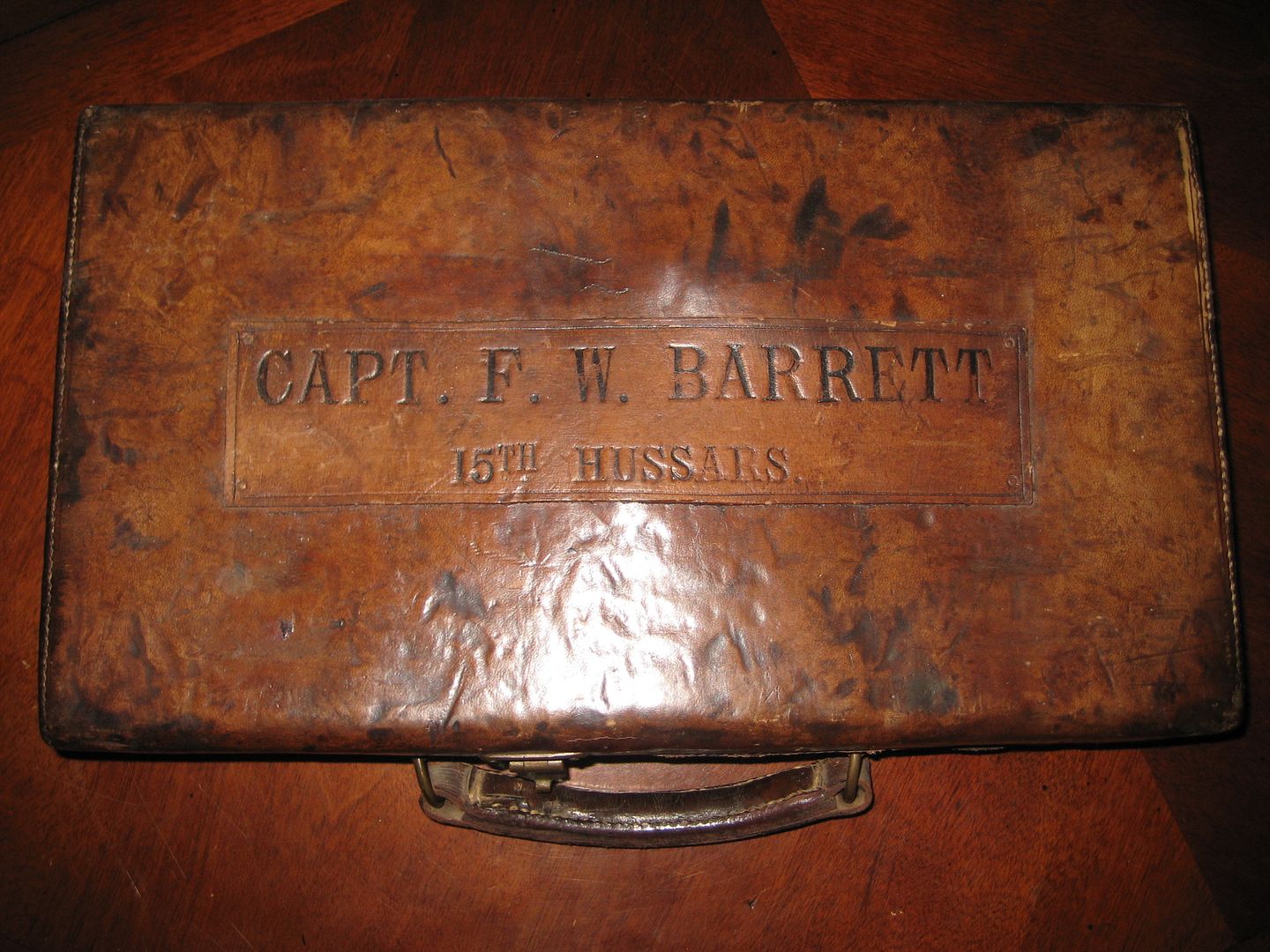
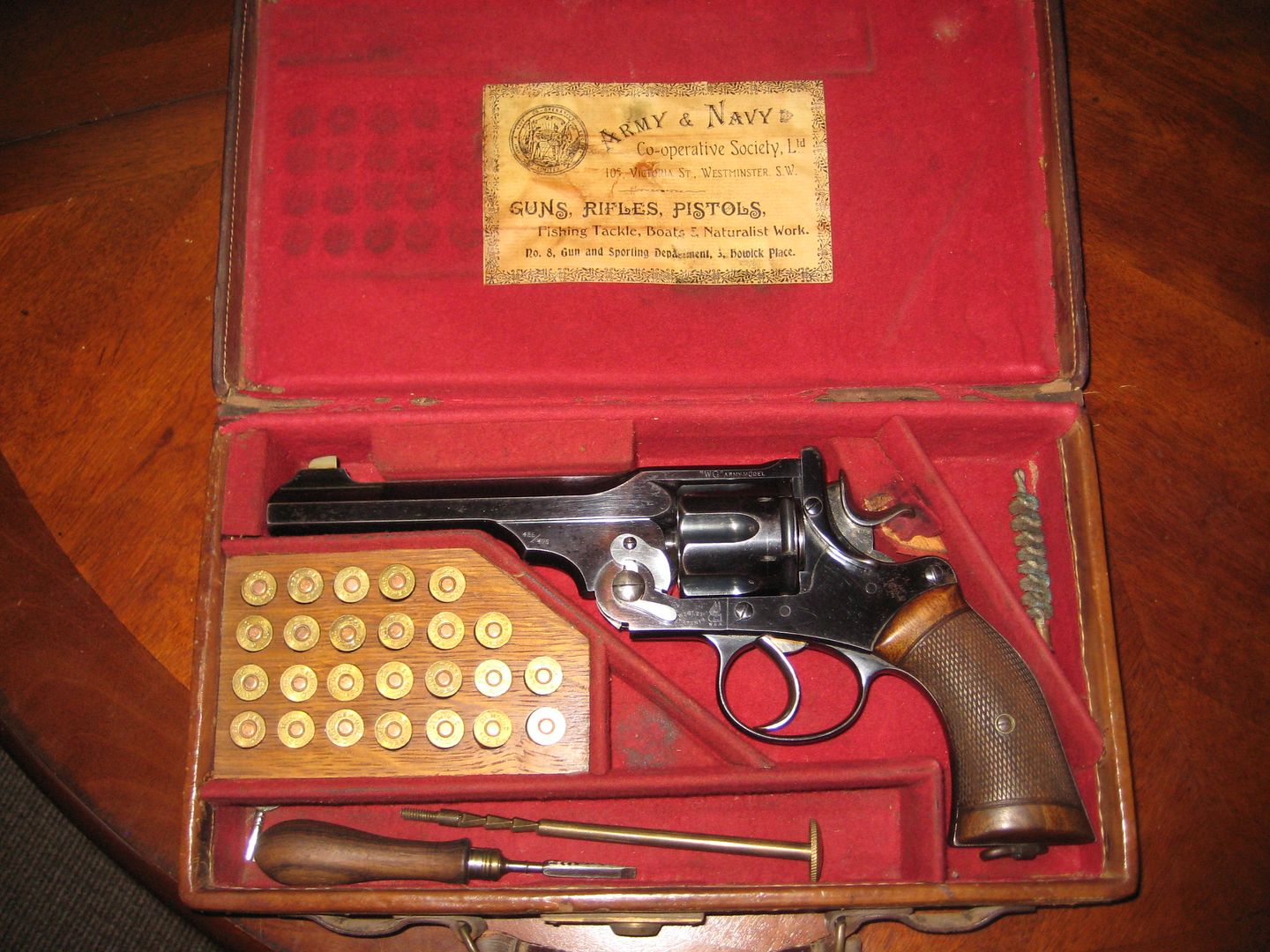
Webley WG .455 presented to Capt F W Barrett of the 15th Hussars by a Capt Pigeon but I haven’t researched this one yet. This would be British not Canadian.

IMG_0347-1.jpg


IMG_0348.jpg


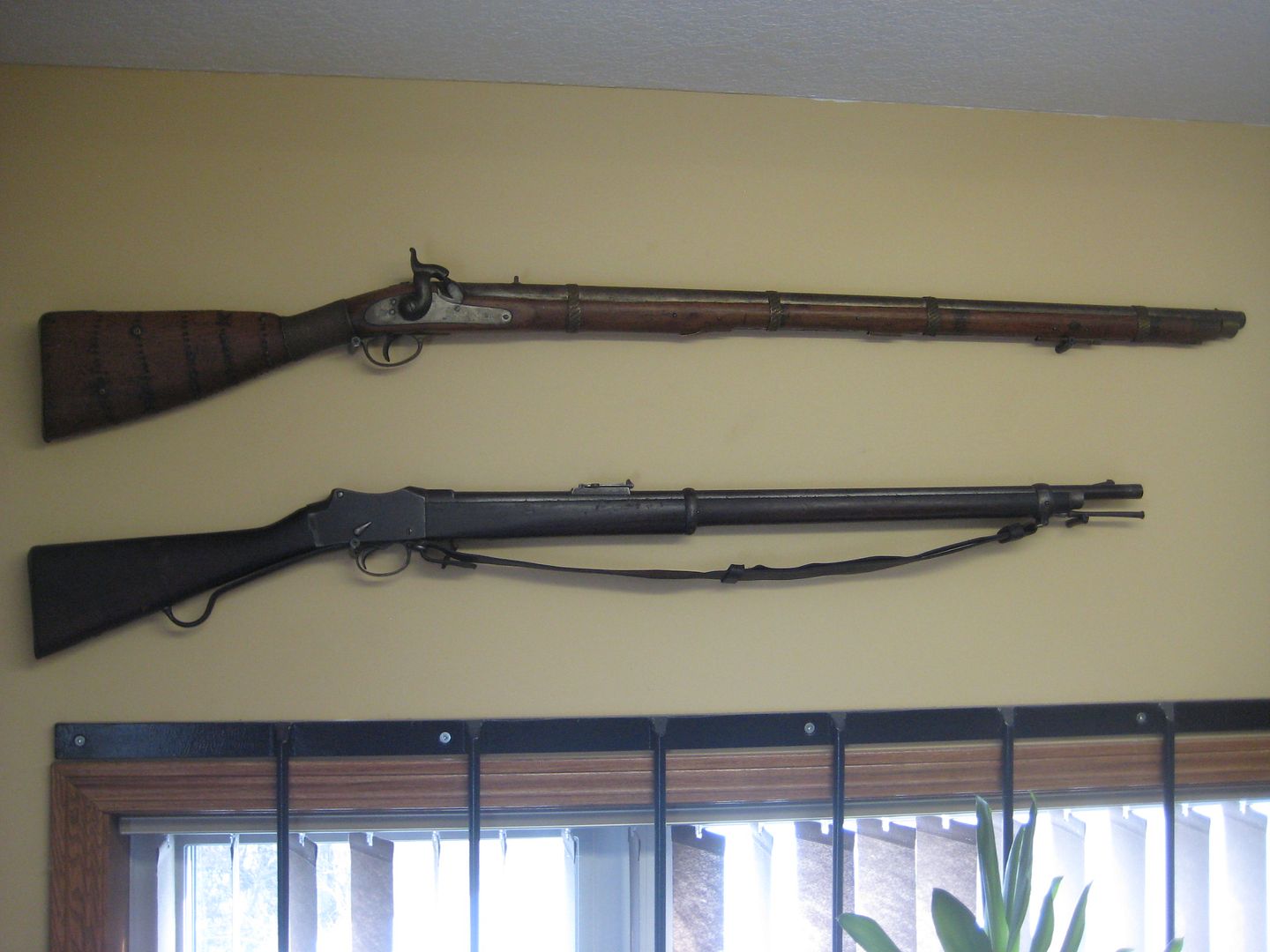
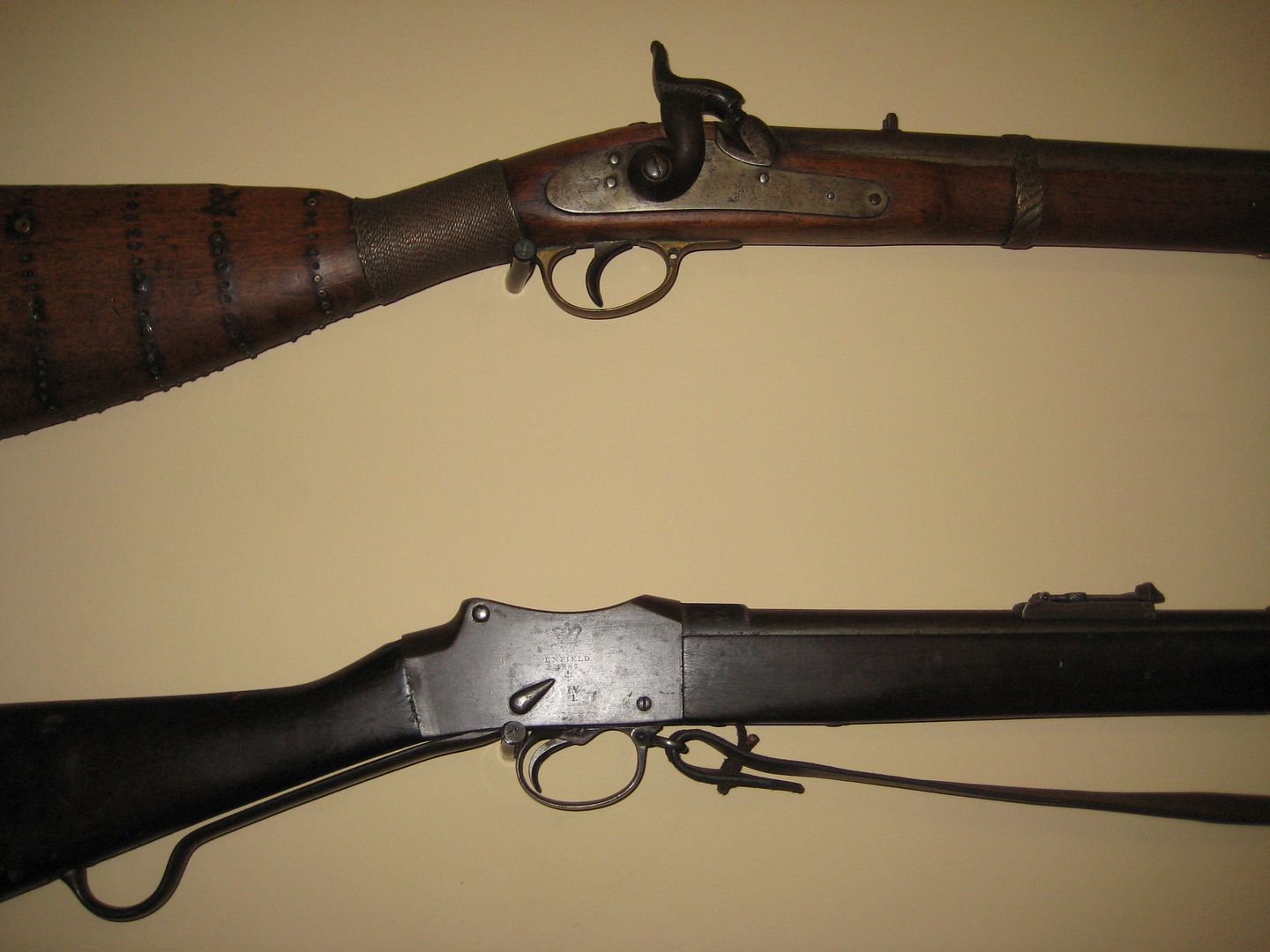
An 1872 Trade Musket by I Hollis, displays authentic Zulu wire work. These Muskets would have been used as trade goods throughout the British Empire.

IMG_0351.jpg


An 1887 Martini Henry IV in .577.450.

IMG_0349.jpg


I am always looking for new additions to my "African Collection", thanks for looking.
 
Last edited:
Hi, John, I have a Kalahari Bushman bow, arrows and quiver and the little love bow set to go with it, and a lovely soapstone carving of the head of an African girl. half size.
And a carved wooden drum with cowhide matching your Zulu shield.
Brought back from Africa in the seventies, let me know if you are interested in purchasing them and I can bring them over.
Mike Bonner, Onanole
 
Thanks for the pics, i worked with the zulu's in the Johannesburg gold mines. They are tough and hard working, true warriors who frequently beat the crap out of each other at the shebeen (pub). Black label beer flows all night long. The old timers still carry knobkierries for self defense :HR:
 
That's pretty neat stuff John. Lately I've been taken with Voertrekker history, especially the Battle of Blood River for some reason. Maybe it's the fact that civilians with slow loading muzzleloaders and a bit of personal skills defeated a much larger native force. And to think that years later the British Army at Isandlwanna were defeated and they had much more modern weaponary, besides breech loading rifles, also mounted cavalry and artillery batteries??
(not forgetting Rourke's Drift of course)
Pretty difficult to say who was harder, the Boers or the Zulus? Africa sure pounds out tough people on the forge.
 
Last edited:
... And to think that years later the British Army at Isandlwanna were defeated and they had much more modern weaponary, besides breech loading rifles, also mounted cavalry and artillery batteries??

You can read a lot of explanations for the debacle at Isandlwanna, most having to do with poor troop placement, but the true reason was simple -- and stupid. The British Army issued ammunition in large crates with screwed-down lids and the expedition forgot to bring screwdrivers. The troops literally ran out of ammunition. Before they did, they "ripped the belly out of the [Zulu] nation" to use Cetewayo's phrase.

The Army switched to nailed-down lids shortly after. Forgot your hammer? Prise open with a bayonet.
 
You can read a lot of explanations for the debacle at Isandlwanna, most having to do with poor troop placement, but the true reason was simple -- and stupid. The British Army issued ammunition in large crates with screwed-down lids and the expedition forgot to bring screwdrivers. The troops literally ran out of ammunition. Before they did, they "ripped the belly out of the [Zulu] nation" to use Cetewayo's phrase.

The Army switched to nailed-down lids shortly after. Forgot your hammer? Prise open with a bayonet.

I understand that it was also due to the army being unused to a fairly rapid firing rifle and the need for much more ammo to be issued to each rifleman. Apparently, this and the fact that the spent cartridges were getting stuck in the chambers as the rifles got hot, resulted in a big slackening of fire at a critical point in the battle. All the spare ammo was in the rear with the quartermasters!

Anyway, amazing collection...sincere appreciation for sharing.
 
I to always believed that the British were overran at Isandlwana due to the screwed on lids of the ammo crates and that the ammo was in the rear. I have walked the battle field see http://www.canadiangunnutz.com/forum/showthread.php?t=381370 My conclusion now, is that the British were out Generaled, they were deployed to spread out so that each unit could not support each other, they failed to make even basic defensive positions. The reserve ammo in the rear didn’t help but I think if they had opened ammo boxes within the ranks the outcome would have been the same, it would only have taken a little longer and a few more Zulu would have been killed. The British were simply over run by massed Zulu warriors.

At Blood River the Boers chained their wagons together to make a defensive Lager. The British were advised to do this at Isandlwana, but they laughed at the thought!. At Rorks Drift a strong defensive position was built, the defenders fell back to second hasty smaller position built with the biscuit boxes after their local troops ran away and their final position was not much bigger than my office, see http://www.canadiangunnutz.com/forum/showthread.php?t=383195


Thanks for your comment, this is all great history.
 
I understand that it was also due to the army being unused to a fairly rapid firing rifle and the need for much more ammo to be issued to each rifleman. Apparently, this and the fact that the spent cartridges were getting stuck in the chambers as the rifles got hot, resulted in a big slackening of fire at a critical point in the battle. All the spare ammo was in the rear with the quartermasters!

Anyway, amazing collection...sincere appreciation for sharing.

Thank you, bcbravo2zero, these are things I did not know and they sound absolutely correct.

I to always believed that the British were overran at Isandlwana due to the screwed on lids of the ammo crates and that the ammo was in the rear. I have walked the battle field see http://www.canadiangunnutz.com/forum/showthread.php?t=381370 My conclusion now, is that the British were out Generaled, they were deployed to spread out so that each unit could not support each other, they failed to make even basic defensive positions. The reserve ammo in the rear didn’t help but I think if they had opened ammo boxes within the ranks the outcome would have been the same, it would only have taken a little longer and a few more Zulu would have been killed. The British were simply over run by massed Zulu warriors.

At Blood River the Boers chained their wagons together to make a defensive Lager. The British were advised to do this at Isandlwana, but they laughed at the thought!. At Rorks Drift a strong defensive position was built, the defenders fell back to second hasty smaller position built with the biscuit boxes after their local troops ran away and their final position was not much bigger than my office, see http://www.canadiangunnutz.com/forum/showthread.php?t=383195


Thanks for your comment, this is all great history.

I will happily surrender my "I read it somewhere so it must be true" to your "I've walked the battlefields". We all know that travel expands our understanding but all too many of us restrict our "travel" to some island in the Caribbean. I even know one man who brags proudly that he has never left Canada.

My respect for you only increases, Mr. Hipwell.

For anyone unsure whether or not to follow the links in Mr. Wolverine's last post, do so. They will be the best things you read today, probably the best this month.
 
Thank you, bcbravo2zero, these are things I did not know and they sound absolutely correct.


I will happily surrender my "I read it somewhere so it must be true" to your "I've walked the battlefields". We all know that travel expands our understanding but all too many of us restrict our "travel" to some island in the Caribbean. I even know one man who brags proudly that he has never left Canada.

My respect for you only increases, Mr. Hipwell.

For anyone unsure whether or not to follow the links in Mr. Wolverine's last post, do so. They will be the best things you read today, probably the best this month.

BTW gents, of course, my comments are not my conclusions. My info comes from a few reviews of the compiled historical research, and interestingly, archaeological investigations. I have always been very interested in these events b/c my family comes from Abergavenny, Wales and the surrounding area, ie/ where the South Wales Borderers, who fought at Rorke's Drift, were recruited from.

Sadly, although I can boast that I've set foot on every continent (except Antarctica), I have only briefly visited northern Africa. I would love to visit these places we're discussing...

 
Back
Top Bottom