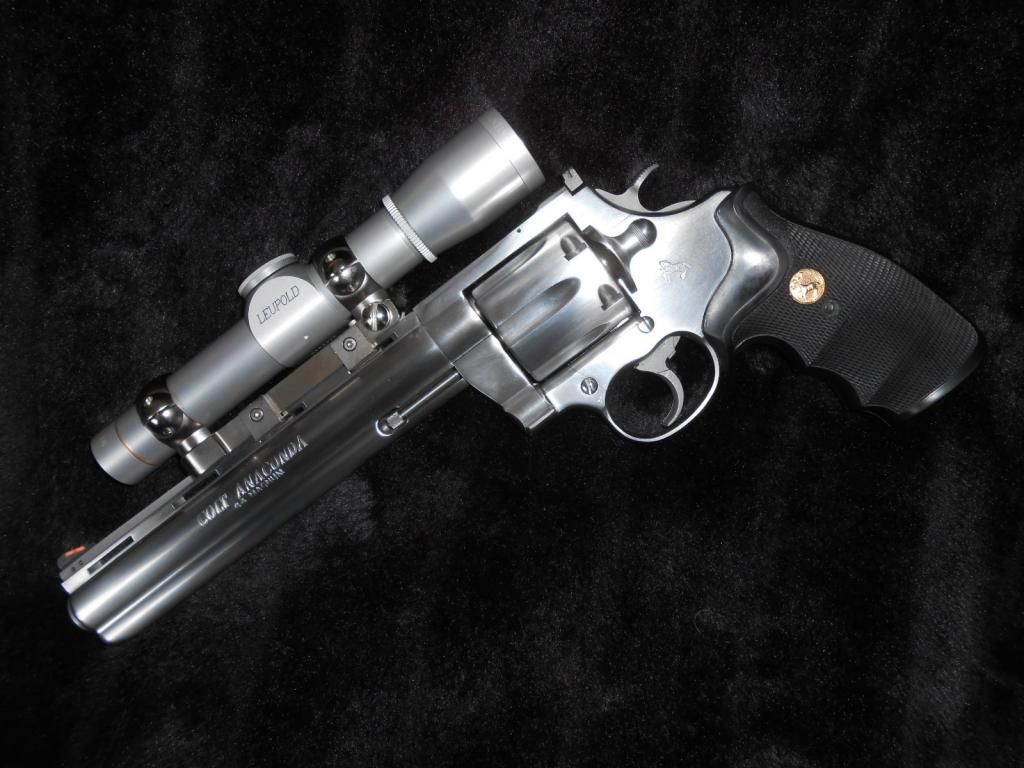
FWIW from wikipedia some interesting tidbits....
-History of firearm laws in Canada
Controls on civilian use of firearms date from the early days of Confederation, when justices of the peace could impose penalties for carrying a handgun without reasonable cause.[1] Criminal Code of Canada (Criminal Code or Code criminel) amendments between the 1890s and the 1970s introduced a series of minor controls on firearms. In the late 1970s, controls of intermediate strength were introduced. In the mid-1990s, significant increases in controls occurred.
-The following is a summary of the history of gun control laws in Canada:
The federal Parliament instituted a system of gun control in the North-West Territories in 1885 to hinder the Red River Rebellion for Metis rights. Permission in writing from the territorial government was needed to possess any firearm (other than a smooth-bore shotgun), and also ammunition. Possession of a firearm or ammunition without the necessary permit was an offence, and could lead to the forfeiture of the firearm and ammunition. These gun control provisions applied to all of what is now Alberta, Saskatchewan, parts of Manitoba, the current Northwest Territories, Yukon, and Nunavut.
The Criminal Code of Canada enacted in 1892, required individuals to have a permit to carry a pistol unless the owner had cause to fear assault or injury. Not until 1935 was it considered an offence to sell a pistol to anyone under 16. Vendors who sold handguns had to keep records, including purchaser's name, the date of sale and a description of the gun.
In the 1920s, permits became necessary for all firearms newly acquired by foreigners.
Legislation in 1934 required the registration of handguns with records identifying the owner, the owner's address and the firearm. Registration certificates were issued and records kept by the Commissioner of the Royal Canadian Mounted Police (RCMP) or by other police forces designated by provincial attorneys general.
In 1947, the offence of “constructive murder” was added to the Criminal Code for offences resulting in death, when the offender carried a firearm. This offence was struck down as unconstitutional by the Supreme Court of Canada in a 1987 case called R. v. Vaillancourt.
Automatic firearms were added to the category of firearms that had to be registered in 1951. The registry system was centralized under the Commissioner of the RCMP.
In 1969, Bill C-150 created categories of “non-restricted,” “restricted” and “prohibited” firearms. Police were also given preventive powers of search and seizure by judicial warrant if they had grounds to believe that firearms that belonged to an individual endangered the safety of society.
In 1977, Bill C-51 required firearms acquisition certificates (FACs) to purchase any firearm, and introduced controls on the selling of ammunition. Applicants were required to pass a basic criminal record check before receiving the FAC.
It wasnt until 1935 store owners where required to have a ledger with the name date sold description of sold item and to whom it was sold to or they could be fined.
Does it answer the question ''what can we not hunt with handguns'' ?
Probably not, but it does show it has been a hot topic since the days of before Confederation.
Take it for what it is worth and it was long before PETRO Canada....
Tight Groups,
Rob