1883 Reichsrevolver Caliber Change - Bubba'd Cylinder :(

Thiopento

CGN Regular
Rating - 100%
64   0   0
Location
Toronto
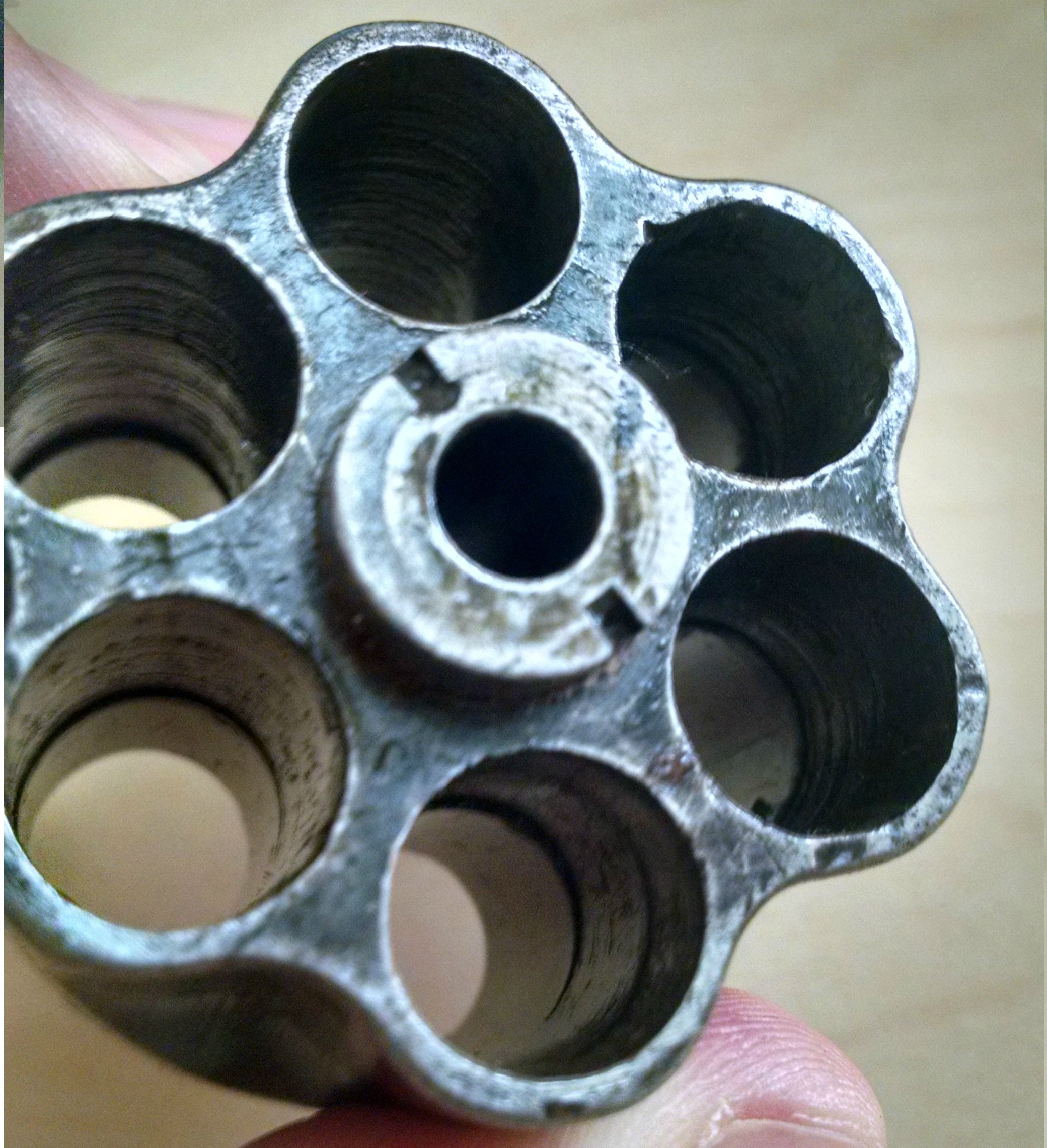
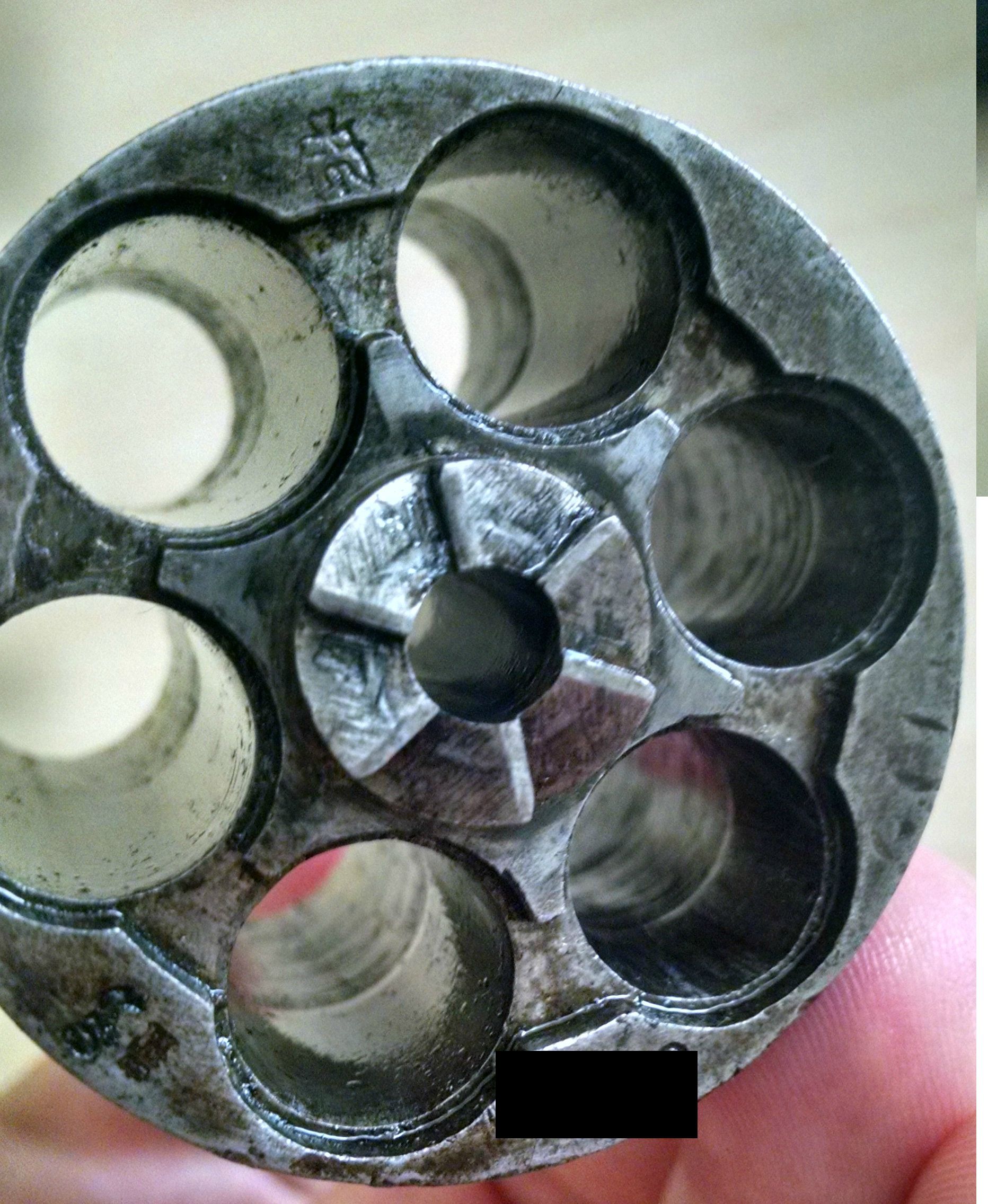
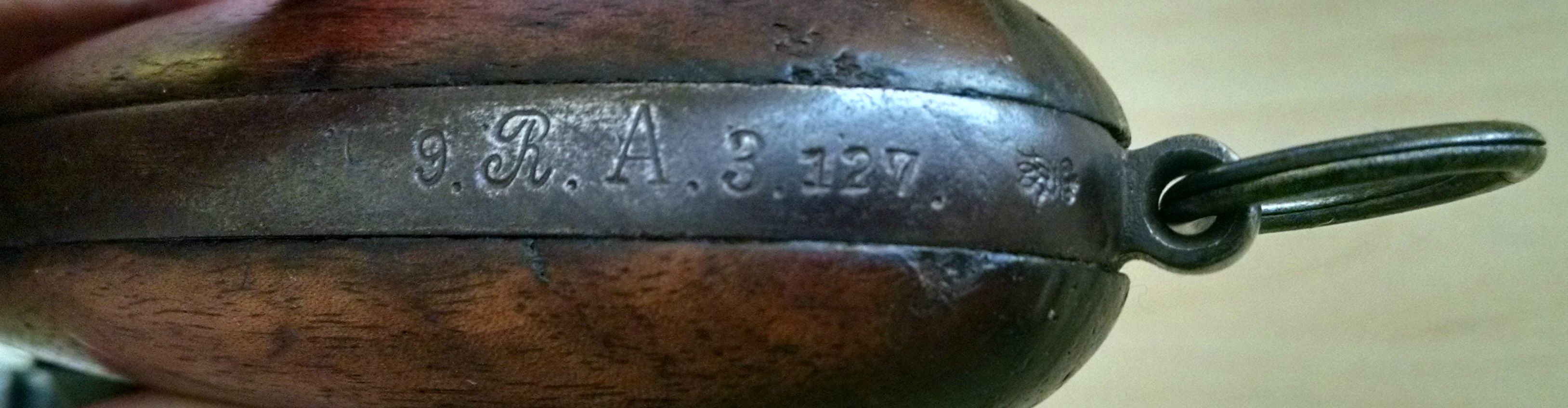
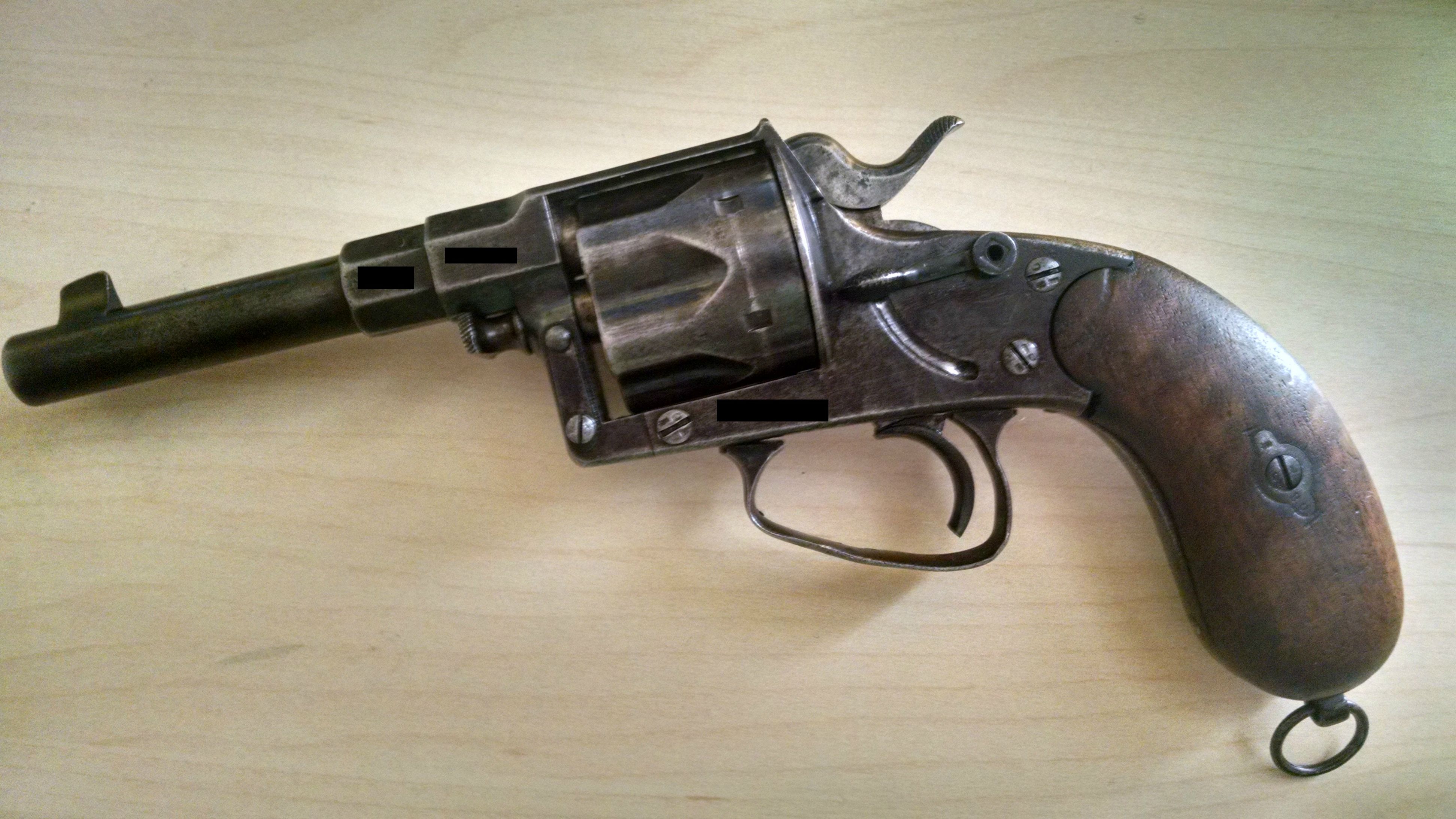
I've bought an 1883 Reichsrevolver with a bubba'd cylinder (triggerguard too) for a good price. The front of the cylinder has been bored out some, now shooting an antique gun like this is already putting strain on it and I wouldn't want to be shooting it now with an even thinner cylinder wall. So, to make it shootable I'm thinking about taking it to a gunsmith and getting it fixed- I could get the cylinder sleeved to return it to its original caliber (the bore is nice on it) but if I'm going to be doing work on it I was thinking about getting it in a more readily available caliber other than .44 Russian that these guns shoot. I was thinking about .38 special, anyone have any thoughts on other calibers I could do ? Also, .38 special being a relatively weaker cartridge I think shooting commercial ammo shouldn't be a problem through the converted 1883 Reichsrevolver. Also- can anyone tell me what unit it belonged to ? 9. R. A. 3. 127 with a funny crown stamp after is the handle marking. Pics ahead-

Nice gun overall
01dxiwk.jpg


Front of cylinder
UUetDMN.jpg


Back of cylinder
9NrI9ua.jpg


Anyone know what unit mark this is ?
IQMsPjU.jpg
 
Nice gun, that said and without raining on your parade too much I think you might find having a smith reline your barrel and cylinder is going to be pricey. Its an otherwise relatively inexpensive antique in good condition and unless you can do the work yourself you are going to be challenged to get this kinda work make economic sense. I personally would just start hunting for a replacement cylinder in the original calibre. That or just keep it for parts, tough one.
 
What if you went with full length shells in the cylinder. Say a 44 magnum with the bullet seated inside the case with a scallop crimp to hold it in place?
The 44 magnum brass is going to give you some added strength as well.
I've a Frontier Buldog that is about the same; a slight taper but no throat on the cylinder...pretty much straight through. I have to use bubba fabbed brass in mine though, cut down 444 marlin. But again the brass only adds to the over proof that was there.
 
What a mess!

Getting those chambers corrected by milling them straight and true and then relining and reboring to a .38 special chambers is going to be as Apu said expensive and requires somebody who as the proper equipment and knowledge! Plus you will need a new barrel fitted and when all is said and done you would be looking at a antique revolver that cost twice what you could sell it for!

I had just 2 chambers on a revolver relined and correctly rechambered not that long ago and it cost me $250! Now for 6 chambers you could at the least double if not triple that cost! It is time consuming and delicate work that needs to be done by a professional otherwise your timing and chamber alignment will be off and cause you more trouble than it is worth!

You would be better off looking out for an antique already converted to .38 special or hold out like mentioned for a replacement cylinder off a scrapped one!
 
What if you went with full length shells in the cylinder. Say a 44 magnum with the bullet seated inside the case with a scallop crimp to hold it in place?
The 44 magnum brass is going to give you some added strength as well.
I've a Frontier Buldog that is about the same; a slight taper but no throat on the cylinder...pretty much straight through. I have to use bubba fabbed brass in mine though, cut down 444 marlin. But again the brass only adds to the over proof that was there.

This is your guy. Ream the cyl. out on the others, and find what fits with a light load. Shoot on, and work the load up as you go. No cost, but be careful.

(edit.,) You gotta do some gentle work on that trigger guard. That's just nasty.).
 
Last edited:
This is your guy. Ream the cyl. out on the others, and find what fits with a light load. Shoot on, and work the load up as you go. No cost, but be careful. (edit.,) You gotta do some gentle work on that trigger guard. That's just nasty.).


Look at the chambers which have been drilled out from the front to about half way in and off center! You can see that who ever drilled them out did not have the cylinder aligned in a jig or vice properly and was drilling them out at a angle leaving a larger internal lip on one side!

If you just ran a reamer through these cylinders the pilot would not centre the reamer correctly and I think from how much shows as removed from the front, it will still give ruptured and split cases and bullets hitting the barrel forcing cone at odd angles as they have nothing to keep them going straight as the front of the cambers are now huge and way bigger than the barrel forcing cone!
 
In my opinion, cut your losses, part it out and find another antique revolver that some dimwit didn't modify. If you're lucky enough to find a competent smith to do the required work, you're looking at big dollars and low resale value.
 
It would be a great project gun for someone capable of doing the work himself.
Index from the unaltered rear of each chamber, bore out, sleeve, chamber, drill out and sleeve the barrel. I would reduce the caliber, to keep the chamber walls as thick as possible. A .38 caliber would work.
Paying someone to do it would not be cost effective at all.
 
Over the years, I've broken a number of guns for parts.
Some parts will sell easily. Others you will never sell. The desirable bits will be gone fast, then you are stuck with the rest. You have to make your money on the parts that will actually sell.
Easiest to just sell the thing as a project to someone with the wherewithal to do the work, and put the money towards one that is ready to go.
 
It would be a great project gun for someone capable of doing the work himself.
Index from the unaltered rear of each chamber, bore out, sleeve, chamber, drill out and sleeve the barrel. I would reduce the caliber, to keep the chamber walls as thick as possible. A .38 caliber would work.
Paying someone to do it would not be cost effective at all.

This would seem to me to be the best route. Sell it to someone that can do the work, and call it the price of an education, eh?

I seem to recall seeing that one when it was on the EE. How much into it?

Breaking it for parts will leave you with an incomplete and even less value remainder.
I think it would be a losing proposition, and a very last resort. Leave that option for parts stripped from guns going in to the smelter.

Wonder what the logic was behind the butchery? Maybe making it "safe" as a kids toy? Have seen a really rough Colt SAA that was chrome plated for that reason.

Cheers
Trev
 
Go and buy one that works, and keep this one as your "parts gun". Think of it as buying extended warranty. :)

When you sell, you sell both of them together and most people will see the value of having a source of parts and be willing to pay more for the pair. That way you don't have to part it out to get your money back and you preserve an antique for future generations. The best of all worlds, and the perfect excuse to go and buy a working example. Definitely a win/win solution. :)
 
Back
Top Bottom