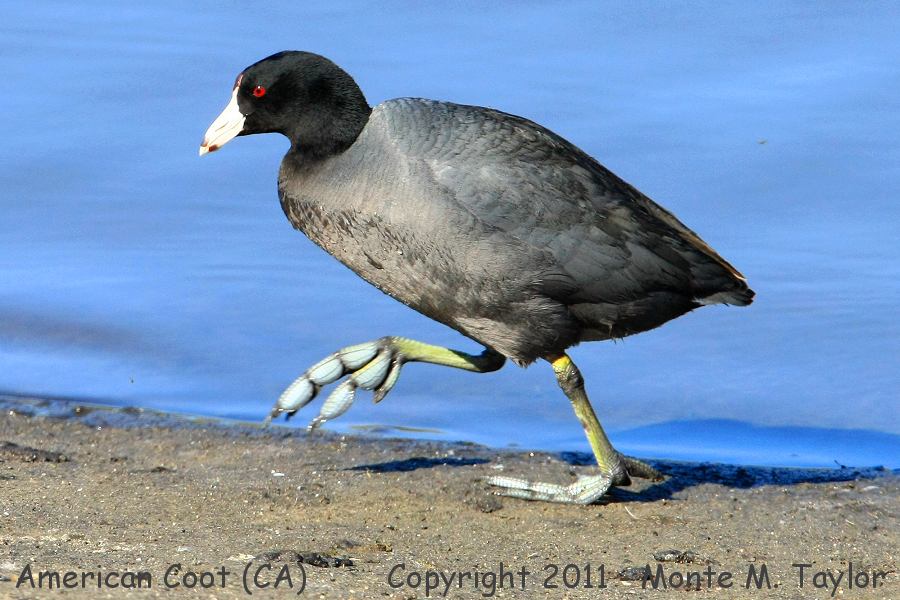
American Coot - fish pond - friend or foe ?

two-dogs

CGN Ultra frequent flyer
Rating - 100%
77   0   0
Location
SE MB RR CoC
so, I see a new visitor on our trout pond! I think it's an American Coot. White bill, black/grey body, greenish feet, not webbed, has paddles on the toes, swims like a duck. Walks like a chicken on the shore.

Some research shows pro & cons:

Pro's:
>Eats: duck weed, algae, eel grass.
>Will fight for it's territory! Maybe chase away fish predators such as cormorants, mink, muskrat etc? Anyone know?

Con's:
>Eats: tadpoles, bugs, beetles.

Unknown:
>Eats: organic plants, wild rice, salamanders, snails.

I only see one so far, don't know if it has a mate or not!
No mention of it eating minnows or fish. Should I let this guy stay or not?
Thanks for any info. I posted this in hunting because I thought perhaps some hunters may know what these birds are like. Many are hunted in the USA, apparently.

 
I can't imagine a coot being detrimental to your fish pond? Strange though that its even there since they like heavy vegetation to hide and nest in. Seems like the shallower more stagnant type sloughs is their favored habitat. Maybe it's just stopping by on it's migration and feeding on little critters in your new eco-system?
And BTW they are considered a migratory game bird and as such have harvest rates and seasons that hunting them falls under. You need a migratory permit/habitat stamp to kill them.
 
I can't imagine a coot being detrimental to your fish pond? Strange though that its even there since they like heavy vegetation to hide and nest in. Seems like the shallower more stagnant type sloughs is their favored habitat. Maybe it's just stopping by on it's migration and feeding on little critters in your new eco-system?
And BTW they are considered a migratory game bird and as such have harvest rates and seasons that hunting them falls under. You need a migratory permit/habitat stamp to kill them.

Your funny. New fish pond and a bird is eating your new fish. SSS
 
Coots aren't fish eaters. They are surface feeders that primarily feed on vegetation, invertebrates and crustaceans. If you ever sit and watch them feeding they don't even put their heads under water never mind dive under after fish. There is much more concern for his trout with Blue Herons, Cormorants and Mink/Otters etc..
 
commonly called "Mud Hens". Aas you said, very territorial but not a very big area (immediately around their nesting site). Not sure if any protection to the furry visitors to your pond but have seen them put the run on blue herrons...and you do too Herrons and fish ponds do not live well together...the herrons do very well but the fish suffer in the exact opposite proportion.

Even a large population of mud hens wouldn't concern me but two herrons will render your pond fish almost unusable, for every one they actually eat there will be ten fish that you may harvest that will have escaped with stab wounds of varying degree that ruins them for your own use.
 
commonly called "Mud Hens". Aas you said, very territorial but not a very big area (immediately around their nesting site). Not sure if any protection to the furry visitors to your pond but have seen them put the run on blue herrons...and you do too Herrons and fish ponds do not live well together...the herrons do very well but the fish suffer in the exact opposite proportion.

Even a large population of mud hens wouldn't concern me but two herrons will render your pond fish almost unusable, for every one they actually eat there will be ten fish that you may harvest that will have escaped with stab wounds of varying degree that ruins them for your own use.

This ^^^^
 
I can't imagine a coot being detrimental to your fish pond? Strange though that its even there since they like heavy vegetation to hide and nest in. Seems like the shallower more stagnant type sloughs is their favored habitat. Maybe it's just stopping by on it's migration and feeding on little critters in your new eco-system?
And BTW they are considered a migratory game bird and as such have harvest rates and seasons that hunting them falls under. You need a migratory permit/habitat stamp to kill them.

thanks bud, if he stays, he will be my friend!
 
Coots are a hoot to watch.

I doubt they will bother your fish.

And if they have babies, they are about the most ungainly things ever.

Cranky neighbors to each other, otherwise, no worries.

Cheers
Trev
 
coots are usually an eater of vegetation but they might snack on frogs eggs for added protein... I've shot a few as "bonus birds" back in the '80s. Although the meat is very dark it's better than some bluebills and goldeneye I've eaten.
 
coots are usually an eater of vegetation but they might snack on frogs eggs for added protein... I've shot a few as "bonus birds" back in the '80s. Although the meat is very dark it's better than some bluebills and goldeneye I've eaten.

had I known, I would have asked him to leave!
 
Frogs are good fish food and bait. I have tree frogs, northern leopard frogs, and bull frogs. The bull frog tadpoles overwinter as tadpoles. Herons love bull frogs.
 
The frog eggs probably hatched...they don't take long after being laid to develop.

If you start worrying about every waterbird that lands on your pond being a competitor for fish food, you'll have an ulcer before your first fish fry. :) As stated above, watch out for fish eaters, not fish competitors.

Coots eat a lot of duckweed.
 
The frog eggs probably hatched...they don't take long after being laid to develop.

If you start worrying about every waterbird that lands on your pond being a competitor for fish food, you'll have an ulcer before your first fish fry. :) As stated above, watch out for fish eaters, not fish competitors.

Coots eat a lot of duckweed.

I don't think they did, no signs of them anywhere There one day and gone the next when the coot was there and then the coot was gone!
No duck weed as of yet, but if and when, the coots are welcome to eat it!
 
Back
Top Bottom