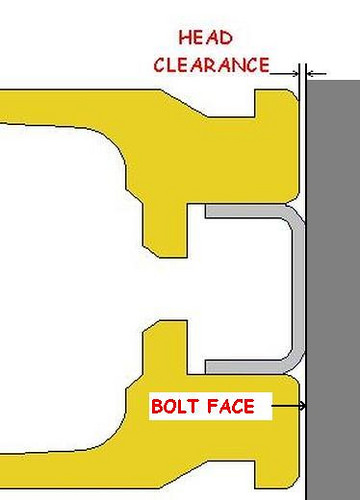
Your amount of shoulder bump when full length resizing is your head clearance when the cartridge is chambered. This head clearance or air space between the rear of the case and the bolt face is how far the case must stretch when fired. Recommended shoulder bump for a bolt action is .001 to .002, and this is within the elastic limits of the brass. Meaning the brass can stretch and spring back without stretching and thinning.
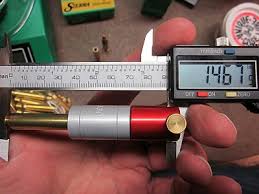
Below a .223/5.56 fired case in my Hornady cartridge case headspace gauge. And for my AR15 I adjust the die to bump the shoulder back .003 from its fired length. The best thing about the Hornady gauge is it allows you to accurately measure the fired length of the case and then adjust the die for minimum shoulder bump.
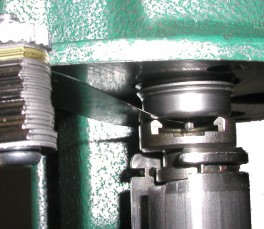
Chambers and dies vary in headspace length and the majority of full length dies will push the shoulder back too far if the die contacts the shell holder.
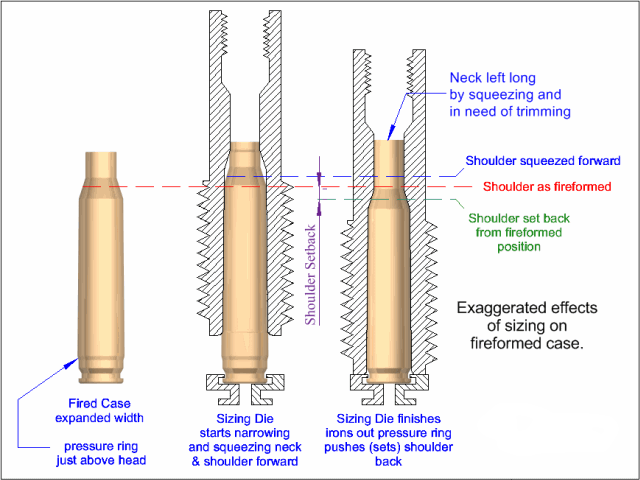
Below is a exaggerated illustration of full length resizing and the effects on the brass case. The desired amount of shoulder bump is .001 to .002 below the red dotted line. And if the shoulder is pushed back too far it allows the case to stretch and thin resulting in a case head separation.
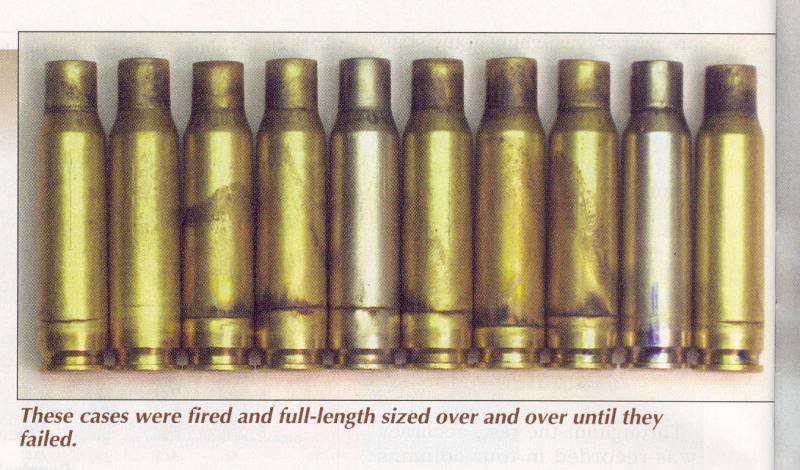
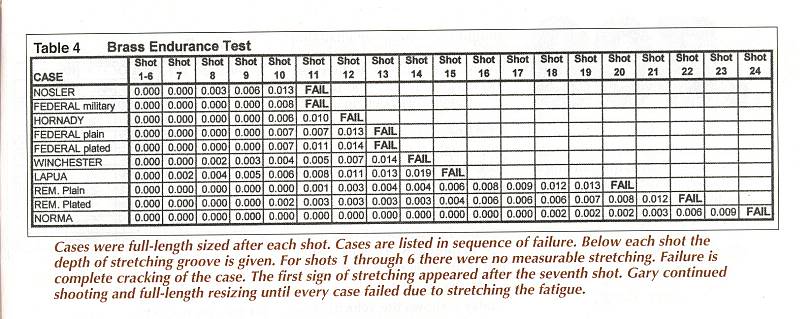
Below is a "ball park" example of full length resizing of .308 cases, the die was set up per the instructions making hard contact with the shell holder. "BUT" the article did not say how much shoulder bump or head clearance the cases had.
As you can see above cartridge cases can vary in the quality of the brass used and how the case is manufactured.
If you don't buy the Hornady case gauge you can place feeler gauges between the die and shell holder. Start at .020 and work down until the case chambers easily without resistance closing the bolt. This is the same basic method as explained by c-fbmi in his very good postings.
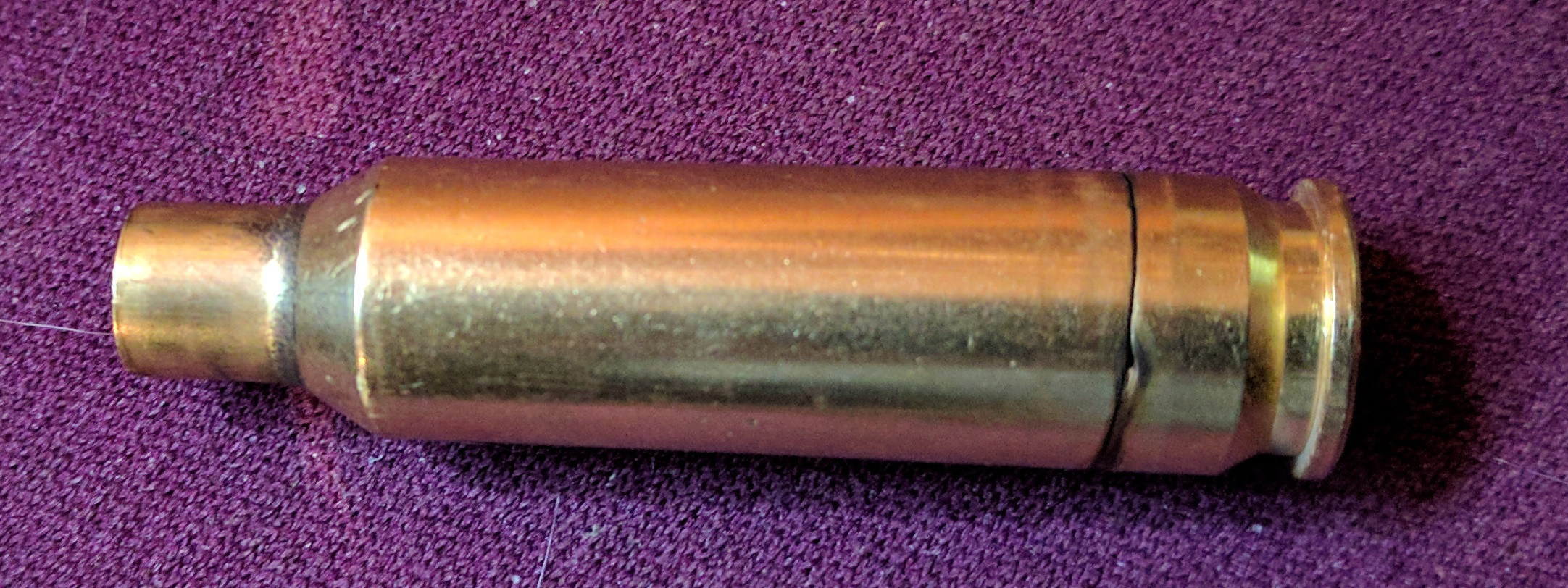
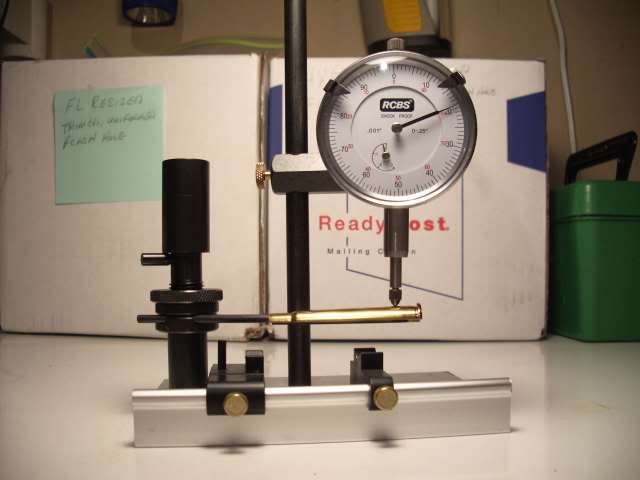
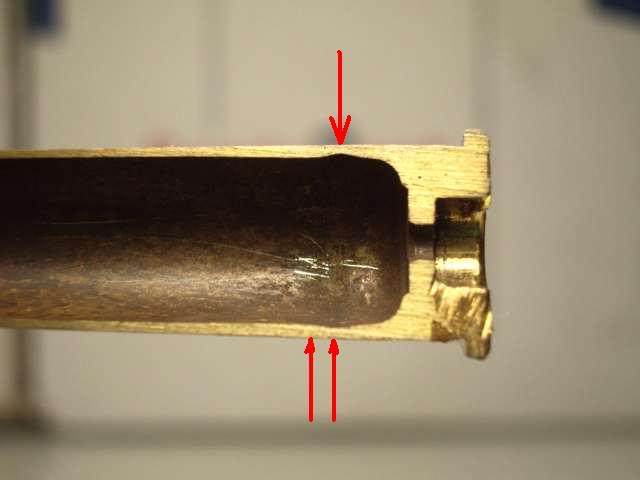
I bought the RCBS case mastering gauge below after getting my first Enfield rifle and my first partial case head head separation. As used below it is nothing more than the bent paper clip method of checking for case stretching and thinning. ($100.00 bent paper clip that reads in .001 of an inch)

Below is the same case as above, it is a once fired factory loaded Winchester .303 British case that stretched .009 on its first firing.
Bottom line, the instructions with your full length resizing dies are to make sure the resized case will fit in any chamber. And you can adjust the die so that the case is a custom fit in your chamber and not stretch.
Understanding Headspace — What You Need to Know
http://bulletin.accurateshooter.com/tag/headspace/
Tech Line & Tips (FAQs)
Create A “Custom Die” With A Simple Shellholder Change!
http://redding-reloading.com/tech-line-a-tips-faqs/144-create-a-custom-die-with-a-simple-shellholder-change