Odd Occurrence? Help!

Doug, I support your statement 100%. You need to adjust your FL sizing die for the individual chamber of the rifle you are using. I accomplish this in several rifles of the same chambering by buying a die-set for each rifle, and adjusting
the FL die to just touch the shoulder enough that I feel a very slight drag as I close the bolt on a newly sized case. This is now adjusted for that specific chamber, and will not likely work properly for any other rifle so chambered. I have cases
for a 6mm Remington that have been reloaded 20+ times, and no separation issues. D.


Excellent information right here. ^^^

Case life will be long when dies are set up properly, primer pocket looseness should probably the first sign you get to determine when to ditch the case and for that matter the whole batch.


When setting up the size die for the 'feel' method it may be prudent to take out the plunger style ejector as it can influence the 'feel'. Better still, measure a fired case and compare the base to datum line on a sized case and adjust die from there.

Using a Lee collet neck sizing die and a body die to bump shoulders will give you concentric ammo and not over work the brass.
 
Last edited:
When I see the three members who are all saying the same thing in this thread, I take it as gospel. You gents know who you are, and the respect is well earned.
Many many years back when my old Uncle was showing me the ropes, he said after the first firing in a rifle, back the die out half a turn to size yer brass. I reckon that was his ballpark for this game.

oh and a Princess Auto dental pick works better than a paper clip for me...
 
https://www.canadiangunnutz.com/forum/showthread.php/1534725-Flawed-Thinking
Did you ever figure out how to deal with the Nitro loading? I was wondering if a partial bump might expand the body too much in a long case like that, creating chambering issues?


I am playing with just sizing the neck down far enough to grip the full length of the seated bullet, which still leaves about 1/8" to the shoulder. These are very low pressure loads compared to those run in a bolt gun so I doubt very much if I will have any grief with them doing it this way. If I ever get to go for another elephant or rhino or some more buff.........I will most certainly try each and every cartridge in the rifle before I go..........you can be certain of that !!!! One doesn't need a rifle that won't close and lock up when confronted with an angry and large pachyderm which in all likelihood already has two holes in him..........I know, I know.......he should already be dead at this point, but remember "Best laid plans of mice and men...." and it's definitely not the time to find out your reloads are a touch too long in the shoulder..........
 
Last edited:
So, who do you believe? The guy from Lapua or the folks who claim Full Length sizing will cause case head separation? Lee Enfields are notorious for this regardless how you size them. I've had a few do this. With my F/L sized .308 brass not once, ever.

As has been discussed, the key for new reloaders is understanding the "WHY?"... why are you doing each particular step? What is the objective? And that requires an understanding of the working of your firearms ( a very good thing).

Once you understand the WHY, it is quite straightforward to understand the "HOW?"... or the right tool(s) to complete the task.

I have never seen a step in reloading so misunderstood then sizing a case. The WHY never changes... get the case to fit the chamber in a specific way for best function and performance. Regardless of the firearm, that is the whole point. Maybe it starts because shooters don't really understand the actual function or fit of a firearm?

From here, we can discuss the various options is sizing the various parts of the case. Again, once you define the firearm and the purpose, the "best" steps are well defined.

From there, you look at the various "tools" (in our case, Dies), and how they function AND vary . Pick the appropriate tool and away you go.

All too often a shooter assumes one process that may have worked for them will work for ALL... experience and exposure to a wider number and range/format of firearms will quickly end that debate.

So take the time to understand the Why... And when you understand that, the how will become very obvious which makes choosing the right tool(s) straightforward.

Jerry
 
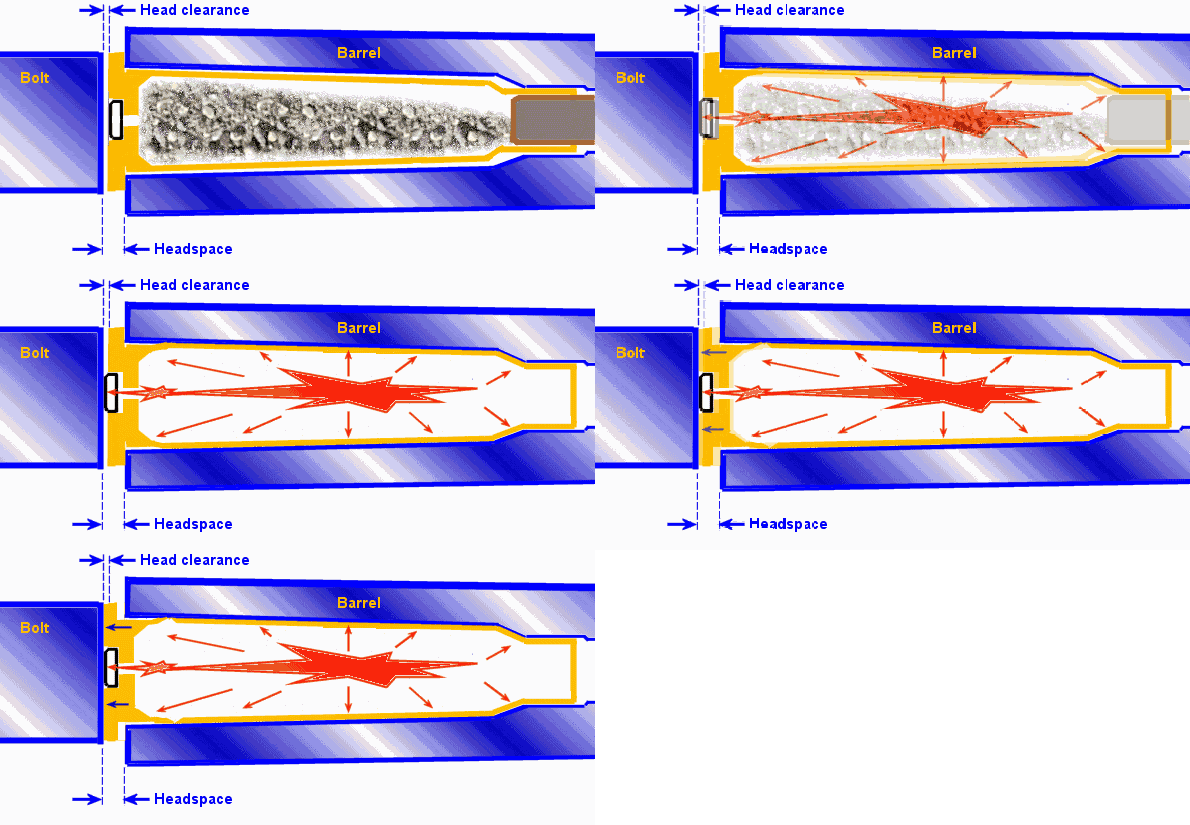
You are correct Jerry........I think too many new or closed minded reloaders don't understand what is happening to the brass when a cartridge is fired in a chamber. bigedp51's diagram shows this perfectly, where the undersize case is driven forward under the firing pin blow, then the thinner forward section of the case expands first and grabs the chamber walls, as the pressure builds the case is forced back against the boltface and must stretch somewhere. This somewhere is just forward of the thickening of the case head, just exactly where the OPs photo shows the separation.
This is very easy mechanics to understand. Stretch this case several times in the same place and it will separate, how quickly depends upon how much stretch it is being subjected to on each firing and the thickness and quality of the brass.......but make no mistake it WILL separate. To my knowledge this is the only reason that a brass cartridge case separates as shown in the OP's photo.

Apparently not everyone is fully reading, or possibly understanding, the inset from bigedp51 from the guy from Lapua........In his 3rd sentence he says very clearly "IF DONE PROPERLY, F/L SIZING......." and in saying this he doesn't mean just running the shell holder up hard against the die bottom, he is referring to exactly what I describe in my first post..........
 
Last edited:
I think new reloaders need to start with truly understanding HEADSPACE and action lock up. Better, just learn what the heck is going on when they pull that trigger.

Unfortunately, most have never seen a reloading manual with all the basic steps, pictures, terms and warnings. Yep, that would require them to open a book and learn all the basic, boring stuff.

BUT for those that do, these questions dissappear cause they will quickly and completely understand what is happening when they look at their fired case

And ingeneral, they will not experience case separation cause they will have avoided it in the first place.

In a properly set up and functioning front locking bolt action using properly sized ammo, case separation is near impossible with operating pressures within SAAMI and CIP spec for that chambering.

The problem with the internet and the LCD screen is the loss of context... and because so many new shooters want to start at the end, they don't learn all the basics and pitfalls that come from "working up" a load.

And unfortunately, they typically run into a potentially big safety problem and need help on forums like this... where they don't always get complete info... and round and round we go.

YMMV.

Jerry
 
I have gotten a huge amount of info from this thread so far - subb'ed to continue reading.

Thanks from a new reloader !!

Have not needed to know about this with my pistol ammo, but now I have started rifle and never would have thought about any of this....

In my mind it was deprime, tumble clean, full length resize, measure and trim any oversize - go......
 
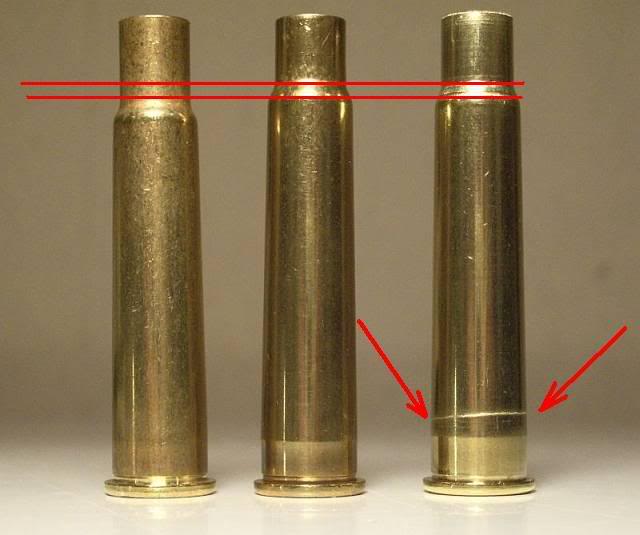
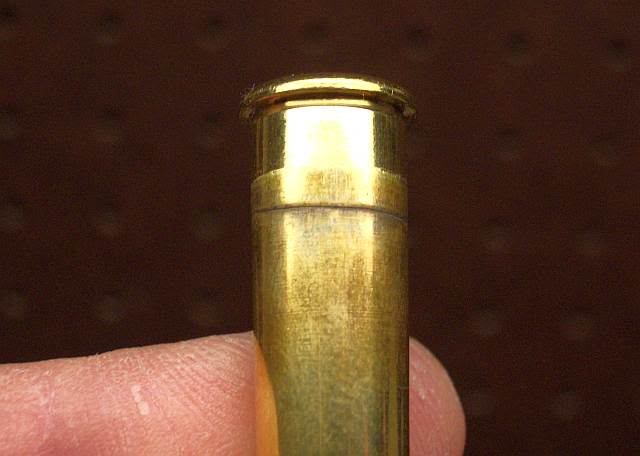
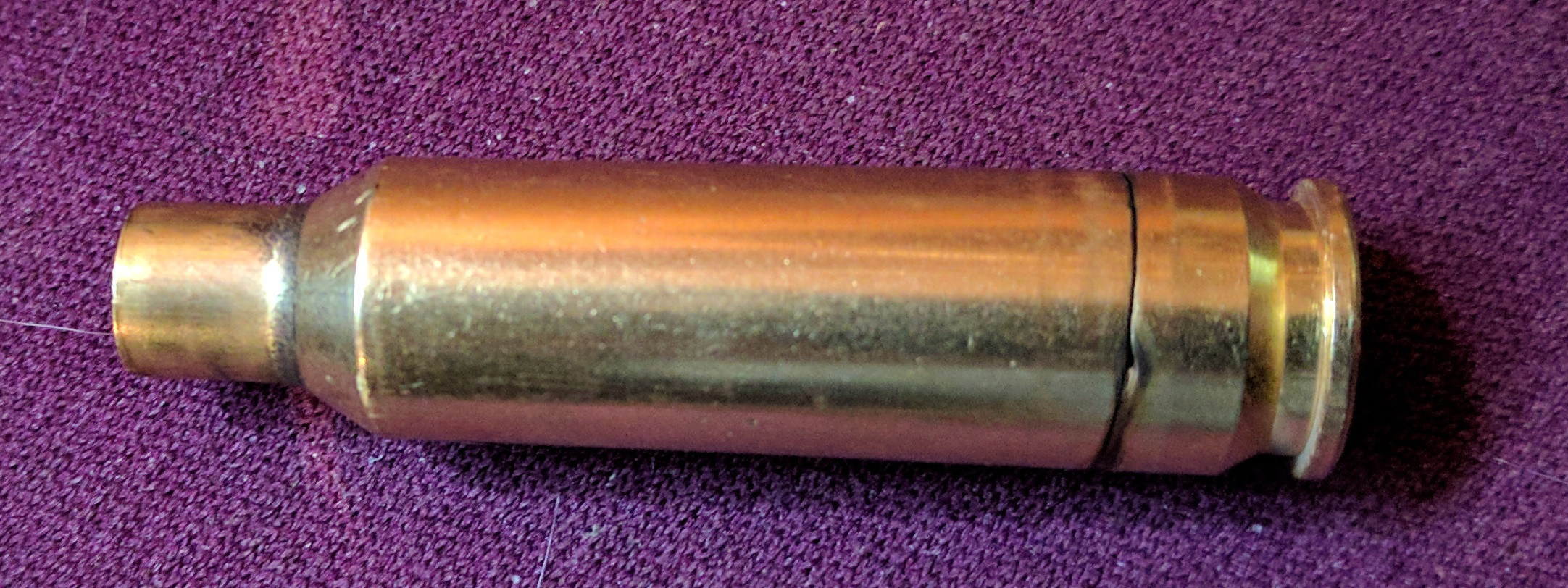
I have been very lucky in over 47 years of reloading below is as close to a total case head separation that I ever had. And the only reason this happened was I didn't listen and full length resized the first batch of Winchester .303 British cases on my first Enfield rifle.

NHlR9jO.jpg


DVy4C4T.jpg


And below is the "WHY" of case head separations, excessive head clearance or "air space" between the rear of the case and the bolt face. And the amount of shoulder bump or how far you push the shoulder back when resizing is your head clearance.

sHgqVJR.gif


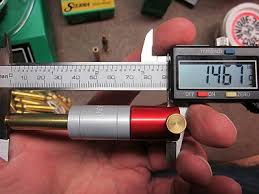
And below is the best reloading investment I ever made, a digital vernier caliper and a Hornady cartridge case headspace gauge. (big numbers for chronologically gifted eyesight) :d

H0SXHH8.jpg


Case Sizing 1: Sizing Die Selection
http://www.mssblog.com/2016/02/02/case-sizing-1-sizing-die-selection/

Understanding Headspace — What You Need to Know
http://bulletin.accurateshooter.com/tag/headspace/

Tech Line & Tips (FAQs)
Create A “Custom Die” With A Simple Shellholder Change! (Redding Competition Shellholder Set)
http://redding-reloading.com/tech-line-a-tips-faqs/144-create-a-custom-die-with-a-simple-shellholder-change

How to Set Up Full-Length Sizing Dies and Control Shoulder Bump
http://bulletin.accurateshooter.com/tag/neck-sizing/

Headspace is also the distance between your ears, so fill this space by reading the front part of your reloading manuals. (and the links above)

And remember only Saddam Hussein's cat enjoys neck sizing.
(if you don't think this is funny then your the type person who would complain if they hung you with a new rope)

oYX8YZT.gif
 
Last edited:
Well OP, it looks like this is your lucky day.........now you know how to set up your sizer die so this doesn't happen any more and Jerry @ Mystic has a glut of new 6.5 Creed at 30% off. You can replace all your trashed brass with new stuff at a reasonable price and you now know enough to not make that mistake again.
 
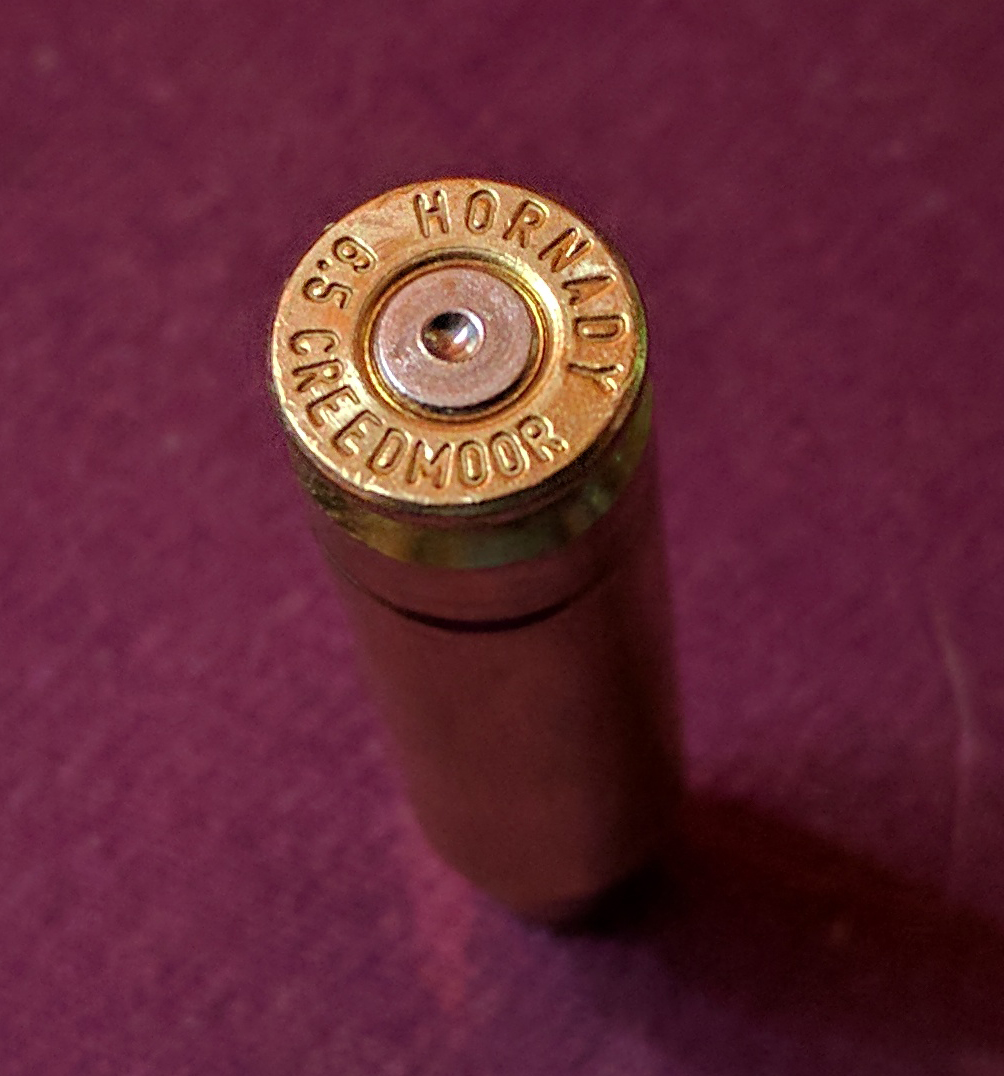
Hey all, so I have to say I'm fairly new when it comes to re-loading I've only been at it for about a year. I've never had any issues whatever so ever until recently. I was loading for my 6.5 Creedmoor and was running my usual load of 42g of H4350 with Berger 140gr hybrid projectile (have shot maybe 700+ rounds of this load though my rifle) then this one case / issue happens?

Would you say this is due to excess pressure? or is this just a case with a defect? I've never gotten any obvious signs of too much pressure with this load before, no sticky bolts, or stuck cases, primers all look about like this one.

Case:
Cf5U0N3.jpg


Primer:
doRhLMW.jpg


Should I back the load off? or again is this just a weird case? ** Side note case has been fired 4 times.

So the answer to the OP question is oversizing the case...

But I noticed on the pic showing the primer, there is cratering around the firing pin impact. For those that are unsure what primer cratering looks like, well... here it is.

So to the 2nd question of the OP, YES, the load used for this rifle is at elevated pressures beyond SAAMI spec. The amount of powder indicated is also higher then is commonly listed in published data. Yes, you can see primer cratering on lower pressure cases BUT you would need a really ill fitting firing pin to bolt and that is rare in modern rifles.

Also, note on the first "E" in the creedmoor, it is shiney compared to the rest of the case head..... maybe that is just in the lighting of the pic or brass rub due to pressure. not the best of pressure signs, especially if there are rough spots on the bolt face but in concert with the primer cratering, good indication to consider backing off the load.

I would suggest to the OP that the primer cratering has been visible in all your fired cases since you started... so you have had pressure signs but have not noticed. Stiff extraction may not occur in actions with good lock up even at very high pressures. By the time you get to sticky bolt or worst, a stuck case, pressures have likely soared well past where you might want to be.

But again, that can depend on the condition of the action so be careful about pressure signs.

Watch the charges vs reliable published data and compare to the printed velocities. In general, they are using very good gear to generate this data and don't just guess. If they suggest a load maxes out at say 2700fps and you are getting 2800fps with "no pressure signs" but using more fuel, chances are one of you is wrong.

Jerry

 
Jerry

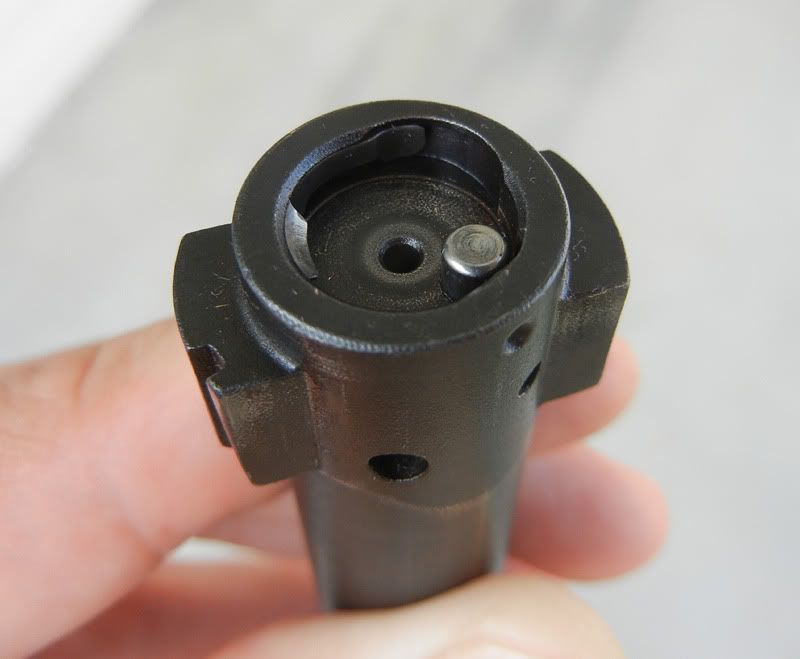
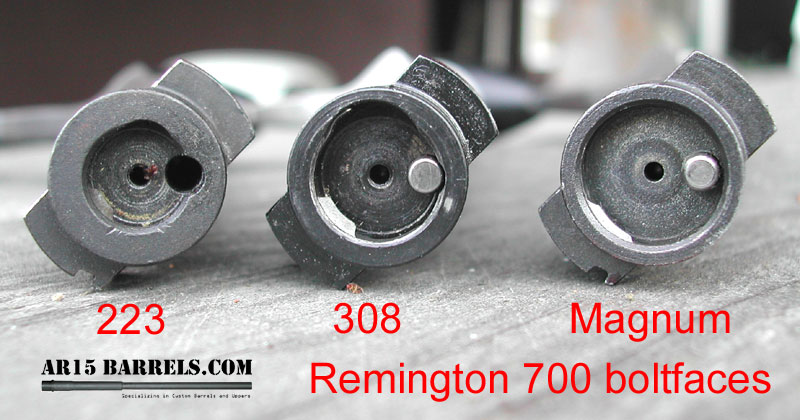
Below are what my 30-06 Remington 700 bolt face looks like and there are thousands of these with a beveled firing pin hole in the bolt face.

My fired cases all have some form of cratering around the firing pin impact, from a start load to maximum load. This also happens with any rifle with a under size firing pin or over sized firing pin hole in the bolt face. And the only way to fix it is have the bolt face bushed as the bottom photo.

Also I get the same rub marks on the rear of my cases when adjusting shoulder bump. this was caused by not bumping the shoulder back far enough when testing case fit in the chamber. The same rub marks can happen when neck sizing only with a snug fitting cases and the bolt rubbing the rear of the case.

That being said I agree that the OP may be loading too hot "BUT" sometimes things may look the same and not be caused by loading too hot.

DSCN0407.jpg


Only the right hand magnum bolt face below isn't beveled around the firing pin hole.

700boltfaces.jpg


Below a bushed bolt face to fix the problems.

firingpin20001.jpg


This posting was not meant to be insulting Jerry, you know more about reloading and shooting than I do. Your only real fault is you prefer neck sizing and do not belong to the rat turd in the violin case club.

Signed
bigedp51

mxHhTsh.jpg
 
Last edited:
Yep. Too many reloads and FL sizing. Case stretch then rupture. You can partial FL size so that you are not working the brass so much, or go get new brass, and carry on.
 
You can get some funny looking primers with weak firing pin springs as well... I have an old HVA single shot 30-30 that craters and flattens the hell out of primers with mouse fart loads. Very weak spring in that gun which doesn't hold the dent down in the primer after firing. Primers AND another sign of pressure (ejector marks, etc) would have me looking into things more, primers alone and nothing else can usually be explained.
 
Yes I do full length resize, but all my other cases seem fine. How can I check to see if my shoulder is being bumped back too much?

That was my thought as well. That sort of separation comes from repeated FL sizing. A good way to check your die setting is to smoke the case neck and see where the case stops going into the die. I start by screwing my die into the press with the ram all the way up. As soon as the die touches the ram I tighten down the lock ring and, from there, I smoke a case neck and adjust the die up or down until the neck is fully sized but the shoulder is not touched.
 
bigedp51, yep, know all about firing pin vs bolt face sizing... going from my personal experience loading and shooting the 6.5 CM.. and looking at the case and primer.

Yep, alot of stuff can mask or "cause" certain false signals but I am thinking, things are on the toasty side BUT velocity would be a good tell. Odds are this is a new rifle so firing pin spring is not likely at fault. And odds are it isn't a Rem 700.

What rifle was this shot in? What type of primer was used?

There are gauges that can be used to compare headspace before and after firing/sizing. Hrn and RCBS make them (PM or email if you want to purchase). In general, 4 thou is the max I would want my case shoulder to be sized vs fireformed dimensions. If I want peak accuracy and longest case life, I would work towards 2 thou... certainly not something I would do for any set up that is going to get dirty or see severe useage.

Simple method is to take cases that have been fired, mark a line on the body and rechamber with the line at 12oclock, 3, 6, and 9. Was there any resistance to chambering? Was that resistance only with 1 orientation or several or all? The amount and location of resistance can tell alot about the condition of the action vs chamber alignment.

Any shiny rub spots on the case will also be good tells.

Now set the body die to just touch the case (yep, I would use a body die vs a FL sizing die especially for factory chambers that might be a bit big). The resistance to chamber should remain the same and in the same locations.

Now adjust die for 3 thou bump (use proper lube and enough to ensure even sizing)... chambering effort should drop to near zero. maybe just a hint in the final stages of closing the bolt. Check several cases to ensure all is well. If there is still resistance in certain orientations or with some cases, drop the die for another 1 or 2 thou of bump.

With these newly sized cases, put a piece of masking tape over the case head and then chamber... there should be ALOT of resistance and even stop the bolt from closing 1/2 way through its travel.

DONE.... This will be what I consider min clearance cases. Ideal for range use, some competitions BUT not jumping out of good airplanes.

If you need to bump the shoulder enough that you need 2 pieces of tape to feel resistance in closing the bolt (but 1 piece with some orientations), the lock up is not ideal and could use some proper TLC from a quality gunsmith next time a barrel is installed.

There are plenty of subtle dimensions in an action that can affect what is the proper way and amount to size a case BUT the end result will always be the same. The completed ammo has to chamber without any fuss and function properly.

If an action is way out of alignment, case life may be reduced simply because the case is actually bent during firing. not much you can do accept toss the cases when they cease to chamber properly and fix the action when a new barrel is installed.

Jerry

 
Tagged.

OP, I am interested in how you proceed going forward re die selection and method of shoulder bumping selected. Regarding the possibility of a hot load, and I may have missed this, but would some velocity loads provide some indication if the load was warm regarding primer cratering? Acknowledged every rifle is different of course.

I am following along and understand adjusting a f/l die to bump the shoulders back but am getting a little confused regarding how much of the neck would get resized with a backed out f/l die. ( all due respect to those who do this and are experienced enough to know what's "good enough" neck sizing WRT how far down the neck is sized ) For myself I can grasp two separate operations, one for bumping and one for neck sizing much easier coupled with Dogleg's use of Redding competition shell holders but that's my mileage and what's worked here for repeatable results. The masking tape go no-go approach of Mystics description sets the parameters for bumping operations...hornady headspace measurement system just an afterthought to satisfy my geekiness regarding necessity for numbers, and now purely a random sample.

Regards
Ronr
 
Last edited:
Back
Top Bottom