So many barrel manufacturers have so many different contours. I typically judge a barrels "accuracy or cooling" based on the muzzle thickness. Now I realize there is a lot more science to it. Let's use a 308 caliber. Would a 0.750 muzzle offer all the benefits of a "varmint barrel"? Or should you be pushing closer to the 1" mark? For example what benefits would like a benchmark number 6 offer. It has a 0.750" muzzle. It's too heavy for a hunting rifle. But too light for a prs or tactical rifle. Thoughts?















































You are using an out of date browser. It may not display this or other websites correctly.
You should upgrade or use an alternative browser.
You should upgrade or use an alternative browser.
Let's talk barrel thickness
- Thread starter Chago
- Start date

More mass takes more shots to absorbe temp, and to cool. Thermodynamics. Slimmer profile willl warp more from cold to hot. Moving shots. Contour and fluting will affect this to some measurable degree.
IMO the most predictable barrels are bull barrels. Slower to heat. And slower to cool. Perfectly axial symmetries. Physics would agreee with me. However real world trials might differ.
IMO the most predictable barrels are bull barrels. Slower to heat. And slower to cool. Perfectly axial symmetries. Physics would agreee with me. However real world trials might differ.

Proper stress relieving plays a big part also. A high quality barrel should not string or walk rounds as it heats up. My last barrel was a medium palma. On 20 plus round fast strings POI did not move and neither did the CB.
I am currently running a heavy palma only because my rifle was tail heavy with the med palma and now has a better balance point with the heavier profile barrel.
I am currently running a heavy palma only because my rifle was tail heavy with the med palma and now has a better balance point with the heavier profile barrel.
Last edited:

just having some fun
CGN Ultra frequent flyer
a fluted barrel will be lighter but still retains most if the ridgity and possible cool off quicker
if you go to a heavy barrel you also have to look at balance point
if you ever read about the houston warehouse --- quote "barrel MUST be 21 3/4” long for optimum accuracy"
if you go to a heavy barrel you also have to look at balance point
if you ever read about the houston warehouse --- quote "barrel MUST be 21 3/4” long for optimum accuracy"
Proper stress relieving plays a big part also. A high quality barrel should not string or walk rounds as it heats up. My last barrel was a medium palma. On 20 plus round fast strings POI did not move and neither did the CB.
I am currently running a heavy palma only because my rifle was tail heavy with the med palma and now has a better balance point with the heavier profile barrel.
I found the same thing. Went from a medium palma (in .308) to a M40 (6creed) and MTU (.308) mostly for an improvement in balance as my rifle was tail heavy. The added weight also helps with recoil mitigation. I find the MTU to be a bit heavy in the occasional off-hand stage so for me the M40/M24 contour is the best compromise. I've got another 6 creed coming in heavy palma as well (preorder barrel and M40 wasn't available) but although they are 2 different contours, a heavy palma and an M40 weigh the same thing, at least in a 26" length.
Some will argue that fluting does not improve accuracy but I will argue against that. The problem with discussing fluting is the presumption that we would be taking two identical barrels and fluting one then comparing the results.
In reality we are actually talking about weight... So if we take one barrel without fluting and compare it to a larger barrel with fluting and both barrels weigh the same... the fluted barrel would be more accurate.... and cool faster because of the larger surface area.
Cryo stress relief is also recommended.... twice.
In reality we are actually talking about weight... So if we take one barrel without fluting and compare it to a larger barrel with fluting and both barrels weigh the same... the fluted barrel would be more accurate.... and cool faster because of the larger surface area.
Cryo stress relief is also recommended.... twice.
So if we take one barrel without fluting and compare it to a larger barrel with fluting and both barrels weigh the same... the fluted barrel would be more accurate.... and cool faster because of the larger surface area.
The inherent variation in accuracy between even sequentially produced barrels is greater then any difference fluting will create. Look at benchrest shooters; they'll buy, chamber and shoot multiple barrels and pick the best one. Why? Because even barrels with identical specifications will shoot differently. Theoretically, the fluted should be stiffer and therefore more accurate. But theory and reality don't always coincide.
And fluted barrels heat up faster due to smaller thermal mass. Does that outweigh larger surface area? ¯\_(ツ)_/¯
Mystic Precision
CGN Ultra frequent flyer
- Location
- Summerland, BC
So many barrel manufacturers have so many different contours. I typically judge a barrels "accuracy or cooling" based on the muzzle thickness. Now I realize there is a lot more science to it. Let's use a 308 caliber. Would a 0.750 muzzle offer all the benefits of a "varmint barrel"? Or should you be pushing closer to the 1" mark? For example what benefits would like a benchmark number 6 offer. It has a 0.750" muzzle. It's too heavy for a hunting rifle. But too light for a prs or tactical rifle. Thoughts?
Pick from the long list of quality match barrel makers ... and that means proper stress relieving during the manf process. This is a very important step and many low cost brands simply don't do this... and why they warp so badly as they heat up.
With proper stress relieving, a sporter contour can run hot and still maintain accuracy.
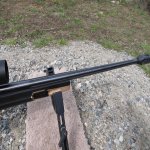
This is my Rem 783 McGowen 6.5 Creedmoor prefit in a #4 contour and also fluted (fluting was a cosmetic features to show off the service vs any mechanical advantage it "might" offer). No problem to drop the last bullet on a target at 1450yds. yes, it is using less powder then typical 308's but 20rds is alot to shoot down range at a target and not loose accuracy.
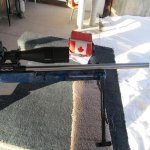
Last night I took my FTR rig with a Shilen Select Match Bull contour 30" long prefit in 308 Win out for some testing. Temps were in the mid 20's and windy. After 27rds, the last shot was as trustworthy as the first... in fact my best test load was shot on shots 25, 26 and 27. In F class in the US, it is possible to shoot over 30rds in a string with sighters... do you demand thermal stability in your barrels? You better believe it.
both rifles shot at a steady pace... say 10 to 15secs per bang.
Were these barrels hot to the touch? You bet.. did I still have confidence that the shot impact was reliable and predictable? Yep....
Would you build a #4 contour 300RUM with the intent to shoot 20rds strings in the middle of summer? I would suggest, BAD IDEA....
If you are building a rifle where you will see high rd counts per string and in high ambient temps, the larger barrels is good insurance.
if you are out hunting and don't anticipate a fire fight with the quarry, pretty much any contour from a quality manf is going to work. If you want light weight, then I would offer the CarbonSix CF wrapped barrels. This I have beat on and again, after 20rds, the last shot hit like the first... If you want to build a light gun and need to put lead down range, I would definitely go CF wrapped from a quality manf.
So the answer... work with quality, properly stress relieved barrels and build the rifle to best suit the tasks. If the set up doesn't balance and handle properly, all the other specs really don't matter.
YMMV
Jerry
Attachments


The inherent variation in accuracy between even sequentially produced barrels is greater then any difference fluting will create. Look at benchrest shooters; they'll buy, chamber and shoot multiple barrels and pick the best one. Why? Because even barrels with identical specifications will shoot differently. Theoretically, the fluted should be stiffer and therefore more accurate. But theory and reality don't always coincide.
And fluted barrels heat up faster due to smaller thermal mass. Does that outweigh larger surface area? ¯\_(ツ)_/¯
I'm quite certain that I read that AI stopped fluting their barrels because they found that the barrels were not consistent as they heated up.
I'm quite certain that I read that AI stopped fluting their barrels because they found that the barrels were not consistent as they heated up.
I've read this too. The thick sections take a long time to cool, but the thin sections cool quickly.
I've read this too. The thick sections take a long time to cool, but the thin sections cool quickly.
Interesting...
I wonder if AI was cryo treating the barrels to stress relieve before making such a determination.
Often times companies will flute a barrel but not stress relieve and it makes all the difference.
Cant argue though that fluting can induce stress, depending upon how and where in the manufacturing process the flutes are produced.
Here is the thread about AI testing on fluted barrels.
Tom Beckstrand (the writer of the AI article) responded, as well as Frank Green of Bartlein Barrels
High level
button rifled and fluting not good (AI tested fluted button rifles barrels Lothar Walther)
cut rifle and fluting good to great
http://forum.snipershide.com/threads/barrel-fluting-poi-shift.167242/
Trevor
Tom Beckstrand (the writer of the AI article) responded, as well as Frank Green of Bartlein Barrels
High level
button rifled and fluting not good (AI tested fluted button rifles barrels Lothar Walther)
cut rifle and fluting good to great
http://forum.snipershide.com/threads/barrel-fluting-poi-shift.167242/
Trevor
Mystic Precision
CGN Ultra frequent flyer
- Location
- Summerland, BC
Well, not fluting button rifled barrels is a well known "thing"... but there are plenty of fluted button rifled barrels that shoot just fine.
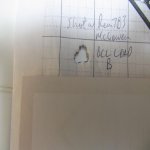
Just burning up some test ammo at 100yds... around 1000rds down the pipe.. still shoots great.

Fluted McGowen #4 contour which is pretty thin..
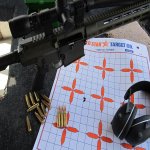
A BCL customer rifle with a new Mcgowen FLUTED AR10 barrel... seems to shoot well too.
Benchmark has been making a bunch of spiral fluted barrels with some very aggressively cut... they seem to shoot well.
Buckets of factory Savage Varmint barrels have been produced over the last 15yrs... for a factory barrel, they seem to shoot well.
The thought process behind not fluting a button rifled barrel is logical but doesn't seem to always play out in real world shooting. How deep? how many? how was it milled? how was the barrel set up and treated during and after? how close to the muzzle or to the bore? and on it goes.
Would I do deep fluting on a button rifled barrel? No, but I would avoid this on cut rifle as well... why take any risks?
But most fluting is cosmetic and really not all that deep... and if done properly, really isn't going to change your results one way or the other.
YMMV
Jerry
Just burning up some test ammo at 100yds... around 1000rds down the pipe.. still shoots great.
Fluted McGowen #4 contour which is pretty thin..
A BCL customer rifle with a new Mcgowen FLUTED AR10 barrel... seems to shoot well too.
Benchmark has been making a bunch of spiral fluted barrels with some very aggressively cut... they seem to shoot well.
Buckets of factory Savage Varmint barrels have been produced over the last 15yrs... for a factory barrel, they seem to shoot well.
The thought process behind not fluting a button rifled barrel is logical but doesn't seem to always play out in real world shooting. How deep? how many? how was it milled? how was the barrel set up and treated during and after? how close to the muzzle or to the bore? and on it goes.
Would I do deep fluting on a button rifled barrel? No, but I would avoid this on cut rifle as well... why take any risks?
But most fluting is cosmetic and really not all that deep... and if done properly, really isn't going to change your results one way or the other.
YMMV
Jerry
Attachments




I'm curretly running heavy palma, medium palma and Sendero (Remington Varmint) contours at 26.5" on all of my rifles (I stick to HP if available). People do use heavier ones in PRS if they know there won't be any off hand shots at a match. A couple of the Team AI guys were running straight 1.25" barrels at the CORE match this spring.
Flutting and even Cerakote are a waste of money on competition barrels IMO.
Flutting and even Cerakote are a waste of money on competition barrels IMO.

In field/practical comps, weight is your friend.
I tried going lighter, with a Hawkhill "Marksman" contour, but honestly it's a bit too light. I don't think I would go lighter than a heavy Palma on a comp gun.
My 6.5 creedmoor and .300NM are MTU contours (24" and 29") and my 6BRA is a 28" heavy Varmint. These rifles balance great l, just in front of the magwell with a JAE chassis.
Cerakoting a barrel is a waste of money, and just traps heat. Polished stainless, especially with the amount they get changed out. Flutes are also a waste of money, doesn't provide any performance and it's just a looks/vanity thing. My rifles get used and beaten on, like the tools they are.
I tried going lighter, with a Hawkhill "Marksman" contour, but honestly it's a bit too light. I don't think I would go lighter than a heavy Palma on a comp gun.
My 6.5 creedmoor and .300NM are MTU contours (24" and 29") and my 6BRA is a 28" heavy Varmint. These rifles balance great l, just in front of the magwell with a JAE chassis.
Cerakoting a barrel is a waste of money, and just traps heat. Polished stainless, especially with the amount they get changed out. Flutes are also a waste of money, doesn't provide any performance and it's just a looks/vanity thing. My rifles get used and beaten on, like the tools they are.
Hey Jerry
I am interested in the 783 action,what have you done to it.How hard is it to headspace.What you running for a mag system.I am planning a future build on using a vanguard action(6.5 Creedmoor)but the 783 interests me as well.I like the barrel nut idea.
I am interested in the 783 action,what have you done to it.How hard is it to headspace.What you running for a mag system.I am planning a future build on using a vanguard action(6.5 Creedmoor)but the 783 interests me as well.I like the barrel nut idea.
Hey Jerry
I am interested in the 783 action,what have you done to it.How hard is it to headspace.What you running for a mag system.I am planning a future build on using a vanguard action(6.5 Creedmoor)but the 783 interests me as well.I like the barrel nut idea.
Any action can be made into a switch barrel action with the ARC bar-loc, WTO switch lug, etc. If that is what you are after.
Personally, I would avoid a switch barrel setup and just do shouldered barrels. I do it with my PRS gun, I swap between my 6.5 creedmoor and 6BRA barrel all the time. No need for go/no-go gauges and my zero changes by 0.10 mils at most.
All you need to swap out shouldered barrels is a barrel vice, torque wrench and action wrench. No need to worry about go/no-go gauges, or Allen/set screws (depending on what type of switch barrel system you use).
I personally wouldn't buy anything Remington these days. Buyer beware - ####ty manufacturing and ####ty QA/QC. Get a Tikka or a ARC Nucleus, Defiance Tenacity or Bighorn Origin if you want a good cost friendly option. Like anything, you get what you pay for...
Plus, with the 783 you have to "Bubba" it up to work with mags, etc. Way better options out there, especially if you want a mag-fed setup. Get something in a rem700 footprint so that you can capitalize on all the aftermarket accessories for stocks, chassis, triggers, etc. Otherwise you are just stuck with, well, a Rem 783 that is bubba'ed up to try and suit your purposes...
Last edited: