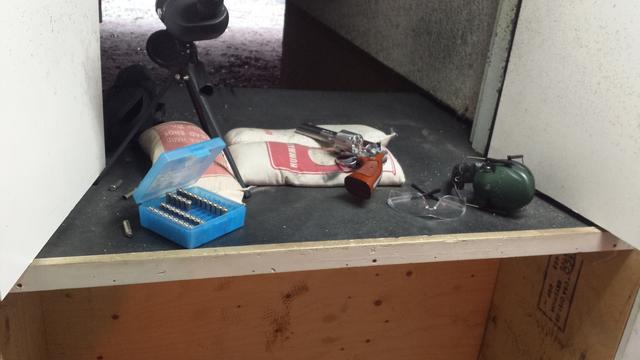
357 mag with H-110 and 158gr semi JHP. (Update post #41)

Thanks so much for all the input in this thread.
Time for an update :)

Finally had time to go to the range this afternoon and had lots of fun!

As mentioned I did load up 15.4, 15.6, 15.8 and 16gr and didn't notice a lot of difference between loads so I'll stick with 16gr for future loads.
No sticking of brass or other pressure signs.

After having fired about 3 cylinders the cylinder didn't want to open anymore... turned out the loads had worked the ejector rod a bit loose so it got stuck in the spring loaded detent. Looks like the gun is not yet used to these loads lol. Does this need some locktite??

Only thing I didn't like so much from these loads is that my middle finger knuckle got a bit beat up by the back of the trigger guard every now and then.

One more question; there were two rounds where I did not seat the primer deep enough so they rubbed when I tried to close the cylinder. Of course I did not force it and removed the ammo.
With the tight resizing and roll crimp these bullets are almost impossible to pull, could I try to seat the primers a bit deeper (rcbs hand primer) or is that asking for trouble?
 
Last edited:
I have never heard a credible account of an over-pressure event being caused by reduced loads of pistol powder in a straight wall rifle or pistol cartridge; I doubt it can happen. Be sure the data you follow is for jacketed bullets, cast bullets of equal weight produces less pressure with any given load. I think its reasonable to assume 16.0 grs is a prudent maximum, but your ejector rod will let you know when your powder charge is too hot. Sticky ejection is nature's way of saying back off.
There are warnings not to reduce loads below recommended with H110/Win 296
 
One more question; there were two rounds where I did not seat the primer deep enough so they rubbed when I tried to close the cylinder. Of course I did not force it and removed the ammo.
With the tight resizing and roll crimp these bullets are almost impossible to pull, could I try to seat the primers a bit deeper (rcbs hand primer) or is that asking for trouble?

Great that you have found loads that work in your 357
DO NOT, under any circumstances, attempt to seat a primer deeper on a loaded round...a recipe for disaster. Dave.
 
Great that you have found loads that work in your 357
DO NOT, under any circumstances, attempt to seat a primer deeper on a loaded round...a recipe for disaster. Dave.

Thanks Dave, that's a pretty clear answer :)
(Speaking from experience? Refering to your sig line Lol)
 
Great that you have found loads that work in your 357
DO NOT, under any circumstances, attempt to seat a primer deeper on a loaded round...a recipe for disaster. Dave.

I disagree. The probability of the primer exploding is the same whether the round is finished or not (very small), and a non-chambered ammo going off isn't nearly as dramatic as most people think it is. I wouldn't do it in the living room while the kids are asleep, but it's not inherently much more dangerous than anything you do regularly when you reload.
 
Using slow burning magnum loads is a good way to find out how tight your forcing cone/cylinder gap is or is not...After 50 rounds or so check your top strap above the forcing cone...You might not like what you see.

My Smiths get cut but Colts for the most part do not.
 
OP you are safe to go up to 16.7 gr of H110. I found 16 gr with campro 158’s to be a fun accurate load. I also load full house loads with Hornady 158’s. A nice tight roll crimp on everything.

Going beyond published maximums depends on pressure sign feed back from your gun, primers and also how you feel.

As stated above reduced loads are not a great idea with H110, I load from 16 gr up. I use HS-6 at max for my 158 cast lead loads.

I know you received a lot of input already and mine mostly echos it, but the most important thing is be safe and have fun!
 
I disagree. The probability of the primer exploding is the same whether the round is finished or not (very small), and a non-chambered ammo going off isn't nearly as dramatic as most people think it is. I wouldn't do it in the living room while the kids are asleep, but it's not inherently much more dangerous than anything you do regularly when you reload.

You obviously have not seen the results of a loaded round going off unsupported by the firearm. Brass shrapnel flies everywhere. If it is an empty case, just a bang, if a loaded round, however remote the chance
of it going off, the operator puts himself in danger of being injured by small pieces of brass. The bullet goes no where, but the brass can and will shred with a loaded round, flying in many directions. Dave.
 
Just to give some background on post #48, a close friend decided to seat a primer deeper on a 375 Winchester loaded round.
It went off, and he spent a couple of hours in emergency while they picked brass out of his face and left arm. To his
credit, he was wearing safety glasses, so no eye injury, but a big scare, nonetheless. Dave.
 
Great that you have found loads that work in your 357
DO NOT, under any circumstances, attempt to seat a primer deeper on a loaded round...a recipe for disaster. Dave.

You don't shoot ICORE do you? I don't have a 1050 so I need to hand seat all my competition loads. Even the winner of the IRC hand seats his and he's got (for free-sponsorship) a new Revolution press.

I've made the mistake of over seating by pressing the handle against a book using my bodyweight to push. None went off while doing so. Problem was some wouldn't go off in the gun, ooops.

Best to be careful though.
 
You don't shoot ICORE do you? I don't have a 1050 so I need to hand seat all my competition loads. Even the winner of the IRC hand seats his and he's got (for free-sponsorship) a new Revolution press.

I've made the mistake of over seating by pressing the handle against a book using my bodyweight to push. None went off while doing so. Problem was some wouldn't go off in the gun, ooops.

Best to be careful though.

Are you saying you seat primers into charged cases (powder already inside)? Because that's what Eagleye was warning against.
 
Using slow burning magnum loads is a good way to find out how tight your forcing cone/cylinder gap is or is not...After 50 rounds or so check your top strap above the forcing cone...You might not like what you see.

My Smiths get cut but Colts for the most part do not.

Did not see or feel anything besides some light carbon deposit at the top strap after about 40 rounds.
Gap measured 0.007 so this is not tight considering my Kuhnhausen shop manual talks about .004 to .006 being normal.
Kind of weird because the gun looks like it has not seen many rounds.

I would assume this top strap cutting will settle after a bit and is strictly a cosmetic "problem".
The pics dirtybarry posted of his Smith in 44mag after 14562 rounds do not make me worried I will ever cut through it :)
 
OP you are safe to go up to 16.7 gr of H110. I found 16 gr with campro 158’s to be a fun accurate load. I also load full house loads with Hornady 158’s. A nice tight roll crimp on everything.

Going beyond published maximums depends on pressure sign feed back from your gun, primers and also how you feel.

As stated above reduced loads are not a great idea with H110, I load from 16 gr up. I use HS-6 at max for my 158 cast lead loads.

I know you received a lot of input already and mine mostly echos it, but the most important thing is be safe and have fun!

Thanks, good to know but I think 16 gr is enough fun for me for now :)
Maybe once I get my chronograph to work at the range I might experiment with a little bit extra.
 
I disagree. The probability of the primer exploding is the same whether the round is finished or not (very small), and a non-chambered ammo going off isn't nearly as dramatic as most people think it is. I wouldn't do it in the living room while the kids are asleep, but it's not inherently much more dangerous than anything you do regularly when you reload.

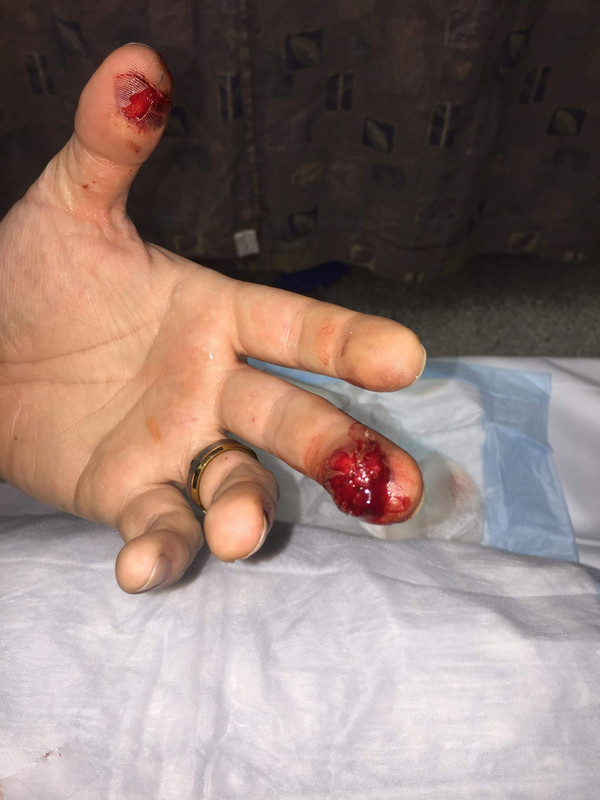
It is unlikely perhaps but as someone who has had a round go off while reseating a primer I would say the potential consequences are enough to never risk it. I was repriming a simple target load 9mm with a hand primer when it went. I nearly lost everything after the top joint of my left middle finger. If you really think what you said you need to give your head a shake...

Here is a picture to help drive the point home...

 
Last edited:

It is unlikely perhaps but as someone who has had a round go off while reseating a primer I would say the potential consequences are enough to never risk it. I was repriming a simple target load 9mm with a hand primer when it went. I nearly lost everything after the top joint of my left middle finger. If you really think what you said you need to give your head a shake...

Here is a picture to help drive the point home...


OWWCH!! I rest my case, and stand by my original warning. Dave.
 
OWWCH!! I rest my case, and stand by my original warning. Dave.

I'm convinced :)
Not even going to try to pull the bullets, have enough left of them. I'll dump them into the dud container at the range next visit.
A reminder to check after they come out of the handprimer next time.
 
Last edited:

I use my left hand to manipulate the casings, or in that case the loaded cartridge. I had left middle finger and thumb close but not holding anything. If I had been holding it I probably would have lost the middle finger. If you can see the small line running up and away from the wound on my thumb it was made by a brass fragment that traversed about 1" of flesh and continued on into the drywall. If anyone thinks the energy released by an unsupported cartridge is no big deal they are mistaken!
 
It would probably been less damage if you held onto it.

I did something really daft 2 weeks ago trying to grind down a lip of a primer cup that was sticking out of some military 40s&w that I picked up at the range. On one of those shop grinders.... I guess primers are heat sensitive too. The little voice in the back of my head was real loud but I didn't listen and BOOM. 4.7grs of N320 and I had less damage than you and I was holding it tight, on my left hand thankfully. My index finger was pulpy but my thumb had a blood blister or 2. The doc at the walk in clinic dug around in the index finger and got a plasticy looking grain out and the xrays showed nothing. And I felt nothing either. To be honest the tetanus shot hurt more the next day. The bullet simply fell straight down. I tossed the WMA brass.

Do you have any nerve damage?
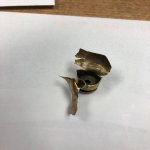
IMG-0201 - Copy.jpg
 

Attachments

  • IMG-0201 - Copy.jpg
    IMG-0201 - Copy.jpg
    33 KB · Views: 49
Back
Top Bottom