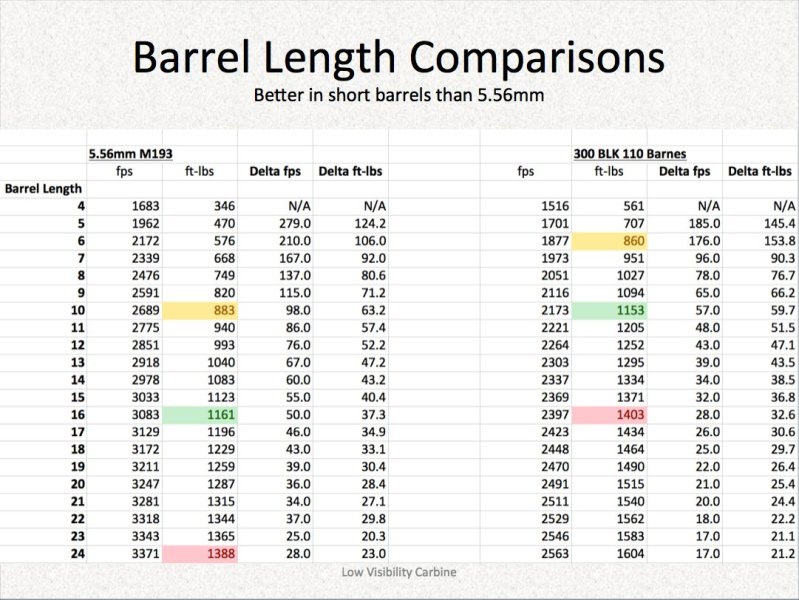
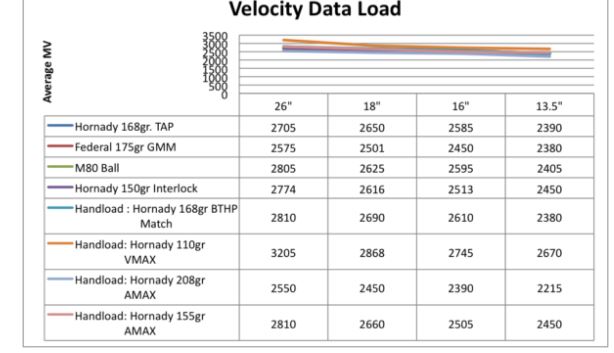
Faster powders for shorter barrels - say 1680 for a 16 inch 308

Status
Not open for further replies.
We all know about wet farts.

Most us know that the powder that produces the highest velocity produces the highest velocity, period.

The few that don't know would research it.

Only you started proclaiming the earth was flat before bothering to look it up. "People will tell you that Accurate 1680 is too fast for a .308 etc. BUT I say the faster stuff makes total sense for short barrel guns like a 16" 308."

"HOWEVER if you were to use a faster powder in at 308, then that 16 inch 308 gun would dramatically outperform 16 inch 7.62 by 39 gun. It's simple. All of the unburnt powder in the World does you no good at all once the bullet has left the bore"
 
We all know about wet farts.

Most us know that the powder that produces the highest velocity produces the highest velocity, period.

The few that don't know would research it.

Only you started proclaiming the earth was flat before bothering to look it up. "People will tell you that Accurate 1680 is too fast for a .308 etc. BUT I say the faster stuff makes total sense for short barrel guns like a 16" 308."

"HOWEVER if you were to use a faster powder in at 308, then that 16 inch 308 gun would dramatically outperform 16 inch 7.62 by 39 gun. It's simple. All of the unburnt powder in the World does you no good at all once the bullet has left the bore"

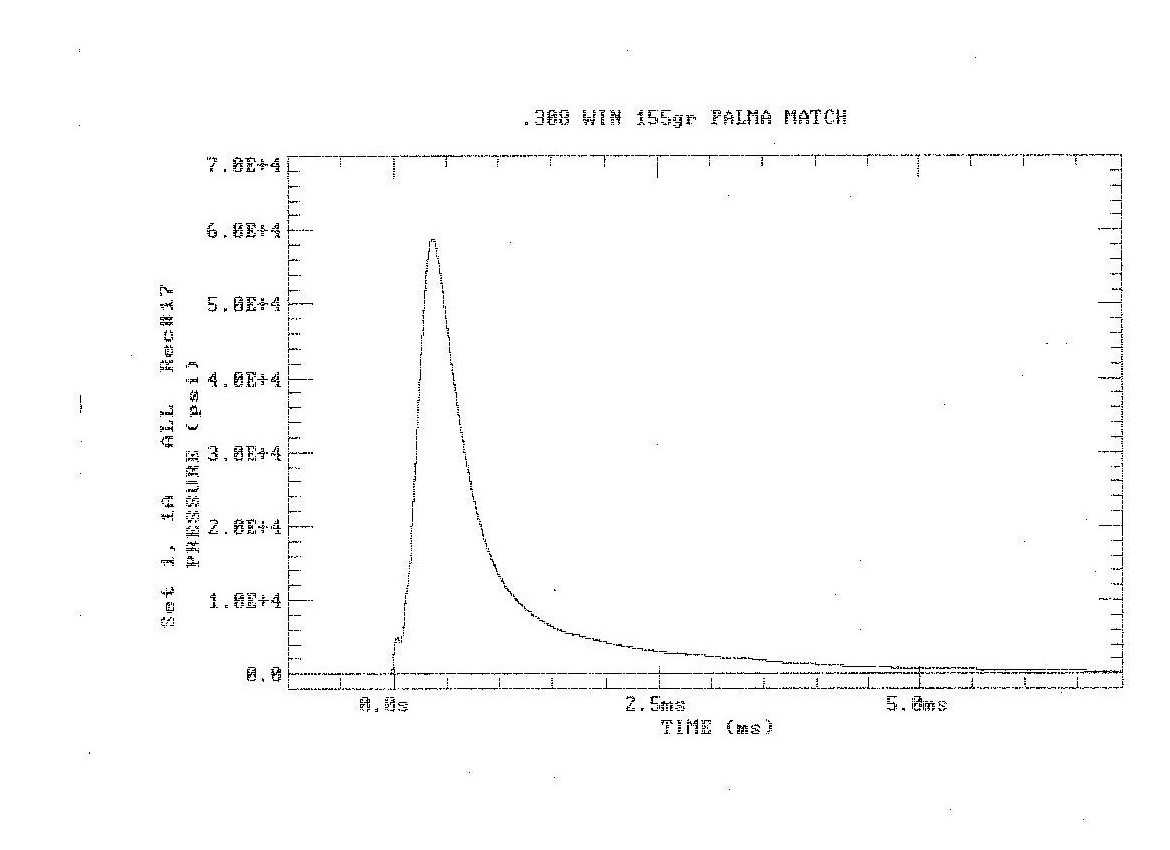
Then again, you do have your pressure graph of a "308 load" that shows the bullet apparently still in the bore - and still subject to pressure from the powder charge - after 5 Ms.

https://www.canadiangunnutz.com/forum/showthread.php/1960279-Faster-powders-for-shorter-barrels-say-1680-for-a-16-inch-308?p=16602112&viewfull=1#post16602112

That is just plain unbelievable. As an example, a subsonic 220 grain bullet in .300 Blkout exits a 16.5 inch inch barrel at around 1,250 FPS in about 1.565 Ms

Follow this link to load data results (click here)


How the heck does an expert - such as I know you are - suggest that any bullet can have a dwell time in a barrel for over 5 Ms - and actually come out of that barrel, on its own, after that? Is this some kind of an Elmer Fudd gun "load" you were testing?

I challenge anyone with QL to back this up and come-up with ANY load that can keep a bullet moving in a barrel for over 5 Ms. I'm not going to limit this to centerfire rounds.

How about a 22 short, fired from one of those ol' time Cooey 22s with the 28-30 inch barrel? Let's say there also happened to be a REALLY strong head wind blowing right down the bore! Would that little pill actually stay in the barrel for 5 Ms and then come-out? No chance.

If anyone can prove otherwise, please do so. Let the fun begin

 
Last edited:
Then again, you do have your pressure graph of a "308 load" that shows the bullet apparently still in the bore - and still subject to pressure from the powder charge - after 5 Ms.

https://www.canadiangunnutz.com/forum/showthread.php/1960279-Faster-powders-for-shorter-barrels-say-1680-for-a-16-inch-308?p=16602112&viewfull=1#post16602112

That is just plain unbelievable. As an example, a subsonic 220 grain bullet in .300 Blkout exits a 16.5 inch inch barrel at around 1,250 FPS in about 1.2 Ms

Follow this link to load data results (click here)


How the heck does an expert - such as I know you are - suggest that any bullet can have a dwell time in a barrel for over 5 Ms - and actually come out of that barrel, on its own, after that? Is this some kind of an Elmer Fudd gun "load" you were testing?

I challenge anyone with QL to back this up and come-up with ANY load that can keep a bullet moving in a barrel for over 5 Ms. I'm not going to limit this to centerfire rounds.

How about a 22 short, fired from one of those ol' time Cooey 22s with the 28-30 inch barrel? Let's say there also happened to be a REALLY strong head wind blowing right down the bore! Would that little pill actually stay in the barrel for 5 Ms and then come-out? No chance.

If anyone can prove otherwise, please do so. Let the fun begin

I can't tell if this is a troll post or you are just that plain dumb. Your link is broken. It takes you to a post that does not show a graph. Have you studied graphs in the past? Just because an instrument is reading pressure does not mean the bullet is still in the bore. If we apply what you are saying, then the pressure reduces as the bullet travels down the barrel, until zero pressure when the bullet exits? No. Just after the peak of the graph represents the bullet exit...
Please mods... shut down this monstrosity
North
 
Last edited:
Then again, you do have your pressure graph of a "308 load" that shows the bullet apparently still in the bore - and still subject to pressure from the powder charge - after 5 Ms.

https://www.canadiangunnutz.com/forum/showthread.php/1960279-Faster-powders-for-shorter-barrels-say-1680-for-a-16-inch-308?p=16602112&viewfull=1#post16602112

That is just plain unbelievable. As an example, a subsonic 220 grain bullet in .300 Blkout exits a 16.5 inch inch barrel at around 1,250 FPS in about 1.565 Ms

Follow this link to load data results (click here)


How the heck does an expert - such as I know you are - suggest that any bullet can have a dwell time in a barrel for over 5 Ms - and actually come out of that barrel, on its own, after that? Is this some kind of an Elmer Fudd gun "load" you were testing?

I challenge anyone with QL to back this up and come-up with ANY load that can keep a bullet moving in a barrel for over 5 Ms. I'm not going to limit this to centerfire rounds.

How about a 22 short, fired from one of those ol' time Cooey 22s with the 28-30 inch barrel? Let's say there also happened to be a REALLY strong head wind blowing right down the bore! Would that little pill actually stay in the barrel for 5 Ms and then come-out? No chance.

If anyone can prove otherwise, please do so. Let the fun begin


Ok. Clearly, you’re not seeing what we’re seeing in the graphs, and the wires are getting crossed.

Can you break down exactly what you believe the graph depicts?

 
Ok. Clearly, you’re not seeing what we’re seeing in the graphs, and the wires are getting crossed.

Can you break down exactly what you believe the graph depicts?

He’s failing to grasp Like northof7 said, “ Just because an instrument is reading pressure does not mean the bullet is still in the bore.”
 
He’s failing to grasp Like northof7 said, “ Just because an instrument is reading pressure does not mean the bullet is still in the bore.”


Yeah, but earlier he said:

With your explanation it is now clear that this is really just a very basic static pressure graph, created by just putting some powder in a closed pressure vessel, making it go bang and measuring the pressure as it goes up and down. This is just a representation of how powder X burns in a closed vessel and so the references to a “load” and a caliber (“308”) were really just an irrelevant red herrings – which did, indeed, confuse me

So I don’t know if he’s still under that impression when he reads the graph or what.
 
just a question then, is there is a known velocity drop for every inch of barrel below a standard length for every caliber? Is there a way to compensate to get same velocity out of a shorter barre?l.

Thank you for asking a question. Asking questions is how we all learn.

I have asked questions on CGN and got very good information.

Centerfire barrels lose velocity as they are cut. I once took a 308W 32" barrel and cut it down in 2" chunks, with a hacksaw, and Chronied it as I went. It dropped about 35 FPS per inch.

Other calibers would lose velocity at different (but similar) rates.

As for "making it up", maybe. Suppose my accuracy load in my 32" 308Win was 43gr of 3031 for 2900fps (155gr bullet). If I shortened the barrel (I sometimes cut 2" off the barrel shank after 2,000 rounds to get rid of the eroded section of the barrel) and I wanted to develop a new load for the short barrel that was still 2900 fps, I could do it, by going to a bigger charge of a slower powder, like N150 or Varget.

I could get the same velocity out of the shorter barrel because the original load was not already at max velocity.

But, if I had a 24" hunting barrel and cut it back to 20" to make it handier (which I have done) and wanted to duplicate my original hunting load that was at near max velocity with Varget, I would not be able to do it. In theory, a bigger dose of a slower powder, like 4350 could improve velocity, but I can't get 55 gr of 4350 into a 308 case. It maxes out at about 50 gr. Even with a drop tube and some compression.

If you shorten a barrel and have been shooting commercial ammo, you might be able to preserve the velocity by handloading and using a case full of the slowest powder that will still reach max pressure.

xTJ3elN.jpg


i6A9T24.jpg
 
Wrong.

The pressure curve is very steep up and down.

Velocity is a function of max pressure and then the area under the pressure curve until the bullet exits.

Max pressure with 4895 or 1680 is the same. Say 62,000 psi

A faster powder would only mean that the pressure will drop faster, after the peak - less velocity.

The best powder for a 16" 308 is the same powder that is best in a 22" 308.

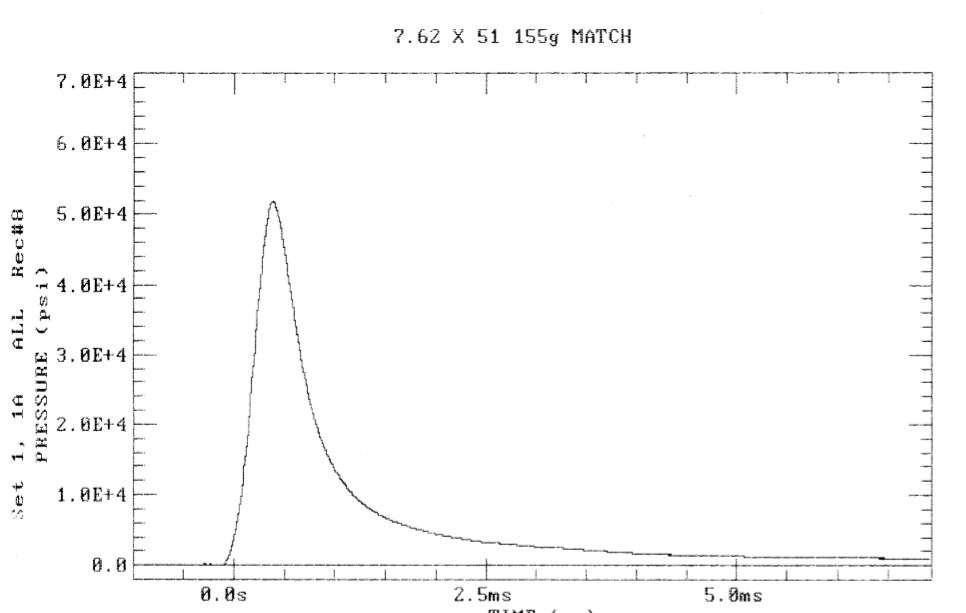
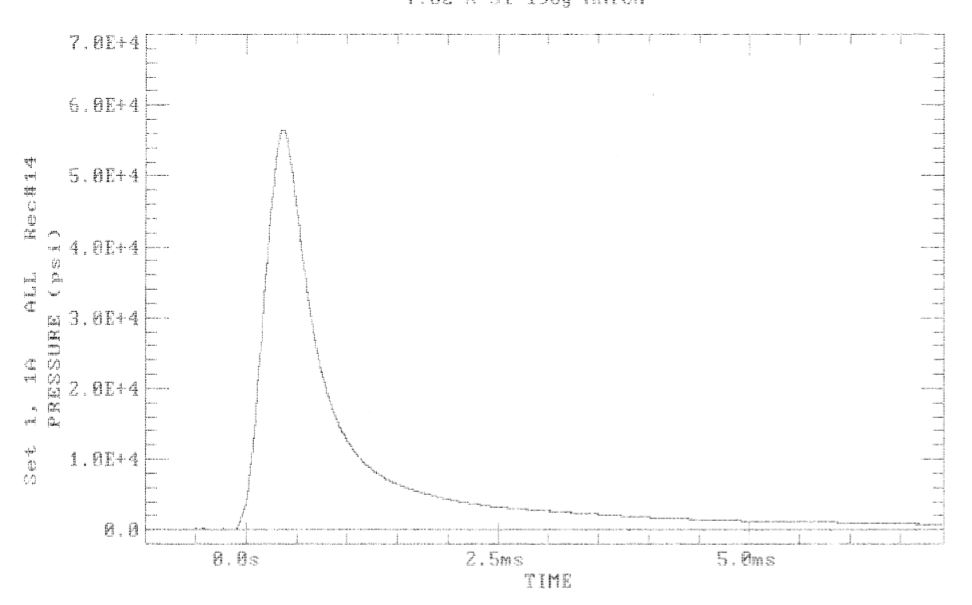
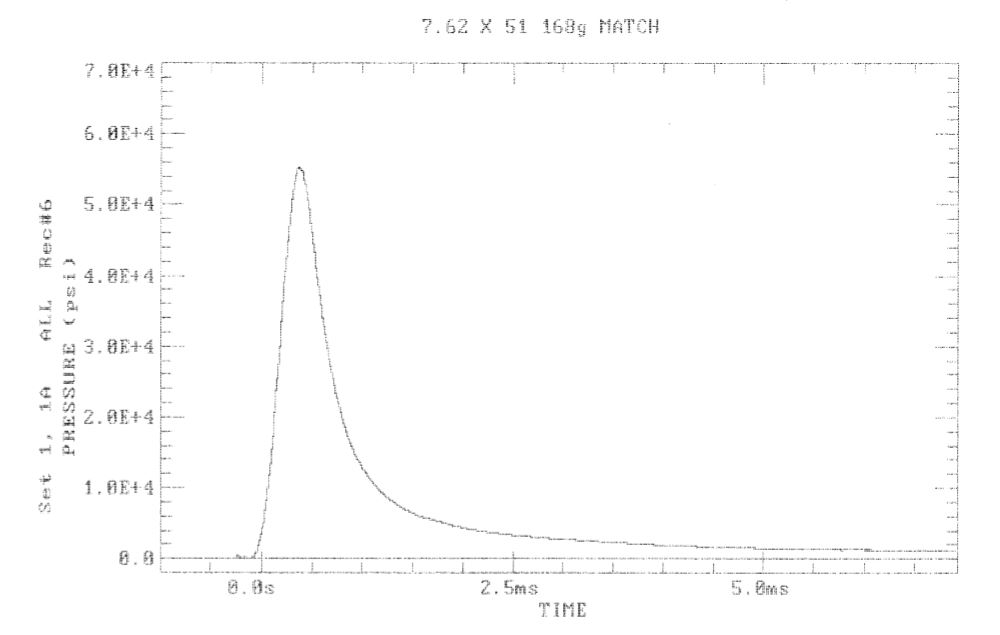
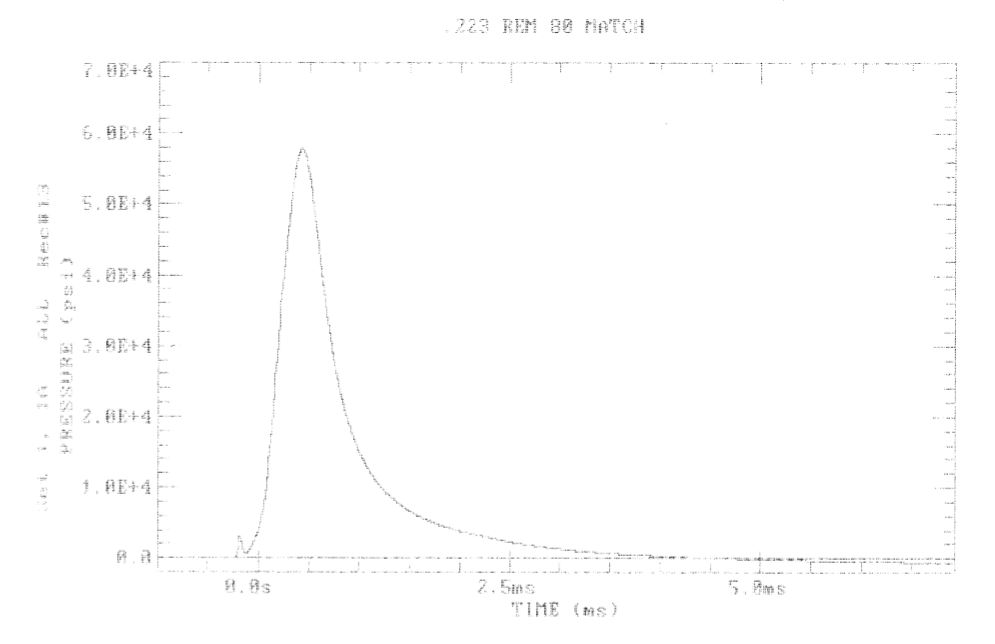
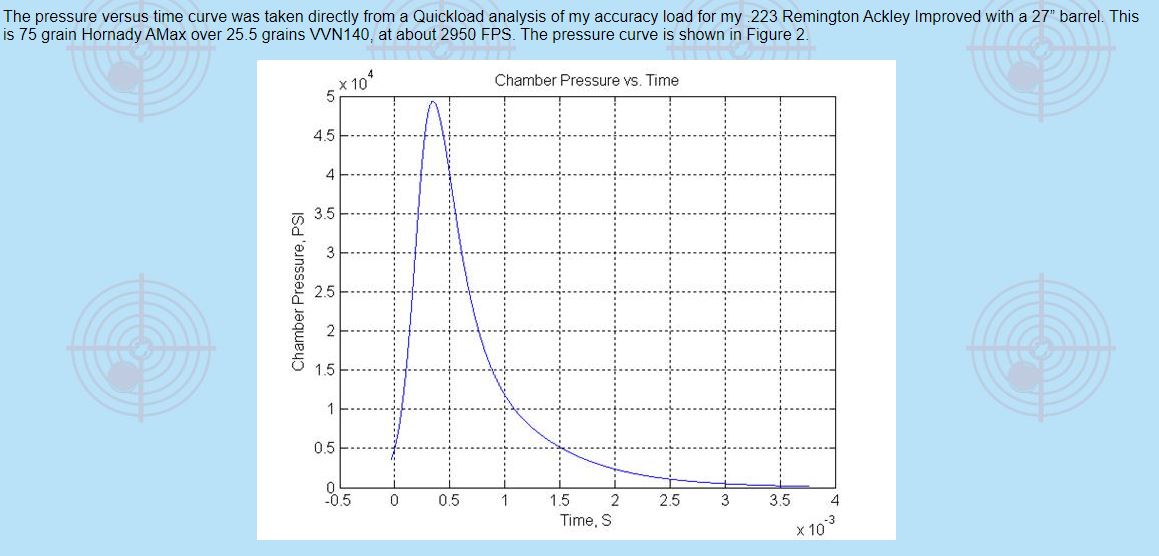
Here is one of my pressure curves for a 308 round I tested.

hoLCpt9.jpg

Its pretty simple. He is saying that the energy delivered to accelerate the bullet is defined by the area under the curve. He calls this his "308 load pressure curve" and the curve continues for 5 Ms and beyond. He is contending that, in this example, the bullet is still in the bore for 5 Ms and beyond.

Like I said, anybody is welcome to use any method that they can to try to support this suggestion. Such efforts will fail because - in spite of Garderite's undoubted expertise - he is asserting something here that is a complete impossibility. I am surprised that his knowledge did not allow him to see this for himself - before he presented post 2.
 
Its pretty simple. He is saying that the energy delivered to accelerate the bullet is defined by the area under the curve. He calls this his "308 load pressure curve" and the curve continues for 5 Ms and beyond. He is contending that, in this example, the bullet is still in the bore for 5 Ms and beyond.

Like I said, anybody is welcome to use any method that they can to try to support this suggestion. Such efforts will fail because - in spite of Garderite's undoubted expertise - he is asserting something here that is a complete impossibility. I am surprised that his knowledge did not allow him to see this for himself - before he presented post 2.

And I am surprised that you haven't had a lightbulb moment and realized this whole thread is a train wreck because you fail to understand the information that was provided. Somebody please mark a special red dot near the top of the pressure spike and name it bullet exit so we can be done with this.

North

Edit: Energy delivered to accelerate the projectile. Energy or Pressure in this case, is present after the bullet is out of the barrel. Pressure is still applied to the measuring device long after the bullet has exited the bore. The graph doesn't instantly hit zero pressure once the bullet exits...
 
Last edited:
And I am surprised that you haven't had a lightbulb moment and realized this whole thread is a train wreck because you fail to understand the information that was provided. Somebody please mark a special red dot near the top of the pressure spike and name it bullet exit so we can be done with this.

North

Edit: Energy delivered to accelerate the projectile. Energy or Pressure in this case, is present after the bullet is out of the barrel. Pressure is still applied to the measuring device long after the bullet has exited the bore. The graph doesn't instantly hit zero pressure once the bullet exits...

He is clearly claiming that this curve is based on instrument readings. The curve wouldn't continue in this undisrupted manner if the bullet left the bore at some point during this curve (as marked by your imagined red dot).

The curve would disrupt in a major way - with a major discontinuity - as the abrupt release of pressure occurred; and this would be picked-up by the measurement system.

As far as I am concerned, Ganderite has probably been telling people for years this is a pressure curve from an actual "308 load" (i.e. a dynamic pressure curve). IMO he has just got his charts mixed up and this is some static pressure curve - testing the burn rate of a given powder in a partially-vented pressure test vessel. That why the burn continues - without any significant disruption - for over 5Ms.
 
He is clearly claiming that this curve is based on instrument readings. The curve wouldn't continue in this undisrupted manner if the bullet left the bore at some point during this curve (as marked by your imagined red dot).

The curve would disrupt in a major way - with a major discontinuity - as the abrupt release of pressure occurred; and this would be picked-up by the measurement system.

As far as I am concerned, Ganderite has probably been telling people for years this is a pressure curve from an actual "308 load" (i.e. a dynamic pressure curve). IMO he has just got his charts mixed up and this is some static pressure curve - testing the burn rate of a given powder in a partially-vented pressure test vessel. That why the burn continues - without any significant disruption - for over 5Ms.

Feel free to post your charts compiled from lab testing actual rifles fitted with pressure testing equipment. Ganderite did this for a living, did you? I thought we had all got on the same page here and were going to let the range tests tell the final chapter. But now you're back to using quickload to argue with people who actually worked in the industry with no actual lab data of your own. It's getting ridiculous.
 
As a researcher and product developer, a lot of lab testing was done at the manufacturing lab. Every test was 20 shots, with pressure and velocity noted for each shot, plus the oscilloscope trace. Traces were printed out on a cheap newsprint type of paper, which has not aged very well.

As the Technical Director of an ammo company, we had to submit our products to Energy, Mines and Resources for certification.

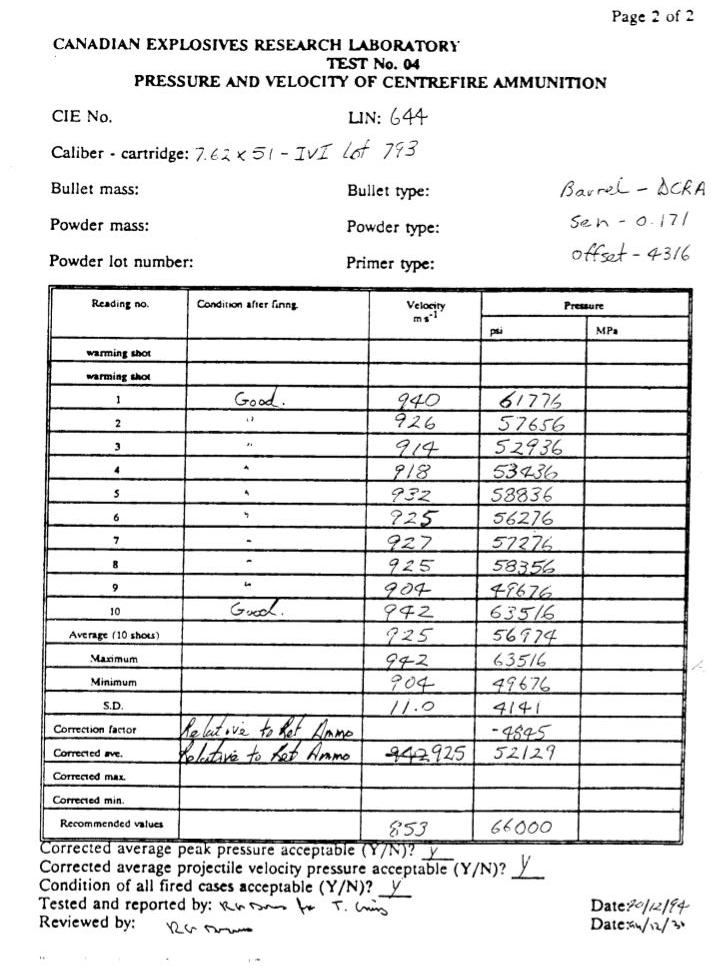
I have a test report here from the feds (1994) for 11 samples of ammo I submitted. The bill for the testing was $486. $44 for each test of 20 rounds. Not expensive.

The this test is for 10 different products we made, plus a sample of some IVI 7.62 ball ammo that had been issued to the DCRA for shooting competition. Some shooters were having high pressure problems with it, so I wanted to see what it was. The report is below. Pressures were all over the place. The worst I have ever seen.

MYQg04o.jpg


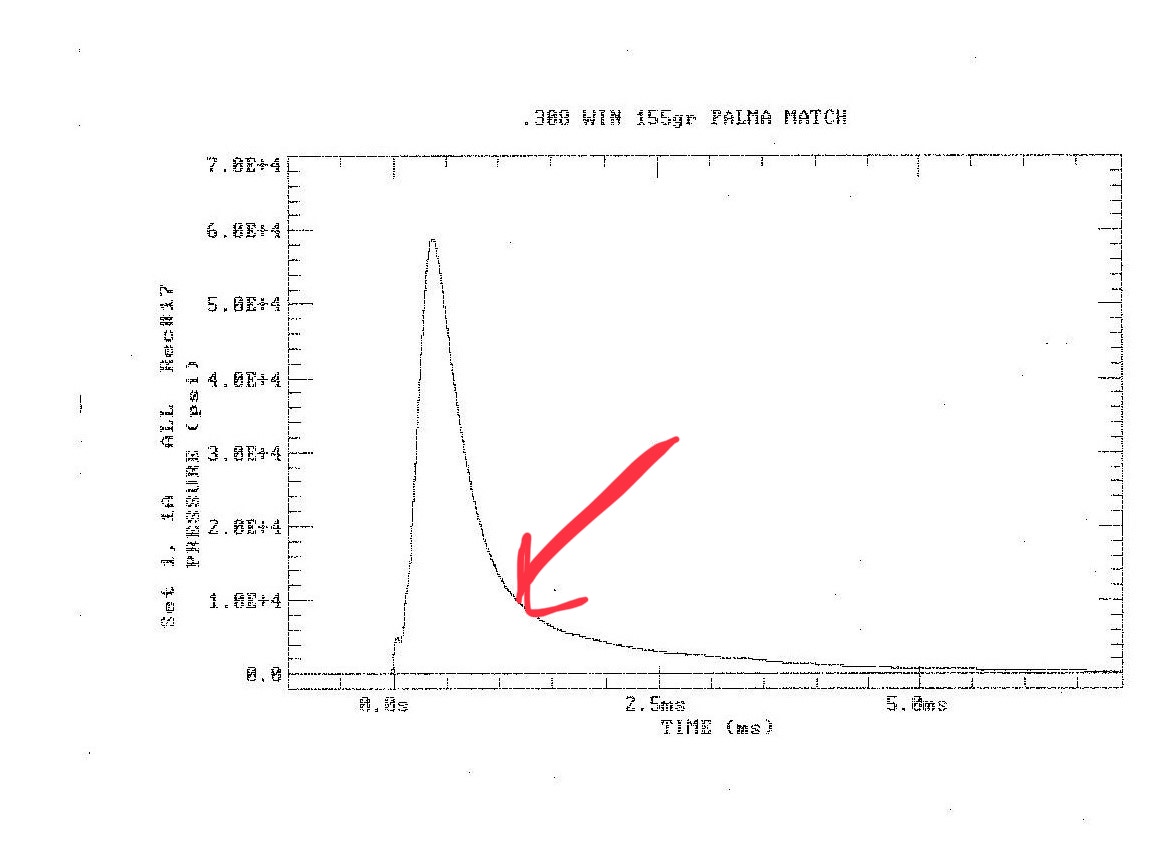
Some of the pressure traces are so faint I don't think you could read them on the screen. But here are the best of them. These are not closed bomb tests. Powders are tested in closed bombs to measure energy and flame temp. These traces are of actual ammo. I don't think i can tell when the bullet leaves the barrel from the graph.

yR5INym.jpg


7.62 x 51 190g Match
QMHa6Vz.jpg


1iJqmUQ.jpg


EP7ruVK.jpg
 
He is clearly claiming that this curve is based on instrument readings. The curve wouldn't continue in this undisrupted manner if the bullet left the bore at some point during this curve (as marked by your imagined red dot).

The curve would disrupt in a major way - with a major discontinuity - as the abrupt release of pressure occurred; and this would be picked-up by the measurement system.

As far as I am concerned, Ganderite has probably been telling people for years this is a pressure curve from an actual "308 load" (i.e. a dynamic pressure curve). IMO he has just got his charts mixed up and this is some static pressure curve - testing the burn rate of a given powder in a partially-vented pressure test vessel. That why the burn continues - without any significant disruption - for over 5Ms.
Right around that magical 1.xx millisecond mark, I believ this is your major disruption. After this point the pressure is no longer subjected to an ever changing volume , once the barrel is open the pressure curve will look differently
xeM7JAl.jpg
 
Last edited:
I have no information about barrel time. If someone can share some data on that, i would find it interesting.

But measurements might vary, depending on what is used as a "start" signal. If it comes from the trigger sear, there would be an ignition time delay.

many curves show that little sguiggle of pressure at the very beginning. I have assumed that is the primer going off, but I don't know that.

Googled a bit. Found this:

https://gundigest.com/gear-ammo/reloading/bullet-ballistics

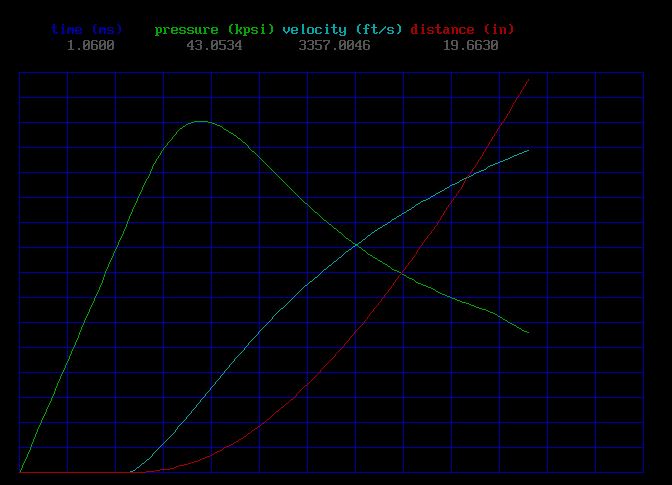
This Quickload curve looks similar to my sample curves:
NLzakIF.jpg


This curve is very interesting. It appears to say that the bullet does not start moving until pressure is almost at peak.

bbprgVe.jpg
 
Last edited:
I would also assume that as I see it, the first spike is the primer, then pressure builds to the peak at which point the bullet moves. The volume increase so pressure drops, bullet leaves bore about 1.3 ms, bore is open and at a static volume now causing a more gradual bleed off. Am I right to assume that’s what’s depicted here?
 
I would also assume that as I see it, the first spike is the primer, then pressure builds to the peak at which point the bullet moves. The volume increase so pressure drops, bullet leaves bore about 1.3 ms, bore is open and at a static volume now causing a more gradual bleed off. Am I right to assume that’s what’s depicted here?

I don't know. I never paid much attention to the curves.

As a maker I was only concerned with pressure (not too high) velocity (as high as possible) so long as it was consistent with accuracy.

We developed accurate ammo and then submitted it for testing. What ever it was, it was. We had our own (crude) pressure gun, so were never too concerned about pressures being too high for a sample we submitted.

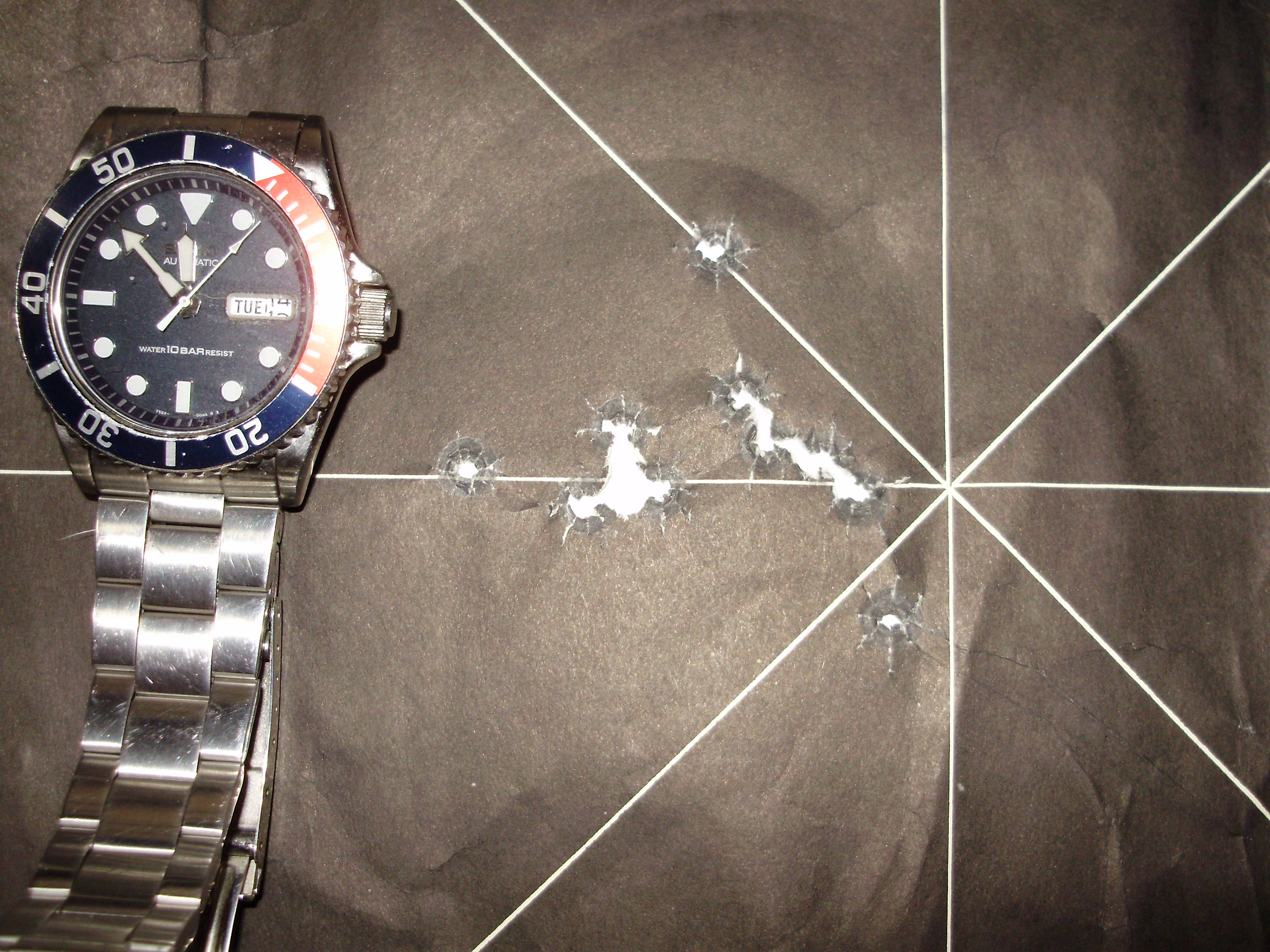
Bill Wylde did the accuracy testing for us, at 525 yards. His targets looked like this:

vM2tcbE.jpg
 
Status
Not open for further replies.
Back
Top Bottom