Maccabee defence VS SLR coyote

No, i love innovation. Do an NR restricted AR, or not. I like this dualithic system. But take all of the positive aspects ? Like the interchangeability and modularity i guess..
Sure, I mean it can still be taken apart, right? Monolithic uppers invited a whole host of problems (mostly with regards to manufacturing, aka cost.) As well as modularity. without REALLY that much gain with regards to performance. Or at least not enough to justify the cost.


Lot of testing between 6061 and 7075 as been done before NEA, belive me. We still are on 7075. I don't take this test as cash. Why NEA didn't publish this revolutionary test online to back this decision ?
Probably because NEA didn't really exist at that time. No one cared what they were being made out of because none were being made or sold at the time.

Sorry but that is bull####. Im a CNC machinist and i work i lot in majority with aluminum. 6061 is way more easy to machine. I work with a few CNC business and its all the same. Test it, send some submission to CNC business for the same drawing, ask for 6061t6 AND another one for 7075t6. Sometime the 7075t6 will be more expensive, and its not for the material. Because yes, 7075t6 is more expensive than 6061t6. The real problem is cheap aluminum. 6061 or 7075, its gonna be gummy af. If 7075 is easier to machine, AR lower will be made of 7075. The real challenge on an AR is the lower, not the upper.
Not trying to be a ####, but I found this almost impossible to read/understand.
 
Yes sorry for my english. Take 2 lol.

Also keep in mind that while on paper 6061 has higher "machinability", the reality is that its gummy af, and most machinists you will talk to prefer to deal with 7075 because it's easier to acheive and maintain a nice finish. (Especially when drilling and/or tapping smaller holes.


So, im a CNC machinist. I work a lot with aluminum. In particular, 6061t6 and 7075t6. You need to understand i deal every week with machinist and we are all on the same line; 6061t6 is way easier to work. I know some business of high precision charge more for the same job if the client want 7075. For 2 reason, 1: 7075t6 is more expensive. 2: 7075t6 is harder to machine.

If the 7075 is easier to machine, why every AR lower are in 6061 ? I ask you because when its time to machine an AR, the real deal is to machine the lower, not the upper.

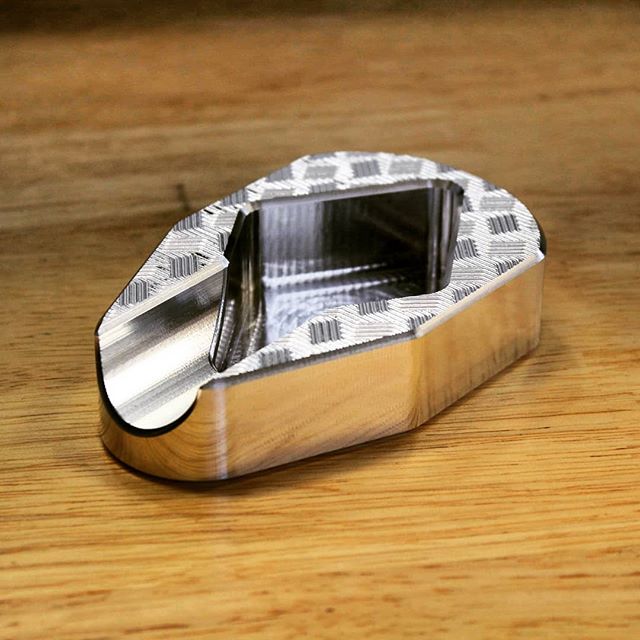
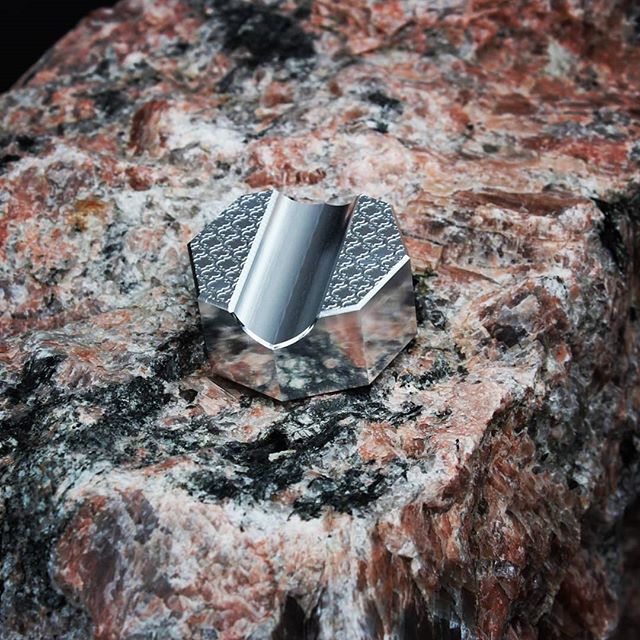
Out of the machine, without any polishing, 6061T6. Some ashtray i make in the past.
aXUBc1v.jpg

IDmtpSh.jpg


I can make these with 7075T6, but it's gonna be more difficult to get this finish. Engraving too. 7075t6 poorly supports approximate speeds&feeds.

And by the way, my first AR was a NEA. I had big machining marks on my upper, at the same place as my friend. They don't really care on finish at this time. So whatever the type of aluminum, the machinability was not a choice criteria.

There is a lot of article and information available on the internet about the best alloys to use. So i don't really care about the test of NEA.

About the hanguard, i like this system, for real. But BCL is not the first to work on that, and people wan't to customize there gun. Before being revolutionary, what about making gun the right way?..
 
- Do you have any idea to boost the public image of BCL ?

- Yeah lets make an upper in 6061 on the lower of Maccabe with a proprietary handguard !

- Sound great !

Then don’t purchase it and stick with your 50’s vintage SKS. There is nothing I mean nothing wrong with any NR black rifle offering (bull pups Tavors and CZ’s don’t count) which gives us the Canadian black rifle owners a selection. Ever AR form factor is good.
 
Then don’t purchase it and stick with your 50’s vintage SKS. There is nothing I mean nothing wrong with any NR black rifle offering (bull pups Tavors and CZ’s don’t count) which gives us the Canadian black rifle owners a selection. Ever AR form factor is good.

Don't worry i don't.

My worst AR was a NEA. I was happy to get an Canadian product. But this gun was a scrap, for real. Like a lot of NEA in Quebec, probably like other province in Canada.

Then the announcement of NEA/BCL with the model 102, so happy about this, the rifle looks great and seems to be a nice finish. My friend bought one, then problem after problem. (Feeding, ejection)

Now the SLR coyote, look great, but 6061 for the upper.. real joke for me. They take 6061 beacause its 25% cheaper then 7075. Thats the only reason.

But no, Sqr, i'm not stick with my SKS, i have other guns, and other option.

By the way, when you bought an SKS, like other good firearms brand, you bought quality guns.
 
To all you machinists and wannabe cool gun gurus - If both the upper and lower aluminum receivers are nothing other than cases, and they are both protected with the same level anodizing or other coating, does the grade of aluminum really matter?
 
Then don’t purchase it and stick with your 50’s vintage SKS. There is nothing I mean nothing wrong with any NR black rifle offering (bull pups Tavors and CZ’s don’t count) which gives us the Canadian black rifle owners a selection. Ever AR form factor is good.

What’s wrong with bullpups? I wish someone up here would throw down a decent puppy.
 
To all you machinists and wannabe cool gun gurus - If both the upper and lower aluminum receivers are nothing other than cases, and they are both protected with the same level anodizing or other coating, does the grade of aluminum really matter?

If you ask the purists, they will say yes. But again, just because 7075 is stronger, that doesn't automatically make 6061 completely useless garbage. Steel or titanium or exponentially stronger than aluminum, but that doesn't make aluminum total crap.
That has piqued my curiosity though....I'm gonna go do some digging for you and find some numbers.

There is a thread buried somewhere on here of a 6061 AR (ironically an OLD quad rail NEA) with over 10,000 rounds through it, and still chugging. Ironically, if I'm not mistaken, the receivers weren't even anodized. Actually BCL posted a clip from their 5,000 round torture test of the coyote, and the receivers were shiney, meaning not anodized. (Though the retail models will be anodized.)

The vast majority of people will NEVER wear one of these receivers out. But hey, if they purchase something made from 7075, then it gives them something to flex on us poors lol

EDIT: "The#hardness#of the anodic coatings is usually measured on their cross sections. It strongly depends on the chemical composition of the alloy. In the case of the#6061#alloy, the#hardness#is between 420 and 490 HV (43.5-49 Rockwell C)and does not depend on the thickness of the coating"

For 7075 I am having trouble finding hard numbers, but this is an anecdotal example. Anodizing hardness varies greatly depending on the process and alloy, so I imagine these hardness numbers are pretty low on the scale, especially when compared to 6061.

"We have a problem with hard anodize wearing through on a 7075-T6 aluminum part that gets heavy wear. The hardness of the coating is 350–360 HV. Would increasing the hardness of the coating show a significant increase in wear resistance?"


I'll see if I can dig up some more info later....I gotta press pause though or imma miss my appointment lol
 
Last edited:
If the 7075 is easier to machine, why every AR lower are in 6061 ? I ask you because when its time to machine an AR, the real deal is to machine the lower, not the upper.

Not all AR lowers are made from 6061. Pretty sure the Milspec TDP specifies a 7075 forging. I'm fairly sure the 7075 lower is the standard.
 
Not all AR lowers are made from 6061. Pretty sure the Milspec TDP specifies a 7075 forging. I'm fairly sure the 7075 lower is the standard.

Yes both of them in fact. But the upper is way more critical. This why lot of AR have a 6061 lower and 7075 upper.

Just have a conversation with BCL and they use 6061 because its cheaper lol..
 
If you ask the purists, they will say yes. But again, just because 7075 is stronger, that doesn't automatically make 6061 completely useless garbage. Steel or titanium or exponentially stronger than aluminum, but that doesn't make aluminum total crap.
That has piqued my curiosity though....I'm gonna go do some digging for you and find some numbers.

There is a thread buried somewhere on here of a 6061 AR (ironically an OLD quad rail NEA) with over 10,000 rounds through it, and still chugging. Ironically, if I'm not mistaken, the receivers weren't even anodized. Actually BCL posted a clip from their 5,000 round torture test of the coyote, and the receivers were shiney, meaning not anodized. (Though the retail models will be anodized.)

The vast majority of people will NEVER wear one of these receivers out. But hey, if they purchase something made from 7075, then it gives them something to flex on us poors lol

EDIT: "The#hardness#of the anodic coatings is usually measured on their cross sections. It strongly depends on the chemical composition of the alloy. In the case of the#6061#alloy, the#hardness#is between 420 and 490 HV (43.5-49 Rockwell C)and does not depend on the thickness of the coating"

For 7075 I am having trouble finding hard numbers, but this is an anecdotal example. Anodizing hardness varies greatly depending on the process and alloy, so I imagine these hardness numbers are pretty low on the scale, especially when compared to 6061.

"We have a problem with hard anodize wearing through on a 7075-T6 aluminum part that gets heavy wear. The hardness of the coating is 350–360 HV. Would increasing the hardness of the coating show a significant increase in wear resistance?"

I'll see if I can dig up some more info later....I gotta press pause though or imma miss my appointment lol

Anodizing thickness is between 6 and 25 ÎĽm. Thats not change the deep structure and overall stress resistance of the upper/lower. Anodizing is for protection and aesthetic.
 
Anodizing thickness is between 6 and 25 ÎĽm. Thats not change the deep structure and overall stress resistance of the upper/lower. Anodizing is for protection and aesthetic.

Protection and Wear resistance*

It's hard to find hardness numbers because it's not typically used (as you say, it's only around .001-.004" thick) to measure. Instead they use a wear or abrasion test. It's just hard to find numbers.
 
Last edited:
I personally don't care if its 6061 or 7075 as it would be just a fun gun for me.

Chances are if they told you it was 7075, no one would know the difference 10 years down the road.... lol

1499.00 for the complete gun...gotta like that....:)

On the other hand, if your a die hard AR-15 (ar-14 if youre Biden) builder, not having 7075 and knowing it would most likely always put doubt in your mind and take away from your enjoyment of owning it.

I've also read if you have a catastrophic failure the 6061 will stretch but most likely not grenade like 7075 will....I'm not a machinist so don't know if thats true or not in all cases.
 
If you ask the purists, they will say yes. But again, just because 7075 is stronger, that doesn't automatically make 6061 completely useless garbage. Steel or titanium or exponentially stronger than aluminum, but that doesn't make aluminum total crap.
That has piqued my curiosity though....I'm gonna go do some digging for you and find some numbers

You don't have to, as it was sort of rhetorical.

Yes both of them in fact. But the upper is way more critical. This why lot of AR have a 6061 lower and 7075 upper.

Just have a conversation with BCL and they use 6061 because its cheaper lol..

Why is it critical the upper is made with 7075 over 6061?
 
You don't have to, as it was sort of rhetorical.


Why is it critical the upper is made with 7075 over 6061?

I say the upper is more a critical part over the lower.
How do you screw your barrel on your AR ? Where is the bolt on your AR ? The upper is not a case. This is the part keeping all the gun together, its the heart of the AR, way before the lower.
Just think about it, where is the energy and figure out how the stress travel in the gun. This is why polymer lower can work and the polymer upper was a fail.
The upper transfer all the stress all around him, coming from the barrel (in majority).
And this is why you can see AR with 6061 lower and 7075 upper.

So yes, for me, 6061 upper is a joke. I don't really care about the lower. But for saving a few buck.. com'n BCL. No excuse.

By the way, the lower of the SLR coyote seems to have a steel reinforced lower. More info soon.


When it comes down to it, 6061 will work just as well as 7075 as your billet lower does not see the stresses that the upper and barrel do
https://www.royalarms.com/6061-vs-7075-billet-lowers/

3t0ie4.jpg
 
Last edited:
Just think about it, where is the energy and figure out how the stress travel in the gun. This is why polymer lower can work and the polymer upper was a fail.
The upper transfer all the stress all around him, coming from the barrel (in majority).
And this is why you can see AR with 6061 lower and 7075 upper.

So yes, for me, 6061 upper is a joke. I don't really care about the lower. But for saving a few buck.. com'n BCL. No excuse.

By the way, the lower of the SLR coyote seems to have a steel reinforced lower. More info soon.

First I don't work with Metal, but my critical thinking is half decent, so... Most of the stress and energy is contained in the barrel, barrel extension, and bolt. In fact all the parts that contain the expanding gas are steel, without any help from the Aluminum regardless of alloy. The Aluminum just keeps the parts aligned as they move back and forth, and support all the crap hanging on the action to make it work, and interface with the monkey. Tall order, I don't think so, at least not to the point where one is vastly superior. Clearly 7075 is the superior alloy, but I think in this application 6061 is perfectly adequate. Pissing on NEA/BLC is a sport in these parts, so I think I've heard it all, but what I haven't heard is a 6061 alloy receiver failing from common use. That doesn't mean it hasn't happened, but it's a long way from common if it even has. I think it's painfully clear that both are suitable for the application. Take it from someone that has broken kit the hard way, I apply so much stress to my 6061 receiver that I damage it, how do you think it would have fared if it was 7075? Apply enough force to break one, it's probably a fine line before the other fails.

They're not saving a buck, they're making one. Also even though they aren't the least expensive, they are affordable, and the vast majority of them work fine.
 
Last edited:
First I don't work with Metal, but my critical thinking is half decent, so... Most of the stress and energy is contained in the barrel, barrel extension, and bolt. In fact all the parts that contain the expanding gas are steel, without any help from the Aluminum regardless of alloy.

So yes your right, most of the stress are on the barrel and the barrel extension. But where this energy is going ? In majority on the upper, simple as that.

The Aluminum just keeps the parts aligned as they move back and forth, and support all the crap hanging on the action to make it work

Yes it's true, but the upper and the lower work as buffer for all the stress to escape from the barrel. This is why in theories you can make an AR upper and lower with the cheapest and soft aluminum you can find if you using a LARGE piece of alloys leaving like 1 inch of material all around the upper, for exemple. Yes, more material so more rigidity, but more room for the energy and stress to escape.

Take it from someone that has broken kit the hard way, I apply so much stress to my 6061 receiver that I damage it, how do you think it would have fared if it was 7075? Apply enough force to break one, it's probably a fine line before the other fails.

Its way more complicated, its not like putting a upper in a vice to crunch it. Thats just pressure. We are talking about stress resilience.

They're not saving a buck, they're making one.

They're making buck like the majority of good AR brand making upper in 7075, because they're not cheap and want to make the best product they can make for the customer.

Also even though they aren't the least expensive, they are affordable

Hey we are not talking about 200$ difference to making it in 7075. 7075 is approximately 25% expensive on raw material, not a lot of money. So yes, i call that cheap.
 
Back
Top Bottom