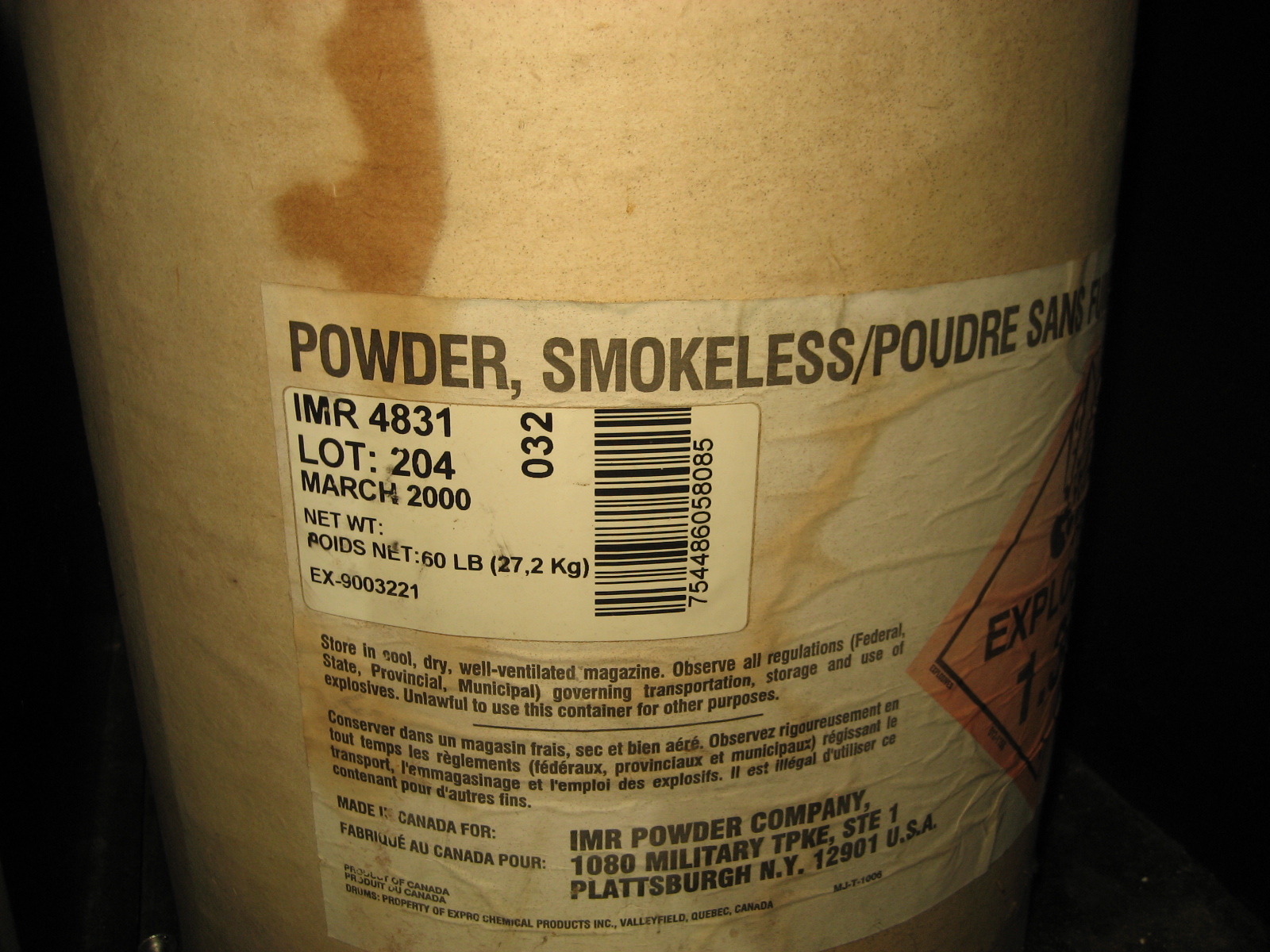
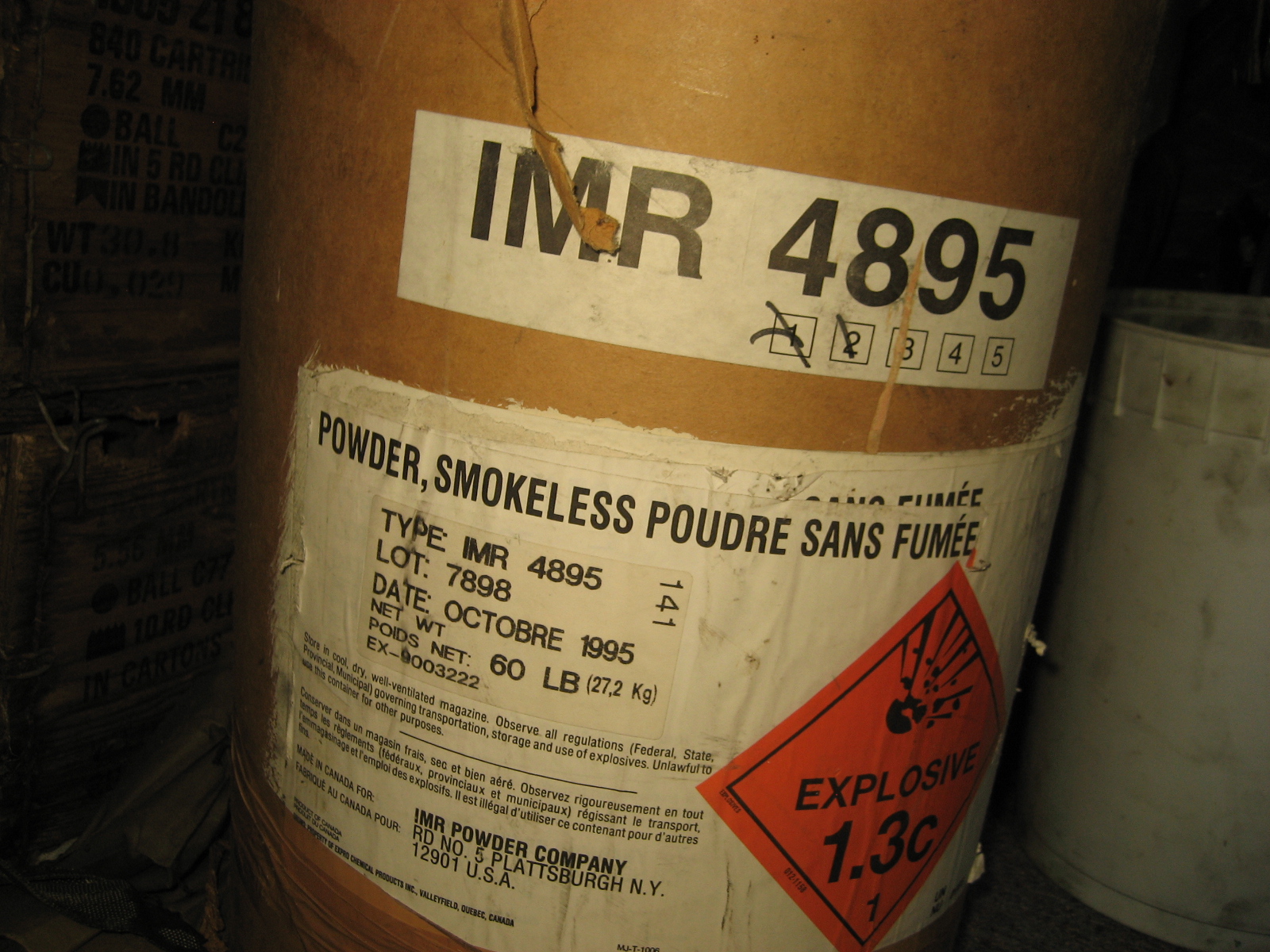
The factories buy powders like 4064 and 4895 by the ton. Each lot number comes with a spec sheet. Some lots are a bit fast. Some are a bit slow. And some are quite a bit faster or slower. It comes in 45 or 60 pound drums, like this:
It is 4831, but unlikely to be the same speed as the 4831 we buy at the local shop. The spec sheet will show how fast or slow it is.
When the factory is planning a run of, say, 180 gr 308, they will ask the powder maker what is available in the quantity they need. They would prefer to buy all the powder in a single lot number.
The powder company might say "we have 6000 pounds of slow 4895" The name "4895" does not make it a canister powder. Each lot is tested, and a lot that meets the 'canister" spec is put aside for commercial packaging. For rifle, the ammo is loaded to specified velocity, so all that is required is a bit of load development to figure out what powder charge of that particular lot number yields the desired velocity. With the appropriate powder, it does not matter if the powder is a bit fast or slow, the target velocity can be reached within the pressure limits. Factory velocity is not at max.
I don't recall how the rifle powders were referred to, other than fast or slow. I do know that some powder lots were so fast or so slow that they over lapped the fast or slow version of the next powder.
I do recall that Red Dot was used for a lot of shotgun loading, and we had a choice of Red Dot 1, 2, 3 or 4. 1 was fast. 4 was the slow version. For shotguns it was more important to match the speed of the powder to the loading, as it was a way to control the wad column height.
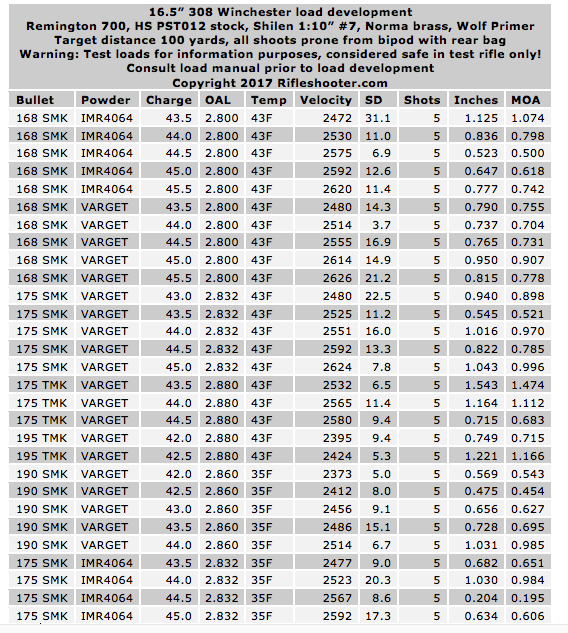
They op should buy quality brass (Lapua is good) quality primers (I use CCI Match) and an appropriate powder (Varget or 4895 or 4064 or N140 or 150) and do a quick survey of powder charges. Something will stand out. The Federal ammo has proved that his rifle works. It is not difficult to get the Sierra 175 to shoot well. An excellent bullet choice.