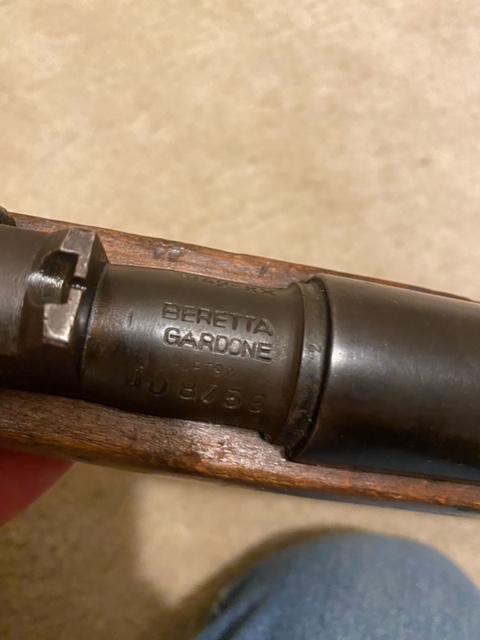
Christmas Sale GNG Carcano Moschetto

I actually questioned the original shipping charge, as they had mentioned they were having improper calculations, and had it reduced by $12. A CGN member mentioned this to me, and I’m glad that he did!
( many thanks fritzhanzel!)

You are welcome.

Just did a quick internet search. What I don't quite understand is why most US dealers have "NRA good to very good condition" Carcanos for US $200 and below and we have "whatever standard condition" for the same price.

Pretty sure the ones we have are not coming from the US. Same source.

At least be honest about the condition. If it is a mixed bag, make at least 2 bags and sort out the better and the worst ones.

The comment above from GNG is appreciated but does not give me a warm and fuzzy feeling.
 
And MilArm in Edmonton.

Bought my very first hand gun after I got my Rpal from milarm, I wanted a Sig 226, they said no problem, $1000 back then 25 years ago, but said hey, we have these Sig 220's in 9mm, single stack, new for $600, you are giving up 1 round but these are really nice.
I still have that 220 9mm and it's still the most accurate pistol I own. That was a good shop.
Tradex was something else though, Anthony would email me stuff that he just got in before it was even listed, bought so much stuff from there that's the way it was. I'd even drive out there to pick it up.
These GNG guys are 15 or 20 mins from me, no pick up to save shipping, obviously no repeat customer concerns as per the Claven experience. Not making me want to spend any money there for sure.
 
Bought my very first hand gun after I got my Rpal from milarm, I wanted a Sig 226, they said no problem, $1000 back then 25 years ago, but said hey, we have these Sig 220's in 9mm, single stack, new for $600, you are giving up 1 round but these are really nice.
I still have that 220 9mm and it's still the most accurate pistol I own. That was a good shop.
Tradex was something else though, Anthony would email me stuff that he just got in before it was even listed, bought so much stuff from there that's the way it was. I'd even drive out there to pick it up.
These GNG guys are 15 or 20 mins from me, no pick up to save shipping, obviously no repeat customer concerns as per the Claven experience. Not making me want to spend any money there for sure.

you Anthony was a class act I was never unhappy with the condition of anything I ordered in fact items were usually better condition than I expected
 
Fwiw. Gng put these back on sale at 288 again and revised the description of the bore condition on the remaining guns to just "good". Listing that they are good condition "on average".

Marstar's sale also ongoing.

I don't think any of the dealers are selling many at the $350+ price point.
 
Last edited:
Time for the big reveal of what Carcano No.2 turned out like after I worked on it all day. I'll explain what I did in case anyone else runs into a similar rifle with similar issues.

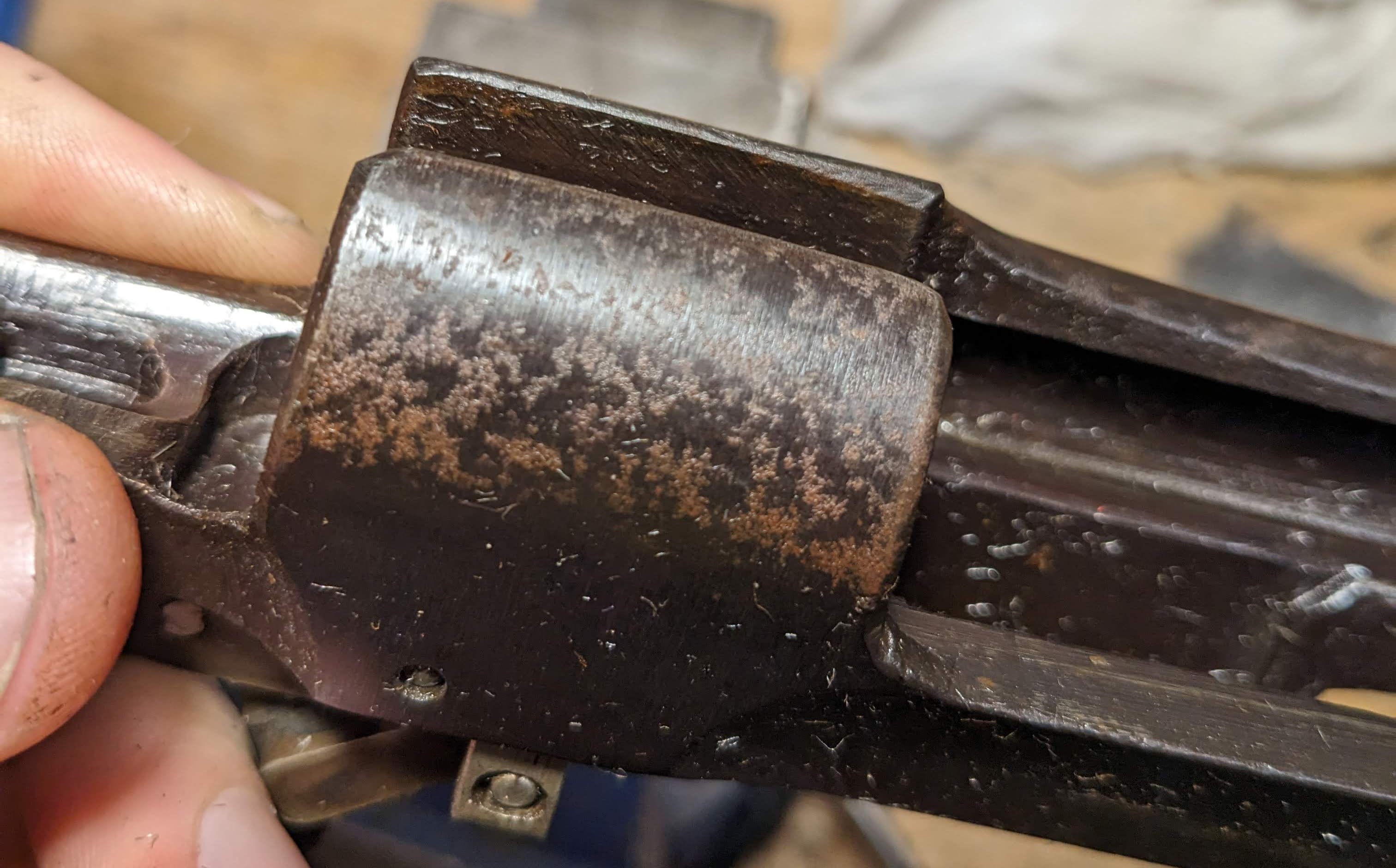
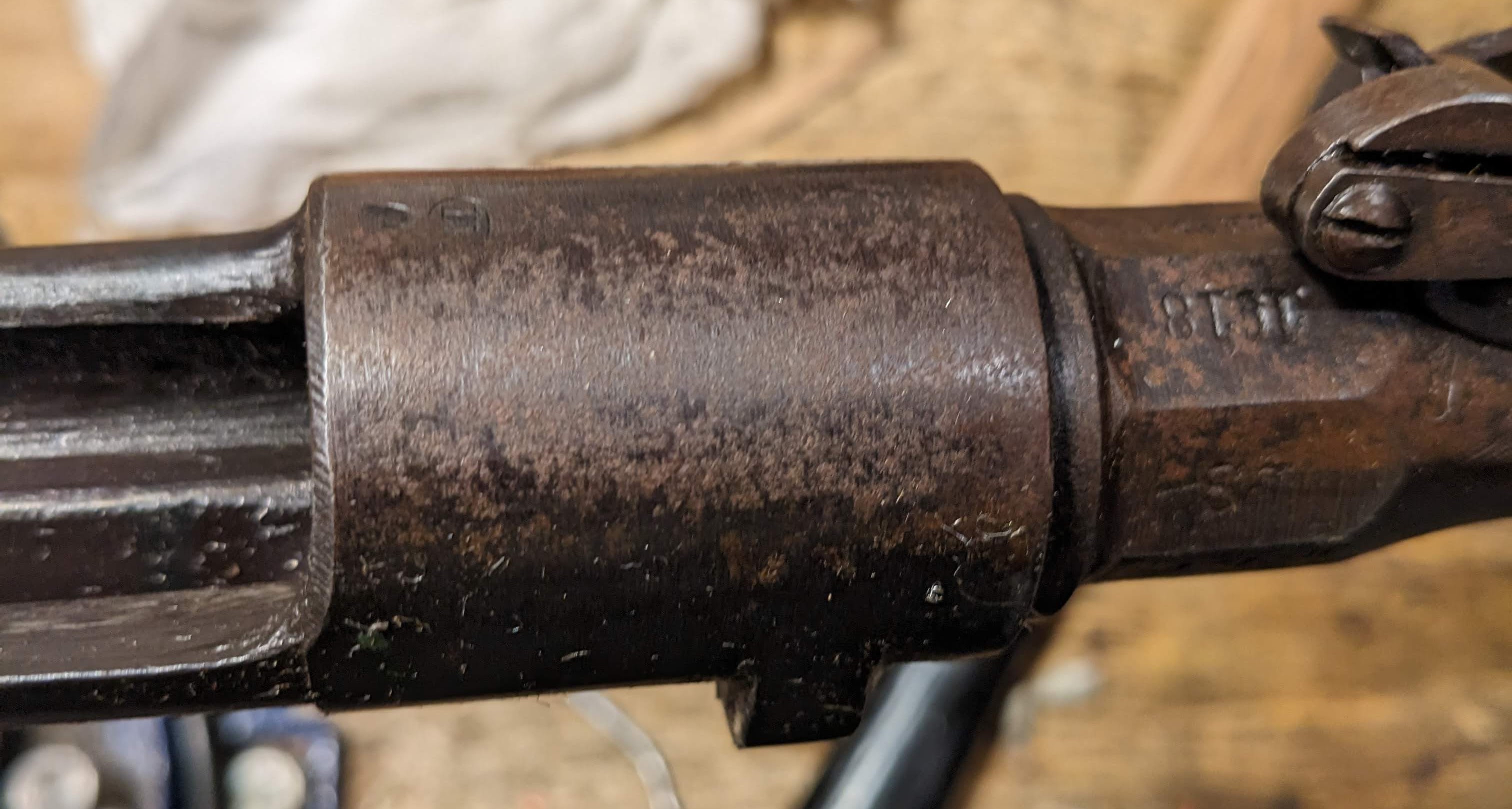
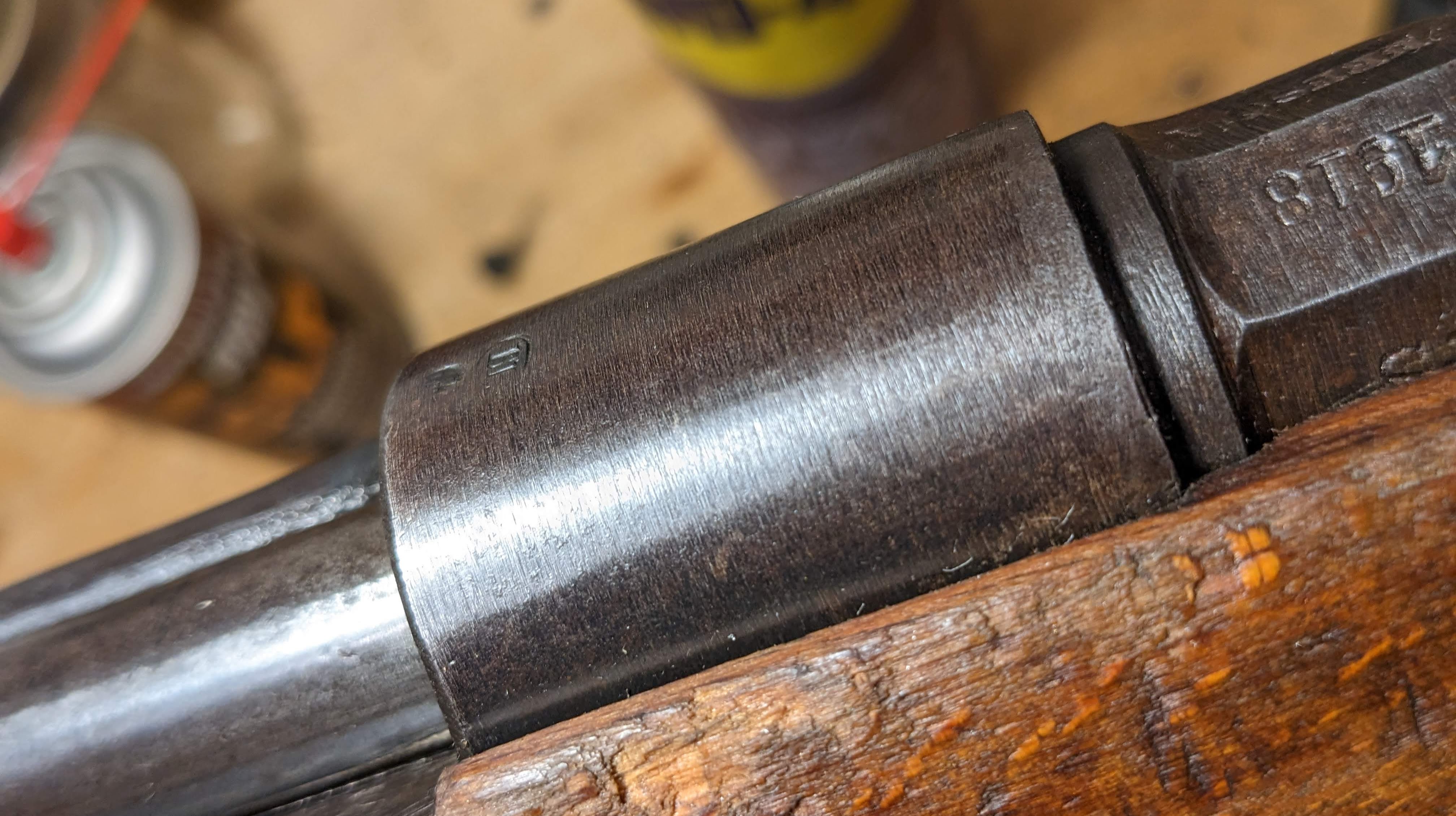
Firstly, the barelled action and front band were the rustiest parts. I scraped the crustiest rust off with a brass scraper and then used #0000 steel wool to buff off the brass residue. I then boiled these parts for 10 minutes (yes, hot water) to "convert" some of the rust to rust blueing. Heated in oven at 100 degrees for 5 minutes to dry. Went over everything afterward with oiled #0000 steel wool.

Not all the rust is gone and some pitting remains, but it's vastly improved.

Before:

37gGJtD.jpg


After:

xK7qnGj.jpg


Before:

sCrboSP.jpg


After:

kfiCJ4R.jpg


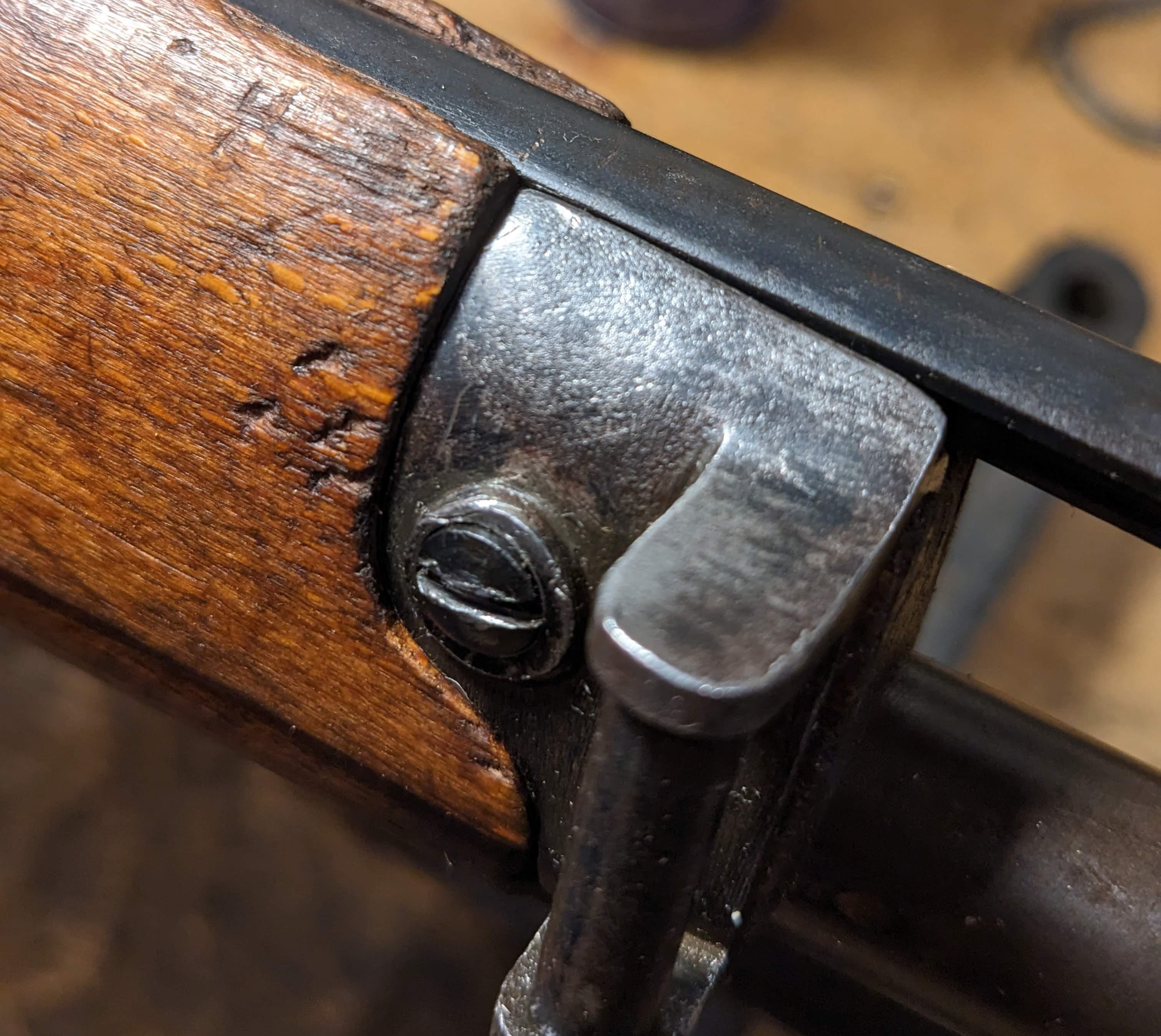
Some of the rust left more pitting than in other places. Here's an example of obvious pitting on the front band, nothing really to do about that unless I want to refinish the gun:

f20J4yT.jpg


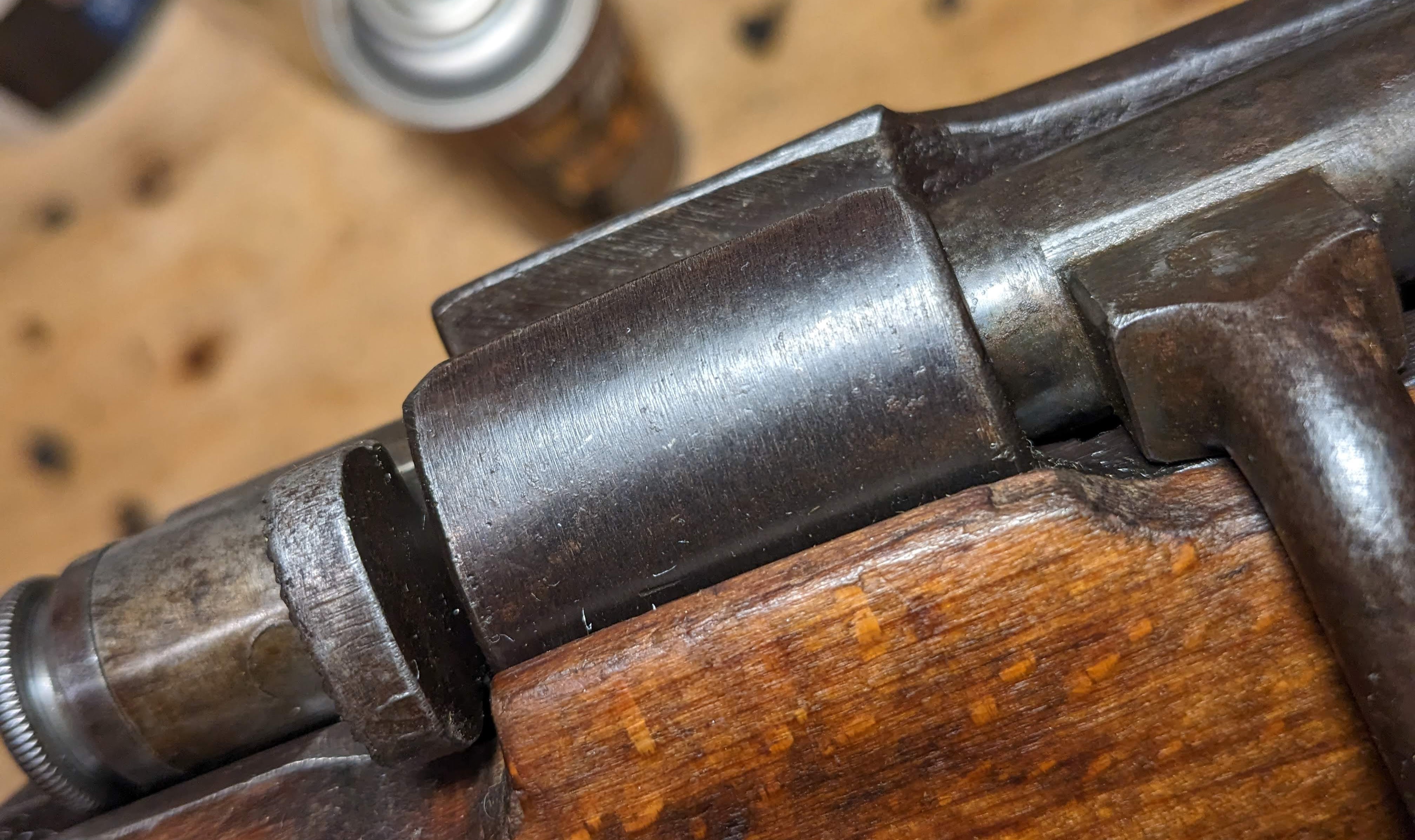
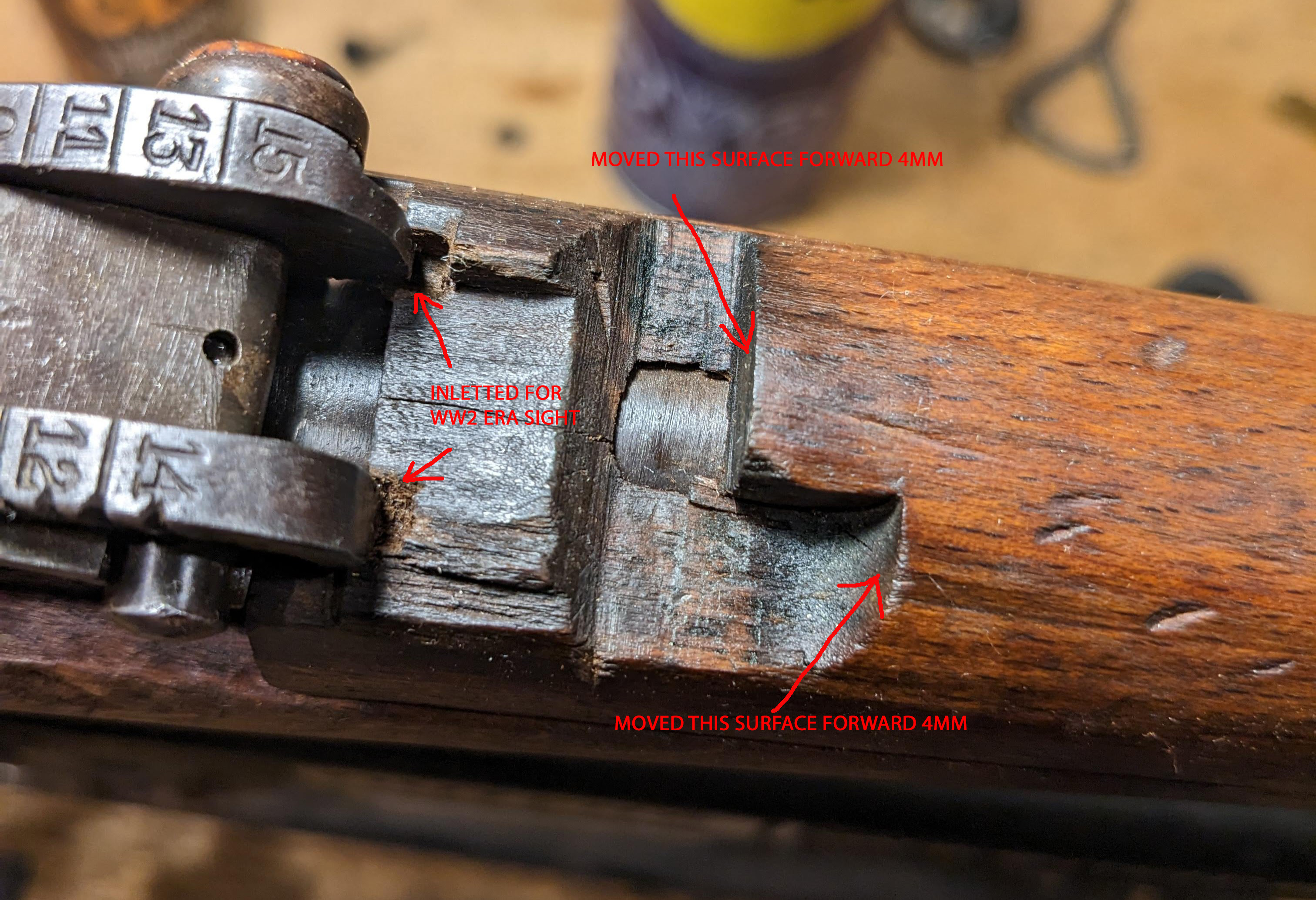
The stock set is off a 1930's Terni, I think. That' relevant because this 1918 carbine got a rear sight off a pre-1916 carbine at some point. That means it was modified for a handguard after it was made, and the handguard retaining profile of these modified sights differs from a post-1916 rear sight. I had to remove a little wood from the handguard in a few places so it would fit under the rear sight and be held on. When I got the rifle, the handguard was only being held on by the barrel band, which itself was not screwed onto the rifle - it was just friction fit on.

You can see in the photos where a post-1916 rear sight sat much further forward on the handguard. I also had to move the adjustable sight blade inletting forward 4mm, otherwise the sight blade would not seat down into the handguard like it's supposed to. I put arrows pointing to where I removed material. The wood was re-darkened with walnut fiebing's oil-based lather dye. My go-to fake wood patina concoction. All this means the handguard now "works" but is technically not the right handguard for this carbine. There are minor differences in fit between WW1 and post-war parts.

If you have another rifle to compare to, you'll notice the sight blade inletting on my handguard is now wider than factory - not much I can do about that, I'm afraid. It's not that obvious in-hand.

qBaeXmC.jpg


I didn't take any photos, but the front sight blade turned out to be bent from a hard knock on something. I straightened it with a jeweller's ballpeen on a small anvil. The rear sight blade was also a mess. It had been hit HARD at some point. I had to straighten the rear leaf where the sighting V is, and I had to straighten the part where the tensions spring attaches. It was pushed over enough it was fouling on the handguard when flipped forward and was interrupting the battle sight picture. I got it as close as I could by tweaking the bent pars in the vise, checking everything with machinist levels - it should be fine now, but was a bit of a tedious job.

The bolt was also inoperable when received - it would go in the gun, but could not be "fired" - the interior was seized up with corrosion. I had to disassemble it with brute force, soak the spring and firing pin assembly in evaporust for a few hours, then wire wheel all the internals. The bolt body exterior was not bad after I wire brushed out the interior and oiled it. It works and look fine now, I'd say it's a smoother bolt than rifle No.1 has, but it was not functional as it arrived.

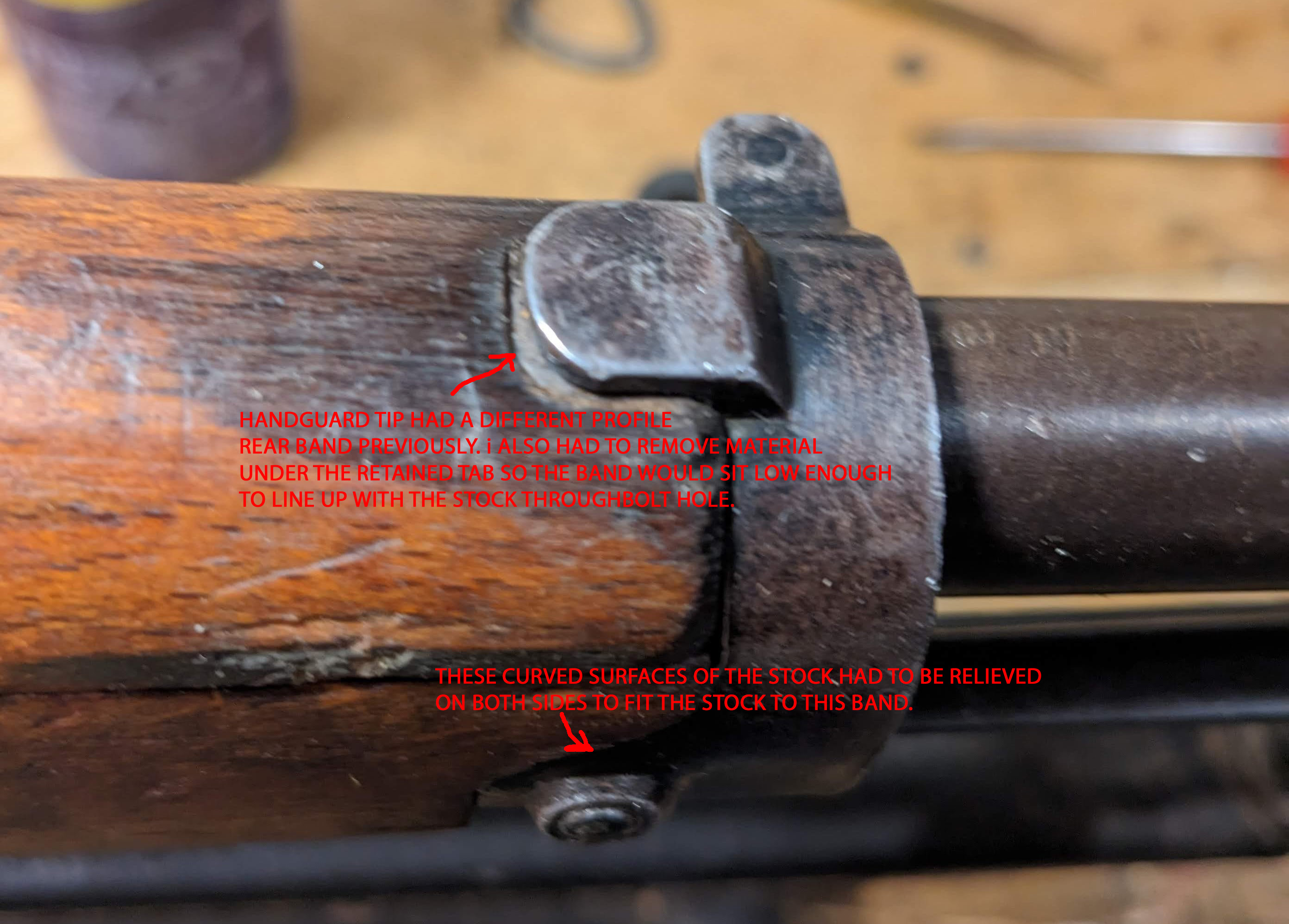
WW2 era wood was also "bigger" in most dimensions. My ww1 era band did not fit, and as mentioned in a previous thread - the screw, when I received the rifle, was jammed about half way into the hole, keeping the handguard in place for shipping, but it could not be used this way. To make the handguard fit, I had to relieve wood from the curved surfaces of the forestock so the handguard could sit further back on the stock, and I had to re-fit the retained tab by removing about 2mm of wood under the tab. You can see where a later production larger tab originally fit further back on this handguard. I did all this by removing the front sight assembly so I could get easy access to the band, painting the inside of the band with inletting black, and then fitting it toe the wood like you would inlet a new stock. Nothing magical here except going slow and re-trying the fit many times. It fits now and you can't really tell what I did.
UzjgB6I.jpg


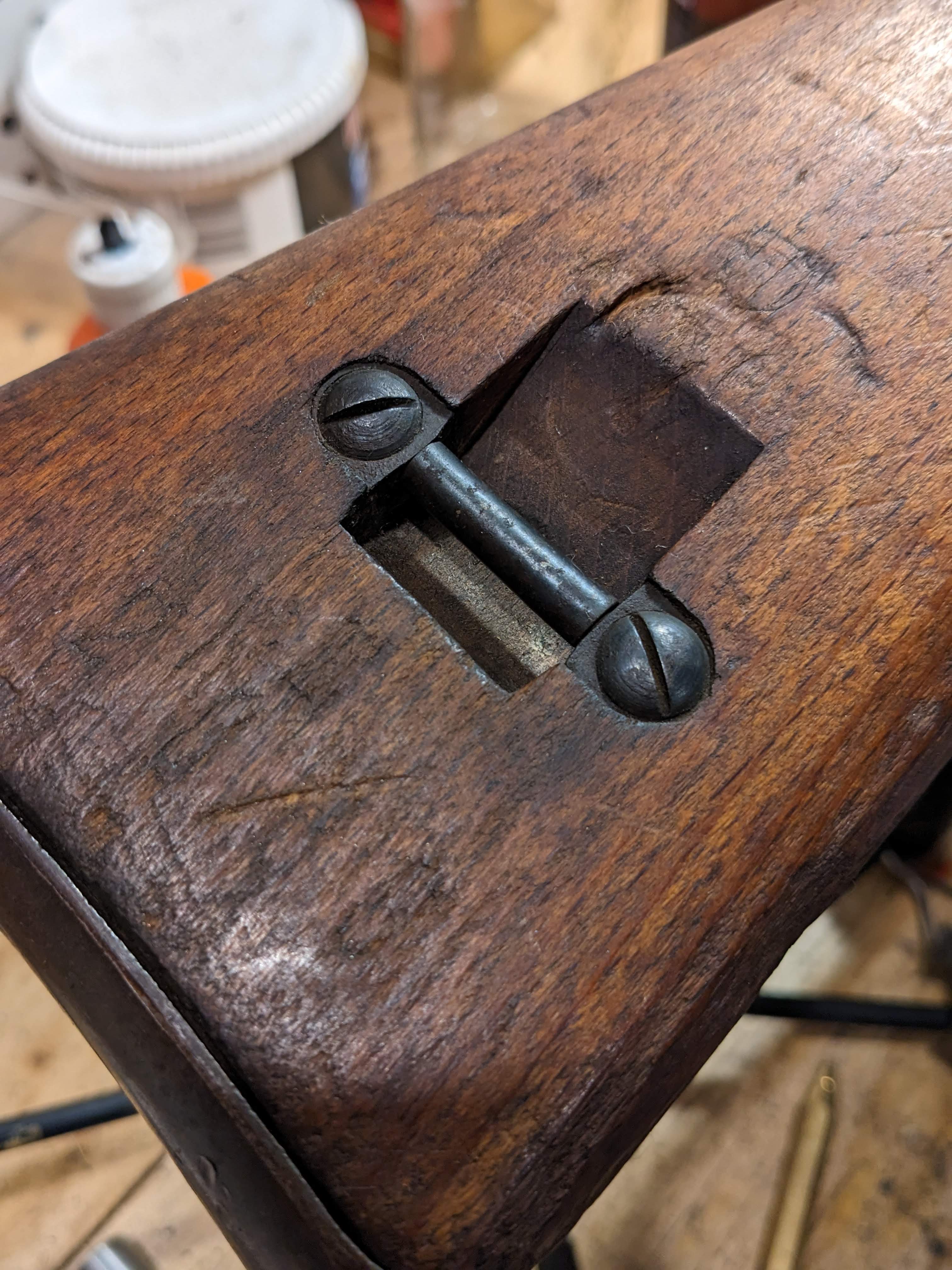
The stock seems to have come off a E2863 numbered gun. That would likely make it a 1936 Terni stock.

NnPHm9b.jpg


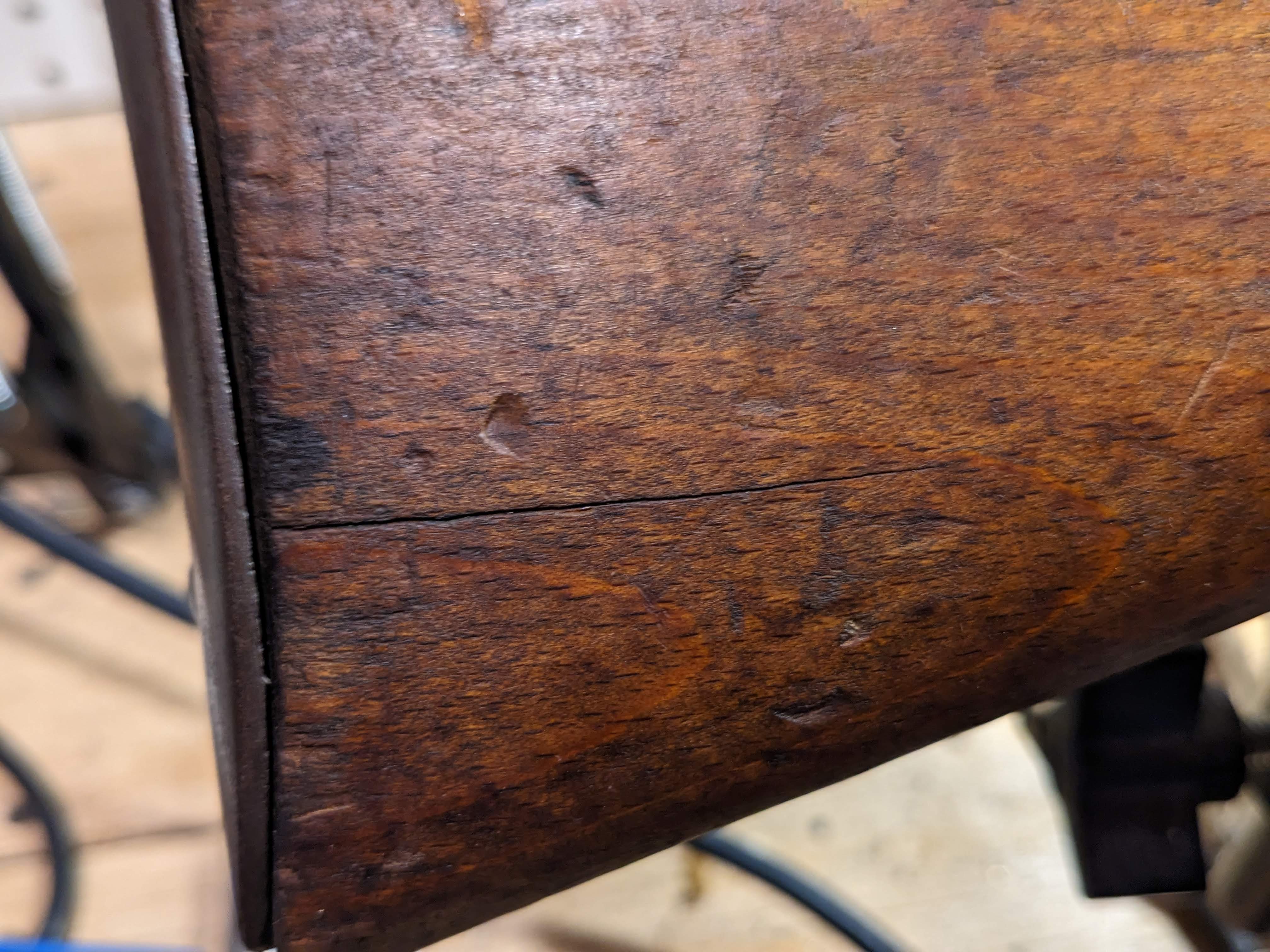
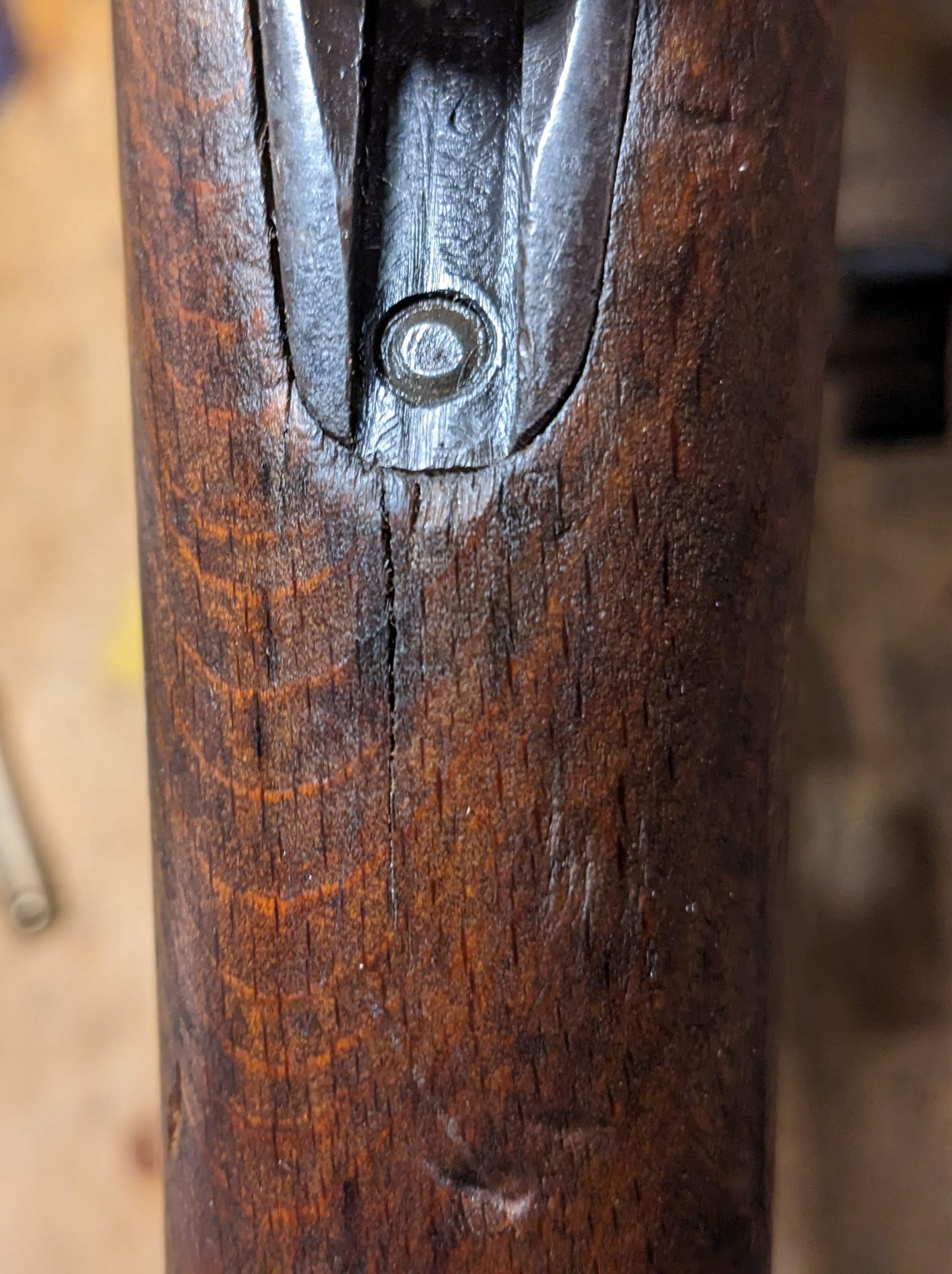
Stock has some cracks, but they appear stable, so I left them alone:

hUhsQvH.jpg

fuXjFBk.jpg


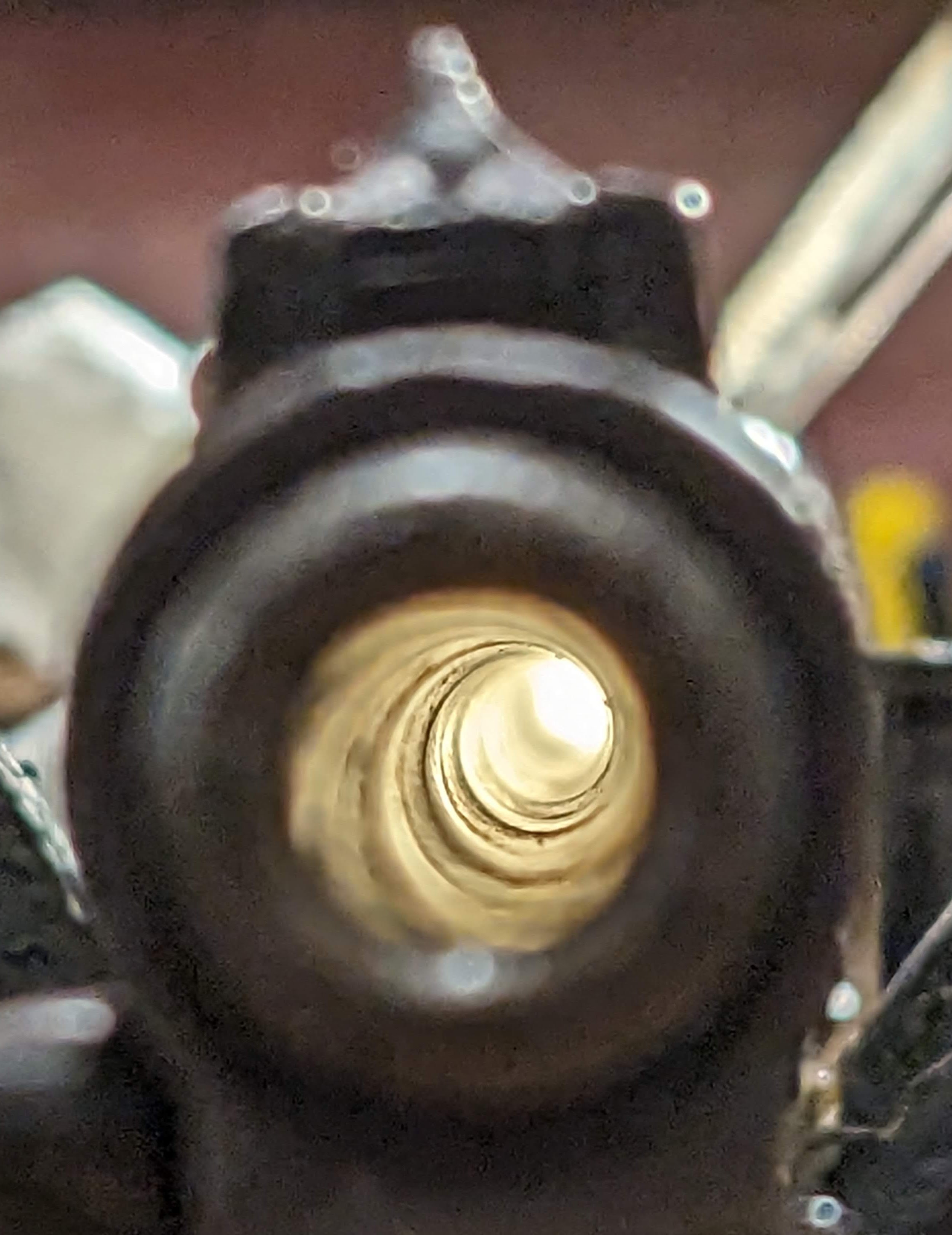
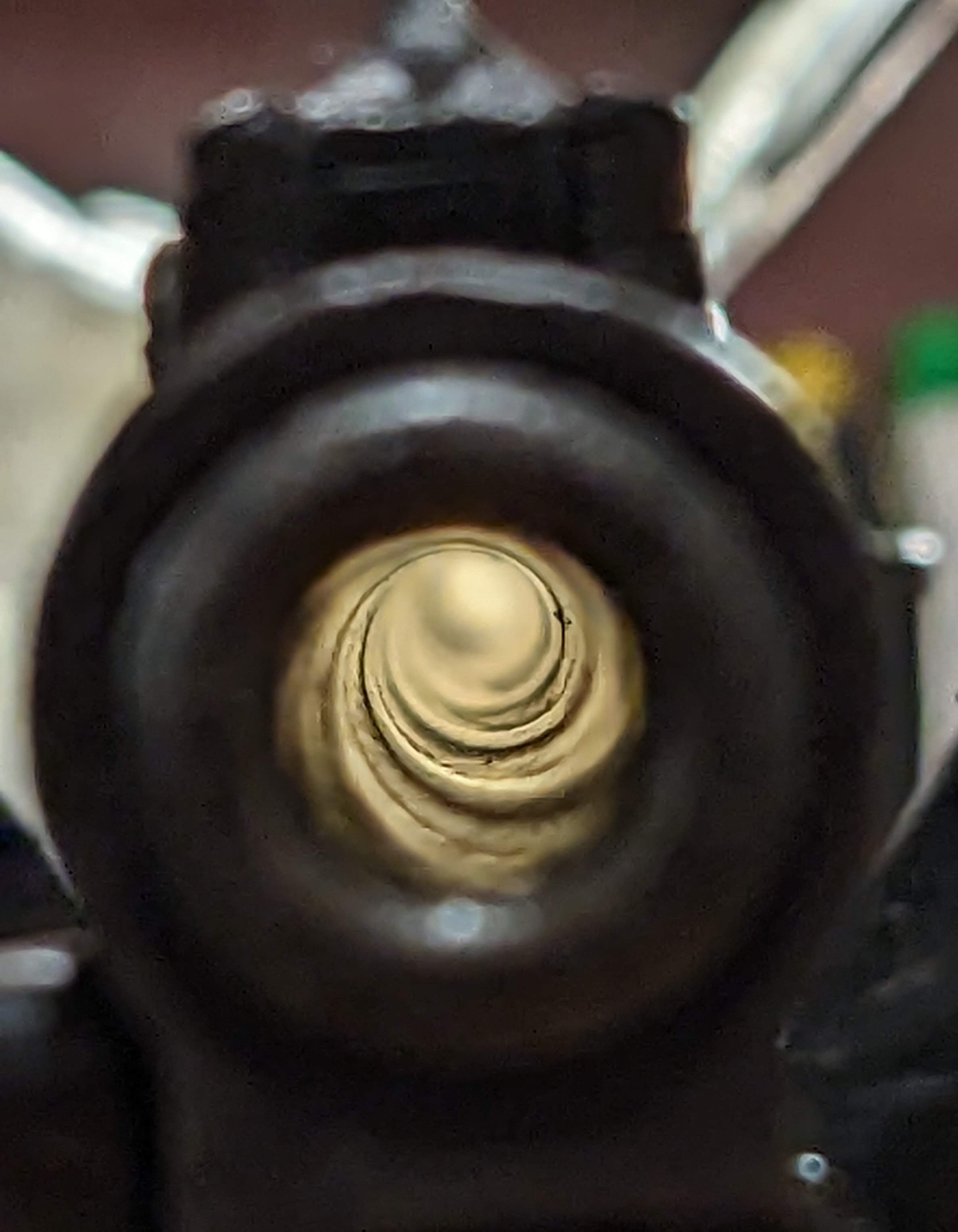
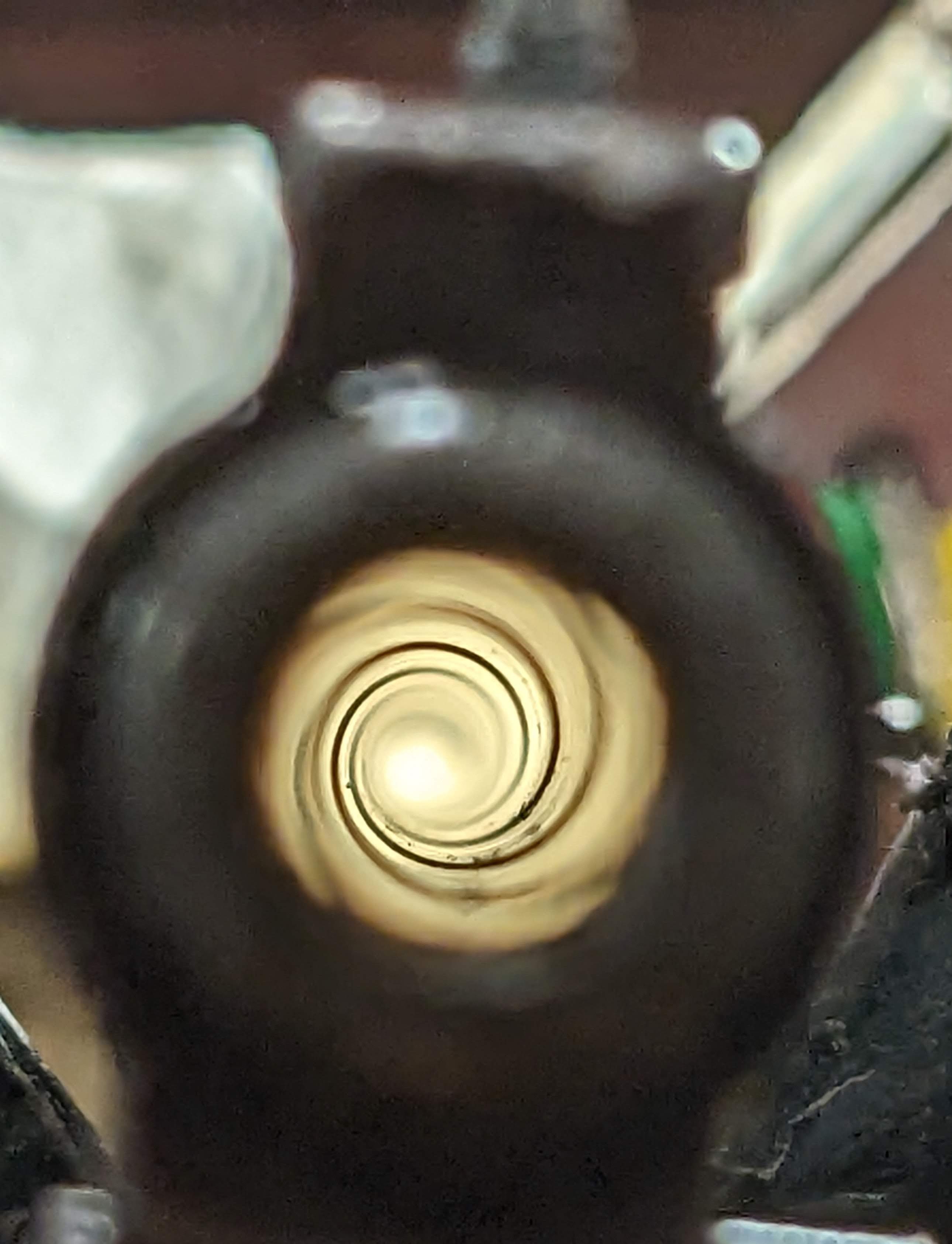
Bore photos - after cleaning the snot out of the bore, I'd say it's fair to good. It's deninitely not as good as the bore on the first rifle I ordered. Pics (best I could do):

Rifle 2, a couple different angles, decent lands, dark grooves with some pitting - I think it may do OK with jacketed bullets, but would foul with cast bullets fairly quickly, I think:

e8aygCV.jpg

mQmrDWb.jpg


Rifle 1 was better, no pitting you can see with the eye, though with a boroscope, I'm sure it would not look as nice:

1OR6HGT.jpg


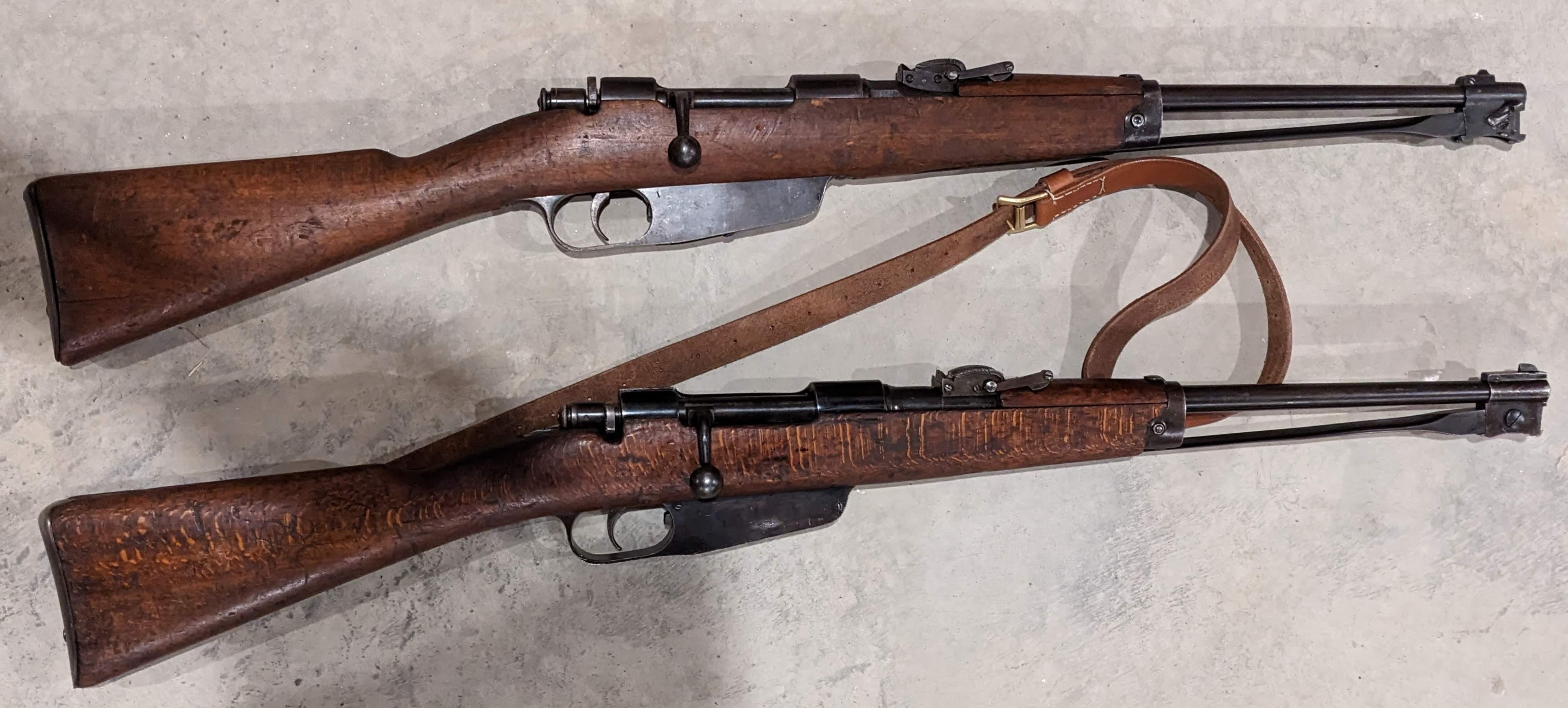
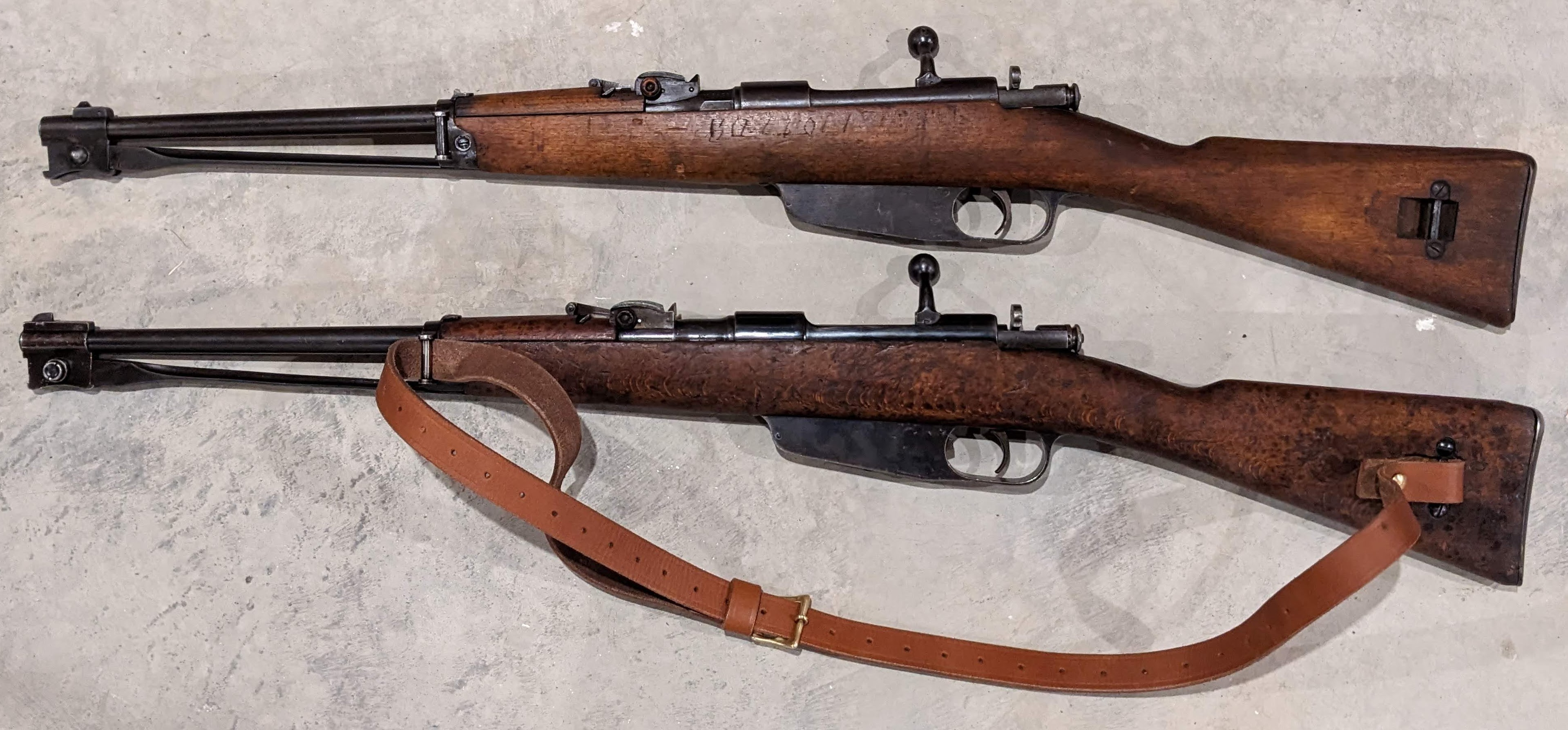
Both rifles after TLC:

zmZAvbd.jpg


In this photo, you can see the obvious differences in the shape and positioning of a WW1 era rear sight and a WW2 era rear sight:

r6vKoBK.jpg


A lot more work than I was expecting, but at least it's now presentable. I'm still really bummed about the gun arriving with the wrong stock and not properly assembled - that should bever have made it past pre-shipping inspections at the distributor or dealer, in my view.

Hopefully this is helpful as you dive into these and clean them up!

 
Last edited:
I forgot to mention - neither rifle has a cleaning rod. I found one on that auction site for altogether too much money that I ordered so I'd have at least 1. The sling is also an auction site repro, but seems well made. I'd buy another.
 
Very nicely done, Claven - and thanks for posting all that info and pictures. I think many - if not most - of the batch of Carcanos which arrived in the past couple of years have been through a LOT. But, with well-instructed TLC, most can continue to shoot reasonably well and safely for many more decades.
 
I forgot to mention - neither rifle has a cleaning rod. I found one on that auction site for altogether too much money that I ordered so I'd have at least 1. The sling is also an auction site repro, but seems well made. I'd buy another.

Great work! Amazing what some elbow grease can accomplish. Looks great now, the wood work turned out excellent. I see the slings on eBay, I think I'll pick a few up as well. Mine should be here early next week, I'll take lots of photos of the unboxing
 
Time for the big reveal of what Carcano No.2 turned out like after I worked on it all day. I'll explain what I did in case anyone else runs into a similar rifle with similar issues.

Firstly, the barelled action and front band were the rustiest parts. I scraped the crustiest rust off with a brass scraper and then used #0000 steel wool to buff off the brass residue. I then boiled these parts for 10 minutes (yes, hot water) to "convert" some of the rust to rust blueing. Heated in oven at 100 degrees for 5 minutes to dry. Went over everything afterward with oiled #0000 steel wool.

Not all the rust is gone and some pitting remains, but it's vastly improved.

Before:

After:

Before:

After:

Some of the rust left more pitting than in other places. Here's an example of obvious pitting on the front band, nothing really to do about that unless I want to refinish the gun:

The stock set is off a 1930's Terni, I think. That' relevant because this 1918 carbine got a rear sight off a pre-1916 carbine at some point. That means it was modified for a handguard after it was made, and the handguard retaining profile of these modified sights differs from a post-1916 rear sight. I had to remove a little wood from the handguard in a few places so it would fit under the rear sight and be held on. When I got the rifle, the handguard was only being held on by the barrel band, which itself was not screwed onto the rifle - it was just friction fit on.

You can see in the photos where a post-1916 rear sight sat much further forward on the handguard. I also had to move the adjustable sight blade inletting forward 4mm, otherwise the sight blade would not seat down into the handguard like it's supposed to. I put arrows pointing to where I removed material. The wood was re-darkened with walnut fiebing's oil-based lather dye. My go-to fake wood patina concoction. All this means the handguard now "works" but is technically not the right handguard for this carbine. There are minor differences in fit between WW1 and post-war parts.

If you have another rifle to compare to, you'll notice the sight blade inletting on my handguard is now wider than factory - not much I can do about that, I'm afraid. It's not that obvious in-hand.

I didn't take any photos, but the front sight blade turned out to be bent from a hard knock on something. I straightened it with a jeweller's ballpeen on a small anvil. The rear sight blade was also a mess. It had been hit HARD at some point. I had to straighten the rear leaf where the sighting V is, and I had to straighten the part where the tensions spring attaches. It was pushed over enough it was fouling on the handguard when flipped forward and was interrupting the battle sight picture. I got it as close as I could by tweaking the bent pars in the vise, checking everything with machinist levels - it should be fine now, but was a bit of a tedious job.

The bolt was also inoperable when received - it would go in the gun, but could not be "fired" - the interior was seized up with corrosion. I had to disassemble it with brute force, soak the spring and firing pin assembly in evaporust for a few hours, then wire wheel all the internals. The bolt body exterior was not bad after I wire brushed out the interior and oiled it. It works and look fine now, I'd say it's a smoother bolt than rifle No.1 has, but it was not functional as it arrived.

WW2 era wood was also "bigger" in most dimensions. My ww1 era band did not fit, and as mentioned in a previous thread - the screw, when I received the rifle, was jammed about half way into the hole, keeping the handguard in place for shipping, but it could not be used this way. To make the handguard fit, I had to relieve wood from the curved surfaces of the forestock so the handguard could sit further back on the stock, and I had to re-fit the retained tab by removing about 2mm of wood under the tab. You can see where a later production larger tab originally fit further back on this handguard. I did all this by removing the front sight assembly so I could get easy access to the band, painting the inside of the band with inletting black, and then fitting it toe the wood like you would inlet a new stock. Nothing magical here except going slow and re-trying the fit many times. It fits now and you can't really tell what I did.

The stock seems to have come off a E2863 numbered gun. That would likely make it a 1936 Terni stock.

Stock has some cracks, but they appear stable, so I left them alone:

Bore photos - after cleaning the snot out of the bore, I'd say it's fair to good. It's deninitely not as good as the bore on the first rifle I ordered. Pics (best I could do):

Rifle 2, a couple different angles, decent lands, dark grooves with some pitting - I think it may do OK with jacketed bullets, but would foul with cast bullets fairly quickly, I think:

Rifle 1 was better, no pitting you can see with the eye, though with a boroscope, I'm sure it would not look as nice:

Both rifles after TLC:

In this photo, you can see the obvious differences in the shape and positioning of a WW1 era rear sight and a WW2 era rear sight:

A lot more work than I was expecting, but at least it's now presentable. I'm still really bummed about the gun arriving with the wrong stock and not properly assembled - that should bever have made it past pre-shipping inspections at the distributor or dealer, in my view.

Hopefully this is helpful as you dive into these and clean them up!

I'm more of a reloading guy and can't wait to shoot mine, but for firearm restoration, that folks: "Is how you do it".

No Cleaning Rod for me either, although I might have one around here somewhere.
 
Last edited:
Well I must be a glutton for punishment. I just ordered a fixed sight version from marstar to see what I'll get. At the worst, it will be a variant I don't yet have.

Anyone else get their Christmas sale purchases home yet?
 
ok received mine from marstar I wasn't expecting much so I was pleasantly surprised when I unboxed it

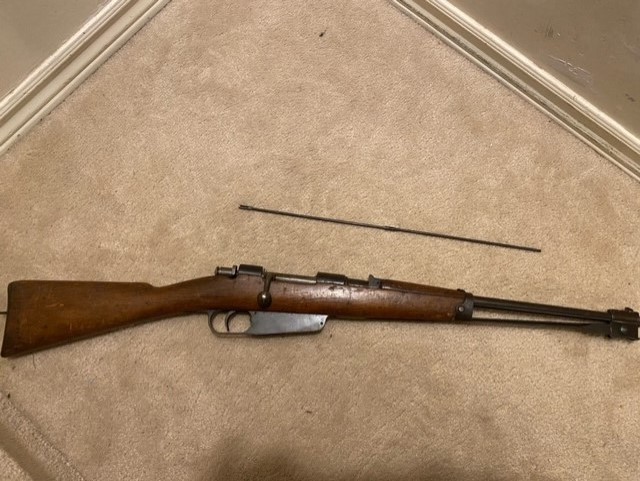
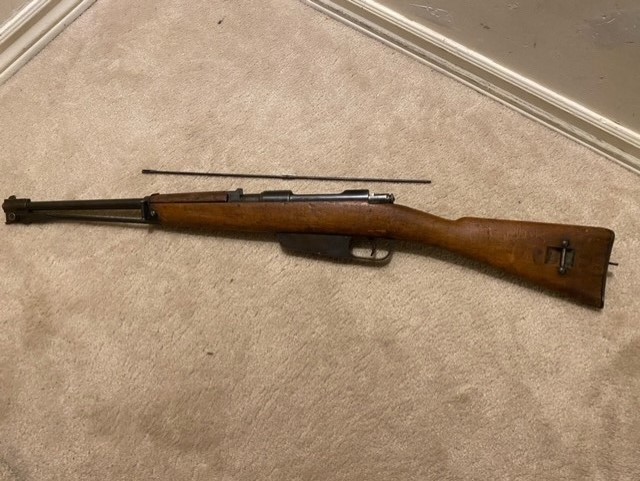
I received a 1942 beretta with original wood numbered to the gun wood has seen use but no cracks and not beat like the example above metal all has finish and no rust. rifling looks sharp and deep with no rust and not dark cleaning kit WAS present in stock

bolt where they numbered? as I don't see any markings on mine

7kHbboK.jpg

idC1nsF.jpg

sl3AGlY.jpg

nKLxP6X.jpg
 
I bought two of these from Marstar a couple months ago and both of them were acceptable quality
Got the deal with two rifles and 6 enblocs
Ones all matching the other one isn’t but both have good bores that I think will shoot ok
Marstar probable broke the junkers down for parts and didn’t send them out to customers like other retailers did
 
Back
Top Bottom