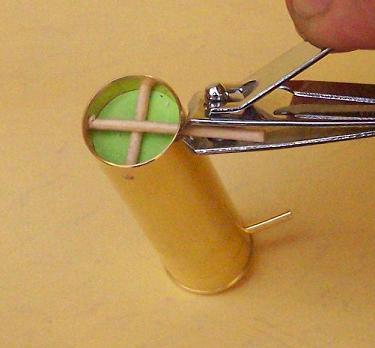
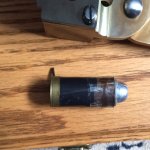
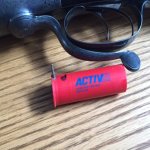
I have tried the brass pin-fire cases some 40 years ago (I obtained them from Henry Krank in the UK), but I was never wholly satisfied with the results. I sealed the paper overwads with a bit of bathroom caulking (as opposed to the strange wood arrangement in the OP's picture). Yes, they did fire OK, and the black powder smoke was satisfying, but I could never get a consistent performance up to commercial shell standards. This might have been due to the fibre wads, how the powder was tamped etc. Eventually I lost them in one of several house moves, though I have one left.
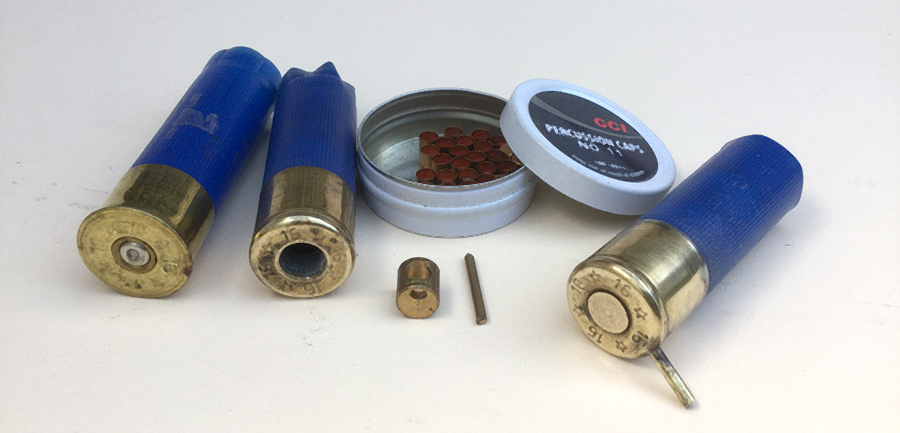
One thing to be aware of, chamber sizes in the pinfire era were not standardized, in diameter or length. What fits in one 12-gauge chamber might not fit in another. Most pin-fire cartridges had no rim, or a very slight one left over in the manufacturing process. No extractor was necessary (you pull them out by the pins), so no need for rims; any adaptation of modern casings would have to remove or reduce the rims somehow, without weakening the structure of the base. The material of the pins is another consideration, as some brass wire is too soft and bends easily, and doesn't transfer the strike. The angle of the pin varies, from slight to none. The arc of the hammer throw is different on each gun, according to the shape and length of the hammer nose, and the fitting of the lock -- again, no standardization. Back then, you chose cartridge brands that fit your gun in more ways than simply popping one in the chamber. As to the chamber, some guns, especially French, Belgian and very early British ones, had no forcing cone, instead having a sharp shoulder (corresponding to the width of the cardboard tube material). The size of the pin holes in the barrels at the breech also varied greatly; some pinched the pins and made for unreliable ignition, and if too large, gas can escape (a little bit does anyway). Choose a size/width of pin that fits closely to your gun, as much as possible. Finally, since we're talking about old guns, the strength of the mainsprings is an issue. Back then they would have been strong and sharp, but dial forward 150 years, and that strength may be much less, leading to misfires.
I wouldn't expect anyone nowadays to be a particularly good shot with a pin-fire game gun, without a lot of practice. The fact that the tall hammers remain in your field of vision can throw you off, unless you use them as a sighting guide (between the goalposts, as it were). Dimension-wise, these guns were used by fellows in top hats and stiff collars, so the comb on the stock is often in the wrong place. As to point-of-aim, many pin-fire game guns were meant for taking shots at rising pheasants, so many shoot a bit high, intentionally. Patterns will vary, but don't expect much from cylinder bores. Back then, a gun that put 40-50% in a thirty-inch circle at 40 yards was considered exceptionally good.
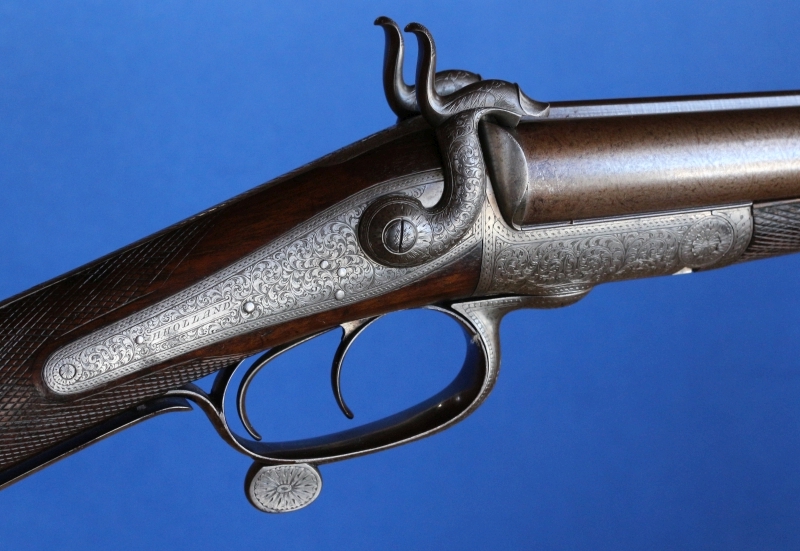
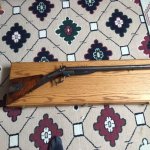
I know that on GunNutz having a gun and not firing it is seen as peculiar, but I've made my peace with that. I have enough vintage and antique centre-fire guns to shoot with, I don't need to risk blowing up my pin-fires, which for the most part are impossible to replace -- like this Holland:
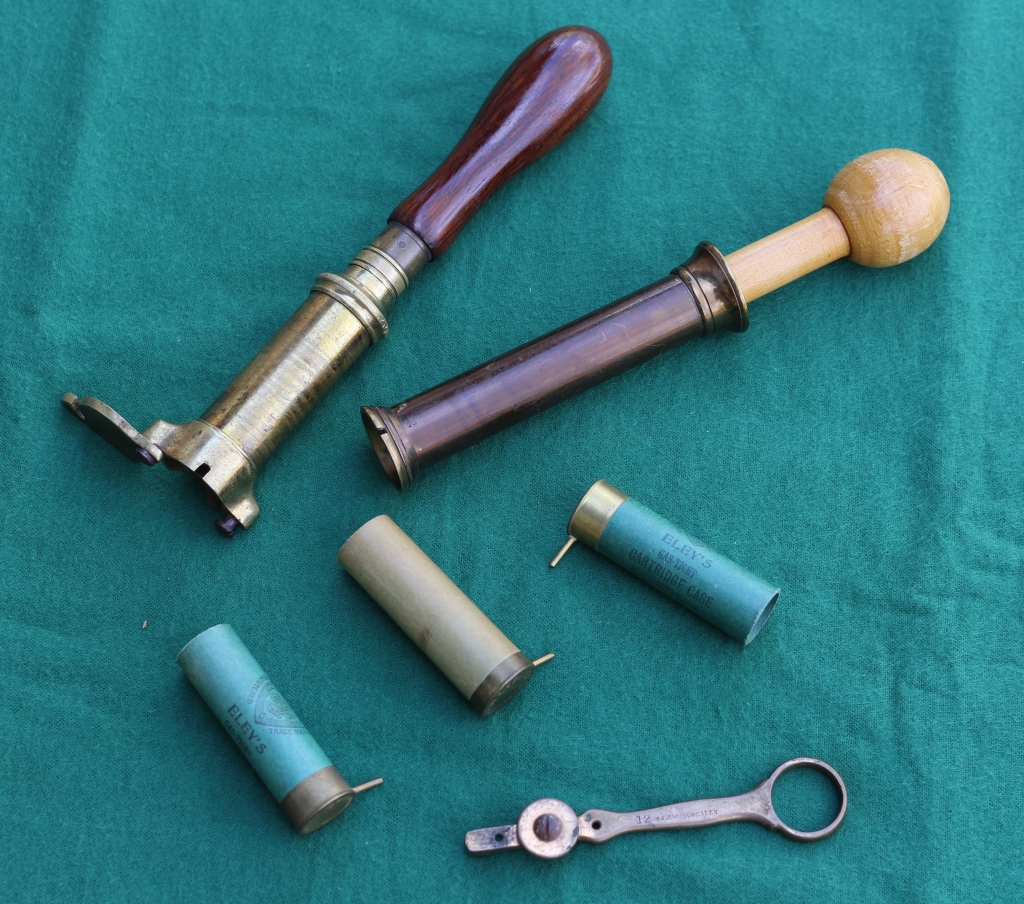
There were quite a few specialized tools to load pin-fire cartridges, either one at a time or in multiple batches. Here are some simple tools for loading cartridges and fitting pins, a hook for removing split cartridge cases, and some primed cases, as they were usually bought back then, ready to be loaded with one's preferred powder and shot recipe:
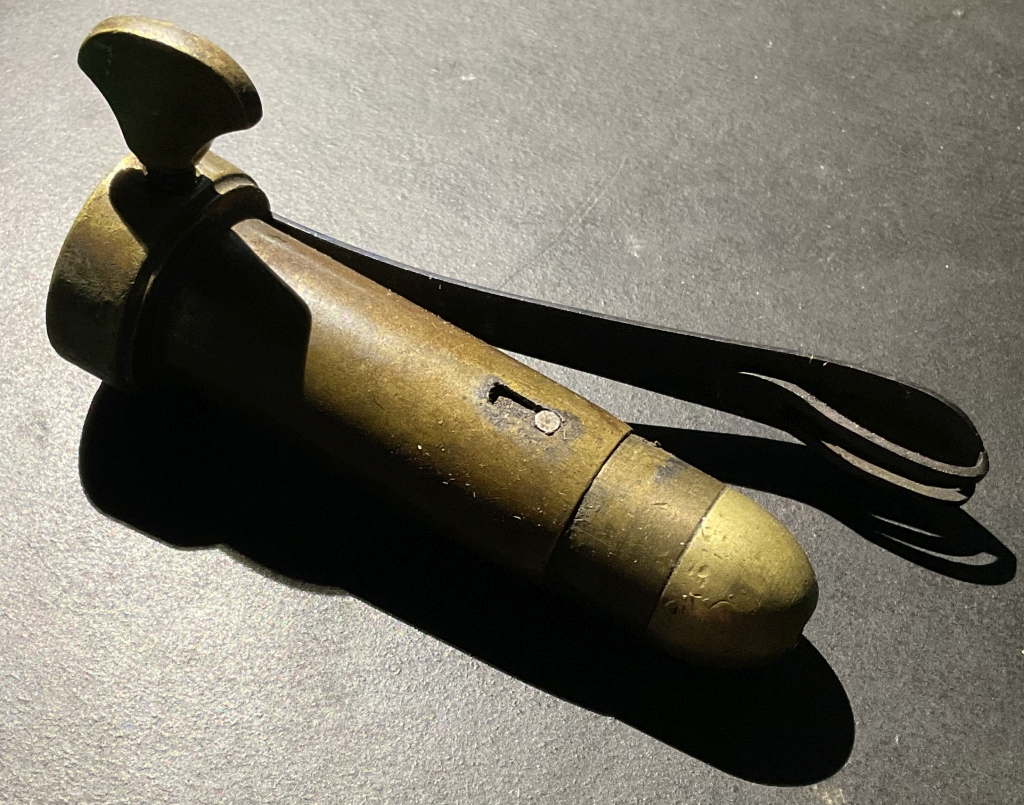
As for capping the cases, there was another specialized tool which inserted the percussion cap in the right place, and which also helped re-size the cardboard tubes:
(Sorry, I don't have better light for taking pictures right now.)
I have found that a thin dowel (or a chopstick), tipped with something sticky, works extremely well for placing the percussion cap in its socket and lining it up, before inserting the pin to hold it in place. Back in the 1860s, a frequent cause of misfires was that the primed cases, purchased ready for loading, occasionally lacked a cap altogether -- you just can't depend on child labour, I guess.
Good luck with your pin-fire cartridge hobby, Sillymike. And I agree with Mbatten, retirement is the best.














































 But since I find it kind of inconceivable to have a gun and not shoot it, I figured I'd first start to look at the process of making ammo (which from what I've read thus far, is a hobby onto itself)