Pinfire reloads?

sillymike

CGN Ultra frequent flyer
Rating - 100%
202   0   0
Silly question for the pinfire shotgun owners: You folks shoot them, right?

Since retirement is getting ever closer, and the wife (and friends) say it's important to have enough hobby to keep you busy once retired, I figure this would be as a good time as any to start looking into pinfire shotguns :cool: But since I find it kind of inconceivable to have a gun and not shoot it, I figured I'd first start to look at the process of making ammo (which from what I've read thus far, is a hobby onto itself)

From what I've read thus far, the brass kit are the "easy" way to do... at about $20/shell (+ tax and shipping)

8193162653442.jpg


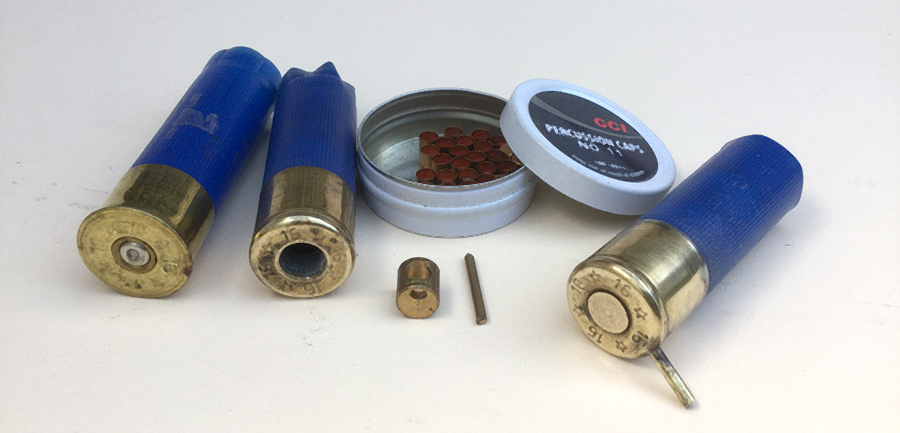
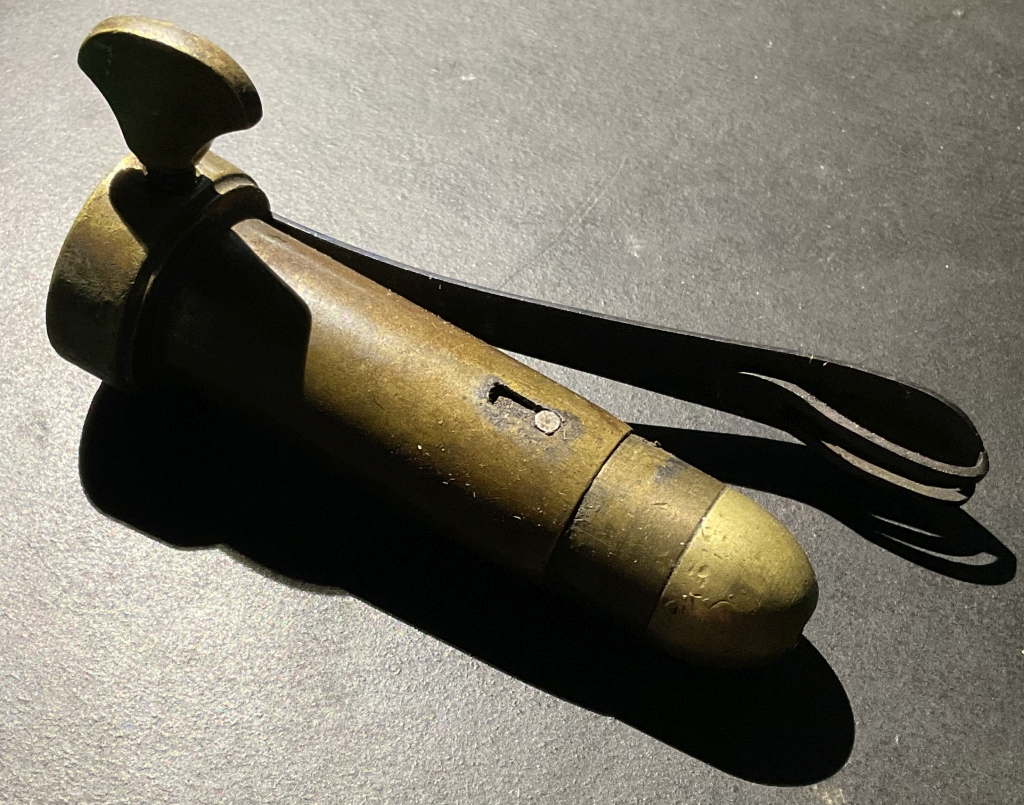
Or making your own by swaging fired brass hulls, then making a piece to hold the percussion cap/primer...
- But while everyone talks about the swaging, no one ever mentions where they got the dies/tools?

pin3.jpg
 
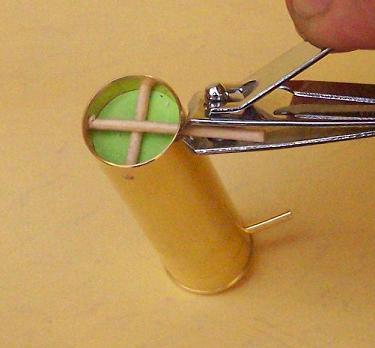
Interesting that the primer is replaced by a cap holder. Makes it easier to set the cap in position. Original pinfire primers are slender things, and were positioned with a specialized tool. The pin was drawn out a bit, the primer was positioned, and the pin pressed back into place.
From the look of those repurposed plastic 16ga shells, was the case pushed rim first into a die, or was a rolling technique used?
 
I have a cheapie Belgian pinfire that I have been putting off trying. But have thought of using a simpler method since mine has a rim recess. Drill a hole for the pin at the correct angle through a fired hull then use the hole on the opposite side as a starting point to drill a hole for a #11 percussion cap. Main reason I haven’t don’t it is the gun stock is in bad shape and it was a 14ga reamed out for 12ga hulls.
 
In the OP's post, there are 16ga plastic shells which have been reworked to alter the rim. Pinfire shells don't necessarily have a rim the way centerfire shells do. I'm assuming the shells were passed through a die which pressed the rims inward. Whatever is being adapted has to be able to chamber freely.
I have used the commercial brass pinfire 16ga shells. Had to shorten them on the lathe to suit my gun's chambers. Problem with them is the expense - I only have half a dozen of them. Altering readily available shells is appealing. Easy enough to make up the little cap adapters.
Plastic shells can be made in a couple of difference ways. The plastic can be a tube, with a built up head of fiber wads with a thin formed brass head. Just like vintage paper shells. Or the hull can be one piece plastic with the thin brass head formed over it.
 
I have tried the brass pin-fire cases some 40 years ago (I obtained them from Henry Krank in the UK), but I was never wholly satisfied with the results. I sealed the paper overwads with a bit of bathroom caulking (as opposed to the strange wood arrangement in the OP's picture). Yes, they did fire OK, and the black powder smoke was satisfying, but I could never get a consistent performance up to commercial shell standards. This might have been due to the fibre wads, how the powder was tamped etc. Eventually I lost them in one of several house moves, though I have one left.

One thing to be aware of, chamber sizes in the pinfire era were not standardized, in diameter or length. What fits in one 12-gauge chamber might not fit in another. Most pin-fire cartridges had no rim, or a very slight one left over in the manufacturing process. No extractor was necessary (you pull them out by the pins), so no need for rims; any adaptation of modern casings would have to remove or reduce the rims somehow, without weakening the structure of the base. The material of the pins is another consideration, as some brass wire is too soft and bends easily, and doesn't transfer the strike. The angle of the pin varies, from slight to none. The arc of the hammer throw is different on each gun, according to the shape and length of the hammer nose, and the fitting of the lock -- again, no standardization. Back then, you chose cartridge brands that fit your gun in more ways than simply popping one in the chamber. As to the chamber, some guns, especially French, Belgian and very early British ones, had no forcing cone, instead having a sharp shoulder (corresponding to the width of the cardboard tube material). The size of the pin holes in the barrels at the breech also varied greatly; some pinched the pins and made for unreliable ignition, and if too large, gas can escape (a little bit does anyway). Choose a size/width of pin that fits closely to your gun, as much as possible. Finally, since we're talking about old guns, the strength of the mainsprings is an issue. Back then they would have been strong and sharp, but dial forward 150 years, and that strength may be much less, leading to misfires.

I wouldn't expect anyone nowadays to be a particularly good shot with a pin-fire game gun, without a lot of practice. The fact that the tall hammers remain in your field of vision can throw you off, unless you use them as a sighting guide (between the goalposts, as it were). Dimension-wise, these guns were used by fellows in top hats and stiff collars, so the comb on the stock is often in the wrong place. As to point-of-aim, many pin-fire game guns were meant for taking shots at rising pheasants, so many shoot a bit high, intentionally. Patterns will vary, but don't expect much from cylinder bores. Back then, a gun that put 40-50% in a thirty-inch circle at 40 yards was considered exceptionally good.

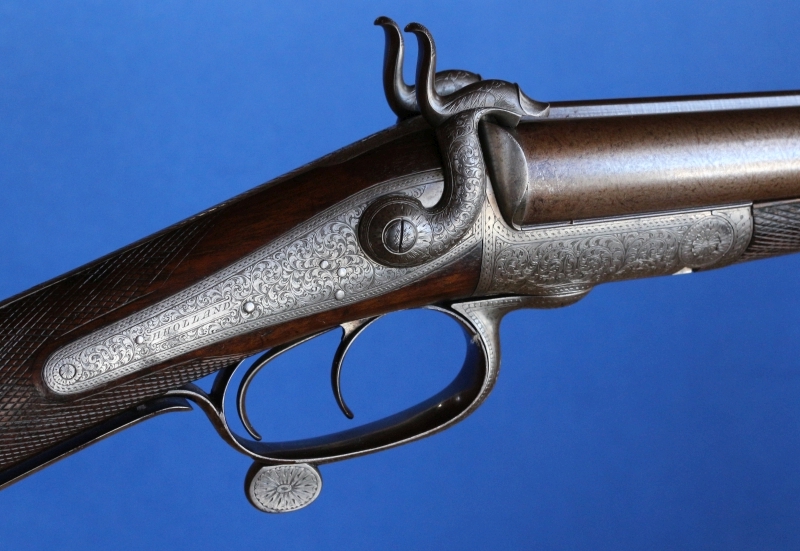
I know that on GunNutz having a gun and not firing it is seen as peculiar, but I've made my peace with that. I have enough vintage and antique centre-fire guns to shoot with, I don't need to risk blowing up my pin-fires, which for the most part are impossible to replace -- like this Holland:

JCpioHK.jpg


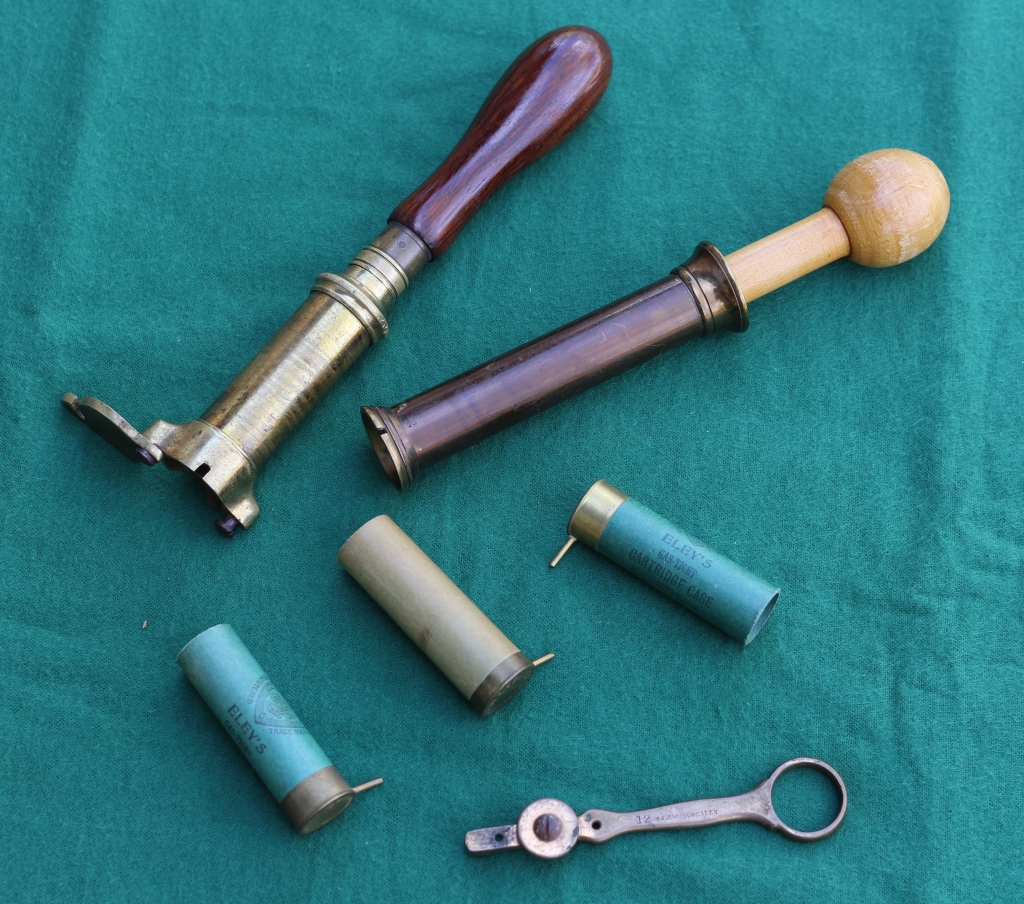
There were quite a few specialized tools to load pin-fire cartridges, either one at a time or in multiple batches. Here are some simple tools for loading cartridges and fitting pins, a hook for removing split cartridge cases, and some primed cases, as they were usually bought back then, ready to be loaded with one's preferred powder and shot recipe:

FvaYoML.jpg


As for capping the cases, there was another specialized tool which inserted the percussion cap in the right place, and which also helped re-size the cardboard tubes:

Z8LF1Wy.jpg


(Sorry, I don't have better light for taking pictures right now.)

I have found that a thin dowel (or a chopstick), tipped with something sticky, works extremely well for placing the percussion cap in its socket and lining it up, before inserting the pin to hold it in place. Back in the 1860s, a frequent cause of misfires was that the primed cases, purchased ready for loading, occasionally lacked a cap altogether -- you just can't depend on child labour, I guess.

Good luck with your pin-fire cartridge hobby, Sillymike. And I agree with Mbatten, retirement is the best.

 
In the OP's post, there are 16ga plastic shells which have been reworked to alter the rim. Pinfire shells don't necessarily have a rim the way centerfire shells do. I'm assuming the shells were passed through a die which pressed the rims inward. Whatever is being adapted has to be able to chamber freely.
I have used the commercial brass pinfire 16ga shells. Had to shorten them on the lathe to suit my gun's chambers. Problem with them is the expense - I only have half a dozen of them. Altering readily available shells is appealing. Easy enough to make up the little cap adapters.
Plastic shells can be made in a couple of difference ways. The plastic can be a tube, with a built up head of fiber wads with a thin formed brass head. Just like vintage paper shells. Or the hull can be one piece plastic with the thin brass head formed over it.

I have been mulling over mine for months thinking of a way to get it going cases would be way too thick to seal the bore if I used brass. I’d have to slug the bore at the breech and muzzle end to get good measurement but I recall it being around a 14ga bore wise.
 
Sometimes the gauge stamp on the barrel flats would be 14, but the original chambers would be 12ga. Basically a tight bored 12. I have a pair of Charles Lancaster oval bored rifled barrels gauge stamped 14 with 12ga chambers.
 
Sometimes the gauge stamp on the barrel flats would be 14, but the original chambers would be 12ga. Basically a tight bored 12. I have a pair of Charles Lancaster oval bored rifled barrels gauge stamped 14 with 12ga chambers.

With fiber wads I’m thinking it’s a non issue. Might try bringing the stock back to life and giving it a shot.
 
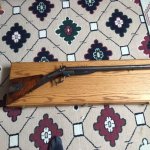
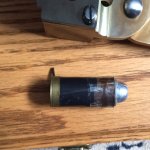
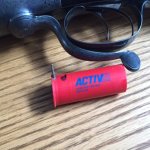
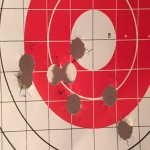
I have a 1865 Powell 16 bore double rifle pinfire that i have shot some, i have use some original paper cases that i wrap in tape since they are smaller then the chamber. when wrapped they can be reloaded again and i have also used Activ plastic shells with the rim turn down. The last picture is a target shot at 80 yards

IMG_0075.jpg

IMG_0080.JPG

IMG_0081.JPG

IMG_0082.JPG
 

Attachments

  • IMG_0075.jpg
    IMG_0075.jpg
    60.3 KB · Views: 139
  • IMG_0080.JPG
    IMG_0080.JPG
    101 KB · Views: 139
  • IMG_0081.JPG
    IMG_0081.JPG
    117.1 KB · Views: 138
  • IMG_0082.JPG
    IMG_0082.JPG
    97.7 KB · Views: 142
I have a 1865 Powell 16 bore double rifle pinfire that i have shot some, i have use some original paper cases that i wrap in tape since they are smaller then the chamber. when wrapped they can be reloaded again and i have also used Activ plastic shells with the rim turn down. The last picture is a target shot at 80 yards

View attachment 713898

View attachment 713899

View attachment 713900

View attachment 713901

That is neat never seen a double rifle pinfire. Would be a great deer gun. Active hills there’s one I do not have for my collection there was a dealer here who had some 12ga once fired for sale but I never seen them to the other night.
 
That is very impressive accuracy from that fine old pinfire, I’m truly impressed. Certainly adequate for deer to 100 yards or so.
In the past when that Activ ammunition was current I reloaded it, data was available and it reloaded well. I still have a few empties around here, maybe some 20’s as well if collectors would like one. They make an interesting conversation piece. Not as interesting as pinfires though.
 
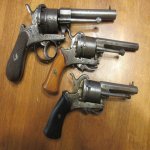
Speaking of pinfires, I should work up some cartridges for these. At least for the upper two Belgians. The lowest gun is hurting a bit.
As far as I can tell, these are 9mm and 7mm.
The top 9mm revolver will accept 9x19 rounds, so altered 9x19 cases should be a good starting point. Face off most of the extraction groove, solder the flash hole shut. Drill for the pin.
Measurements indicate a heeled .38 bullet would be best. Haven't experimented yet to see what a starting point would be for 7mm pinfire case.

IMG_1733.jpg
 

Attachments

  • IMG_1733.jpg
    IMG_1733.jpg
    103.2 KB · Views: 63
Last edited:
I may sound like an idiot for asking this but how would one carry loaded pin fire cartridges in the field? Did they come in special boxes to protect the pins? Not like modern ammo where they stack neatly in a box of 25 I'm guessing
 
One would have to be careful with the pins. Loose in a pocket probably wouldn't be a good idea. Rounds could be positioned in a cartridge belt to keep the pins from getting struck
 
I may sound like an idiot for asking this but how would one carry loaded pin fire cartridges in the field? Did they come in special boxes to protect the pins? Not like modern ammo where they stack neatly in a box of 25 I'm guessing

This was a great subject of discussion in the back-and-forth letters of the weekly newspaper The Field in the 1850s. Opponents of the new breech-loader claimed that dropping a pin-fire shotgun cartridge, or falling with cartridges in one's pocket, would result in catastrophe, and therefore breech-loaders should be avoided. As was typical then, detractors had likely never handled any pin-fire cartridges before bringing up presumed dangers. It didn't matter that correspondents pointed out that if dropped, the weight of the shot at one end meant it would never drop on the pin; or that repeated attempts to detonate a pin-fire cartridge outside of its intended chamber were not successful. The pocket argument was brought up, as it was customary for new users of breech-loaders to carry the expected day's cartridges in one's coat pocket, yet no one ever reported any cartridges detonating, despite falls on rocks etc. In the very unlikely chance that a cartridge was made to detonate, the cartridge would scatter pellets in all directions, without much ill effect, as there would be no build-up of energy behind the pellets. Carrying pin-fire cartridges in one's pockets was seen as an advantage, as a variety of shot sizes could be carried in different pockets, for different kinds of game -- from upland birds to swans and seals (!). The one real risk that was identified was that of the pins eventually poking holes in ones tweed jacket pocket, which a tailor could easily fix! Despite the lack of actual danger, makers of shooting accessories did come up with belts and bandoliers that dispensed pin-fire cartridges without worry. The French developed attractive small leather-covered boxes that could fit 8 or 10 pin-fire shotgun cartridges, and fit in one's pocket. Sportsmen at driven shoots carried cartridges in shoulder bags and boxes, some of which were fitted for pin-fire cartridges. Or, I should say, one's man or designated loader carried the cartridges, not the gentleman shooter. Leather-covered oak gun cases, meant for railway and carriage use, often included a second layer, either below or above the gun and implements, to carry 100 or more pin-fire cartridges in a manner that would not risk bending the pins.


Like the central-fire cartridge, it takes a strong mainspring and hammer blow to detonate a cap.
 
This is awesome, and what CGN is actually for - the dissemination of useful gun info. Well done to everyone, especially Pinfire, who would naturally be expected to know a few things about pinfire reloading... :)

That Holland is upsettingly beautiful. Some squinty old Englishman did every square millimeter of that engraving by hand, and the shapes and forms on that gun are just stunning. As an object of design alone, it's really something. The fact that it can shoot is gravy on potatoes. Thanks for sharing that.

I, too, am finding retirement to be the best job I ever had. The hours are great, the boss is a sweetheart. The money's no good, but it's enough. I can get to the range on a Wednesday and have the place largely to myself. Not seeing a downside.

I find the older I get, the more I appreciate single shots and antiques. Perhaps because I'm becoming something of an antique myself. But the current generation of High-Speed-Low-Drag-semi-auto stuff just doesn't push my buttons. I parted out my AR, sold my GSG16, and am saving up to see about building a mag-fed 9mm Para bolt rifle, just 'cause I have plenty of ammo and am dogsh!t with a pistol.

I wish each of you a good day. Sillymike, enjoy the adventure. :) Keep us posted. I wanna see how this turns out.
 
Back
Top Bottom