













































I read up on this topic all over the place for several days to find out what information I would need. After all that time I decided to try the Devcon steel putty over the Agraglass bedding kit for only two reasons. #1 would be that the Agraglass kit only does 2 maybe 3 rifles and the Devcon product looks like I can do 4-5 rifles with what I have. #2 Devcon can be bought locally for me while Agraglass has to be shipped (read more $$$). Not to mention that the 6mm Benchrest article in this forum has a smith use Devcon. Well here is my experience with pictures for all you noobs who want to try it out. This article is long.
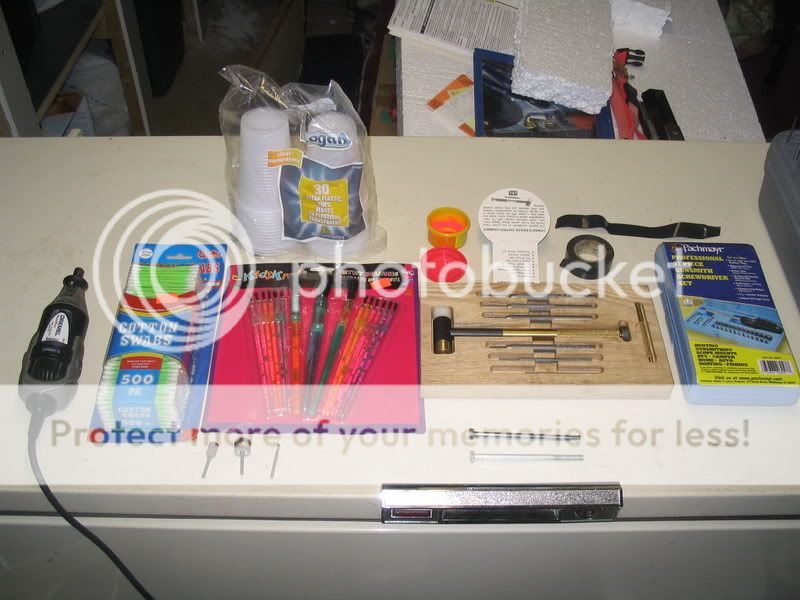
Preparation is the key here, here is a small listing of some of the items you'll need: Dremel tool if you have it or exacto knife works as well, Q-tips, Plastic cups for mixing Devcon, Brushes for application but I would use popcycle sticks next time as the putty is too thick for a brush, Playdough, Gunsmith punch set, 1/4-20x4" bolts x 2, Electrical tape, Gunsmith srew driver set and missing from photo is masking tape, measuring spoons, Devcon Steel Putty and Kiwi shoe polish natural color (release agent). Devcon comes in 1lbs, 4lbs and 8lbs I believe (I got mine from Motion Industries). Sells for about $45 taxes in for the 1lbs box. Most of the other items can be purchased at the Dollar store.
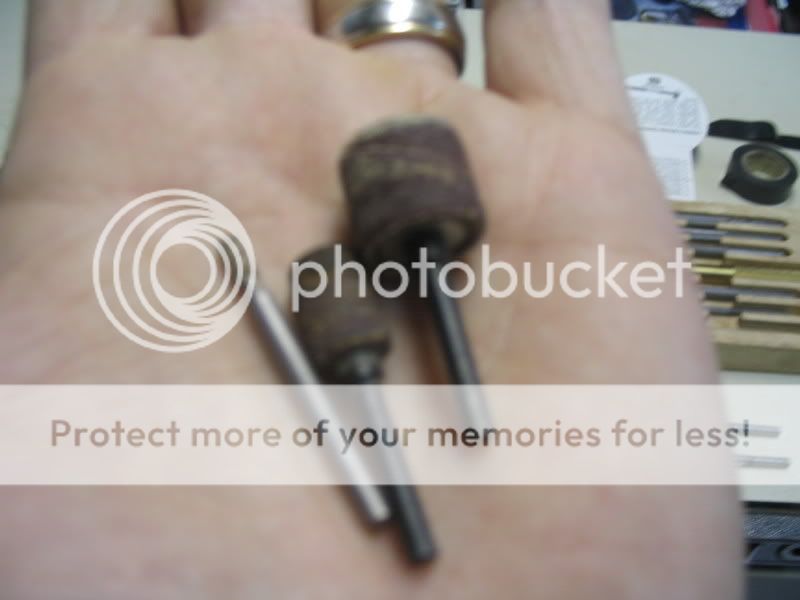
For the Dremel tool I used these bits for relieving the stock. One is a wood bit and the other 2 are sanding wheels.
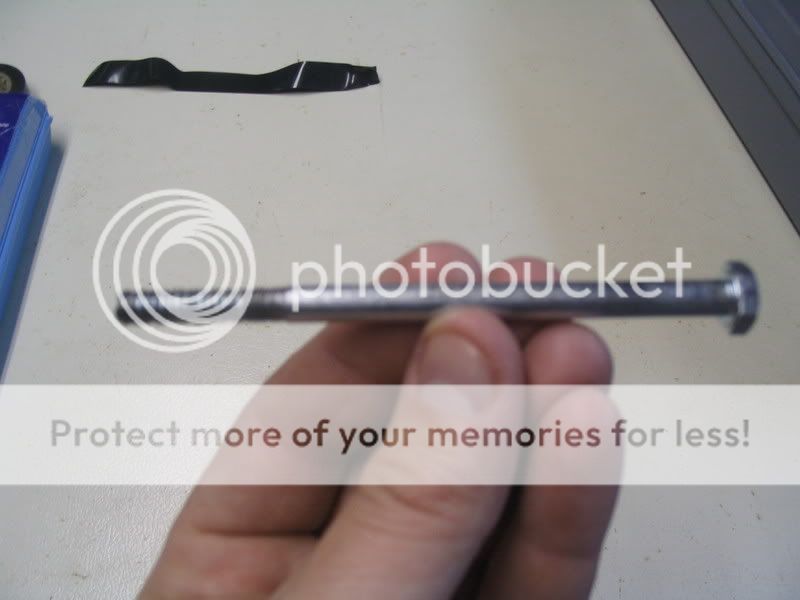
Next on the list are the action screws, good luck getting fine pitch screws at Homedepot, Canadian Tire, Part source etc. You need to buy them at Brafasco or some specialty shop, since I did not want to make a special trip I made mine. These screws will be specific to your action. Retap your 1/4-20 screws (For Rem 700 action) with a 1/4-28 die and work your way into the shank after the threads. Once done cut off old 1/4-20 threads and cut off head. Tapping is done in this photo only.
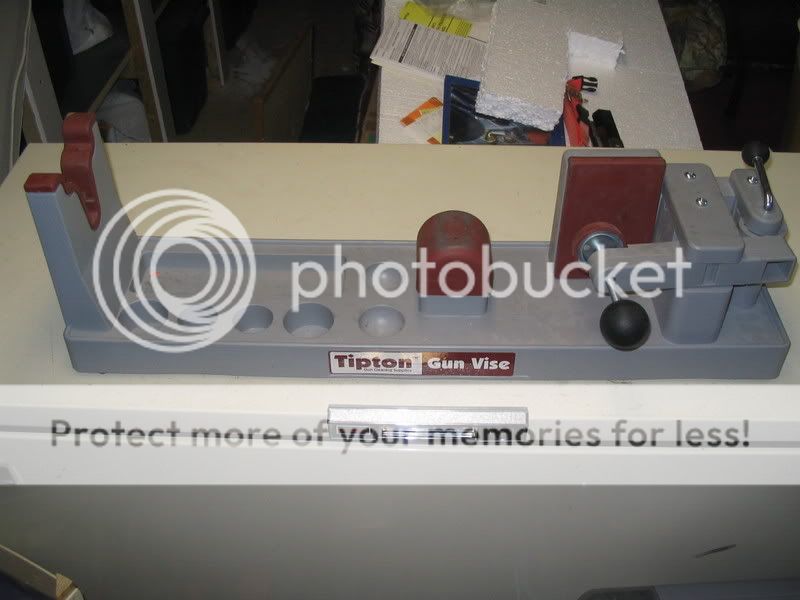
I borrowed this from a friend, It's nice to have and holds everything nicely.
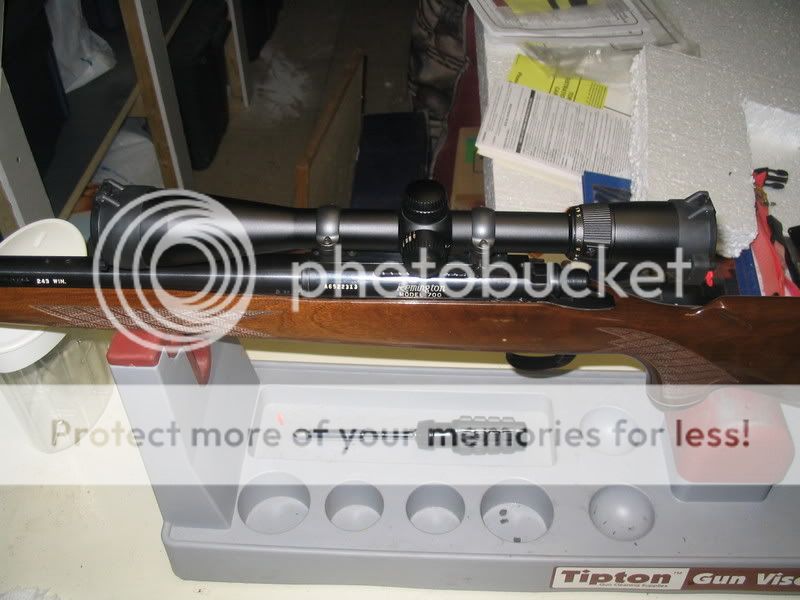
First thing to do on the rifle is remove the scope if you can as it is easier to work on the rifle. Next is to remove the barreled action from the stock. Then remove the bolt, magazine housing, trigger group, and bolt release from the barreled action. Reason for this will be exlained later with pictures. Once the barrel is free of everything, tape your recoil lug with masking tape. One layer on the front, two layers on the sides and bottom. Use an exacto knife to trim the tape perfectly. I taped 2" in front of the recoil lug just to let me know how far to place the putty. Next place a piece of paper around the barrel and apply some electrical tape. You should apply enough tape so that it allows the barrel to sit perfectly centerd in the stock channel. It should not raise the barreled action from original position.
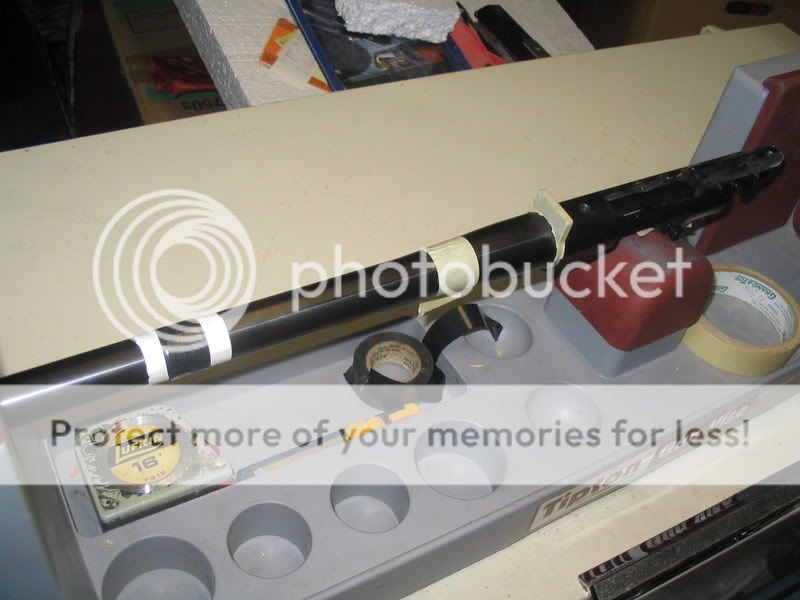
Next is your stock inletting or relieving. Dremel sanding disks worked great. You only need to relieve about 1/8" to 3/16" on your contact areas. I did mine all over. Stay about 1/8" lower than the top edge of your stock for a nice finished look. I went alittle too close on mine. You can use the wood bit in the Dremel for removing about 1/4" from behind your recoil lug. A wood chisel can work as well. Once all that is complete you can tape off your areas that you don't want putty on. I should also mention that you need to leave some original wood at the tang area. This allows your rifle to rest on the original wood (back) and electriacal tape (front) points only.
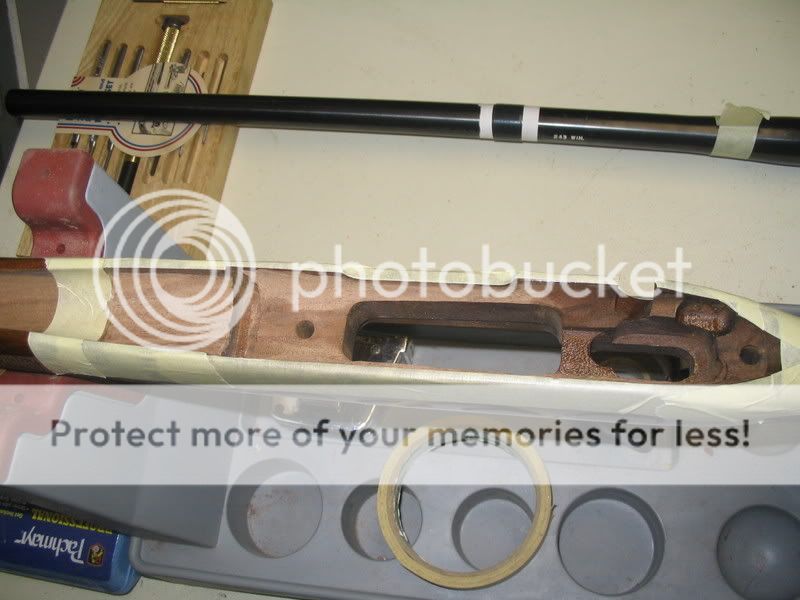
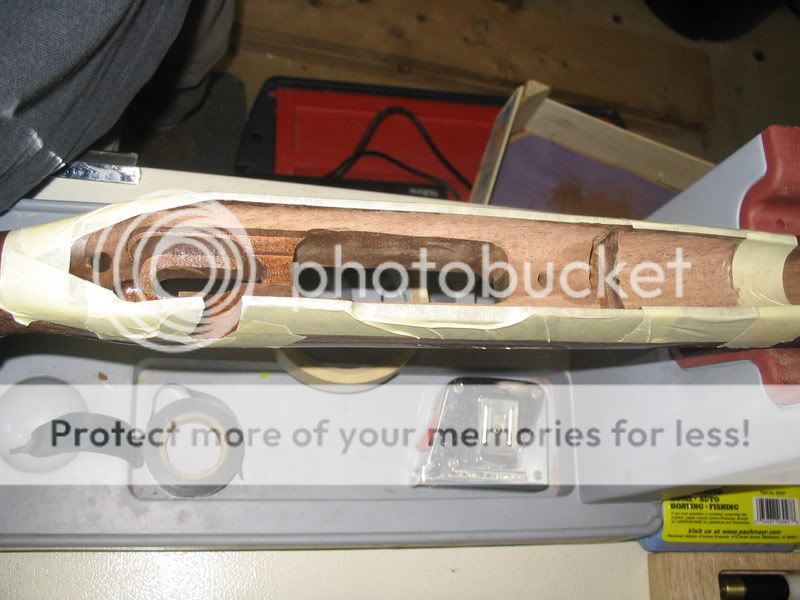
Too avoid any problems later with too much putty in places I don't need it I placed Playdough in the void. You can use plumbers putty but my son has loads of Playdough around and he won't miss the 2 containers that went missing.
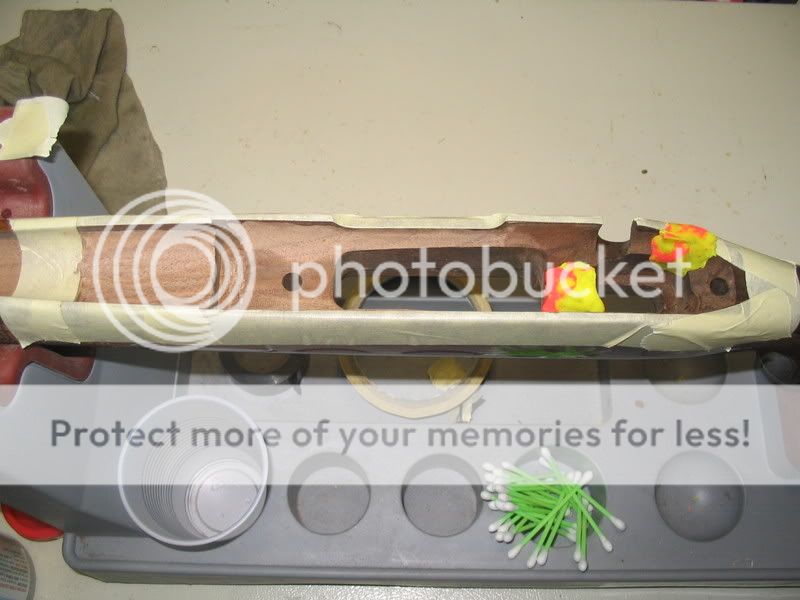
Time to do the same with the barrelled action. Playdough goes in eveything I don't want Putty in. I have also installed my action screws as lineup guides. I also placed some tape around the action screws to allow them a more snug fit in the stock.
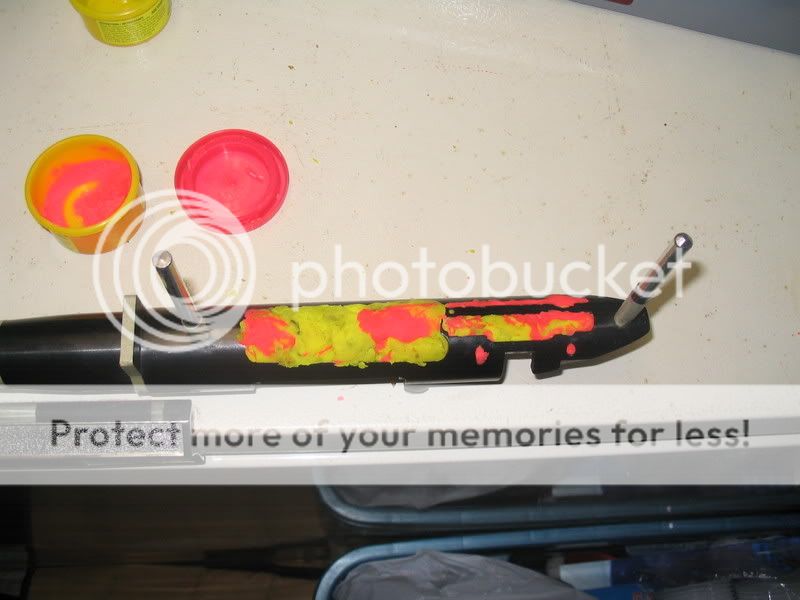
Next is your release agent. I used the Kiwi shoe polish and spread it with my fingers at first and then used a Q-tip to get into the nooks and crannies. Spread it on everything, action, action screws, tape and playdough. Go farther up the sides of the action just in case you get too much putty ooze, it's easier to wipe off. I used the natural color so it would not discolor my stock or action. Do not spread the release agent too thick as you want a very tight action to stock fit.
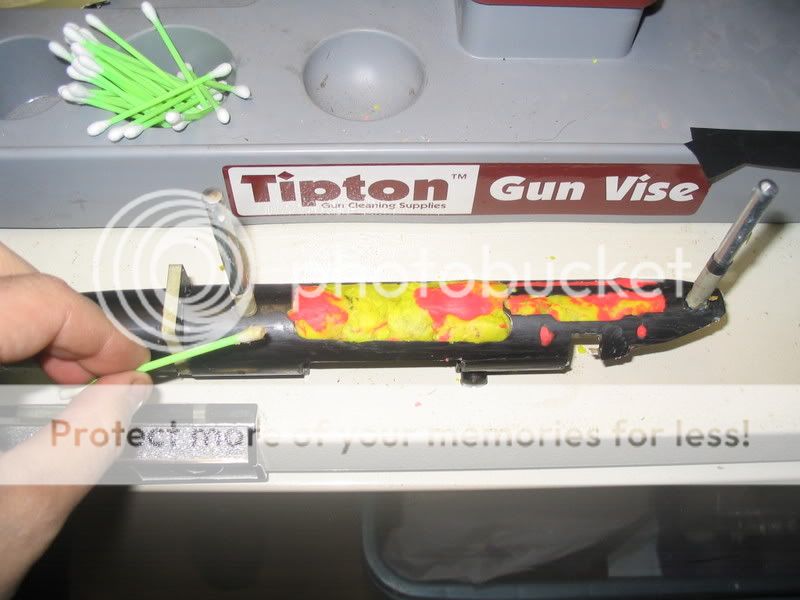
Next you can mix the putty in your container following the directions on the box. After that you can apply the Devcon Steel putty to your action. I was planning on using the brushes but the putty is too thick so I used a srewdriver instead and it worked great. Do not go too far up on your action sides as you will get too much putty ooze. No need to cover the playdough as these are void areas we want to keep clear.
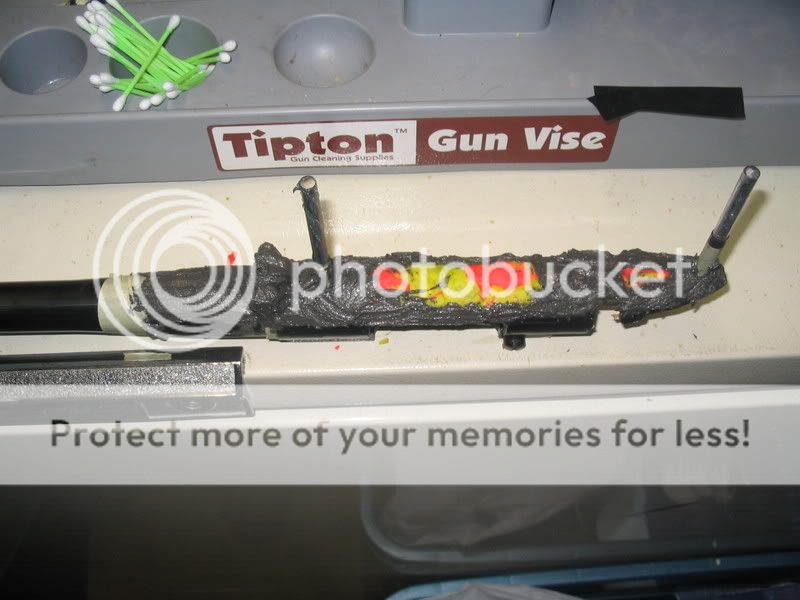
Next you apply the putty to your stock. This should give you a better application with fewer voids, bubbles and fissurs. No need to cover the playdough as these are voids we want to keep clear.
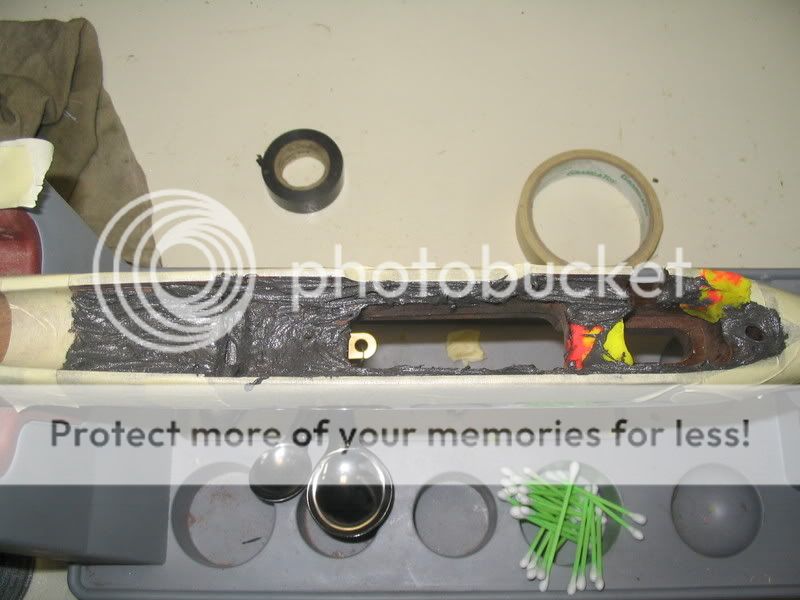
Now for the action to be placed in the stock slowly. Apply enough preassure to see some putty oozing from the stock. If you do not see enough putty ooze then now is the time to slowly remove the action from the stock and see if putty from both action and stock have mated. If everything is OK, reassemble and wipe away any putty ooze with a paper towel followed by Q-tips. You will be using lots of Q-tips (40-50) for this job.
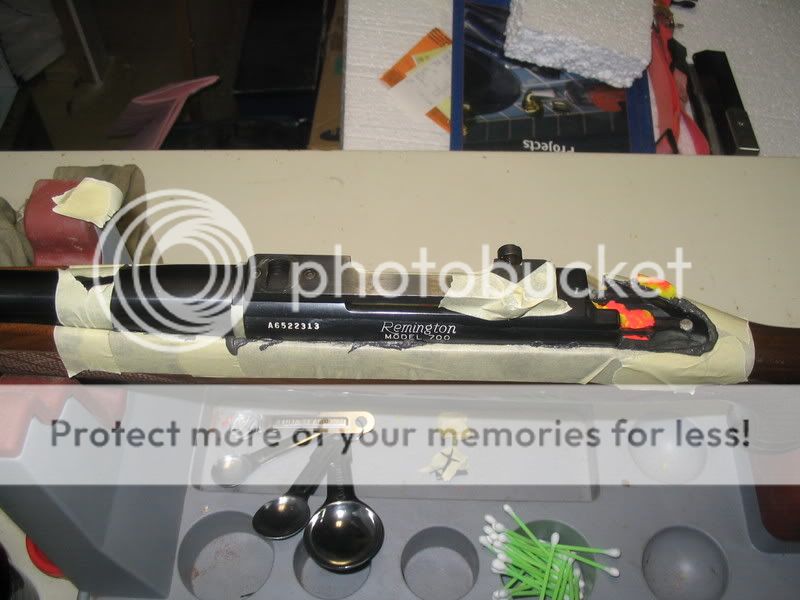
Now you can flip the action and stock over and rest everything on the action only. Now remove any putty ooze from the inlet areas. This is why we have removed the magazine houseing, trigger group and all other items. It is much easier to work in the voids and less chance of getting a mechanical lock.
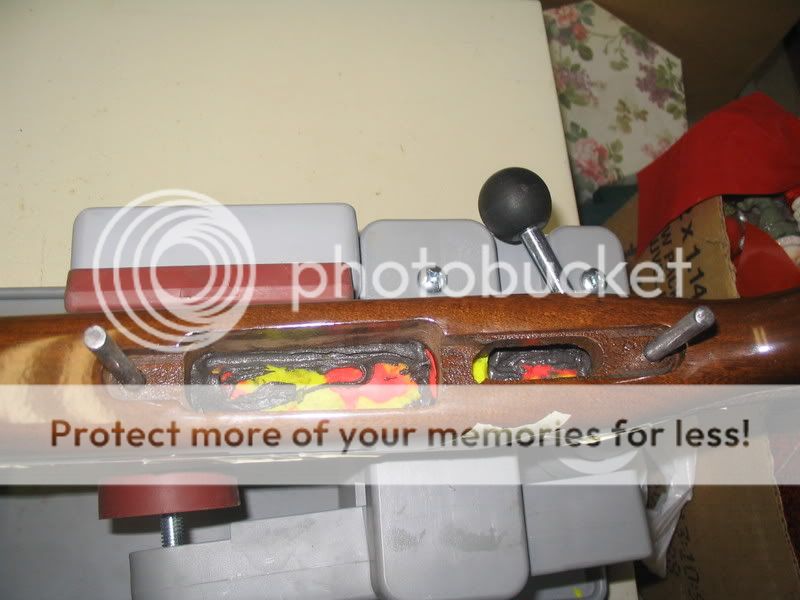
I just did a final wipe with some more Q-tips and for a final cleaning I wiped some of the putty away with a Q-tip dipped in Butch's Bore Shine.
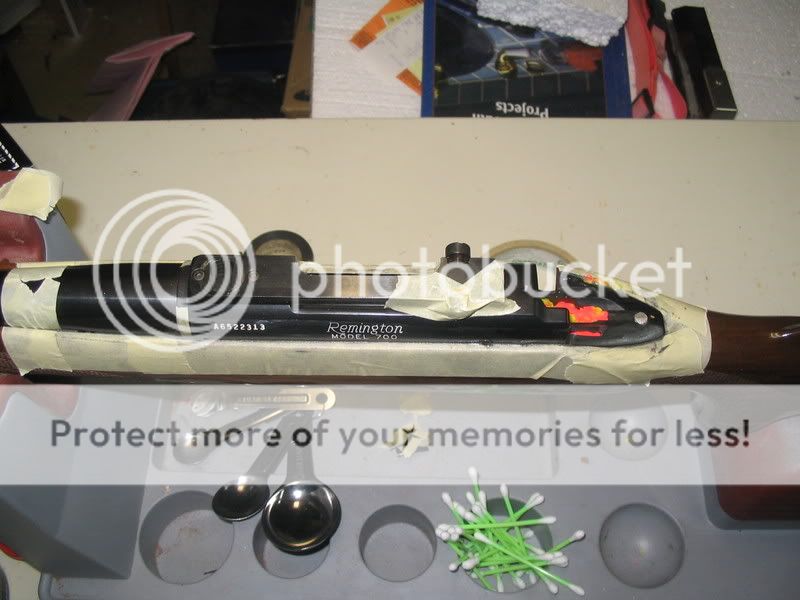
Now you "clamp" your action and stock together for curing. It is not suggested to use an actual clamp. Best method I was reading about to use is to cover your action and stock with a paper towel and then wrap electrical tape around it several times.
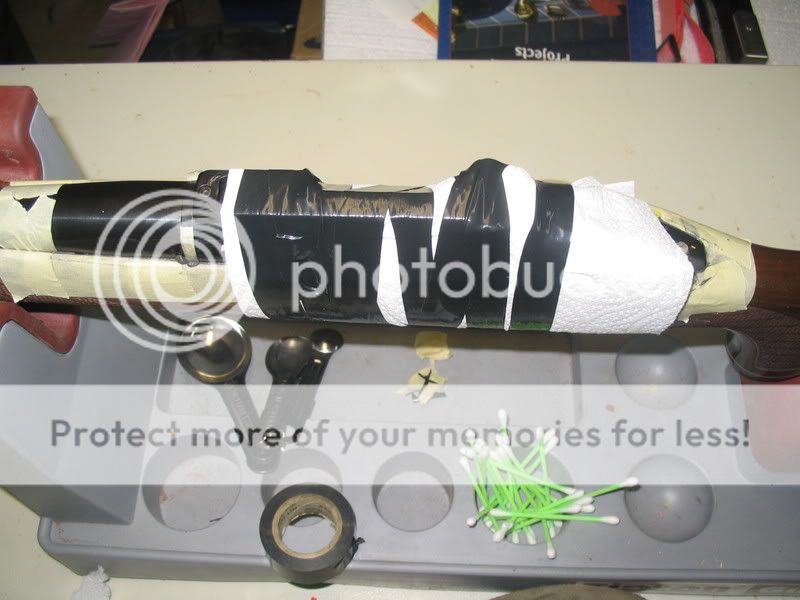
Once it has cured, I left mine overnight, you can remove the electrical tape and paper towel.
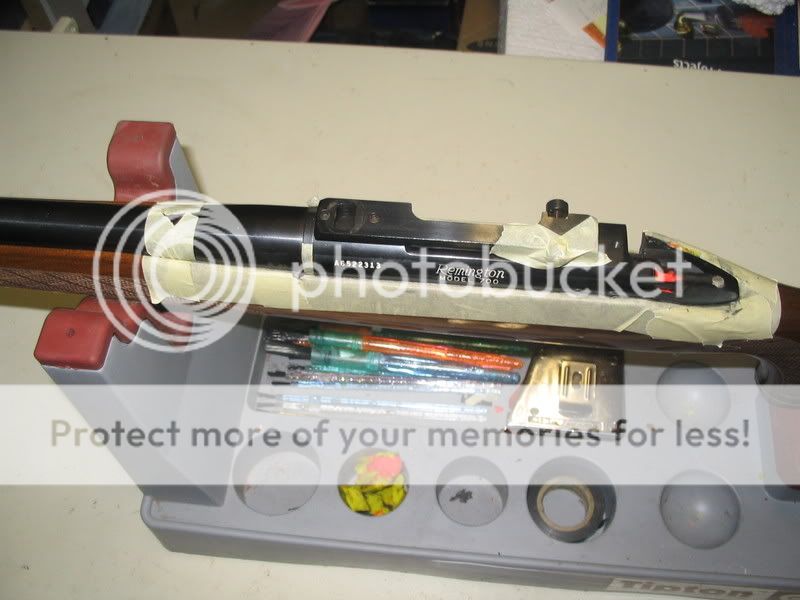
To pop the action from the stock I simply turned mine over in the vise and gently pulled on the barrel. It lifted from the stock very nicely. I then used the action screws to push the rest of the action from the stock. Here is what I found.
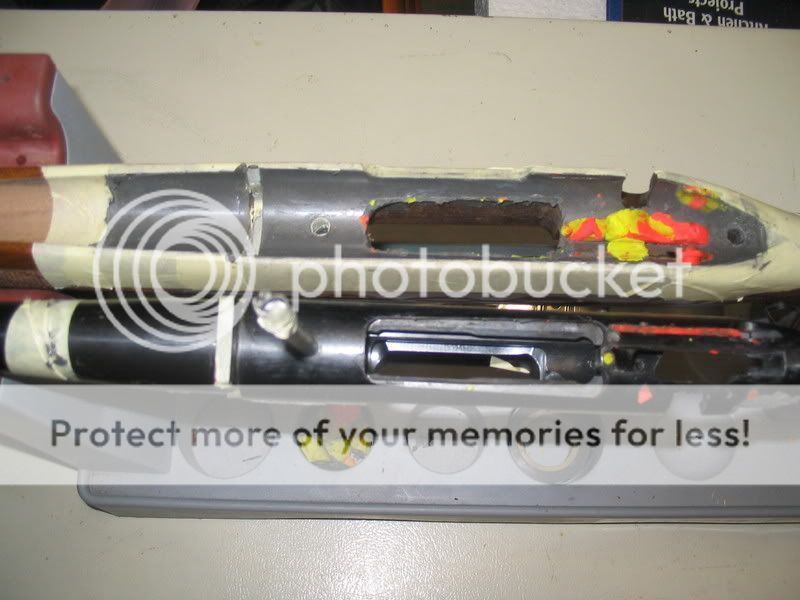
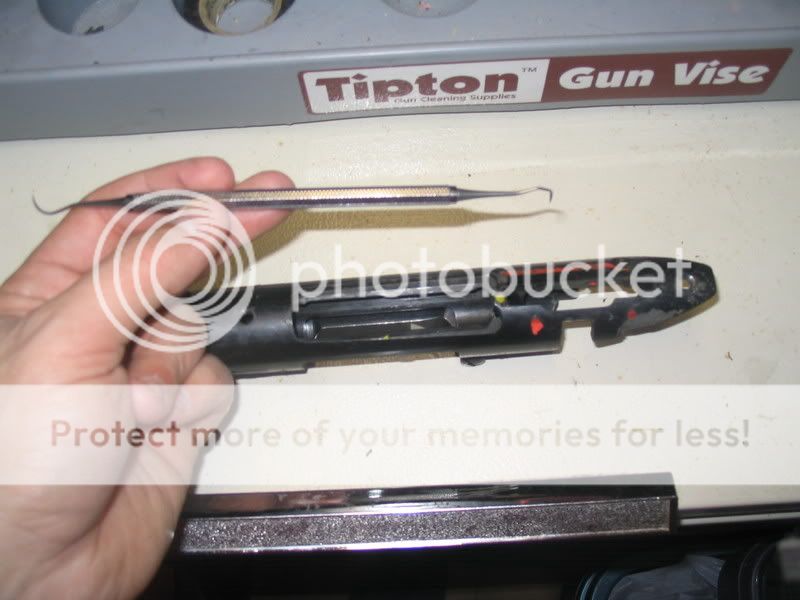
Now for some clean up. You can use anything but I have found dental picks work great and can be picked up free from any dentist office. Remove all playdough and any remaining pieces from the action. You can also remove the tape and the action screws now.
Clean up the stock by cutting the putty with a knife or you can use a Dremel tool with a sanding stone. I did both. Remove all your tape.
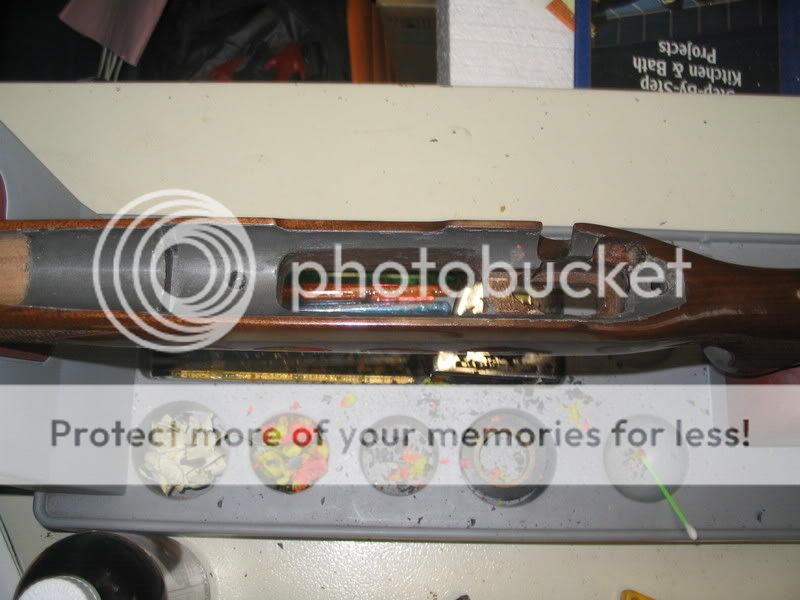
Now it's time to put it all back together. Once I let it fully cure for a week, I'll take it out to the range for a test run.
If this works out great I'll post some groups, pre and post bedding job. I may even get the time to post another bedding job for a synthetic stock, not sure if it'll be my Savage in Ultimate Varmint Stock or my Tikka T3 HB Varmint. It seems like the next likely victim will be my Win Model 70 Laredo in HS stock.
Preparation is the key here, here is a small listing of some of the items you'll need: Dremel tool if you have it or exacto knife works as well, Q-tips, Plastic cups for mixing Devcon, Brushes for application but I would use popcycle sticks next time as the putty is too thick for a brush, Playdough, Gunsmith punch set, 1/4-20x4" bolts x 2, Electrical tape, Gunsmith srew driver set and missing from photo is masking tape, measuring spoons, Devcon Steel Putty and Kiwi shoe polish natural color (release agent). Devcon comes in 1lbs, 4lbs and 8lbs I believe (I got mine from Motion Industries). Sells for about $45 taxes in for the 1lbs box. Most of the other items can be purchased at the Dollar store.
For the Dremel tool I used these bits for relieving the stock. One is a wood bit and the other 2 are sanding wheels.
Next on the list are the action screws, good luck getting fine pitch screws at Homedepot, Canadian Tire, Part source etc. You need to buy them at Brafasco or some specialty shop, since I did not want to make a special trip I made mine. These screws will be specific to your action. Retap your 1/4-20 screws (For Rem 700 action) with a 1/4-28 die and work your way into the shank after the threads. Once done cut off old 1/4-20 threads and cut off head. Tapping is done in this photo only.
I borrowed this from a friend, It's nice to have and holds everything nicely.
First thing to do on the rifle is remove the scope if you can as it is easier to work on the rifle. Next is to remove the barreled action from the stock. Then remove the bolt, magazine housing, trigger group, and bolt release from the barreled action. Reason for this will be exlained later with pictures. Once the barrel is free of everything, tape your recoil lug with masking tape. One layer on the front, two layers on the sides and bottom. Use an exacto knife to trim the tape perfectly. I taped 2" in front of the recoil lug just to let me know how far to place the putty. Next place a piece of paper around the barrel and apply some electrical tape. You should apply enough tape so that it allows the barrel to sit perfectly centerd in the stock channel. It should not raise the barreled action from original position.
Next is your stock inletting or relieving. Dremel sanding disks worked great. You only need to relieve about 1/8" to 3/16" on your contact areas. I did mine all over. Stay about 1/8" lower than the top edge of your stock for a nice finished look. I went alittle too close on mine. You can use the wood bit in the Dremel for removing about 1/4" from behind your recoil lug. A wood chisel can work as well. Once all that is complete you can tape off your areas that you don't want putty on. I should also mention that you need to leave some original wood at the tang area. This allows your rifle to rest on the original wood (back) and electriacal tape (front) points only.
Too avoid any problems later with too much putty in places I don't need it I placed Playdough in the void. You can use plumbers putty but my son has loads of Playdough around and he won't miss the 2 containers that went missing.
Time to do the same with the barrelled action. Playdough goes in eveything I don't want Putty in. I have also installed my action screws as lineup guides. I also placed some tape around the action screws to allow them a more snug fit in the stock.
Next is your release agent. I used the Kiwi shoe polish and spread it with my fingers at first and then used a Q-tip to get into the nooks and crannies. Spread it on everything, action, action screws, tape and playdough. Go farther up the sides of the action just in case you get too much putty ooze, it's easier to wipe off. I used the natural color so it would not discolor my stock or action. Do not spread the release agent too thick as you want a very tight action to stock fit.
Next you can mix the putty in your container following the directions on the box. After that you can apply the Devcon Steel putty to your action. I was planning on using the brushes but the putty is too thick so I used a srewdriver instead and it worked great. Do not go too far up on your action sides as you will get too much putty ooze. No need to cover the playdough as these are void areas we want to keep clear.
Next you apply the putty to your stock. This should give you a better application with fewer voids, bubbles and fissurs. No need to cover the playdough as these are voids we want to keep clear.
Now for the action to be placed in the stock slowly. Apply enough preassure to see some putty oozing from the stock. If you do not see enough putty ooze then now is the time to slowly remove the action from the stock and see if putty from both action and stock have mated. If everything is OK, reassemble and wipe away any putty ooze with a paper towel followed by Q-tips. You will be using lots of Q-tips (40-50) for this job.
Now you can flip the action and stock over and rest everything on the action only. Now remove any putty ooze from the inlet areas. This is why we have removed the magazine houseing, trigger group and all other items. It is much easier to work in the voids and less chance of getting a mechanical lock.
I just did a final wipe with some more Q-tips and for a final cleaning I wiped some of the putty away with a Q-tip dipped in Butch's Bore Shine.
Now you "clamp" your action and stock together for curing. It is not suggested to use an actual clamp. Best method I was reading about to use is to cover your action and stock with a paper towel and then wrap electrical tape around it several times.
Once it has cured, I left mine overnight, you can remove the electrical tape and paper towel.
To pop the action from the stock I simply turned mine over in the vise and gently pulled on the barrel. It lifted from the stock very nicely. I then used the action screws to push the rest of the action from the stock. Here is what I found.
Now for some clean up. You can use anything but I have found dental picks work great and can be picked up free from any dentist office. Remove all playdough and any remaining pieces from the action. You can also remove the tape and the action screws now.
Clean up the stock by cutting the putty with a knife or you can use a Dremel tool with a sanding stone. I did both. Remove all your tape.
Now it's time to put it all back together. Once I let it fully cure for a week, I'll take it out to the range for a test run.
If this works out great I'll post some groups, pre and post bedding job. I may even get the time to post another bedding job for a synthetic stock, not sure if it'll be my Savage in Ultimate Varmint Stock or my Tikka T3 HB Varmint. It seems like the next likely victim will be my Win Model 70 Laredo in HS stock.
Last edited:


 Stuart
























