












































You are using an out of date browser. It may not display this or other websites correctly.
You should upgrade or use an alternative browser.
You should upgrade or use an alternative browser.
The Shotgun In Modern Combat - Drone Defense
- Thread starter joe6167
- Start date


Its not the gun, it is the ammo and the gunner.Soon the question will which shotguns are effective against the new anti-drone drones that are coming out.
Why would you need to shoot down an anti-drone, drone? It isn't threatening you.


Big bore dinosaur
CGN frequent flyer
- Location
- NORT OF COW.TOWN.EH
Bigger ones.. more lead = bad day fir drones..Soon the question will which shotguns are effective against the new anti-drone drones that are coming out.
chiappa 3barrel anyone10GA? 8GA?
Maybe a street sweeper design 8Ga 5oz loads , full of #2.

On Ukraine’s 5.56 mm Anti-Drone Cartridge

Thanks to Brave1, a video of a Ukrainian anti-drone cartridge has begun circulating online. So it seems appropriate to offer some clarification. Yes, such a Ukrainian development exists, a 5.56 NATO caliber round designed specifically for drone hunting.
Informally known as Horoshok (“Pea”), this cartridge is already in use. I’ve fired it myself and successfully taken down more than one FPV drone. In contrast, I haven’t been able to shoot down a maneuvering or high-speed FPV drone (without a warhead) using a conventional 5.56 round. Horoshok makes that possible.
Those familiar with anti-drone systems will likely recognize the concept behind the design. It uses a segmented projectile — that is, several sub-projectiles (pellets) instead of a single solid bullet.
The cartridge is compatible with all standard 5.56 platforms, with one important caveat: it must not be used with suppressors or certain types of flash hiders, as the container components risk getting stuck inside.
One of the round’s key advantages is the initial velocity of its sub-projectiles — over 800 m/s. Compared to smoothbore rounds, which average around 400 m/s, this is a major leap. And because kinetic energy is proportional to the square of velocity, the impact energy is nearly an order of magnitude greater. As a result, Horoshok is effective against even robust FPV drones at distances up to 50–60 meters.
However, there’s a trade-off. While a typical smoothbore cartridge might release 30–40 grams of shot, Horoshok delivers just 4–5 pellets. Which means that a single round is rarely enough to bring down a drone at range. Two rounds won’t do it either. To be effective, the shooter must create a concentrated “cloud” of shot where the drone is flying. This requires sustained, rapid fire — at least 5–6, ideally 8–10 rounds in quick succession.
And the fire must be aimed, not sprayed at random. The shooter needs to track and lead a fast, maneuvering, small target. That’s no easy task. But when done properly, the reward is a downed drone.
Still, it’s worth remembering that even a falling drone may remain dangerous: its warhead can detonate on impact. So, good cover is essential before engaging. Only if there is no alternative should one open fire. If you do, use frequent, aimed or automatic bursts, continuing to track the target until it crashes.
Horoshok is now in production and has been officially codified by the Ministry of Defense. With any luck, it will soon be standard issue for Ukraine’s Armed Forces, available alongside conventional ammunition. The prospects are encouraging.
That’s all for now on drones and countermeasures. Thanks for reading, and don’t forget to subscribe to my channel, About Weapons.
https://militarnyi.com/en/blogs/on-ukraine-s-5-56-mm-anti-drone-cartridge/

That was quite an interesting video. Once he figured out where to aim (lead) the drone he took them all out.
Keep in mind the FPV pilots were racing experts. The FPV video coming out of Ukraine shows drones approaching at much slower speeds. An experienced shotgunner would have little problem bringing down drones.
Keep in mind the FPV pilots were racing experts. The FPV video coming out of Ukraine shows drones approaching at much slower speeds. An experienced shotgunner would have little problem bringing down drones.


Painkillers
CGN Ultra frequent flyer
Not that I'm aware of, and I doubt it for a few reasons.Forgive me if this is a newbie question, but would there be some sort of way to load tracer birdshot? I imagine it could help soldiers who aren’t shootin clays every weekend with trying to hit something like this.
1) tracers rely on velocity and atmospheric resistance to ignite the chemicals that make a tracer round, trace; shotgun pellets wouldn't have that velocity.
2) practicality. When swinging a shotgun on a bird (any target, drone is just a fast bird), one shoots where he anticipates the bird will be in the sky. The skill (and fun) is estimating the birds speed and trajectory and beating to the location in the sky. If one were to shoot "at" the bird, you've missed by a long shot, and more so with a faster bird. Even if some pellets were 'tracers' you'd only be seeing where you ought not have shot. A belt fed machine gun will walk the rounds on target with the benefit of the tracers every 5 or 10 rounds, to do this with a shotgun and drone, you'd only be chasing the thing around, never hitting it.
3) shotguns have sights. Use them.
He gives all the specs.Tungsten eh? He was light on info, looks like 2.75" shells, but I wonder if he was shooting 7.5 shot, or something buck-ish?
12/70
32 G
2,5 mm
https://www.olkkonen.fi/fi/product/una-tungsten-patruuna-12-70-32g-5kpl-rs/9814
The price is insane... 59 Euros for 5 shells!
Painkillers
CGN Ultra frequent flyer
Not speaking Finnish perhaps I missed that? #8 shot, copy.He gives all the specs.
12/70
32 G
2,5 mm
https://www.olkkonen.fi/fi/product/una-tungsten-patruuna-12-70-32g-5kpl-rs/9814
The price is insane... 59 Euros for 5 shells!
Looks high brass, but didn't seem to knock him around more than usual? I suspect the cost is in tungsten rather than powder.
Wholly s hit, 59 Euro's might actually be a steal of a deal! Our TSS is priced at $110 for 5 shells...before tax! https://www.federalpremium.com/shotshell/heavyweight-tss/11-PTSSX197F+79.html
Last edited:
There is a plastic wad between the powder and the shot column. How would the tracer be ignited?Forgive me if this is a newbie question, but would there be some sort of way to load tracer birdshot? I imagine it could help soldiers who aren’t shootin clays every weekend with trying to hit something like this.
Excuse me WHAT the fukc are you talking about?1) tracers rely on velocity and atmospheric resistance to ignite the chemicals that make a tracer round, trace; shotgun pellets wouldn't have that velocity.

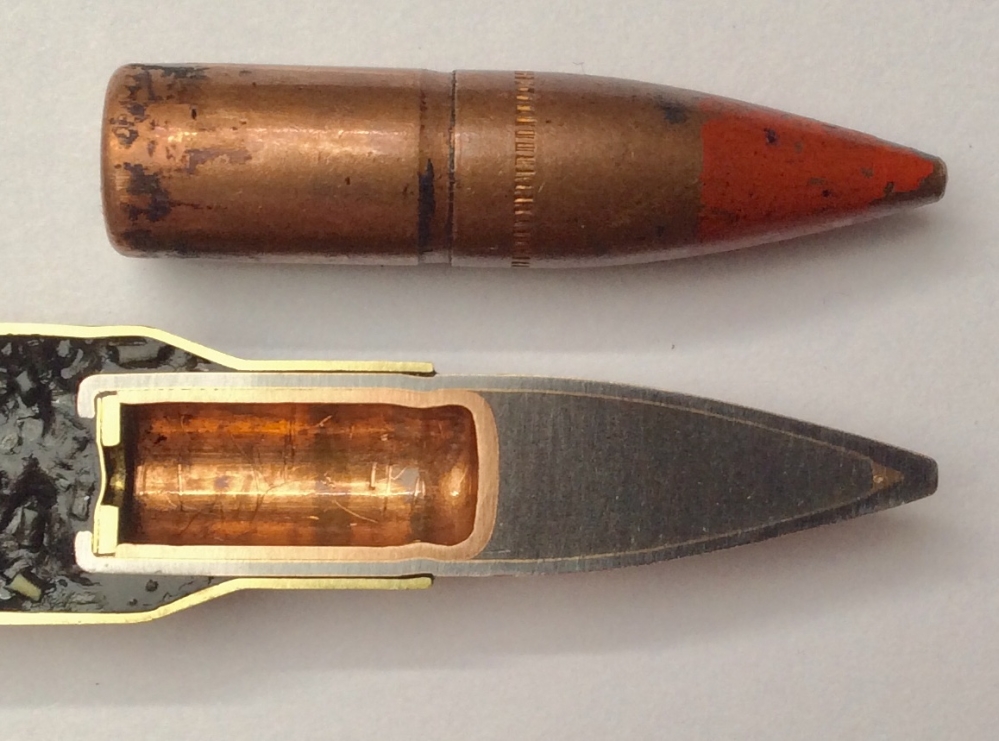
Tracer ignition has NOTHING to do with velocity and or air resistance. Where the heck did you get that crazy idea? The tracer compound is in the base of the bullet and is ignited by the burning powder.
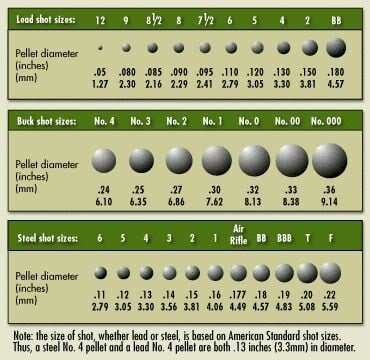
That is the equivalent to #7 shot, which IMO is way too small. I've seen some vids on shot size effectiveness and the sweet spot between shot size and pattern density is somewhere around the #2 shot range. Lead #2 pellets are heavy enough to carry energy to distance and to seriously damage drone components while still having enough shot density to get pellets onto the target.He gives all the specs.
12/70
32 G
2,5 mm
Large shot has the energy and distance but not the cloud density to guarantee hits. Smaller shot has the cloud density but not the energy to damage drone components at distance.
Yes, Finnish, he said that.Not speaking Finnish perhaps I missed that? #8 shot, copy.
Basically the equivalent of #7 shot if one goes by a shot size chart.
I wonder if he would have had more success if he had been using buckshot or large birdshot as seems to be be favored for the task in Ukraine.
Benelli themselves recommends #4 buckshot for use against drones in their Drone Guardian shotgun and may have optimized the barrel internal profile for that load.
Benelli themselves recommends #4 buckshot for use against drones in their Drone Guardian shotgun and may have optimized the barrel internal profile for that load.
It was displayed on the screen...Not speaking Finnish perhaps I missed that? #8 shot, copy.
Looks high brass, but didn't seem to knock him around more than usual? I suspect the cost is in tungsten rather than powder.
Wholly s hit, 59 Euro's might actually be a steal of a deal! Our TSS is priced at $110 for 5 shells...before tax! https://www.federalpremium.com/shotshell/heavyweight-tss/11-PTSSX197F+79.html
Painkillers
CGN Ultra frequent flyer
I didn't know the tracer was set off at the base. I don't recall where I read, or who told me, buy my understanding was the 'trace' was a coating on the projectile?Yes, Finnish, he said that.
Basically the equivalent of #7 shot if one goes by a shot size chart.
Mea Culpa. https://en.wikipedia.org/wiki/Tracer_ammunition
#7 is too small against drones used in combat. There are so many things that are .. I don't know how to say it, artificial, not realistic ? in this video. This is pure entertainment for likes. This is so far away from real life. "Against two drones" was just against 1st, then against another one. Pure circus.






















