












































You are using an out of date browser. It may not display this or other websites correctly.
You should upgrade or use an alternative browser.
You should upgrade or use an alternative browser.
What is this rail on the bottom of the scope and where to find mounts?
- Thread starter cody c
- Start date

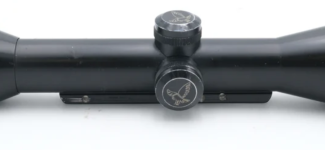

It’s quite popular on European rifles that scopes have a base with a mounting rail built in. I think they would be hard to acquire on this side of the pond. I’m sure they can be sourced but your wallets gonna take a beating. There was an add on theEE with a fellow selling a bunch of European mounts as a package. It was in the parts and accessories for optics I believe. Edit just looked and it’s page 2 and the users name is GGUTHRIE
Last edited:

There are a lot of advantages to those rails, as they help keep the scope tubes rigid/aligned in two piece rings/bases.
They come with different width dove tails and in some cases they are added after scope has been built.
I have a couple of European rifles with those rails and like them a lot. They certainly make for a rigid mounting system.
They come with different width dove tails and in some cases they are added after scope has been built.
I have a couple of European rifles with those rails and like them a lot. They certainly make for a rigid mounting system.
They definitely end wasting time wondering if your reticle is mounted square, up and down correctly etc ! And the strength that rail adds to preventing a bent tube in a big spill.There are a lot of advantages to those rails, as they help keep the scope tubes rigid/aligned in two piece rings/bases.
They come with different width dove tails and in some cases they are added after scope has been built.
I have a couple of European rifles with those rails and like them a lot. They certainly make for a rigid mounting system.

brownbear53
CGN Regular
- Location
- Vancouver, BC
Takes less than 2 minute during the mounting process if you own a wheeler level gauge (to level the rifle) and a laser level gauge (to plumb your reticle).They definitely end wasting time wondering if your reticle is mounted square, up and down correctly etc ! And the strength that rail adds to preventing a bent tube in a big spill.
only times you are risking your tube is if you don't use quality mounts or over torque the caps
Im referring to “taking a spill” or “wiping out” or “landing on the scope hard enough to bend the tube”, “scope takes an impact and the tube becomes distorted”. If you’re telling me that crappy rings or mounts can be so far off that a strong scope tube gets “bent”Takes less than 2 minute during the mounting process if you own a wheeler level gauge (to level the rifle) and a laser level gauge (to plumb your reticle).
only times you are risking your tube is if you don't use quality mounts or over torque the caps
 I’ll um never mind.
 Ever seen a scope that was actually bent to the naked eye? My point was that by adding a European style rail you increase the resistance of the scope tube to bend.
Now regarding levelling crosshairs, having that scope rail removes this step entirely. To set up a round tube I used those levels but needed more accuracy so I grabbed my magnetic based digital protractor to level the rifle’s action. Then using a plumb line set about 25 yards away I line up the reticle vertically by eye. There are many plumb edges looking out the window with houses, posts, fences etc. check one for true level and you’re all set. If it works for top shooters in F-Class it’s good enough for me.
**Using a plumb line I’ve discovered a crooked reticle in a Leupold Vari-X III I’d owned for years and Leupold warranteed it!

That Swarovski would not use the newer SR [Swarovski's proprietary] rail mount; it's too old. Although LM mounts were originally made for Zeiss & Hensoldt, the older Swarovski, Kahles, Karl Kaps, Schmidt & Bender and Docter Optic [the old East German Carl Zeiss] scopes also used them. Zeiss [ZM/VM], Schmidt & Bender [Convex] and now all have their own updated rail systems, as the Swarovski SR system.
While I like them, they result in a very high mounting plane, plus they have to be drilled & tapped once they are set for the owner's needed eye relief. It's not a mounting system you want to change a lot. They're also expensive.
While I like them, they result in a very high mounting plane, plus they have to be drilled & tapped once they are set for the owner's needed eye relief. It's not a mounting system you want to change a lot. They're also expensive.
brownbear53
CGN Regular
- Location
- Vancouver, BC
Its not about visually bending a scope, its about warping or stressing the internals to where your turrets no longer pass a box test or your magnification or parallax ring is so stiff you cause extra wear on the internals. Lots of internal damage can happen when a scope is mounted wrong without seeing any visual damage, this is why I always recommend buying scopes new or from people you trust to anybody. A properly mounted scope of decent quality (read as : not amazon scope rings and tasco rio-rand/chinesium scopes) will handle a tumble or ten no problem. I have personally have a short barreled R700 with a vortex scope on MDT rings bouncing around the SxS storage tray on countless events, it has even been dropped a few times. IT has never once moved from zero or rotated the tube, it even has visual scuffing and missing anodization around the edges at this point. That's because it was properly mounted. IF your scope shifts or rotates, or loses zero, it wasn't mounted well in the first place. Off course hard tumbles do have potential of causing damage and that will depend on the scopes durability too.Im referring to “taking a spill” or “wiping out” or “landing on the scope hard enough to bend the tube”, “scope takes an impact and the tube becomes distorted”. If you’re telling me that crappy rings or mounts can be so far off that a strong scope tube gets “bent”
Ever seen a scope that was actually bent to the naked eye? My point was that by adding a European style rail you increase the resistance of the scope tube to bend.
Now regarding levelling crosshairs, having that scope rail removes this step entirely. To set up a round tube I used those levels but needed more accuracy so I grabbed my magnetic based digital protractor to level the rifle’s action. Then using a plumb line set about 25 yards away I line up the reticle vertically by eye. There are many plumb edges looking out the window with houses, posts, fences etc. check one for true level and you’re all set. If it works for top shooters in F-Class it’s good enough for me.
**Using a plumb line I’ve discovered a crooked reticle in a Leupold Vari-X III I’d owned for years and Leupold warranteed it!
Sure this Swarovski SR rail system removes the need of levelling, assuming they etched the scope reticle perfectly in the first place, however, if you plan on using an adapter, or a third party item in the middle its completely pointless. If you install the Scope to a properly installed Swarovski mount that is meant for the rifle, you wont have any issues, but if you buy an adapter to run this scope on a picatinny rail bases mounted to your receiver, that adds unwanted tolerance stacking, and if not everything was made perfectly level, your scope wont be either, which defeats the purpose and now has no adjustability. IF it was so perfect, why did Swarovski themselves discontinue the use for it and switch to round tubes and rings for their scopes?
Using scope rings allows you to position it in any manner and distance. You generally level your action/rail rings. (regardless of how your stock is), and now you level your scope with a plumb line, this just guarantees your scope etching will be perfectly plumb to a perfectly leveled rifle this also guarantees a perfectly levelled reticle regardless of where and how the scope turrets are since the tolerance of reticle etching doesn't mater as the scope is levelled using the reticle and will match your bullet drop on a 'levelled rifle'.
That is why you always use the reticle and not the to of the scope/scope caps to level it.
In your case Leupold was just kind enough to swap it out for you to keep you happy, functionally that scope was fine and remounting it with a plumb line would have fixed all concerns. That's the whole point of using scope 'rings'.
Yes there are many edges to use in your house to confirm level, I have done that myself and it works if its a rig for sub 200 yard hunts or a dead hold reticle, but a laser level or plumb bob will always be true regardless of a builders craftsmanship and can be purchased for under 60$ online, and makes the process far more reliable.
I'm not disagreeing with you, lots of ways to do it if you know what you're doing, I just briefly described the most dummy proof way in the original statement. Would be rather stupid of F class shooters to use fence posts and unknown surfaces that should be plumb to level their scope, even a 0.5° off reticle on a rifle being 0.5° off level would put you a few inches off at 500 yards when using your reticle for drop compensation, basic trigonometry.
This has been a very productive conversation and I’ve learned a few things and also been reminded of a few things.Its not about visually bending a scope, its about warping or stressing the internals to where your turrets no longer pass a box test or your magnification or parallax ring is so stiff you cause extra wear on the internals. Lots of internal damage can happen when a scope is mounted wrong without seeing any visual damage, this is why I always recommend buying scopes new or from people you trust to anybody. A properly mounted scope of decent quality (read as : not amazon scope rings and tasco rio-rand/chinesium scopes) will handle a tumble or ten no problem. I have personally have a short barreled R700 with a vortex scope on MDT rings bouncing around the SxS storage tray on countless events, it has even been dropped a few times. IT has never once moved from zero or rotated the tube, it even has visual scuffing and missing anodization around the edges at this point. That's because it was properly mounted. IF your scope shifts or rotates, or loses zero, it wasn't mounted well in the first place. Off course hard tumbles do have potential of causing damage and that will depend on the scopes durability too.
Sure this Swarovski SR rail system removes the need of levelling, assuming they etched the scope reticle perfectly in the first place, however, if you plan on using an adapter, or a third party item in the middle its completely pointless. If you install the Scope to a properly installed Swarovski mount that is meant for the rifle, you wont have any issues, but if you buy an adapter to run this scope on a picatinny rail bases mounted to your receiver, that adds unwanted tolerance stacking, and if not everything was made perfectly level, your scope wont be either, which defeats the purpose and now has no adjustability. IF it was so perfect, why did Swarovski themselves discontinue the use for it and switch to round tubes and rings for their scopes?
Using scope rings allows you to position it in any manner and distance. You generally level your action/rail rings. (regardless of how your stock is), and now you level your scope with a plumb line, this just guarantees your scope etching will be perfectly plumb to a perfectly leveled rifle this also guarantees a perfectly levelled reticle regardless of where and how the scope turrets are since the tolerance of reticle etching doesn't mater as the scope is levelled using the reticle and will match your bullet drop on a 'levelled rifle'.
That is why you always use the reticle and not the to of the scope/scope caps to level it.
In your case Leupold was just kind enough to swap it out for you to keep you happy, functionally that scope was fine and remounting it with a plumb line would have fixed all concerns. That's the whole point of using scope 'rings'.
Yes there are many edges to use in your house to confirm level, I have done that myself and it works if its a rig for sub 200 yard hunts or a dead hold reticle, but a laser level or plumb bob will always be true regardless of a builders craftsmanship and can be purchased for under 60$ online, and makes the process far more reliable.
I'm not disagreeing with you, lots of ways to do it if you know what you're doing, I just briefly described the most dummy proof way in the original statement. Would be rather stupid of F class shooters to use fence posts and unknown surfaces that should be plumb to level their scope, even a 0.5° off reticle on a rifle being 0.5° off level would put you a few inches off at 500 yards when using your reticle for drop compensation, basic trigonometry.
I’ve been known to carry a good quality paint pen and a 4’ carpenter’s level across the street and drawn a perfectly plumb vertical line 4’ long on the pale grey trunk of a street light pole I can see clearly from my picture window. That line is easily viewed with nearly any scope I own but especially sharp with my Sightron SIII 10-50x60mm mounted on my F-TR rifle.





















