












































You are using an out of date browser. It may not display this or other websites correctly.
You should upgrade or use an alternative browser.
You should upgrade or use an alternative browser.
Enfields
- Thread starter Nats
- Start date


I just realized I have not posted these two yet... have had them a while.
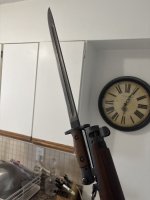
Top rifle is a 1966 2A1, bottom rifle is a 1965 2A - both are matching with nice bores, and depicted with a couple different variants of the bayonets these were issued with.
These seem to be tough to locate in Canada these days... I remember 20 years ago they were easier to find. Happy hunting!
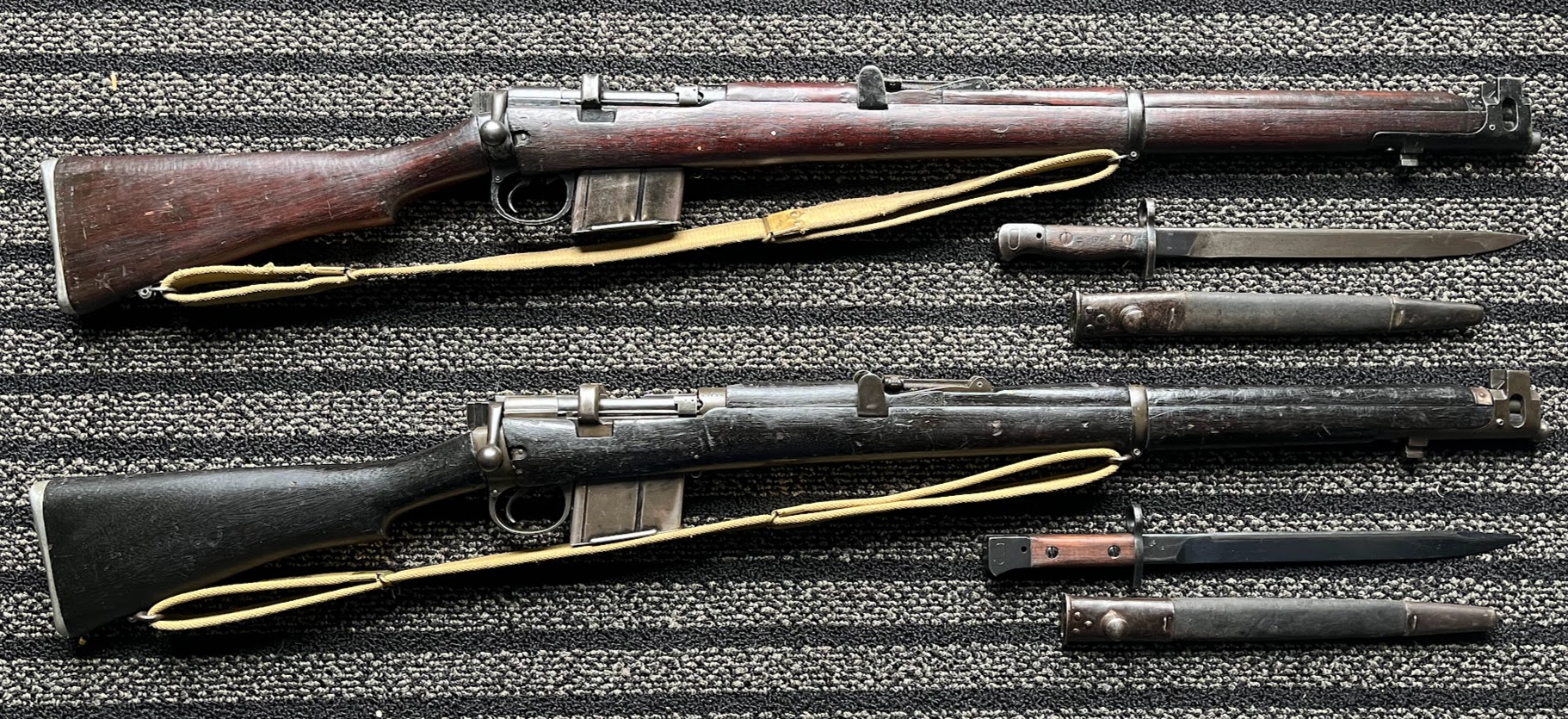
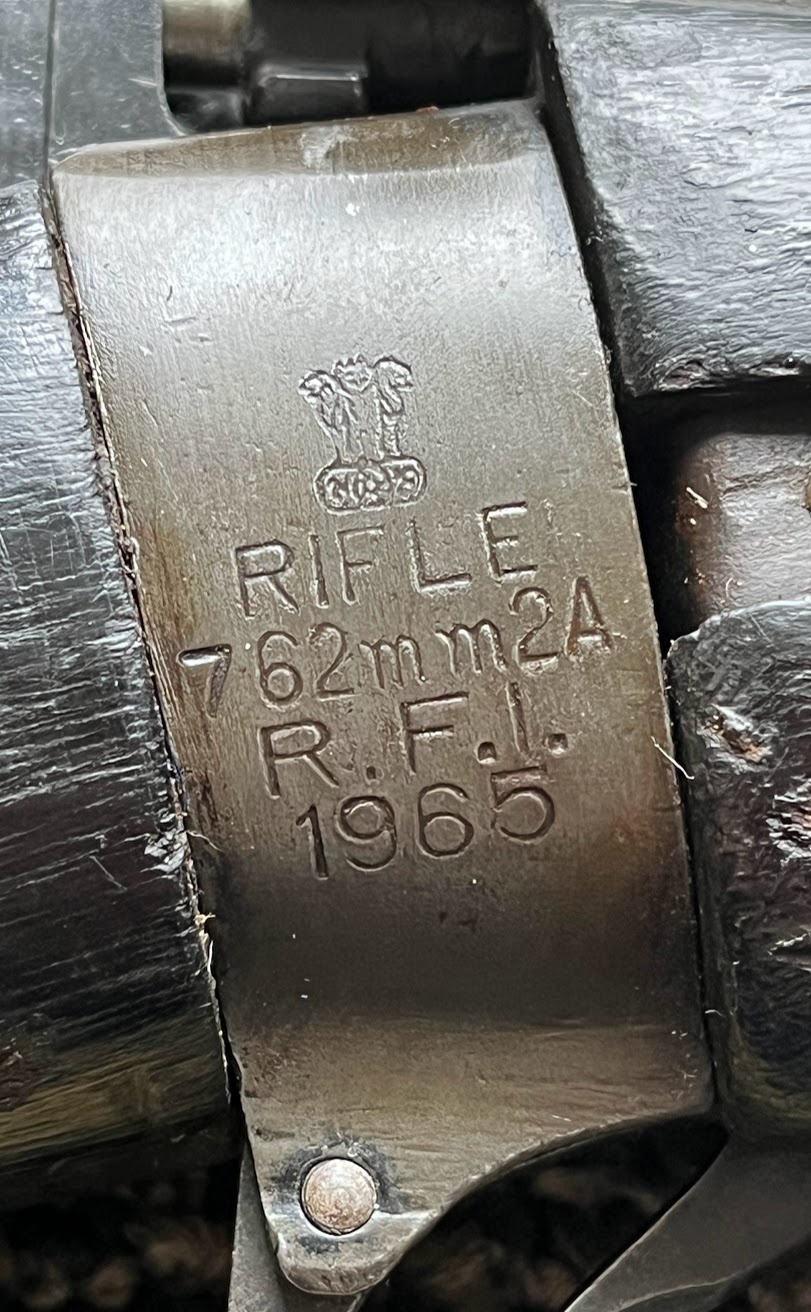
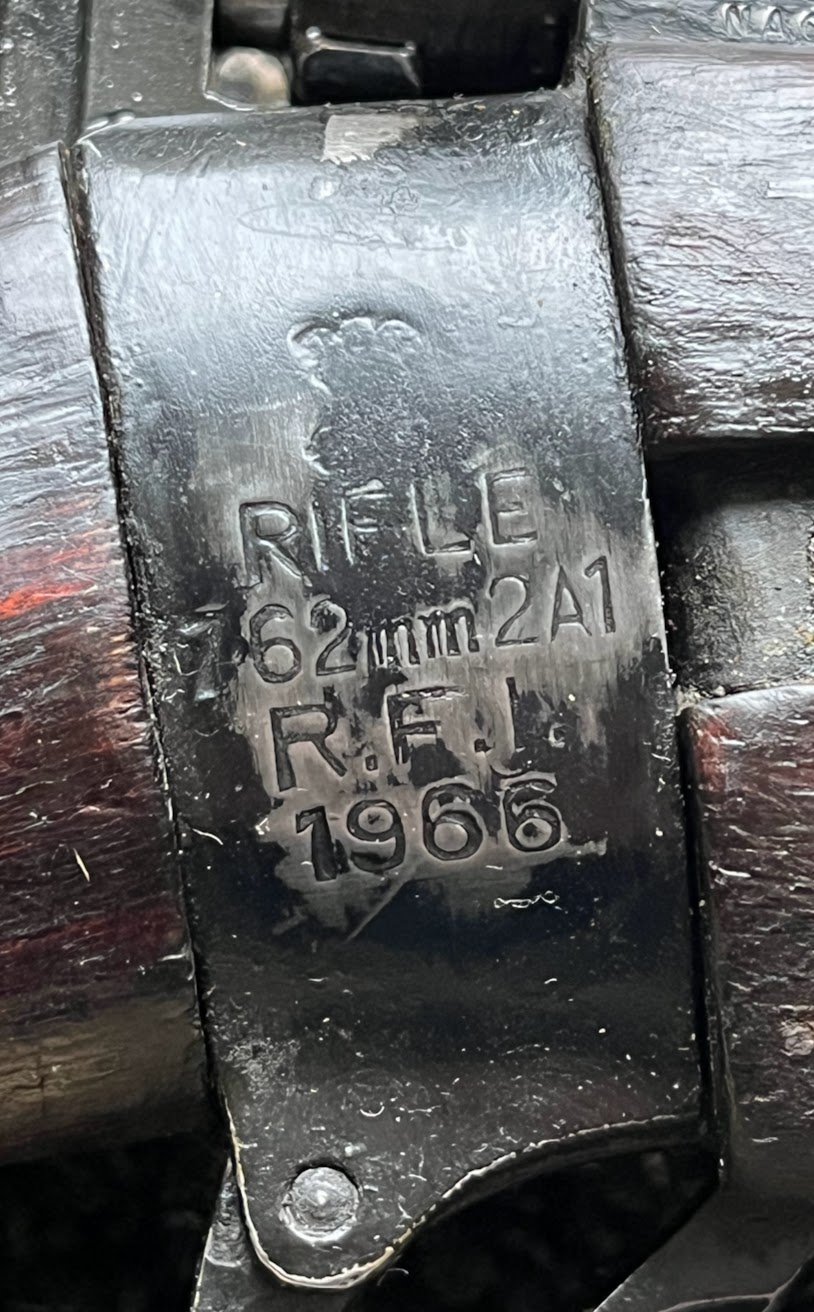
Top rifle is a 1966 2A1, bottom rifle is a 1965 2A - both are matching with nice bores, and depicted with a couple different variants of the bayonets these were issued with.
These seem to be tough to locate in Canada these days... I remember 20 years ago they were easier to find. Happy hunting!
Last edited:
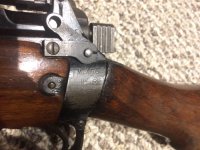
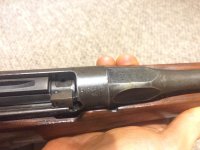
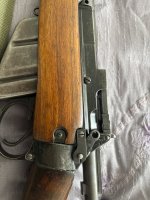
Here is the newest milsurp addition - a 1942 Fazakerley No4 Mk1.
This is without a doubt the roughest Lee Enfield rifle I have ever seen fit/finish wise. The finish is mostly a silver/ grey colour. The metal finishing is similar to the many wartime Mosins I have had over the years. A very nice, salty wartime rifle. A few small LB marked parts as well. Two groove barrel.
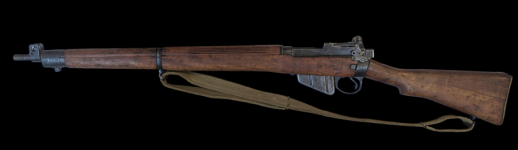
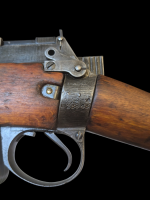
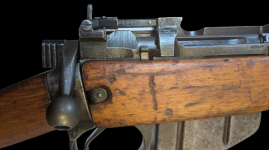
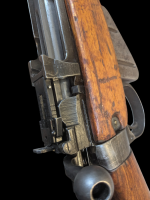
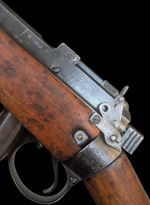
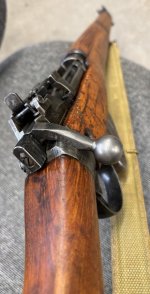
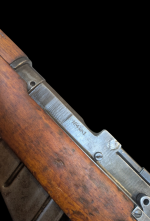
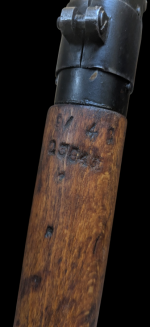
This is without a doubt the roughest Lee Enfield rifle I have ever seen fit/finish wise. The finish is mostly a silver/ grey colour. The metal finishing is similar to the many wartime Mosins I have had over the years. A very nice, salty wartime rifle. A few small LB marked parts as well. Two groove barrel.
Do you guys have any thoughts on the stock of this rifle? It's a lighter colour than typically seen walnut. I did read that during the war the British used Beech and Birch with less than great results. Does this look to possibly be a beech or birch wood stock? I don't think it's been refinished and the stock serial numbers look ok? Did the British serialize the foreends in 1942?
that stock is not walnut - it's beech. The gun isn't an obvious refurb, so it may be one of the fairly uncommon Faz guns to have been beech stocked during the war. Most No.4's got walnut or Birch until the post-war era.
Obviously, it's darkened from decades of oxidized linseed oil.
Serializing forestocks was done during the war but not overly consistently. A lot of stock were not serialized at all. For example, Maltby didn't serialize fore-ends, and Faz and BSA sometimes did, but not uniformly.
Guns that got FR or FTR were often serialized if the forestocks were going to removed during service. It's basically impossible to know if a forestock was serialized at the factory or at a depot today though. The forestocks are typically stamped in a larger font that the receivers or bolts, so comparing die strikes and character shapes isn't that informative.
The 9/42 stamp is interesting - I've not seen a factory 42 faz with a dated forestock, but it could be an inspection or FR date. Possibly the stock was serialized in Sept 42 when that mark was applied - where that happened is anyone's guess. It does not look recent or faked to me and the serif fonts look period.
Obviously, it's darkened from decades of oxidized linseed oil.
Serializing forestocks was done during the war but not overly consistently. A lot of stock were not serialized at all. For example, Maltby didn't serialize fore-ends, and Faz and BSA sometimes did, but not uniformly.
Guns that got FR or FTR were often serialized if the forestocks were going to removed during service. It's basically impossible to know if a forestock was serialized at the factory or at a depot today though. The forestocks are typically stamped in a larger font that the receivers or bolts, so comparing die strikes and character shapes isn't that informative.
The 9/42 stamp is interesting - I've not seen a factory 42 faz with a dated forestock, but it could be an inspection or FR date. Possibly the stock was serialized in Sept 42 when that mark was applied - where that happened is anyone's guess. It does not look recent or faked to me and the serif fonts look period.
Last edited:
This is super helpful, thanks Claven! I’ve had (and regretfully sold ) a few Long Branch rifles over the years and got an SMLE for the first time in the last six months. This is my first British No4 and I realized quickly how little I know about them. It was the incredibly rough metalwork and early ish date that drew me too it.
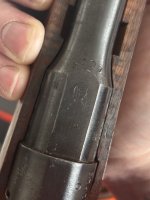
On closer look, there is a very, very faint "FR" mark on the right side of the buttstock
FR likely being field or factor repair? It would make sense given a few LB marked small parts.
I initially thought the 9/42 marking would be date of manufacture. Wonder if like you mentioned it could be an FR date?
FR likely being field or factor repair? It would make sense given a few LB marked small parts.
I initially thought the 9/42 marking would be date of manufacture. Wonder if like you mentioned it could be an FR date?
Attachments
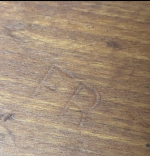
If it's FR marked, the 9/42 date is likely a field repair date and likely the serial number was also applied then. The rifle was likely made earlier in 1942. LB and Savage shipped a lot of spare parts with their rifle shipments to the UK, and some of those parts (most commonly magazines) ended up being put in newly produced british rifles, while other small pieces like safeties sometimes were used to repair british rifles at field depots, despite not being complete FTR refurbs. There was a war on, and all that.
If it's FR marked, the 9/42 date is likely a field repair date and likely the serial number was also applied then. The rifle was likely made earlier in 1942. LB and Savage shipped a lot of spare parts with their rifle shipments to the UK, and some of those parts (most commonly magazines) ended up being put in newly produced british rifles, while other small pieces like safeties sometimes were used to repair british rifles at field depots, despite not being complete FTR refurbs. There was a war on, and all that.
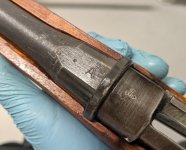
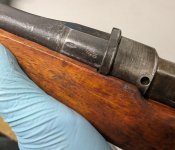
I was hoping for a month on the barrel but no such luck! I wonder when in 1942 it was made? Is this likely the original barrel then? Was the “FR” more of a “first line” repair vs a full on “third line” FTR? Sure makes you wonder where this rifle ended up over its service life.
Attachments
Last edited:

That action has a lot of the No.5 lightening cuts as on receiver and bolt. Both variants were Faz production.Here is the newest milsurp addition - a 1942 Fazakerley No4 Mk1.
This is without a doubt the roughest Lee Enfield rifle I have ever seen fit/finish wise. The finish is mostly a silver/ grey colour. The metal finishing is similar to the many wartime Mosins I have had over the years. A very nice, salty wartime rifle. A few small LB marked parts as well. Two groove barrel.
View attachment 1134248
View attachment 1134249
View attachment 1134250
View attachment 1134251
View attachment 1134252
View attachment 1134253
View attachment 1134254
View attachment 1134255
View attachment 1134256
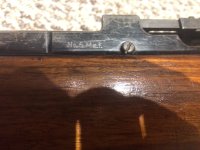
My No.5 is a 1945 Faz build and it’s just as rough looking as your No.4.
I’d say that parts commonality between them as well as production process was the same to streamline the build so they could keep the guns flowing to those that needed them.
Attachments
FR means “field repaired” which generally means a unit armorer did work on it. Could be as simple as changing a flip sight to the mk3 sight, changing a handguard, or something like that.I was hoping for a month on the barrel but no such luck! I wonder when in 1942 it was made? Is this likely the original barrel then? Was the “FR” more of a “first line” repair vs a full on “third line” FTR? Sure makes you wonder where this rifle ended up over its service life.
The barrel looks to be original and probably is.
It’s possible though in 42 the work was rough right out of the factory. I would not be surprised if it were original. In my experience, early war Faz guns were the roughest of the lot on non-critical surfaces.I suspect the welds at the ends of the charger bridge were part of the FR.
I also notice at some point an A suffix was added over the end of the serial number, and if it had been factory, Faz usually stamped the serial numbers to leave room for the A at the end of the serial, if it was needed. I rather suspect the A was added at the sept 1942 FR to denote a non- standard part was fitted somewhere on the gun. Likely something that had to be hand fitted.
This is my 1918, giving to the Irish in the 20’s to fight the IRA. Original barrel serial number is scratched out and remarked with the receiver and bolt numbers. I do have the number matching bayonet as well
Attachments
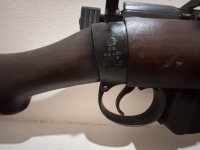
On closer look, there is a very, very faint "FR" mark on the right side of the buttstock
FR likely being field or factor repair? It would make sense given a few LB marked small parts.
I initially thought the 9/42 marking would be date of manufacture. Wonder if like you mentioned it could be an FR date?
Your rifle is serial numbered L23843. It is the 3,843 rifle in the L letter batch.
Calculate your rifles manufacture date by month by using the below info -
The first number in the serial number denotes the factory code. 2 is for Fazakerley production
- ROF (Maltby): Identified by serial numbers often starting with a 1 (e.g., 1###x), sometimes stamped with a stylized 'M'.
- ROF (Fazakerley): Identified by serial numbers often starting with a 2 (e.g., 2###x). Post-war rifles often used PF or PF2 prefixes.
- BSA Shirley (M47C): Identified by serial numbers often starting with a 3 (e.g., 3###x). Early production (1941–1943) used 4-digit numbers, while later (1944) used 5 digits, often marked M47C.
- Maltby proofed its first 25 rifles in June of 1941, Fazakerley its first 300 rifles in July of 1941 and BSA Shirley its first lot of 300 rifles in August of 1941.
No. 4 Mk I Fazakerley production serials were assigned as follows:
20000 thru 29999 for the first 10,000 starting in July of 1941
A20000 thru A29999 for the second 10,000 starting in August of 1941
B20000 thru B29999 and so on thru the Z prefix series.
That's 10,000 rifles per block x 26 blocks = 260,000 rifles plus the first unlettered serial number range = 270,000 rifles to SN Z29999
Then two letter prefixes starting at AA thru AZ
Considering A thru Z represents 260,000 rifles then with repeating this to LZ (latest dated serial number seen) would be way more than were actually produced (10,000 per single letter block x 26 single letter blocks x 12 double letter blocks to LZ > 3 Million rifles).
Production Volume: During the peak war years, Fazakerley produced, on average, approximately 10,000 to a max of 12,000+ rifles per month, often marked by serial number prefix changes (e.g., A, B, C prefixes, etc.) representing roughly 10,000 rifles per block.
Wartime production volume started to drop off after late 1943.
Post war Faz serial numbers were in the PF2###X serial range. Total Wartime Production: ROF Fazakerley produced a total of 619,913 No.4 Mk1 rifles during the war (1941–1945).

Just a wise crack comment here, only because there is an AIA sporter looking version on the EE for $3000 lol.
Has "AIA made in Australia, if you know you know!" as part of the sales pitch lol.
Apparently buddy does not know what he knows... literally anyone familiar knows they were made in Vietnam, nothing made in Australia at all, even the wood was outsourced.
They may have put the wood on the completed rifles, that's about the extent of made in Australia these things got lol
Has "AIA made in Australia, if you know you know!" as part of the sales pitch lol.
Apparently buddy does not know what he knows... literally anyone familiar knows they were made in Vietnam, nothing made in Australia at all, even the wood was outsourced.
They may have put the wood on the completed rifles, that's about the extent of made in Australia these things got lol

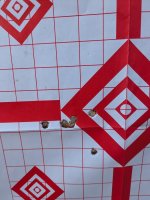
I have one from 1946 also, mine have a steel nose cap on the forend, serial Y4189.Picked up this jungle carbine late winter from a local rural gunsmith that was closing up shop for retirement. Really looking forward to getting it out to the range.
View attachment 1143443View attachment 1143445View attachment 1143446View attachment 1143447View attachment 1143448View attachment 1143449View attachment 1143450
Agreed thats a lot of money to be asking, that being said...................Just a wise crack comment here, only because there is an AIA sporter looking version on the EE for $3000 lol.
Has "AIA made in Australia, if you know you know!" as part of the sales pitch lol.
Apparently buddy does not know what he knows... literally anyone familiar knows they were made in Vietnam, nothing made in Australia at all, even the wood was outsourced.
They may have put the wood on the completed rifles, that's about the extent of made in Australia these things got lol
I have heard "some" parts were sourced out, not everything as you indicate. Some of the Enfield purists give them a bad rap but I'm not sure if that's grounded in factual information. There is a lot of miss-information floating around about these AIA rifles.
One thing I can tell you is they are very, very well made, the machining is very nice, fit and finish are great and they are accurate and highly sought after, junk does not garner much interest and have much of a following! If per chance they were completely made in Vietnam as you indicate then my hat goes off to the Vietnamese for making a very, very nice quality rifle! Yes they are expensive and aside from the quality, that's because there is a limited supply floating around and the majority are in .308 cal which makes them desirable.






















